
Pin kerbing represents a critical advancement in civil engineering and highways infrastructure, offering enhanced durability and stability for road edges, driveways, and pedestrian areas. This installation method uses steel pins driven through pre-drilled holes in concrete kerb units, securing them firmly to the base layer below. As commercial and residential developments demand more reliable edge restraint systems in 2026, understanding the technical specifications, installation procedures, and practical applications of pin kerbing has become essential for civil engineering professionals and property developers alike. The technique provides superior resistance to vehicular impact and ground movement compared to traditional bedding methods, making it particularly valuable in high-traffic zones.
Understanding Pin Kerbing Systems
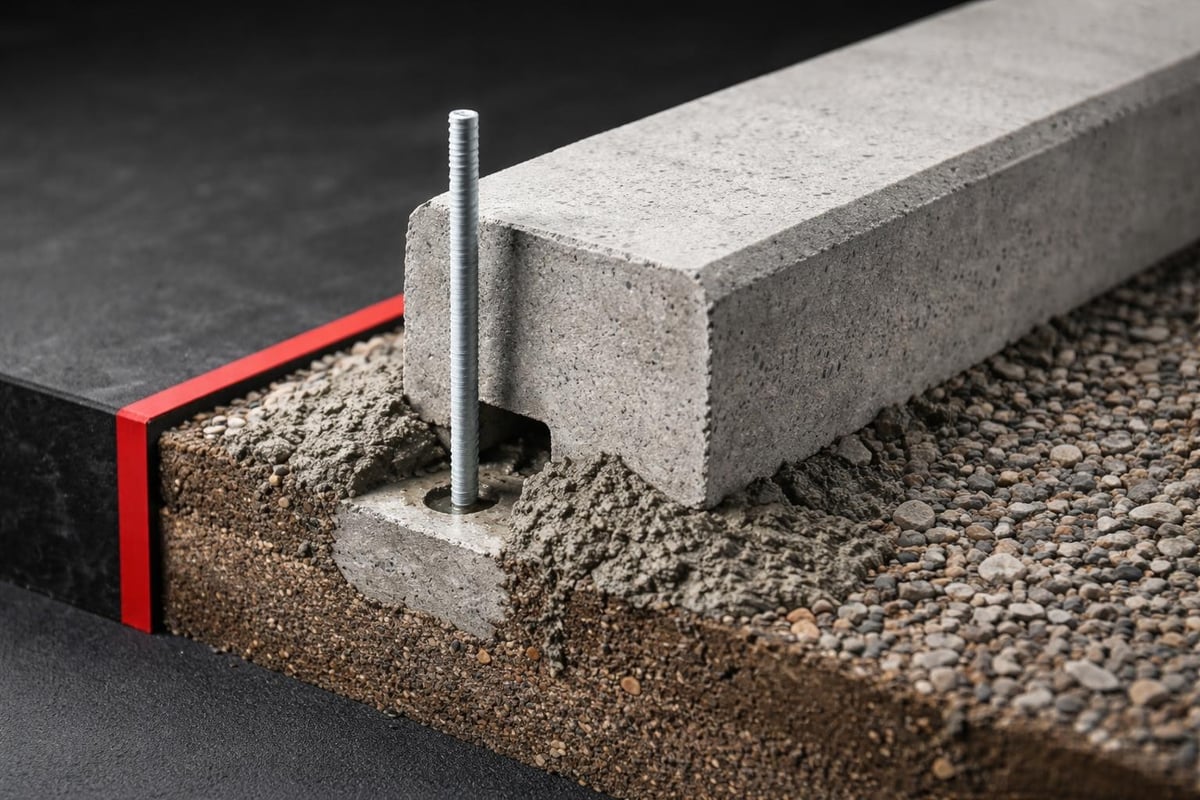
Pin kerbing involves mechanically fixing concrete or stone kerb units to a prepared base using steel pins, typically ranging from 400mm to 600mm in length. Unlike traditional mortar-bedded kerbing that relies solely on adhesion and weight for stability, pin kerbing creates a physical anchor point that penetrates through the kerb unit and into the sub-base material below.
The fundamental principle centres on distributing lateral forces across multiple fixed points rather than depending on continuous bedding support. Each pin acts as an individual anchor, collectively creating a robust restraint system that maintains kerb alignment even under significant stress.
Key Components of Pin Kerbing Installation
A complete pin kerbing system comprises several essential elements working together:
- Pre-cast concrete kerb units with appropriate dimensions and strength ratings
- High-tensile steel pins, typically 16mm to 20mm diameter
- Granular sub-base material compacted to specified density
- Haunching concrete to provide additional lateral support
- Joint sealing materials for weather resistance
The Spikma method of pinned kerbing pioneered many of these integrated approaches, demonstrating how factory-prepared kerb units with pre-drilled holes could streamline installation whilst maintaining structural integrity.
Advantages Over Traditional Kerbing Methods
The superiority of pin kerbing becomes apparent when examining performance metrics across various installation scenarios. Traditional mortar-bedded kerbs face challenges with differential settlement, thermal expansion, and impact resistance that pin kerbing systems address effectively.
Structural Performance Benefits:
Pin kerbing delivers measurable improvements in load-bearing capacity and longevity. The mechanical fixings prevent kerb movement during ground settlement, a common issue in newly constructed developments where sub-base consolidation continues for months after installation. Vehicle overrun incidents, particularly common in commercial car parks and drive-through facilities, cause significantly less damage to pinned kerbs compared to bedded alternatives.
Installation Efficiency Gains:
Modern pin kerbing techniques reduce installation time considerably. Crews can position and secure kerbs without waiting for mortar curing periods, allowing subsequent surfacing work to commence immediately. This efficiency proves particularly valuable on projects with tight completion deadlines or phased construction schedules.
| Comparison Factor | Traditional Mortar Bedding | Pin Kerbing |
|---|---|---|
| Installation time per linear metre | 15-20 minutes | 8-12 minutes |
| Weather dependency | High (frost/rain sensitive) | Low |
| Curing period required | 24-48 hours | Immediate |
| Resistance to vehicular impact | Moderate | High |
| Long-term alignment stability | Variable | Excellent |
Durability and Maintenance Considerations
The longevity of pin kerbing stems from its resistance to the primary failure mechanisms affecting traditional installations. Frost heave, which displaces mortar-bedded kerbs by expanding moisture beneath units, has minimal impact on pinned systems where mechanical anchors maintain position despite ground movement.
Maintenance requirements decrease substantially over the kerb's service life. Highway safety standards emphasize the importance of maintaining vertical kerb faces for effective traffic control, and pin kerbing maintains these critical dimensions far more reliably than alternatives.
Technical Specifications and Standards
Proper pin kerbing installation requires adherence to specific technical parameters governing material properties, dimensional tolerances, and installation procedures. Understanding these standards ensures compliance with highways authority requirements and achieves optimal performance characteristics.
Material Requirements
Steel pins used in kerbing applications must meet minimum tensile strength specifications, typically exceeding 500 N/mm². The pins require corrosion protection through galvanization or alternative protective coatings, ensuring structural integrity throughout the installation's design life. Design requirements for kerbing outline these material standards comprehensively for adoption purposes.
Concrete kerb units must achieve compressive strength ratings appropriate for their intended application. Highway kerbs typically require minimum 50 N/mm² strength, whilst residential driveway applications may utilize 40 N/mm² units successfully.
Pin Spacing and Penetration Depth:
Installation specifications dictate precise parameters:
- Pin centres typically range from 600mm to 1000mm depending on application
- Minimum penetration depth into sub-base of 300mm below kerb soffit
- Pin diameter selection based on kerb height and anticipated loading
- Edge distance from kerb faces maintained at minimum 50mm
The structural features of Spikma kerbing design demonstrate how these specifications integrate with manufacturing processes to optimize performance.
Installation Methodology and Best Practices
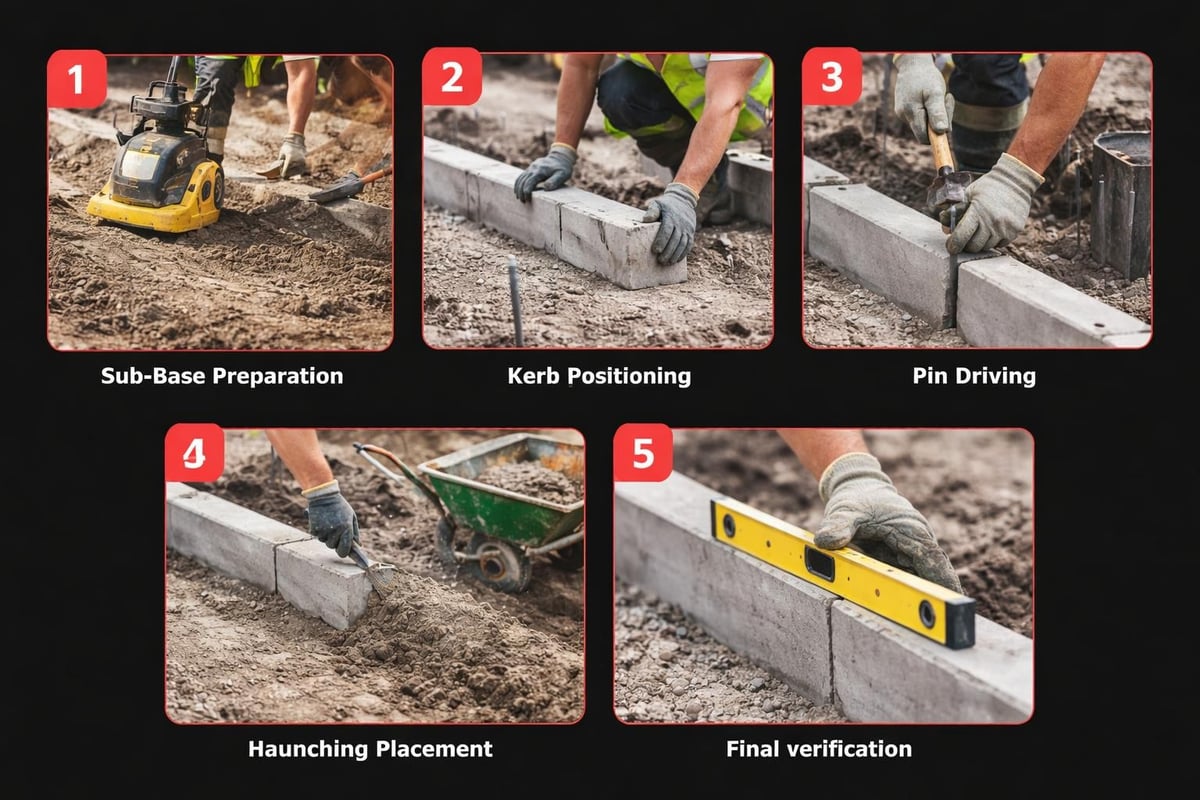
Achieving optimal results with pin kerbing demands meticulous attention to preparation work and installation sequences. The foundation's quality determines the system's long-term performance more significantly than the kerbing itself.
Sub-Base Preparation
The sub-base layer provides the essential anchor medium for pins. Specifications typically call for Type 1 granular material compacted to 95% maximum dry density. Thickness varies according to ground conditions and anticipated loading, ranging from 150mm for light-duty applications to 300mm or more for highways work.
Compaction equipment selection impacts achievable density. Vibrating plate compactors suit residential projects effectively, whilst roller compaction becomes necessary for larger commercial installations ensuring uniform support across extended kerb runs.
Pin Driving Techniques
Pin installation requires controlled force application to avoid kerb damage whilst achieving specified penetration depths. Pneumatic or hydraulic driving equipment provides optimal control compared to manual sledgehammer methods, particularly important when working with higher-strength concrete units.
Critical installation checkpoints include:
- Verifying pin alignment perpendicular to kerb face before driving
- Monitoring penetration depth through measurement rather than visual assessment
- Ensuring pins seat fully within pre-drilled holes without enlarging apertures
- Checking kerb alignment continuously during pin installation sequence
- Applying haunching concrete whilst kerbs remain properly supported
Modern alternatives such as Bison steel kerbing demonstrate how innovation continues advancing edge restraint technology, though traditional pin kerbing remains the standard for most applications in 2026.
Applications Across Commercial and Residential Projects
Pin kerbing versatility allows deployment across diverse project types, from major highways infrastructure to domestic driveway installations. Understanding application-specific requirements ensures appropriate specification and installation approaches.
Commercial and Highways Applications
Large-scale commercial developments benefit significantly from pin kerbing's durability characteristics. Drive-through restaurant facilities experience concentrated vehicular traffic patterns with frequent tight radius turning movements that stress kerb lines considerably. The mechanical anchoring prevents progressive displacement that would compromise drainage falls and create trip hazards.
Highways applications demand the highest performance standards. Motorway slip roads, roundabouts, and junction arrangements subject kerbs to substantial lateral forces from vehicle encroachment. Pin kerbing maintains alignment under these conditions whilst providing the vertical face necessary for effective traffic channelization.
| Application Type | Typical Pin Spacing | Recommended Pin Diameter | Sub-Base Thickness |
|---|---|---|---|
| Motorway/A-roads | 600-750mm | 20mm | 300mm minimum |
| Residential roads | 750-900mm | 16-18mm | 200-250mm |
| Car parks | 800-1000mm | 16mm | 150-200mm |
| Driveways | 900-1000mm | 16mm | 150mm |
Residential and Private Works
Domestic driveway projects increasingly specify pin kerbing where ground conditions suggest settlement risks or where decorative kerb profiles justify additional installation security. Block paving driveways particularly benefit from pinned edge restraint, as the rigid perimeter prevents progressive creep that allows individual blocks to displace.
Garden landscaping applications utilize pin kerbing where level changes require retained edges. Patio surrounds and pathway delineation gain both aesthetic definition and practical durability through properly installed pinned kerbs. The technique suits footpath applications where pedestrian safety and long-term edge stability intersect.

Quality Assurance and Common Installation Challenges
Successful pin kerbing projects incorporate rigorous quality control measures throughout the installation process. Identifying and addressing potential issues before they compromise performance prevents costly remedial work and ensures client satisfaction.
Inspection and Testing Protocols
Quality assurance begins with material verification. Inspecting kerb units for dimensional accuracy, surface finish quality, and pre-drilled hole positioning confirms conformance to specifications. Pin samples should undergo visual inspection for straightness, diameter consistency, and coating integrity.
During installation, monitoring focuses on achievable tolerances:
- Line and level accuracy within ±10mm over 3-metre straightedge
- Pin penetration depth verification using depth gauges
- Joint width consistency maintained at specified dimensions
- Haunching concrete placement completing installation sequence
- Final surface level relationships to adjacent paving elements
Addressing Common Installation Problems
Ground conditions frequently present challenges requiring adaptive approaches. Encountering unexpected obstructions during pin driving necessitates repositioning rather than forcing pins through resistant materials. Excessively soft sub-bases may require additional compaction passes or material replacement before proceeding.
Weather conditions influence installation success significantly. Heavy rainfall saturates granular materials, reducing compaction effectiveness and compromising pin anchor capacity. Scheduling flexibility allows postponing work during unsuitable conditions rather than proceeding with substandard preparations.
Kerb unit damage during handling or installation typically results from inadequate support during pin driving. Proper blocking beneath units distributes impact forces, preventing corner spalling or crack propagation from pin holes.
Alternative Systems and Emerging Technologies
Whilst traditional pin kerbing remains the predominant edge restraint method, alternative systems continue emerging to address specific application requirements or installation constraints. Understanding these options allows informed specification decisions aligned with project parameters.
Steel and Composite Kerbing Systems
Metal landscape edging products offer reduced weight and simplified installation procedures compared to concrete alternatives. These systems typically incorporate integral fixing flanges eliminating separate pin requirements, though the principle of mechanical anchoring remains consistent. Some specifications favour these approaches where traditional concrete kerbing presents logistical challenges.
Comparative advantages of alternative systems:
- Reduced manual handling requirements due to lighter unit weights
- Flexibility accommodating curved alignments without specialized units
- Corrosion-resistant materials eliminating concrete degradation concerns
- Faster installation rates on suitable projects
However, concrete pin kerbing maintains advantages in visible applications where substantial appearance and established aesthetic expectations prevail. Most highways authorities continue specifying traditional concrete kerbs for adoptable infrastructure, ensuring consistency across road networks.
Innovations in Pin Technology
Recent developments in fixing technology include resin-bonded anchor systems providing chemical and mechanical bonding simultaneously. These hybrid approaches suit renovation projects where existing sub-base disturbance must remain minimal. Specialists apply these techniques when standard pin driving would compromise adjacent structures or services.
The fundamental principles underlying pin kerbing continue guiding these innovations. Regardless of specific materials or methodologies employed, creating multiple discrete anchor points throughout the kerb line delivers superior performance compared to continuous bedding approaches.
Cost Considerations and Value Analysis
Pin kerbing typically commands higher initial material costs compared to traditional mortar bedding, yet whole-life cost analysis frequently favours the pinned approach when maintenance and longevity factors receive consideration. Understanding these economic relationships supports informed procurement decisions.
Initial Installation Costs
Material expenses for pin kerbing include the pins themselves plus any specialized drilling equipment if using standard kerb units rather than factory-prepared alternatives. Labour costs may decrease due to faster installation rates and elimination of mortar mixing requirements, partially offsetting material premiums.
Budget planning factors include:
- Pin material costs approximately £2-4 per unit depending on specification
- Specialized driving equipment hire if not available within existing plant inventory
- Potential savings from reduced installation duration
- Haunching concrete quantities remaining comparable to traditional methods
Long-Term Value Proposition
The economic case for pin kerbing strengthens when examining maintenance requirements over typical infrastructure design lives. Kerbs remaining properly aligned eliminate trip hazard liability concerns and preserve designed drainage characteristics maintaining pavement integrity.
Reduced reinstatement frequency following utility works provides additional value. Pinned kerbs withstand the disturbance associated with excavation adjacent to kerb lines more successfully than bedded alternatives, often remaining serviceable when traditional installations require complete replacement.
For commercial developments, particularly those involving franchised operations with corporate standards, the reliability and professional appearance of properly installed pin kerbing justifies premium investment. Facility operators avoiding ongoing maintenance calls and associated business disruption recognize substantial operational benefits.
Specification Writing and Contract Requirements
Producing comprehensive pin kerbing specifications ensures contractors understand expectations and enables accurate tender pricing. Ambiguous or incomplete specifications generate variation claims and quality disputes undermining project success.
Essential Specification Components
Effective specifications address materials, installation procedures, and acceptance criteria explicitly. Material clauses must reference applicable British or European standards governing concrete strength, steel properties, and protective coatings. Dimensional tolerances require clear definition preventing subjective interpretation.
Installation methodology sections should establish:
- Sub-base material specification and compaction requirements
- Pin spacing parameters and acceptable tolerance ranges
- Driving equipment types permitted for use
- Haunching concrete mix design and placement timing
- Line and level tolerances for completed work
Quality assurance provisions outline inspection frequencies, testing protocols, and remedial action procedures for non-conforming work. Establishing these requirements during specification development rather than addressing deficiencies retrospectively maintains project momentum.
Contract Administration Considerations
Site supervision requirements reflect pin kerbing's criticality within overall works. Experienced engineers recognize that kerb installation often occurs early in construction sequences, with subsequent trades obscuring any installation deficiencies. Verifying compliance during active work prevents discovering problems only after surfacing completion.
Photographic records documenting key installation stages provide valuable quality assurance evidence. Images showing sub-base preparation, pin penetration depths, and haunching placement create defensible records supporting interim payments and final certification.
Pin kerbing delivers exceptional performance and longevity for edge restraint applications across commercial highways projects and residential developments when installed according to proper specifications and quality standards. Whether you're planning a major infrastructure scheme, commercial car park, or domestic driveway, the civil engineering expertise at JRG Civils ensures professional installation from initial groundworks through all finishing touches, maintaining the excellent standards that have built our reputation across the North East and throughout the UK since 2020.