
Kerbing represents one of the most critical yet often overlooked components in highway construction, driveway installation, and commercial development projects. Whether you're planning a residential driveway, managing a commercial car park, or overseeing major road infrastructure, understanding the principles, types, and installation methods of kerbing ensures both functional performance and aesthetic appeal. This essential guide explores everything you need to know about kerbing, from material selection to maintenance requirements.
Understanding the Fundamentals of Kerbing
Kerbing serves multiple essential functions within road and pavement construction. At its core, it provides a defined boundary between different surfaces, typically separating vehicular carriageways from pedestrian footpaths or landscaped areas. This physical barrier guides traffic flow, prevents vehicles from straying onto footpaths, and protects pedestrians whilst maintaining clear delineation of spaces.
Beyond boundary definition, kerbing plays a vital role in drainage management. The raised edge directs surface water into designated drainage channels and gullies, preventing water from spreading across pedestrian areas or infiltrating into foundations. Without proper kerbing, water management becomes problematic, potentially leading to surface deterioration, flooding, and structural damage.
The structural support provided by kerbing shouldn't be underestimated. It restrains the edge of flexible pavements, preventing lateral movement and displacement of surfacing materials under traffic loads. This edge restraint is particularly crucial in asphalt installations, where the material requires containment to maintain its integrity over time.
Types of Kerbing and Their Applications
Different projects demand different kerbing solutions. Understanding which type suits your specific requirements ensures optimal performance and longevity.
Flush Kerbs sit level with the adjacent pavement surface, creating a smooth transition ideal for shared spaces and disabled access points. These are commonly specified in pedestrianised zones and areas requiring frequent vehicular crossings.
Half-Batter Kerbs feature a sloped face on one side, typically used in residential developments and minor roads. The angled profile provides a gentler visual appearance whilst maintaining adequate edge restraint for surfacing materials.
Bull-Nosed Kerbs incorporate rounded top edges, offering enhanced safety in areas with pedestrian activity. The curved profile reduces injury risk from impacts and provides a more refined aesthetic finish.
Splayed Kerbs combine vertical and angled faces, delivering robust edge protection for highways and major roads. These represent the most common choice for high-traffic applications where durability is paramount.
Material Selection for Kerbing Projects
Choosing the right material for your kerbing installation directly impacts performance, maintenance requirements, and overall project costs. Each material offers distinct advantages suited to different applications.
| Material | Durability | Cost | Best Applications | Maintenance Level |
|---|---|---|---|---|
| Concrete | Excellent | Moderate | Highways, commercial | Low |
| Natural Stone | Outstanding | High | Prestige developments | Moderate |
| Granite | Exceptional | Very High | Heritage projects | Very Low |
| Reconstituted Stone | Good | Moderate | Residential driveways | Low |
Concrete kerbing remains the most widely specified option across commercial and public highway projects. Its strength, consistency, and cost-effectiveness make it ideal for large-scale installations. Manufacturing processes ensure uniform dimensions and quality, whilst various profiles accommodate different design requirements. The detailed design standards for roads and footpaths provide comprehensive specifications for concrete kerbing in highway applications.
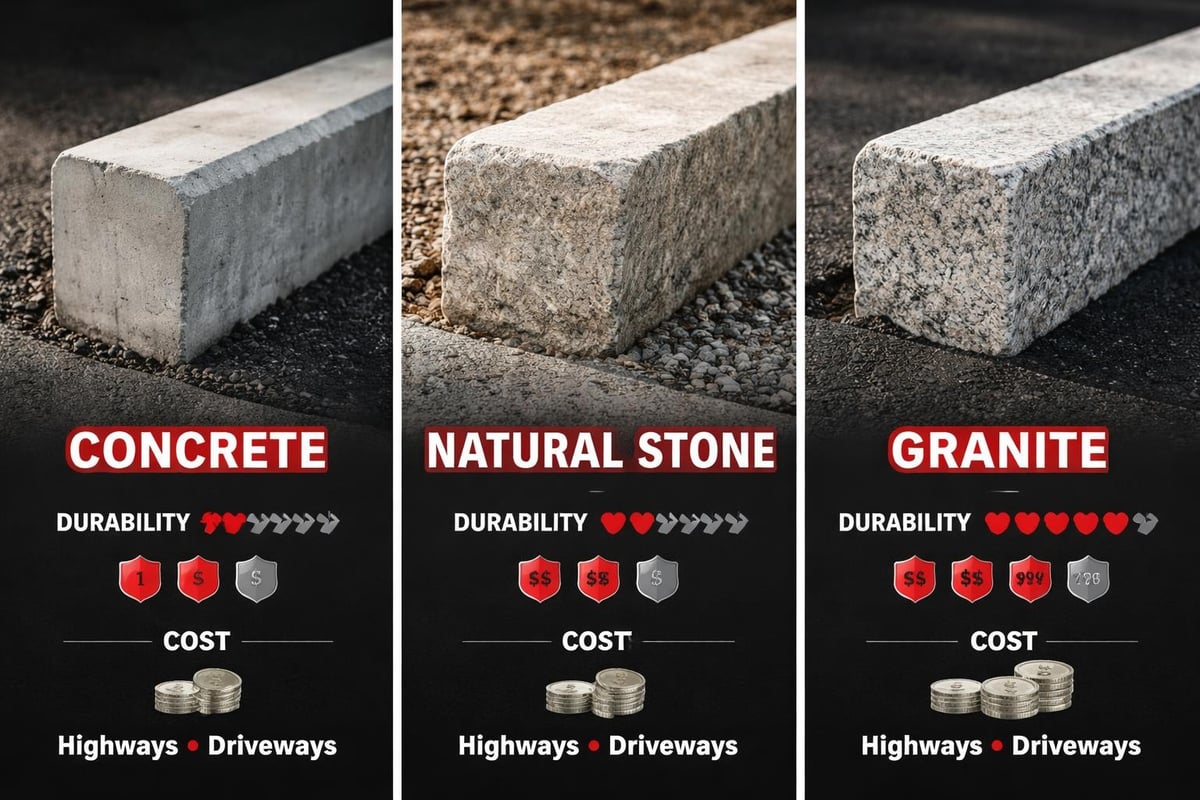
Natural stone kerbing offers unmatched aesthetic appeal and exceptional longevity. Granite, sandstone, and limestone options provide character and distinctiveness, particularly valuable in conservation areas and prestige developments. Whilst initial costs exceed concrete alternatives, the minimal maintenance requirements and extended service life often justify the investment.
Reconstituted stone products bridge the gap between concrete and natural stone, delivering enhanced appearance at moderate cost. These manufactured units combine stone aggregates with cement binders, creating products that mimic natural stone aesthetics whilst maintaining concrete's consistency and workability.
Installation Standards and Best Practices
Proper installation determines whether kerbing performs effectively throughout its intended service life. Cutting corners during installation invariably leads to premature failure, requiring costly remedial works.
Foundation Preparation
The foundation represents the most critical element of successful kerbing installation. Inadequate foundations cause settlement, misalignment, and structural failure regardless of material quality.
- Excavate to required depth based on kerb height and traffic loading
- Compact the formation to prevent future settlement
- Install concrete haunching to provide lateral support
- Ensure adequate drainage beneath the foundation layer
- Check levels continuously throughout the installation process
Foundation depth varies according to the kerb type and intended traffic loading. Residential driveways typically require 150mm granular sub-base beneath the concrete bed, whilst highway kerbing may demand 300mm or more depending on ground conditions and traffic volumes.
Laying Techniques
Professional kerbing installation demands precision and attention to detail. The concrete bed should provide uniform support across the entire kerb length, with thickness appropriate to the loading conditions. For standard applications, a 100mm concrete bed proves sufficient, increasing to 150mm for heavy-duty installations.
Haunching provides essential lateral support, preventing the kerb from tilting or moving under traffic loads. The haunch typically rises to two-thirds of the kerb height on the road side, with a smaller backing haunch on the footpath side. Understanding various kerb profiles and their applications helps ensure appropriate haunching configurations for different kerb types.
Alignment and level control separate professional installations from substandard work. String lines establish the required alignment, whilst regular level checks ensure consistent height throughout. Variations create unsightly appearances and compromise drainage performance.
Design Considerations for Different Applications
Kerbing design varies significantly depending on the project type, location, and intended use. Specifications for a residential driveway differ markedly from those governing major highway construction.
Highway and Road Kerbing
Highway kerbing must withstand significant traffic loads whilst providing reliable drainage and clear lane definition. Splayed kerbs dominate these applications, offering robust edge restraint and excellent durability. Heights typically range from 125mm upstands for minor roads to 150mm for major highways.
Transitional pieces accommodate changes in direction, crossovers, and junctions. These specially manufactured units maintain smooth alignment whilst negotiating curves and intersections. Radius units in various curvatures eliminate the need for cutting standard lengths, ensuring professional appearance and structural integrity.
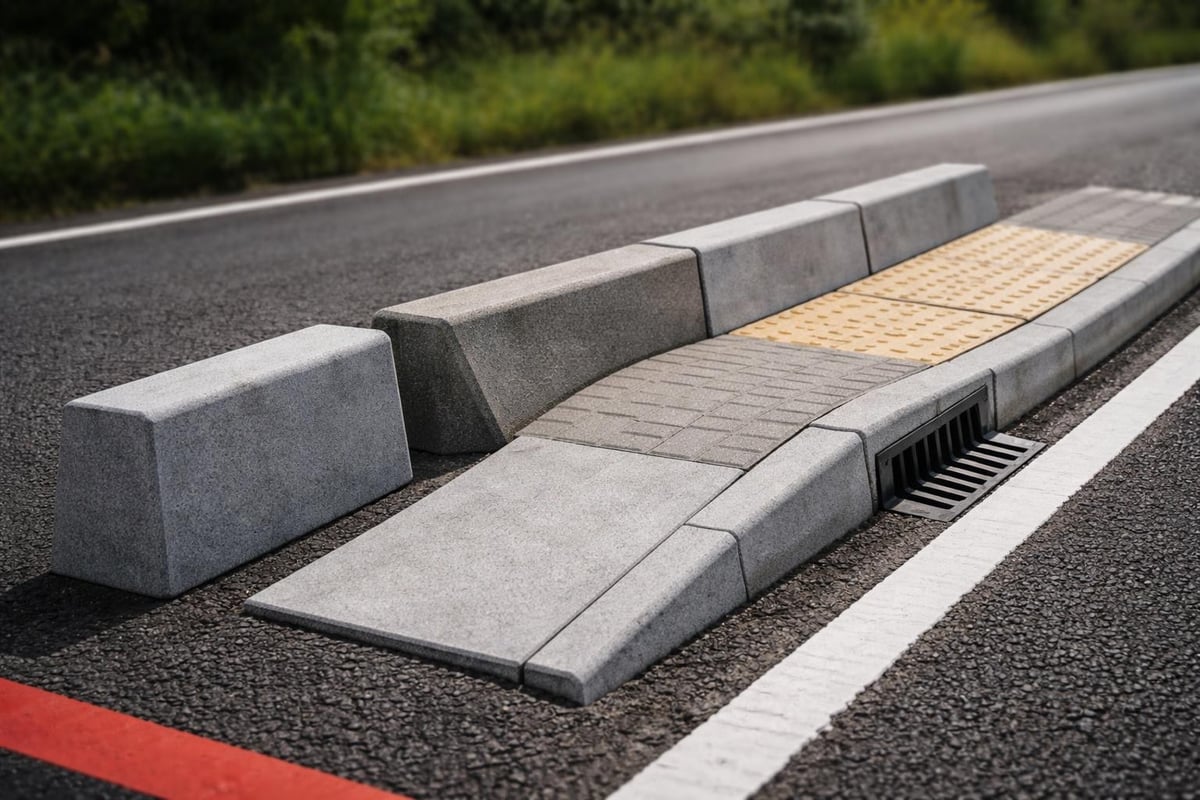
Dropped kerbs facilitate vehicular access and provide essential disabled access points. The gradual transition from full height to flush level requires careful specification to maintain acceptable gradients for wheelchair users and pushchairs.
Commercial and Industrial Kerbing
Commercial developments demand kerbing solutions that balance functionality with aesthetic appeal. Car parks, loading areas, and access roads experience different loading patterns compared to public highways, influencing material and profile selection.
Heavy goods vehicle movements require enhanced edge protection, often specifying larger section kerbs with deeper foundations. Loading bay kerbing particularly benefits from reinforced specifications, as vehicles frequently mount and impact these edges during manoeuvring.
Demarcation of parking bays, pedestrian routes, and landscaped areas relies heavily on kerbing to create clear, durable boundaries. The visual impact contributes significantly to the overall development appearance, making profile and finish selection important considerations beyond purely functional requirements.
Residential Driveway Kerbing
Driveway kerbing combines practical edge restraint with aesthetic enhancement. Block paving driveways particularly depend on robust edge restraint to prevent lateral spreading of the paving units. Without adequate kerbing, block paving installations gradually lose their integrity as blocks move under traffic.
Material choices often prioritise appearance alongside performance. Natural stone and decorative concrete kerbing complement property architecture, adding value and kerb appeal. The comprehensive civil engineering services required for residential projects extend beyond simple kerb installation to encompass complete driveway construction, drainage integration, and surfacing.
Drainage Integration and Water Management
Effective kerbing works in concert with drainage infrastructure to manage surface water runoff. The relationship between kerbs, gullies, and drainage channels determines whether water is properly controlled or allowed to cause problems.
Kerb and Channel Systems
Combined kerb and channel units provide integrated drainage solutions, particularly effective in residential streets and light-traffic areas. The profiled channel section sits alongside the kerb, collecting and conveying surface water to gullies positioned at strategic intervals.
Channel width and depth specifications vary according to anticipated water volumes and slope gradients. Steeper gradients permit narrower channels, whilst flat areas require enhanced capacity to prevent ponding. Design calculations account for rainfall intensity, catchment area, and surface permeability to ensure adequate provision.
Gully Spacing and Positioning
Strategic gully positioning prevents water accumulation and ensures efficient drainage. Typical spacing ranges from 20 to 40 metres depending on road gradient and kerb type. Additional gullies are specified at low points, approaching junctions, and before pedestrian crossings to prevent water flowing across footpaths.
Kerb profiles influence gully requirements. Flush kerbs demand more frequent gullies compared to raised kerbs, as water can more easily flow across the boundary. The coordination between kerbing installation and drainage works ensures proper integration without compromising either element.
Maintenance and Longevity Strategies
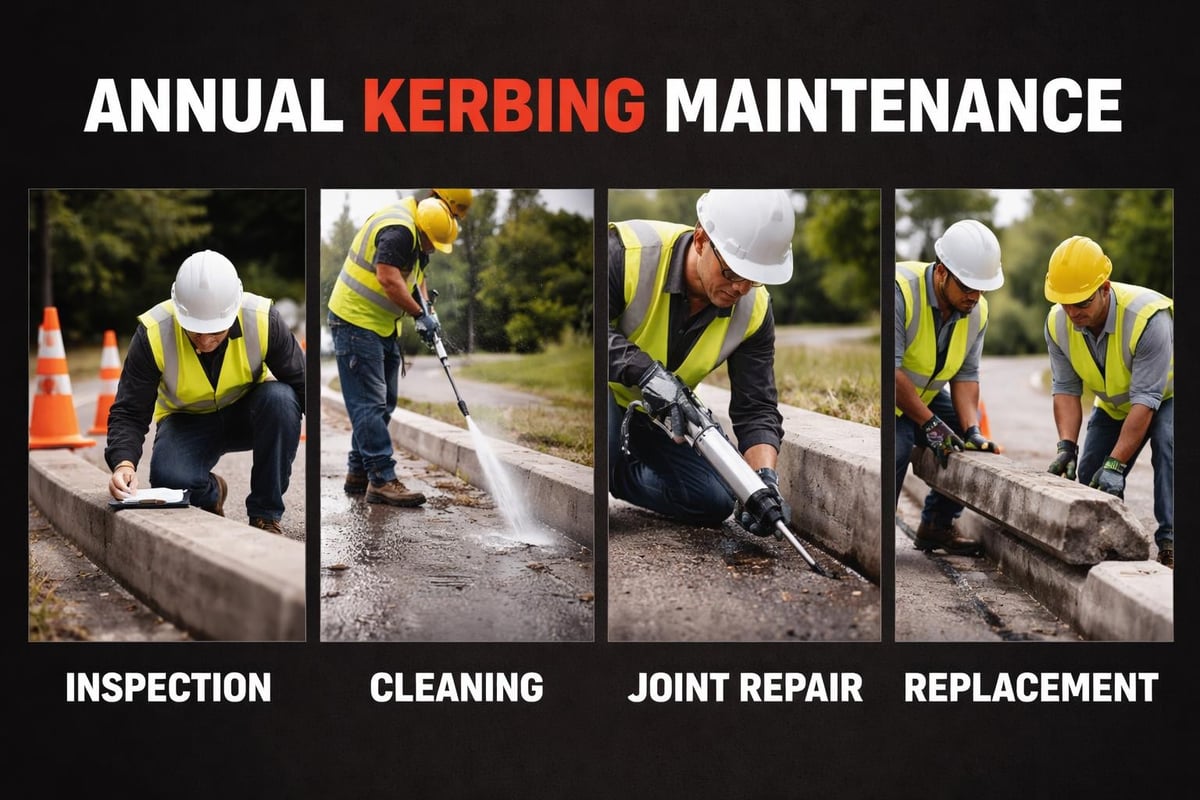
Well-installed kerbing requires minimal maintenance, yet periodic attention ensures continued performance and prevents minor issues developing into major problems. Seasonal maintenance tips for kerbs provide practical guidance for property owners and facility managers.
Regular inspection identifies damage before it progresses. Cracked or displaced kerbs indicate foundation problems requiring prompt attention. Vegetation growth along kerb lines undermines foundations and compromises drainage, necessitating removal and proper treatment.
Cleaning maintains both appearance and functionality. Accumulated debris blocks drainage channels and creates slip hazards on adjacent paving. Pressure washing removes organic growth, staining, and ingrained dirt, restoring the kerb's original appearance whilst improving surface water flow.
Common Issues and Remedies
Settlement represents the most frequent kerbing problem, typically resulting from inadequate foundation preparation or ground movement. Affected sections require excavation, foundation improvement, and reinstallation to restore proper alignment and level.
Spalling of concrete kerbs occurs through frost action in saturated materials or impact damage from vehicles. Individual damaged units can be replaced without disturbing adjacent sections, provided the foundation remains sound. Matching replacement units to existing profiles ensures seamless appearance.
Joint failure between kerb units allows water infiltration and progressive deterioration. Repointing with appropriate mortar restores weather resistance and prevents further damage. Flexible sealants accommodate slight movement in areas subject to minor settlement or thermal expansion.
Regulatory Compliance and Adoption Standards
Projects involving public highways must comply with adoption standards set by local highway authorities. These specifications ensure kerbing installations meet required performance levels and integrate properly with existing infrastructure.
Adoption standards cover materials, installation methods, and quality control procedures. Non-compliant work faces rejection, requiring costly reconstruction to achieve acceptable standards. Early consultation with the adopting authority clarifies requirements and prevents specification errors.
Testing protocols verify material quality and installation workmanship. Concrete kerb units undergo strength testing, whilst alignment tolerances and level control receive scrutiny during installation inspections. Documentation demonstrates compliance and facilitates the adoption process upon project completion.
Cost Considerations and Budget Planning
Kerbing costs vary significantly depending on materials, project scale, and site conditions. Understanding the components contributing to overall costs enables realistic budget preparation and informed decision-making.
Material Costs fluctuate based on type, profile, and quantity. Standard concrete kerbs represent the most economical option, whilst natural stone commands premium pricing. Bulk purchases for large projects benefit from economies of scale, reducing unit costs compared to small quantity orders.
Installation Costs reflect labour requirements, equipment needs, and site accessibility. Straightforward installations on level, accessible sites cost considerably less than complex projects involving slopes, restricted access, or extensive groundworks. Professional installation ensures compliance with standards and delivers long-term value despite higher initial expenditure.
Lifetime Costs incorporate maintenance, repairs, and eventual replacement. Quality materials and proper installation minimise ongoing costs, whilst cheap alternatives often prove expensive through frequent repairs and premature replacement needs. Total cost of ownership provides more meaningful comparison than initial price alone.
| Cost Component | Economy Option | Standard Specification | Premium Solution |
|---|---|---|---|
| Materials (per metre) | £8-12 | £15-25 | £40-80 |
| Installation (per metre) | £12-18 | £20-30 | £35-50 |
| Expected Service Life | 15-20 years | 30-40 years | 50+ years |
| Annual Maintenance | Moderate | Low | Very Low |
Specialist Applications and Innovative Solutions
Contemporary kerbing extends beyond traditional highway applications into diverse specialist uses. Understanding these applications reveals the versatility and adaptability of modern kerbing systems.
Conservation projects demand sensitive approaches respecting historical character whilst meeting current performance standards. Reclaimed kerbing maintains authenticity in heritage environments, sourced from architectural salvage yards or carefully removed from other locations. New kerbs manufactured using traditional methods and materials replicate historical appearance whilst incorporating modern durability.
Sustainable drainage systems integrate permeable kerbing solutions that allow water to drain through joints into underlying soakaway structures. These innovative systems reduce surface runoff, alleviate pressure on conventional drainage infrastructure, and support groundwater recharge. The environmental benefits align with contemporary sustainability objectives whilst delivering functional performance.
Traffic calming installations utilise kerbing to create build-outs, chicanes, and raised platforms that moderate vehicle speeds. Contrasting materials and colours enhance visibility, alerting drivers to changes in road layout and priority. These applications demonstrate how kerbing contributes to road safety objectives beyond basic edge definition.
Decorative kerbing transforms functional requirements into design features. Coloured concrete, exposed aggregate finishes, and mixed materials create visual interest and reinforce place identity. Carefully specified decorative kerbing enhances development appeal without compromising performance or durability.
Quality Assurance and Professional Installation
The gap between adequate kerbing and exceptional installations lies in attention to detail, technical knowledge, and commitment to quality. Professional contractors bring expertise that ensures compliance, performance, and aesthetic excellence.
Experienced teams recognise site-specific challenges requiring design modifications or specialist solutions. Ground conditions, existing utilities, and drainage integration demand problem-solving abilities that distinguish professional operators from basic installers. This expertise prevents issues during construction and ensures long-term performance.
Quality control procedures verify compliance throughout the installation process. Material testing, foundation inspection, and alignment verification provide documented evidence of specification adherence. These measures protect clients' interests whilst supporting warranty claims and adoption processes.
Professional accreditation and insurance demonstrate contractor credibility and competence. Membership of recognised trade bodies indicates commitment to standards and professional development. Comprehensive insurance coverage protects clients against defective workmanship and construction accidents, providing essential financial safeguards.
Kerbing excellence requires comprehensive understanding of materials, installation techniques, and design principles that ensure functional performance and aesthetic appeal. From highway infrastructure to residential driveways, proper specification and professional installation deliver lasting value that justifies careful planning and quality execution. When your project demands civil engineering expertise combined with meticulous attention to detail, JRG Civils brings proven experience across commercial, highway, and residential applications throughout the UK, ensuring your kerbing installation meets the highest standards from initial groundworks through to final completion.