
Kerbing stones form the critical boundary between road surfaces and pedestrian areas, serving both functional and aesthetic purposes in civil engineering projects. From commercial developments like drive-throughs to residential driveways, these essential components provide structural integrity, drainage management, and visual definition. Understanding the various types, materials, and installation methods ensures projects meet British standards whilst delivering long-lasting results. Whether you're planning a highway surfacing project or a domestic driveway enhancement, selecting the appropriate kerbing solution requires careful consideration of multiple factors.
Understanding Kerbing Stones and Their Applications
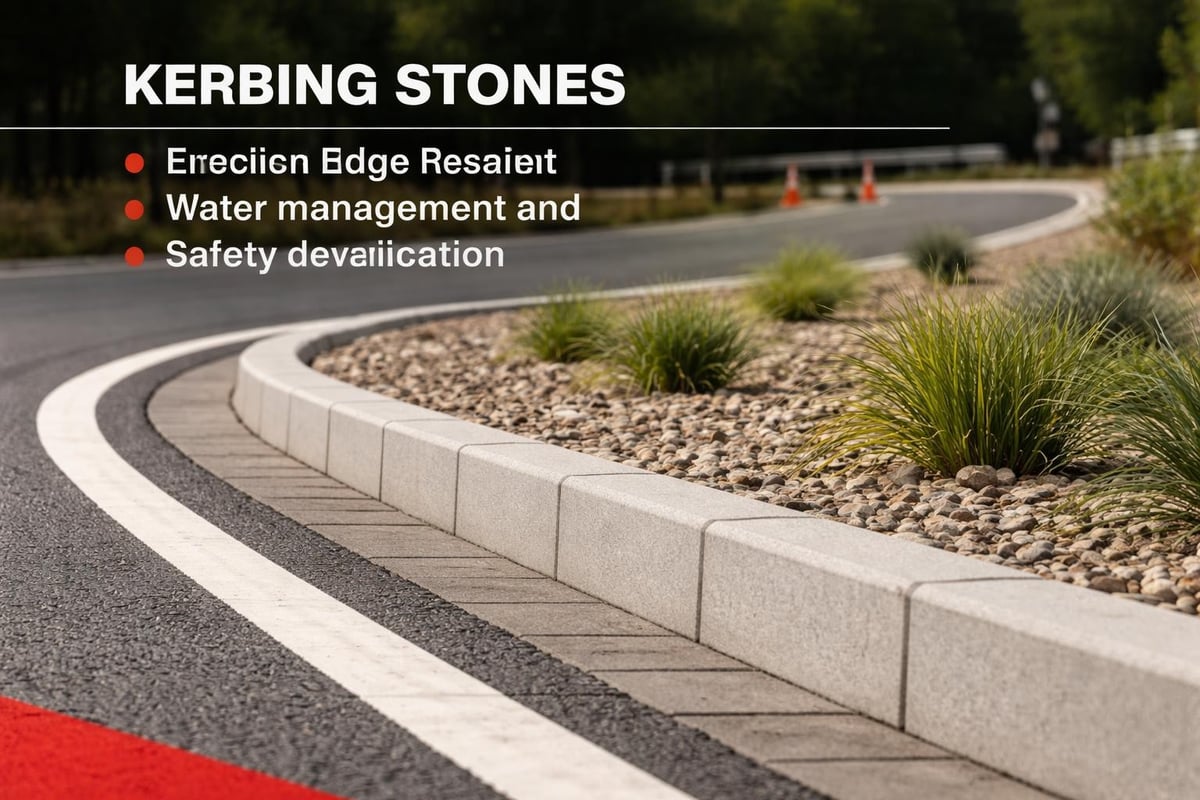
Kerbing stones serve multiple essential functions in modern infrastructure projects. These engineered components define edges, prevent surface materials from spreading, and direct water flow towards drainage systems. In commercial settings such as the Costa Coffee and Greggs drive-through projects, kerbing stones create safe pedestrian zones whilst managing vehicle access.
The role of curbs in road construction extends beyond simple boundary definition. They provide structural support to pavement edges, preventing lateral movement of surfacing materials under traffic loads. For highways and high-traffic areas, this structural function becomes paramount to maintaining surface integrity over decades of use.
Key Functions of Kerbing Stones
Professional installations deliver multiple benefits simultaneously:
- Edge restraint for block paving, tarmac, and concrete surfaces
- Water management directing surface runoff to drainage points
- Safety demarcation between vehicular and pedestrian zones
- Aesthetic enhancement providing clean lines and visual appeal
- Structural support preventing surface material displacement
Different project types demand specific kerbing solutions. Residential driveways typically require lighter-duty kerbing compared to commercial highways surfacing projects. Understanding these distinctions ensures appropriate specification and cost-effective installations.
Types and Materials for Kerbing Stones
Material selection significantly impacts both performance and appearance. The comparison of concrete and granite kerb stones highlights the trade-offs between cost, durability, and aesthetic preferences. Each material brings distinct advantages to different project contexts.
Concrete Kerbing Solutions
Concrete kerbing stones dominate UK civil engineering projects due to their versatility and cost-effectiveness. Manufactured to precise British standards, these units offer consistent dimensions and reliable performance. The specifications for concrete kerb stones include compressive strength requirements exceeding 40 MPa and freeze-thaw durability ratings suitable for British climates.
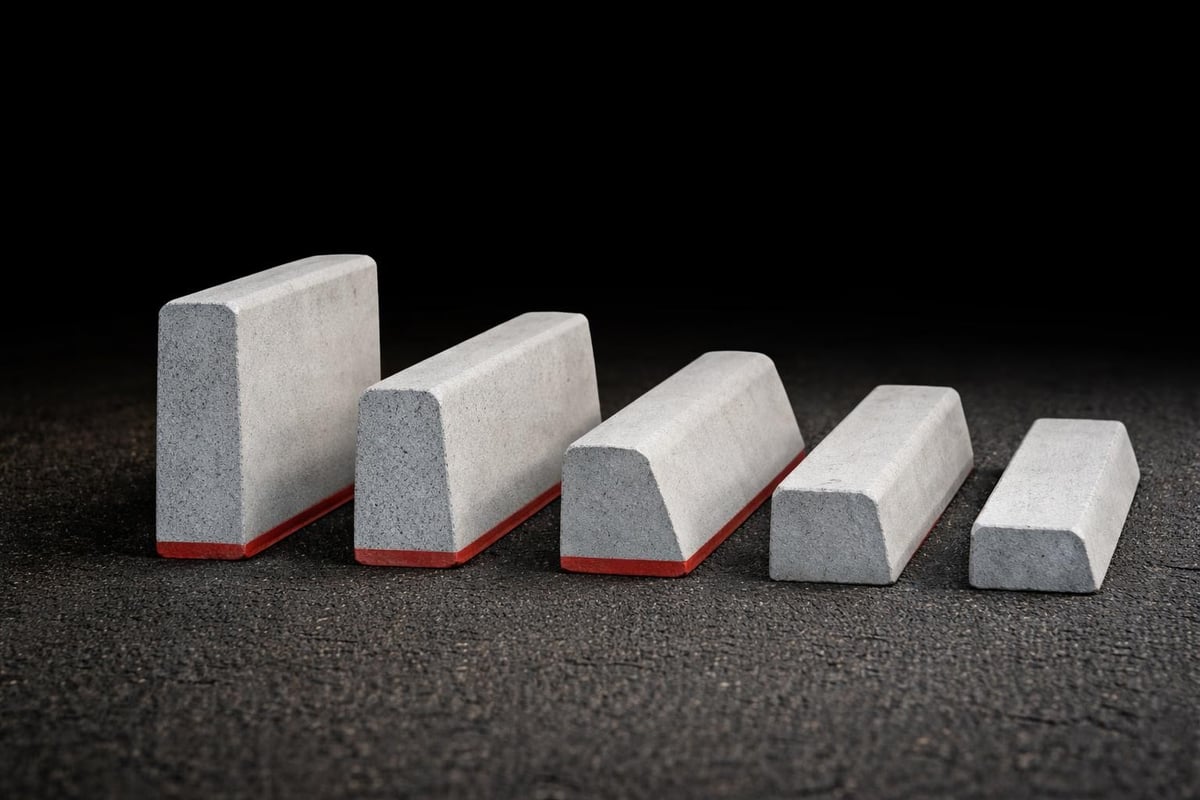
Standard concrete kerbing types include:
- Half-battered kerbs with one vertical face and one angled face
- Full-battered kerbs featuring two angled faces
- Bull-nosed kerbs providing rounded profiles for safety
- Dropped kerbs enabling vehicle and wheelchair access
- Quadrant kerbs for radius corners and curves
Natural stone options present premium alternatives. Granite kerbing stones deliver exceptional durability and distinctive appearance, particularly valued in heritage areas and high-specification developments. Sandstone and limestone variants offer softer aesthetics whilst maintaining structural capability.
Specialist Kerbing Systems
Modern projects often require innovative solutions. The Marshalls Quadrant kerb system demonstrates how engineered systems address specific challenges like radius corners and complex geometries. These specialist products streamline installation whilst ensuring compliance with industry standards.
| Kerbing Type | Typical Height | Primary Application | Material Options |
|---|---|---|---|
| Standard upright | 125-150mm | Highways, car parks | Concrete, granite |
| Dropped kerb | 25-50mm | Access points | Concrete |
| Edging kerb | 50-100mm | Driveways, paths | Concrete, stone |
| Channel kerb | 125-175mm | Drainage routes | Concrete |
Installation Methods and Best Practices
Proper installation determines kerbing longevity and performance. Whether working on residential driveways or commercial highways projects, following established procedures ensures results that withstand decades of use and weathering.
Foundation Preparation
Successful kerbing installations begin below ground level. Excavation depth depends on kerbing height and expected loadings. For standard residential driveways, a 150mm concrete foundation typically suffices. Commercial projects and highways surfacing require deeper, more substantial foundations.
The foundation must be:
- Level and adequately compacted
- Free from organic material and debris
- Properly drained to prevent frost heave
- Dimensioned to support the kerbing securely
Concrete foundation strength should match or exceed the kerbing stones themselves. A ST4 concrete mix provides appropriate strength for most applications, curing for minimum 24 hours before kerbing installation commences.
Positioning and Alignment
Accurate setting ensures professional results. String lines establish alignment, whilst optical levels maintain consistent height across extended runs. The innovative methods for placing kerb stones demonstrate how specialist equipment improves efficiency and precision, particularly on large-scale projects.
Critical installation steps include:
- Establishing accurate string lines for alignment
- Preparing concrete haunching bed
- Setting kerbing stones to precise levels
- Applying rear haunching for stability
- Pointing joints between adjacent units
- Protecting newly installed kerbing during curing
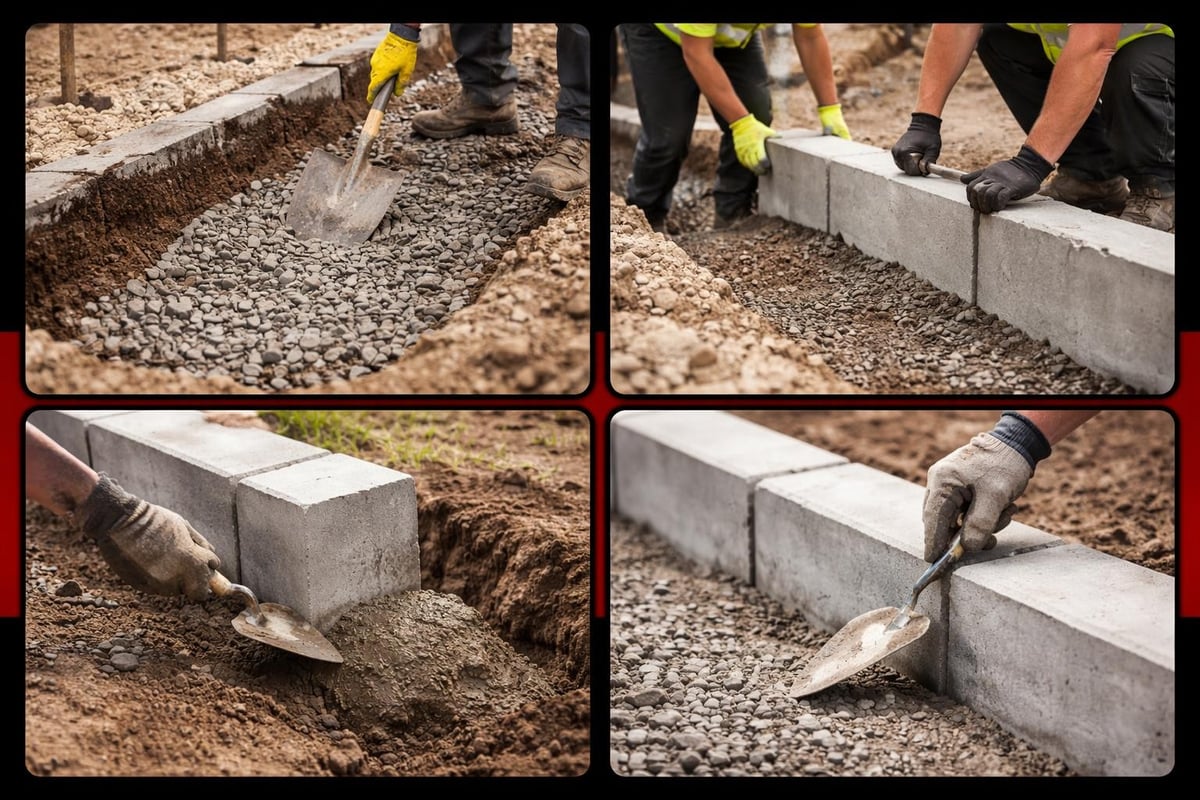
Haunching provides essential support. Concrete haunching should extend minimum 150mm behind the kerbing and 75mm in front, tapering to ground level. This wedge-shaped support prevents kerbing movement under lateral forces from adjacent surfacing materials.
Quality Assurance Standards
Professional installations meet British Standards specifications. Tolerances for height variation typically allow maximum 6mm deviation across 3-metre sections. Alignment straightness should not exceed 10mm variation over the same distance. These standards ensure consistent appearance and proper function.
Selecting Appropriate Kerbing for Different Projects
Project-specific requirements guide kerbing selection. Commercial developments demand different solutions compared to domestic installations, whilst heritage environments may require particular materials or profiles to maintain character.
Commercial and Highways Applications
Large-scale projects like the drive-through developments completed across the UK require robust kerbing solutions. Heavy goods vehicles accessing service areas impose significant loads on kerbing stones, necessitating full-depth concrete units with substantial haunching.
High-speed highways demand specific safety considerations. Kerbing profiles must not present hazards to errant vehicles whilst effectively channelling surface water. The historical perspective on road construction reveals how these principles evolved from early engineering practices to modern standards.
| Project Type | Recommended Kerbing | Key Considerations |
|---|---|---|
| Highway | HB2 full-battered | High-speed safety |
| Car park | Half-battered 125mm | Vehicle manoeuvring |
| Drive-through | Barrier kerb | Heavy vehicle loading |
| Pedestrian areas | Bull-nosed | Safety and accessibility |
Residential and Domestic Projects
Driveways and patio projects prioritise aesthetics alongside function. Smaller kerbing stones, often termed edging, provide appropriate scale for domestic settings. The range of small kerbing options demonstrates the variety of sizes and finishes available for residential applications.
Material choice significantly influences appearance. Natural stone kerbing complements traditional properties, whilst contemporary developments often specify sleek concrete profiles with smooth finishes. Colour options in concrete kerbing allow coordination with surfacing materials and building facades.
Specialist Considerations
Certain projects demand unique solutions. Conservation areas may require reclaimed stone kerbing to match historical character. Tree-lined avenues need expanded tree pit kerbing allowing root growth whilst protecting surface integrity. Sustainable drainage systems increasingly incorporate permeable kerbing details.
The purposes and types of kerb stones available continue expanding as innovation addresses emerging requirements. Modern kerbing systems incorporate features like integrated lighting, sensor housings, and enhanced visibility markings.
Maintenance and Longevity Factors
Well-installed kerbing stones require minimal maintenance whilst delivering decades of service. Understanding common issues and preventive measures maximises investment returns across residential and commercial projects.
Common Deterioration Causes
Several factors contribute to kerbing failure:
- Frost damage from inadequate drainage allowing water accumulation
- Salt attack from de-icing treatments on roads and driveways
- Impact damage from vehicle strikes or maintenance equipment
- Settlement due to inadequate foundations or subgrade preparation
- Joint failure where pointing deteriorates allowing movement
Quality materials and professional installation mitigate most deterioration risks. Concrete kerbing stones manufactured to British standards incorporate freeze-thaw resistant aggregates and appropriate air entrainment. Proper haunching prevents movement even under significant lateral forces.
Inspection and Remediation
Regular inspection identifies issues before major repairs become necessary. Annual reviews should assess:
- Overall alignment and level maintenance
- Joint integrity and pointing condition
- Cracking or spalling in kerbing faces
- Settlement or displacement from original position
- Drainage function around kerbing lines
Remedial works range from simple repointing to complete kerbing replacement. Individual damaged units can often be replaced without disturbing adjacent sections, particularly where modular concrete kerbing systems were specified originally.
Integration With Overall Project Design
Kerbing stones represent one component within comprehensive civil engineering schemes. Successful projects coordinate kerbing selection with surfacing materials, drainage systems, and landscape elements to achieve cohesive results.
Coordinating Materials and Finishes
Visual harmony requires careful specification. Concrete kerbing finish options include smooth, exposed aggregate, and textured profiles. Matching or complementing these finishes with driveway or highway surfacing creates professional appearance. Colour consistency across batches ensures uniform appearance, particularly critical on extensive projects.
The transition between different surface levels demands particular attention. Dropped kerbs must provide compliant gradients whilst maintaining structural integrity. Tactile paving integration at pedestrian crossings requires precise kerbing installation to support these essential safety features.
Design coordination checklist:
- Kerbing height relative to finished surface levels
- Material compatibility with adjacent elements
- Colour coordination across project components
- Drainage integration and surface water management
- Future maintenance access requirements
Drainage System Integration
Effective water management relies on coordinated kerbing and drainage design. Channel kerbing directs surface water towards gullies and linear drains. Gradient and fall calculations ensure positive drainage under all weather conditions. Proper integration prevents standing water accumulation that damages both kerbing and adjacent surfacing.
Modern sustainable drainage approaches increasingly influence kerbing specification. Permeable systems may require specialist kerbing details allowing water infiltration whilst maintaining edge restraint. These innovative solutions deliver environmental benefits without compromising structural performance.
| Drainage Integration | Kerbing Solution | Performance Benefit |
|---|---|---|
| Linear channel | Integrated channel kerb | Continuous water collection |
| Gully connections | Standard kerb with outlets | Point drainage at intervals |
| Permeable systems | Perforated edge detail | Distributed infiltration |
| Sustainable drainage | Conservation kerb | Enhanced water quality |
Projects completed across the UK demonstrate how thoughtful integration delivers superior outcomes. From commercial developments to residential enhancements, coordinating kerbing with overall project objectives ensures long-term satisfaction and performance.
Kerbing stones represent essential infrastructure components delivering structural integrity, safety, and aesthetic value across highways, commercial developments, and residential projects. From material selection through professional installation and ongoing maintenance, each decision influences long-term performance and appearance. Whether you're planning a new driveway, commercial car park, or highways surfacing project, JRG Civils brings the expertise and attention to detail necessary for outstanding results. Our commitment to excellence from project commencement through final finishing touches ensures your kerbing installation meets the highest standards whilst serving reliably for decades to come.