
Earth works form the bedrock of virtually every construction project, from major highway developments to residential driveways. This fundamental aspect of civil engineering involves the precise manipulation of soil, rock, and other earth materials to create stable foundations, level surfaces, and proper drainage systems. For anyone planning construction work, understanding the scope and importance of professional earth works can mean the difference between a project that stands the test of time and one that encounters costly structural problems. The processes involved require specialised knowledge, proper equipment, and meticulous attention to environmental and engineering standards.
Understanding the Fundamentals of Earth Works
Earthworks in engineering encompasses a wide range of activities that prepare land for construction purposes. These operations include excavation, grading, trenching, filling, and compaction.
The primary objectives of earth works include:
- Creating level or appropriately graded surfaces for building
- Establishing proper drainage patterns
- Removing unsuitable materials from construction sites
- Stabilising slopes and embankments
- Preparing foundations for roads, buildings, and infrastructure
Each earth works project begins with thorough site assessment and planning. Engineers evaluate soil composition, water table levels, existing topography, and load-bearing requirements. This initial analysis determines the extent of excavation needed, the type of backfill materials required, and the compaction standards that must be met.
Site Preparation and Excavation Methods
The excavation phase represents one of the most critical stages in any earth works operation. Different projects demand varying excavation techniques depending on soil type, project scale, and site constraints.
Bulk excavation removes large quantities of earth material to reach desired depths or grades. This method commonly applies to car parks, building foundations, and major highway projects. Precision excavation, conversely, focuses on careful removal around existing utilities, services, or structures requiring protection.
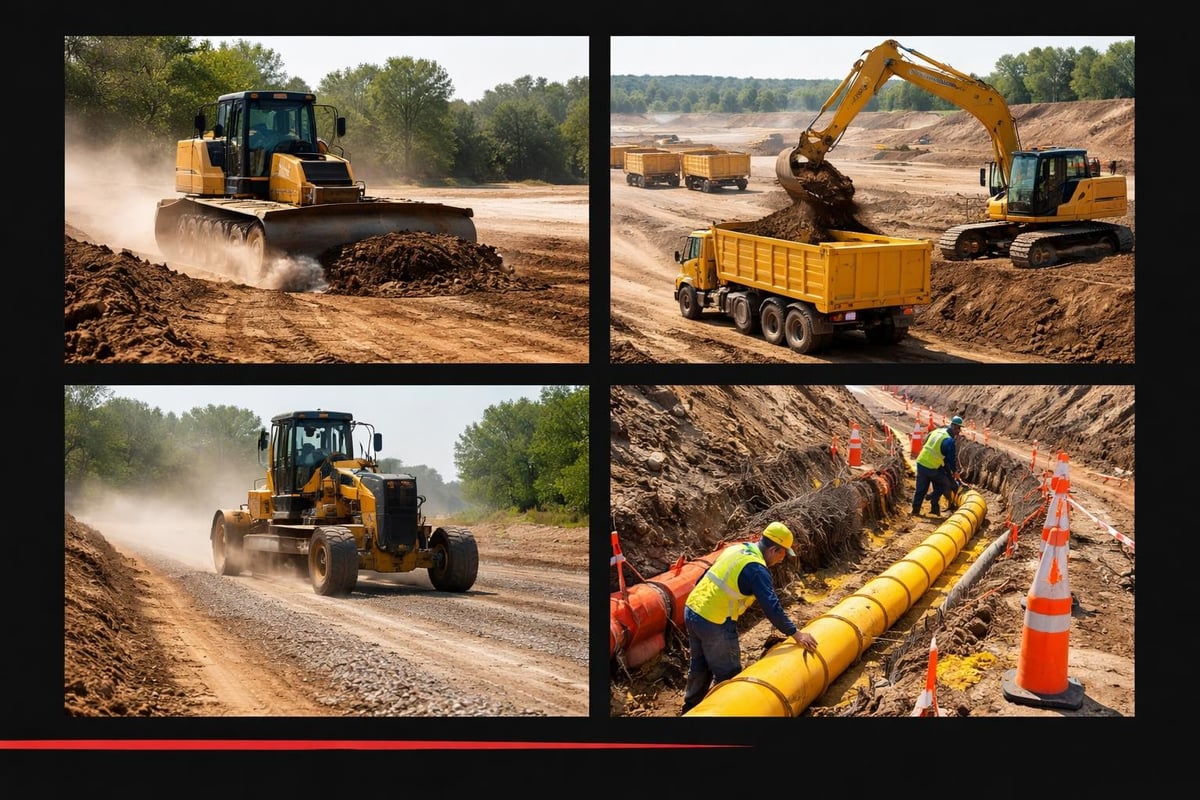
Modern earth works increasingly rely on sophisticated machinery. Hydraulic excavators, bulldozers, scrapers, and graders work in coordination to move earth efficiently whilst maintaining specified tolerances. Advanced civil engineering earthworks utilise hydraulic splitting tools for challenging rock formations, minimising vibration and environmental disruption compared to traditional blasting methods.
Material Classification and Management
Not all earth materials behave identically under load or environmental conditions. Proper classification ensures the right materials occupy the right positions within the finished structure.
| Material Type | Characteristics | Typical Applications |
|---|---|---|
| Topsoil | Organic content, poor load-bearing | Landscaping, final surfaces |
| Clay | Cohesive, susceptible to moisture changes | Selected fill with proper management |
| Sand and Gravel | Free-draining, good compaction | Sub-base, drainage layers |
| Rock | Excellent load-bearing, difficult excavation | Deep foundations, erosion control |
Effective material management during earth works involves:
- Segregating materials based on engineering properties
- Stockpiling suitable materials for reuse
- Removing contaminated or unsuitable soils
- Sourcing appropriate imported materials when necessary
- Managing spoil disposal responsibly
The distinction between cut and fill operations significantly impacts project efficiency. Cut areas provide excavated material that can be redistributed to fill areas, reducing transportation costs and material waste. Balancing cut and fill volumes during the design phase optimises earth works economy whilst minimising environmental footprint.
Compaction Standards and Quality Control
Compaction transforms loose earth materials into dense, stable masses capable of supporting structural loads. This process proves absolutely essential for earth works supporting highways, driveways, and building foundations.
Insufficient compaction leads to settlement, cracking, and structural failure. Professional earth works operations achieve specified density through systematic compaction in layers, typically 150-300mm thick before compaction.
Testing and Verification Methods
Quality assurance in earth works relies on rigorous testing throughout construction. Field density tests confirm that compacted materials meet design specifications, typically expressed as a percentage of maximum dry density.
Nuclear density gauges provide rapid, non-destructive density measurements at various depths. Plate bearing tests assess the load-bearing capacity of prepared surfaces. California Bearing Ratio (CBR) tests determine the strength of sub-grade materials beneath road pavements.
Compaction equipment selection depends on:
- Material type and moisture content
- Layer thickness requirements
- Specified density targets
- Site access and working space
- Project scale and timeline
Vibratory rollers excel with granular materials, whilst sheepsfoot rollers prove more effective for cohesive soils. Plate compactors suit confined areas and detail work around structures or utilities.

Drainage Considerations in Earth Works
Water management represents perhaps the most critical aspect of successful earth works. Improper drainage causes soil erosion, settlement, frost heave, and structural instability.
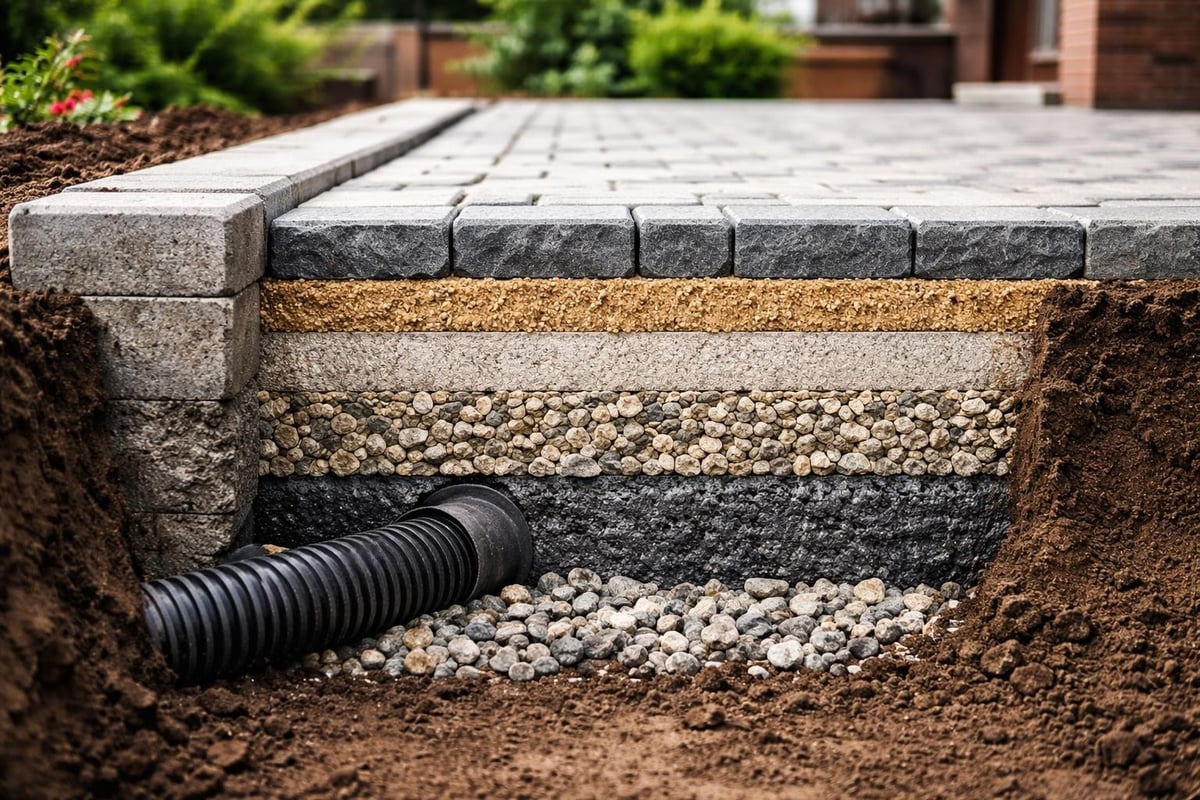
Professional earth works incorporate comprehensive drainage strategies from initial design through final construction. Surface water must be directed away from structures and pavements through appropriate grading. Subsurface drainage systems intercept groundwater before it compromises structural integrity.
Erosion Control and Environmental Protection
Environmental impacts of earthworks extend beyond the immediate construction site. Sediment-laden runoff affects water quality in streams, rivers, and ecosystems. Professional contractors implement erosion control measures throughout earth works operations.
Silt fences, sediment traps, and check dams prevent soil migration from active construction areas. Temporary vegetation or erosion control blankets stabilise disturbed soils. Permanent drainage infrastructure including swales, channels, and retention basins manages stormwater whilst protecting water quality.
The sequence of earth works activities influences erosion risk. Minimising the area of exposed soil at any given time, scheduling earth-moving activities during appropriate weather conditions, and rapidly stabilising completed areas all contribute to environmental protection.
Commercial and Industrial Earth Works Projects
Large-scale commercial developments demand earth works capabilities that extend beyond basic excavation and grading. Projects such as drive-through restaurants, retail centres, and industrial facilities require precise coordination between earth works, utilities installation, and structural construction.
Commercial earth works typically include:
- Extensive site grading for buildings, car parks, and access roads
- Installation of comprehensive drainage systems
- Coordination with utility providers for services installation
- Construction of loading bays and service areas
- Integration of sustainable drainage systems (SuDS)
The earth works for a Costa Coffee or Greggs drive-through, for instance, must accommodate vehicle circulation patterns, queue management, service vehicle access, and stormwater management within often constrained urban sites. This requires mathematical precision in setting levels and grades to ensure functionality whilst meeting planning requirements.
Residential Earth Works Applications
Whilst commercial projects demonstrate earth works at scale, residential applications demand equal attention to detail and quality. Driveways, patios, and garden landscaping all rely on proper earth works for longevity and performance.
| Residential Application | Key Earth Works Requirements |
|---|---|
| Driveways | Excavation to suitable subgrade, granular sub-base installation, proper drainage, compaction to prevent rutting |
| Patios | Level excavation, adequate falls for drainage, edge restraint preparation, sub-base compaction |
| Retaining walls | Foundation excavation, drainage installation, backfill placement and compaction |
| Garden features | Topsoil management, drainage provision, shaping and grading |
A professionally executed driveway begins with earth works that extend well beyond simply levelling ground. The subgrade must be assessed for load-bearing capacity and improved if necessary. A properly designed sub-base distributes vehicle loads and prevents localised settlement. Drainage provisions ensure water doesn't accumulate beneath or adjacent to the paved surface.
Long-term Performance Factors
The quality of earth works directly determines the lifespan of the finished surface. A driveway constructed over inadequately prepared ground will develop depressions, cracks, and drainage problems regardless of surfacing quality.
Professional earth works contractors understand soil behaviour under varying conditions. They recognise when ground improvement techniques such as soil stabilisation or geotextile reinforcement become necessary. This expertise proves particularly valuable in the North East, where varied geology and climate conditions challenge construction projects.
Modern Technology in Earth Works Operations
Contemporary earth works benefit from technological advances that improve accuracy, efficiency, and outcomes. GPS-guided grading systems enable operators to achieve precise levels and slopes without constant surveying. Machine control technology reduces human error whilst accelerating earth-moving operations.
Technological innovations enhancing earth works include:
- 3D site modelling for accurate volume calculations
- Laser-guided grading equipment
- GPS machine control systems
- Ground-penetrating radar for subsurface investigation
- Digital documentation and quality assurance systems
These technologies prove particularly valuable on complex projects where tight tolerances must be maintained across large areas. Highway construction, for example, demands precise adherence to design grades to ensure proper drainage and smooth traffic flow. GPS-controlled graders can achieve these specifications more consistently than traditional methods.
Project Planning and Sequencing
Successful earth works rarely happen in isolation. They form part of an integrated construction sequence that must be carefully planned and coordinated.
The typical progression begins with site clearance and topsoil stripping. Valuable topsoil is stockpiled for later reuse in landscaping. Bulk excavation follows, creating the general site levels. Precision grading then establishes exact elevations for various project elements.
Utilities installation typically occurs after bulk earth works but before final grading. Drainage systems, water mains, sewers, electrical conduits, and communication cables must be placed at specified depths and locations. Backfilling around these services requires careful compaction to prevent future settlement.
Final grading prepares surfaces for their intended use, whether that involves road construction, building foundations, or landscaping. This stage demands particular attention to detail as it directly affects the finished product's appearance and functionality.
Regulatory Compliance and Safety Standards
Professional earth works operations must comply with numerous regulations governing construction safety, environmental protection, and quality standards. The Construction (Design and Management) Regulations establish responsibilities for managing health and safety throughout construction projects.
Environmental permits may be required for earth works affecting watercourses, protected habitats, or areas with contamination concerns. Proper management of excavated materials, particularly those containing contaminants, follows strict regulatory frameworks.
Safety considerations in earth works include:
- Excavation support and shoring to prevent collapse
- Protection of underground utilities
- Traffic management around work areas
- Personal protective equipment requirements
- Equipment operation and maintenance standards
Experienced contractors maintain comprehensive safety management systems that protect workers, the public, and the environment throughout earth works operations.
Sustainability in Modern Earth Works
Contemporary earth works increasingly incorporate sustainability principles that reduce environmental impact whilst maintaining project quality. This involves minimising material wastage, reusing excavated materials where suitable, and implementing erosion control measures that protect local ecosystems.
The carbon footprint of earth works can be substantial due to fuel consumption by heavy machinery and transportation of materials. Optimising cut-fill balance reduces vehicle movements. Sourcing materials locally further decreases transportation emissions. Modern equipment with improved fuel efficiency also contributes to sustainability goals.
Sustainable drainage systems represent another area where earth works support environmental objectives. Rather than rapidly conveying stormwater to drainage systems, SuDS utilise earth works to create features such as swales, infiltration basins, and rain gardens that manage water naturally whilst enhancing biodiversity.
Choosing Professional Earth Works Contractors
The complexity and importance of earth works demand experienced professionals with proven capabilities. When selecting contractors for civil engineering projects, several factors warrant careful consideration.
Essential contractor qualifications include:
- Demonstrated experience with similar project types
- Appropriate equipment inventory and maintenance programmes
- Quality assurance procedures and testing capabilities
- Environmental management systems
- Health and safety track record
- Professional insurance and bonding
References from previous clients provide valuable insights into contractor performance, reliability, and problem-solving abilities. Projects completed on time, within budget, and to specification demonstrate contractor competence.
For projects ranging from commercial developments to residential driveways, partnering with established civil engineering specialists ensures earth works meet the exacting standards required for long-term performance. Companies with comprehensive capabilities can manage all aspects of site preparation, utilities installation, drainage systems, and surface construction within an integrated approach.
Professional earth works establish the foundation for successful construction projects, whether commercial highways or residential driveways. The precision, quality control, and expertise required for these operations directly influence the longevity and performance of finished surfaces. With extensive experience across commercial franchises and private residential projects throughout the UK, JRG Civils delivers the civil engineering excellence and attention to detail that transforms earth works challenges into lasting infrastructure solutions.