
When undertaking development projects that impact public highways in England, understanding the legal framework governing alterations to the existing road network becomes essential. A section 278 agreement highways england framework enables developers to carry out necessary highway improvements, modifications, or additions whilst ensuring these works meet required standards and benefit the wider community. Whether you're planning a commercial development, residential project, or infrastructure enhancement, navigating this process correctly safeguards both your investment and compliance with legal obligations.
Understanding Section 278 Agreements
The statutory provision for highway alterations stems from the Highways Act 1980, specifically Section 278, which empowers highway authorities to enter into agreements with developers. This legislation creates a formal mechanism whereby private entities can fund and execute works on public highways, ensuring developments integrate properly with existing infrastructure.
A section 278 agreement highways england arrangement represents a legally binding contract between the developer and the local highway authority. Under this framework, developers commit to designing, funding, and constructing highway improvements to mitigate the impact of their proposed development on the surrounding road network.
Key Components of the Legal Framework
The agreement typically covers several critical aspects that protect both parties and the public interest:
- Design specifications ensuring works meet current highway standards
- Financial guarantees through bonds or securities
- Construction timelines with defined milestones
- Maintenance responsibilities following completion
- Quality assurance throughout the project lifecycle
Highway authorities maintain oversight throughout the entire process, from initial design approval through to final adoption of completed works. This scrutiny ensures that any modifications align with broader transport strategies and maintain safety standards for all road users.

The Application Process Explained
Initiating a section 278 agreement highways england procedure begins well before any physical works commence. The application process for Section 278 agreements varies slightly between authorities but follows a consistent overall structure.
Initial Consultation Stage
Early engagement with the highway authority proves invaluable. During pre-application discussions, developers can:
- Identify potential highway impacts from their development
- Establish the scope of required improvements
- Understand local authority expectations and standards
- Receive preliminary feedback on proposed solutions
- Clarify timescales and procedural requirements
These conversations often reveal opportunities to refine development proposals, potentially reducing the extent of required highway works or identifying more cost-effective solutions.
Formal Application Requirements
Once initial discussions conclude, developers submit formal applications accompanied by comprehensive documentation. The highway authority reviews technical drawings, traffic assessments, and construction methodologies before granting approval to proceed.
| Document Type | Purpose | Typical Requirements |
|---|---|---|
| Highway Plans | Show proposed alterations | Scale drawings, cross-sections, levels |
| Traffic Assessment | Demonstrate impact analysis | Movement predictions, safety audits |
| Construction Methodology | Detail execution approach | Phasing, traffic management, timescales |
| Cost Estimates | Establish financial obligations | Detailed breakdowns, contingencies |
Financial Considerations and Bonding
Understanding the financial obligations within a section 278 agreement highways england framework prevents unexpected costs derailing your project. Developers bear full responsibility for design, construction, and often initial maintenance costs associated with highway improvements.
Highway authorities require financial securities to protect public interests. These guarantees ensure completion of works even if developers encounter financial difficulties or abandon projects mid-construction.
Bond Calculations and Requirements
Most authorities calculate bond values at approximately 125-150% of estimated construction costs. This buffer accounts for:
- Potential cost overruns during construction
- Remedial works if initial construction proves defective
- Authority intervention costs should the developer default
- Extended maintenance periods before final adoption
The Section 278 procedures typically specify bond types accepted, which may include cash deposits, parent company guarantees, or insurance-backed bonds.
Commercial developments requiring substantial highway modifications might face bond requirements exceeding six figures. Planning these costs into overall project budgets from inception avoids financing challenges during construction phases.

Design and Technical Approval
Technical standards for highway works in England demand rigorous compliance with established design manuals and safety requirements. A section 278 agreement highways england project must satisfy these benchmarks throughout the design development process.
Design Manual Requirements
Highway authorities expect designs conforming to current standards, primarily:
- Design Manual for Roads and Bridges (DMRB)
- Manual for Streets guidance documents
- Local authority supplementary design guides
- Accessibility and inclusive design standards
The approval process involves multiple submission stages, each requiring authority sign-off before progression to the next phase. Preliminary designs establish the principle and scope, detailed designs specify exact dimensions and materials, whilst construction drawings provide buildable information for contractors.
Safety Audit Procedures
Road safety audits form a mandatory component of the design approval process. Independent auditors review proposed works at key stages, identifying potential safety concerns before construction begins. These audits examine:
- Preliminary design layouts and concepts
- Detailed design specifications and geometry
- Pre-construction final checks
- Post-completion performance monitoring
Addressing audit findings may necessitate design modifications, adding time to approval timescales. Building flexibility into project programmes accommodates these potential iterations without compromising overall delivery schedules.
Construction Phase Management
Once designs receive approval and agreements are executed, construction can commence under the section 278 agreement highways england framework. However, developers cannot simply begin works at their convenience.
The highway authority issues formal permission to commence, often conditional upon:
- Submission of detailed construction programmes
- Approval of traffic management arrangements
- Provision of required bonds and securities
- Appointment of approved contractors
- Implementation of quality management systems
Contractor Selection and Approval
Many highway authorities maintain approved contractor lists or specify particular accreditation requirements. Contractors must demonstrate competence in highway construction through relevant certifications, insurance cover, and previous experience.
| Requirement Category | Typical Standards | Verification Method |
|---|---|---|
| Quality Management | ISO 9001 or equivalent | Certificate submission |
| Health & Safety | CHAS, Constructionline | Registration confirmation |
| Technical Competence | Sector Scheme 19 (highways) | Accreditation evidence |
| Insurance | Public liability £10m minimum | Policy documentation |
Throughout construction, highway authority inspectors monitor progress, ensuring compliance with approved designs and specifications. Non-conforming works require rectification at the developer's expense, potentially delaying project completion and increasing costs.
Maintenance and Adoption Procedures
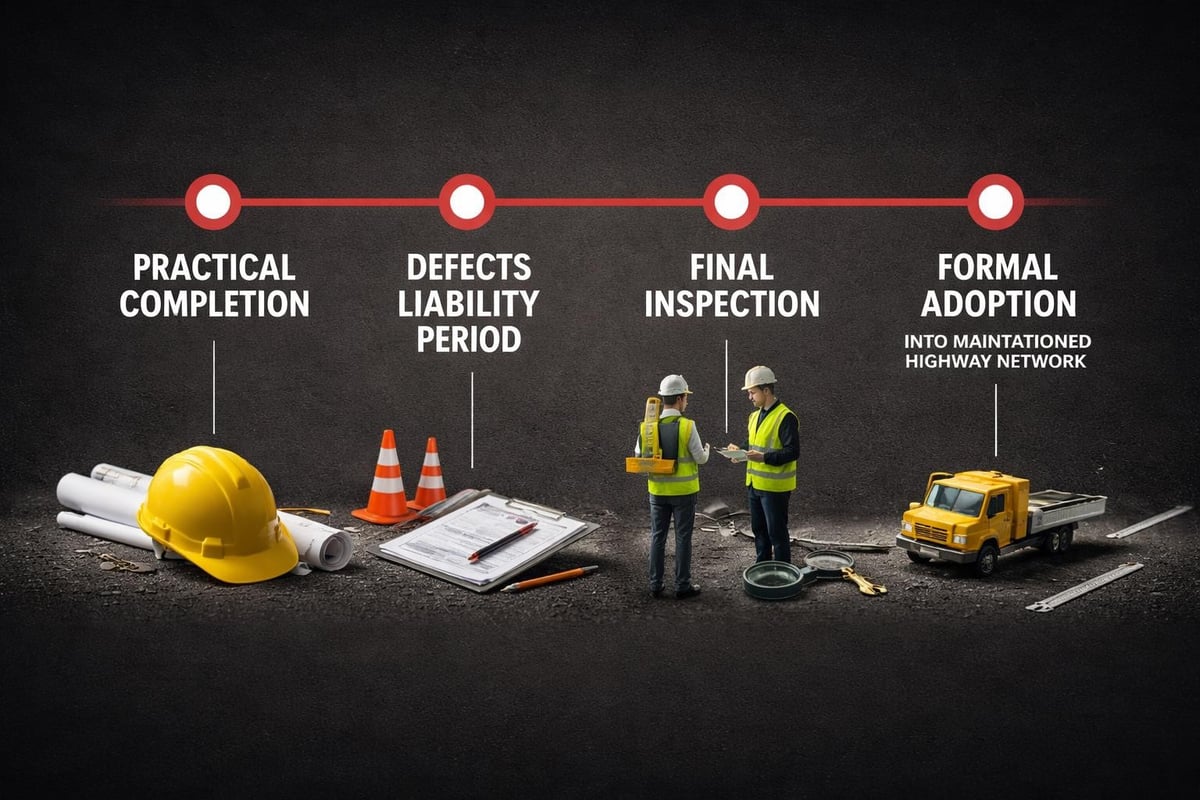
The relationship between developer and highway authority extends beyond construction completion. A section 278 agreement highways england arrangement typically includes maintenance obligations before the authority formally adopts new or altered highways into the public network.
Defects Liability Periods
Standard agreements impose maintenance periods, commonly twelve months, during which developers must remedy any defects arising from construction. The authority inspects works at the period's conclusion, identifying any issues requiring correction before adoption.
More substantial works might attract extended maintenance periods or commuted sum requirements. These lump-sum payments compensate authorities for increased future maintenance burdens resulting from new infrastructure.
Common Challenges and Solutions
Navigating the section 278 agreement highways england process presents several recurring challenges that developers frequently encounter. Understanding these obstacles enables proactive mitigation strategies.
Design Iteration Delays
Highway authorities often request multiple design revisions before granting approval. Each iteration extends timescales, potentially impacting wider development programmes. Engaging experienced highway design consultants familiar with local authority requirements reduces revision cycles.
Utility Conflicts
Highway works frequently encounter existing utilities requiring diversion or protection. Detailed guidance on highway works emphasises early utility investigations to identify potential conflicts before design finalisation.
Traffic Management Complexities
Major highway alterations necessitate comprehensive traffic management during construction. Securing approval for lane closures, diversions, or temporary traffic signals requires detailed planning and often consultation with emergency services and public transport operators.
Regional Variations Across England
Whilst Section 278 derives from national legislation, individual highway authorities implement procedures differently. The approaches adopted by Wakefield Council demonstrate how authorities streamline processes whilst maintaining standards.
Authority-Specific Requirements
Developers working across multiple local authority areas must adapt to varying:
- Application form formats and submission portals
- Fee structures for technical approval and supervision
- Preferred design standards beyond mandatory requirements
- Timescale expectations for approval stages
- Communication protocols and nominated contacts
The comprehensive overview provided by St Helens illustrates typical authority expectations, whilst the detailed procedures from Doncaster showcase alternative approaches to similar statutory obligations.
Strategic Road Network Considerations
Projects affecting the Strategic Road Network managed by National Highways require coordination with both the national body and local highway authorities. This dual approval process adds complexity, particularly where motorway junctions or trunk roads intersect with local road networks.
Industry Best Practices
Successful navigation of section 278 agreement highways england requirements benefits from established industry practices refined through countless projects across the country.
Early Engagement Principles
Commencing dialogue with highway authorities during pre-application stages yields significant advantages. This proactive approach identifies potential obstacles before designs solidify, enabling adjustments whilst flexibility remains maximal.
Comprehensive Documentation
Maintaining thorough records throughout the agreement process protects all parties. Documenting design decisions, authority feedback, agreed variations, and approval confirmations provides clarity should disputes arise.
Programme Integration
Aligning Section 278 timescales with broader development programmes requires realistic scheduling. Experienced developers build substantial contingency into highway works programmes, recognising that authority approval processes rarely accelerate but frequently extend.
Professional Team Assembly
Engaging specialists with proven highway design and delivery credentials streamlines the process considerably. Teams familiar with specific authority requirements navigate approvals more efficiently than those encountering particular authorities for the first time.
Practical Application for Development Projects
For businesses undertaking commercial or residential developments, the section 278 agreement highways england framework directly impacts project viability and delivery timescales. Understanding when agreements become necessary helps developers plan appropriately from project inception.
Triggering Circumstances
Highway authorities typically require Section 278 agreements when developments:
- Create new access points onto public highways
- Require widening of existing junctions or carriageways
- Necessitate new pedestrian crossing facilities
- Alter existing highway geometry or alignments
- Introduce new traffic signals or street lighting
Projects of various scales trigger these requirements. A small retail development creating a new junction might require similar procedural compliance as a major residential scheme, though the complexity and cost naturally differ substantially.
Integration with Planning Permissions
Section 278 agreements often form planning conditions, with development commencement contingent upon executed agreements. This interdependency means planning and highway technical approvals must progress in coordinated fashion.
Some authorities request draft Section 278 agreements before granting planning permission, whilst others permit conditional approvals subject to subsequent agreement execution. Understanding local authority preferences prevents delays at critical project milestones.
Quality Assurance and Compliance
Maintaining rigorous quality standards throughout design and construction phases ensures works satisfy highway authority requirements and avoid costly remediation. A section 278 agreement highways england project demands attention to detail across multiple disciplines.
Material Specifications
Highway construction materials must conform to specifications within the Specification for Highway Works. Non-compliant materials face rejection, necessitating removal and replacement at the developer's expense.
Testing regimes verify material compliance before and during construction. Aggregate gradings, binder contents, compaction levels, and surface regularity all undergo scrutiny through systematic sampling and laboratory analysis.
Construction Standards
Workmanship quality directly influences long-term highway performance. Poor construction techniques resulting in premature deterioration generate ongoing maintenance burdens that commuted sums might inadequately address.
Highway authority inspectors witness key construction activities, including:
- Excavation and subgrade preparation
- Drainage installation and testing
- Kerb laying and alignment verification
- Surfacing operations and layer thicknesses
- Road marking application
Failing inspections triggers corrective action requirements before works progress, extending programmes and increasing costs.
Looking Forward
The landscape surrounding section 278 agreement highways england procedures continues evolving. Highway authorities increasingly adopt digital platforms for application submissions, design reviews, and progress monitoring. These technological advances promise greater transparency and potentially faster approval timescales.
Sustainability considerations now feature more prominently in highway design standards. Authorities encourage sustainable drainage systems, electric vehicle charging infrastructure, and active travel provisions within Section 278 schemes.
Navigating Section 278 agreements successfully requires thorough understanding of legal requirements, technical standards, and procedural expectations across different highway authorities. Whether you're planning commercial drive-through facilities, residential access improvements, or comprehensive highway modifications, partnering with experienced civil engineering specialists ensures compliance whilst optimising project delivery. At JRG Civils, we bring proven expertise in highway construction and Section 278 delivery across the North East and throughout the UK, ensuring your development projects integrate seamlessly with existing road networks through professional, reliable service from initial design through to final adoption.