
Understanding the legal and procedural requirements for highway works is essential for any development project that interfaces with public roads. Whether you're planning a commercial development with new access points or improving existing infrastructure, navigating the regulatory landscape ensures your project proceeds smoothly and legally. Section 278 agreement highways provide the formal mechanism through which developers can fund and execute necessary works on public highways, creating a legally binding framework that protects all parties involved.
What Is a Section 278 Agreement for Highways?
A section 278 agreement highways is a legal agreement made under Section 278 of the Highways Act 1980 between a developer and the local highway authority. This mechanism allows developers to carry out works on the public highway, typically to facilitate access to a new development or to mitigate the impact of additional traffic generated by the project.
The agreement establishes clear responsibilities, technical standards, and financial obligations. Under this arrangement, the developer funds the highway works, which might include creating new junctions, installing traffic signals, widening roads, or improving pedestrian crossings. The highway authority retains oversight throughout the process, ensuring all works meet required standards.
Key Characteristics of Highway Agreements
Financial Structure:
- Developer bears full cost of design, construction, and supervision
- Commuted sum often required for future maintenance
- Legal and administrative fees payable to highway authority
- Bond or financial security to guarantee completion
Technical Requirements:
- All works must comply with highway authority design standards
- Independent safety audits typically required
- Quality assurance through staged inspections
- Materials and construction methods subject to approval
The agreement remains in force until all works are completed satisfactorily and any defects period has expired, usually twelve months after practical completion.

When Do You Need a Section 278 Agreement?
Section 278 agreement highways become necessary in numerous development scenarios. Understanding when these agreements apply helps developers plan timelines and budgets accurately from the outset.
Commercial developments requiring new vehicular access onto public roads invariably need these agreements. The three Costa Coffee and two Greggs drive-through projects mentioned earlier would typically require section 278 agreement highways to create safe, compliant access arrangements. These developments generate significant traffic movements, necessitating improvements to existing highway infrastructure.
Common Triggering Scenarios
- Creating new access points onto existing public highways
- Modifying existing junctions to accommodate increased traffic volumes
- Installing traffic management systems such as signals or roundabouts
- Widening carriageways to improve traffic flow
- Enhancing pedestrian facilities including crossings and footways
- Relocating or upgrading street furniture and services
Residential developments also frequently require these agreements, particularly larger schemes. Even smaller projects might need section 278 agreement highways if they involve alterations to highway geometry, such as creating dropped kerbs or modifying sight lines.
| Development Type | Typical Section 278 Requirements | Complexity Level |
|---|---|---|
| Small retail unit | New access, visibility splays | Low to Medium |
| Drive-through facility | Junction improvements, queuing lanes | Medium to High |
| Residential estate | Multiple access points, pedestrian facilities | High |
| Industrial unit | Heavy vehicle access, turning areas | Medium |
The planning permission for your development often includes conditions requiring section 278 agreement highways before construction commences. Early engagement with the highway authority is crucial for identifying these requirements.
The Section 278 Agreement Process
Navigating the process efficiently requires understanding each stage and the typical timescales involved. While processes vary between different highway authorities, Stockport Council’s highways guidance provides a useful framework that reflects common practice across England and Wales.
Initial Stages
The process begins with pre-application discussions with the highway authority. These conversations establish the scope of required works, identify potential technical challenges, and clarify the authority's specific requirements. Many authorities offer formal pre-application advice services, which, though chargeable, can save considerable time and expense later.
Following these initial discussions, you'll need to submit a formal application accompanied by preliminary designs. The highway authority reviews these proposals against their design standards, traffic flow requirements, and safety criteria.
Application Requirements Typically Include:
- Detailed site plans showing existing and proposed highway layouts
- Traffic impact assessments demonstrating development effects
- Preliminary engineering designs with dimensional accuracy
- Access visibility studies and safety considerations
- Drainage proposals for highway surface water
Design Development and Approval
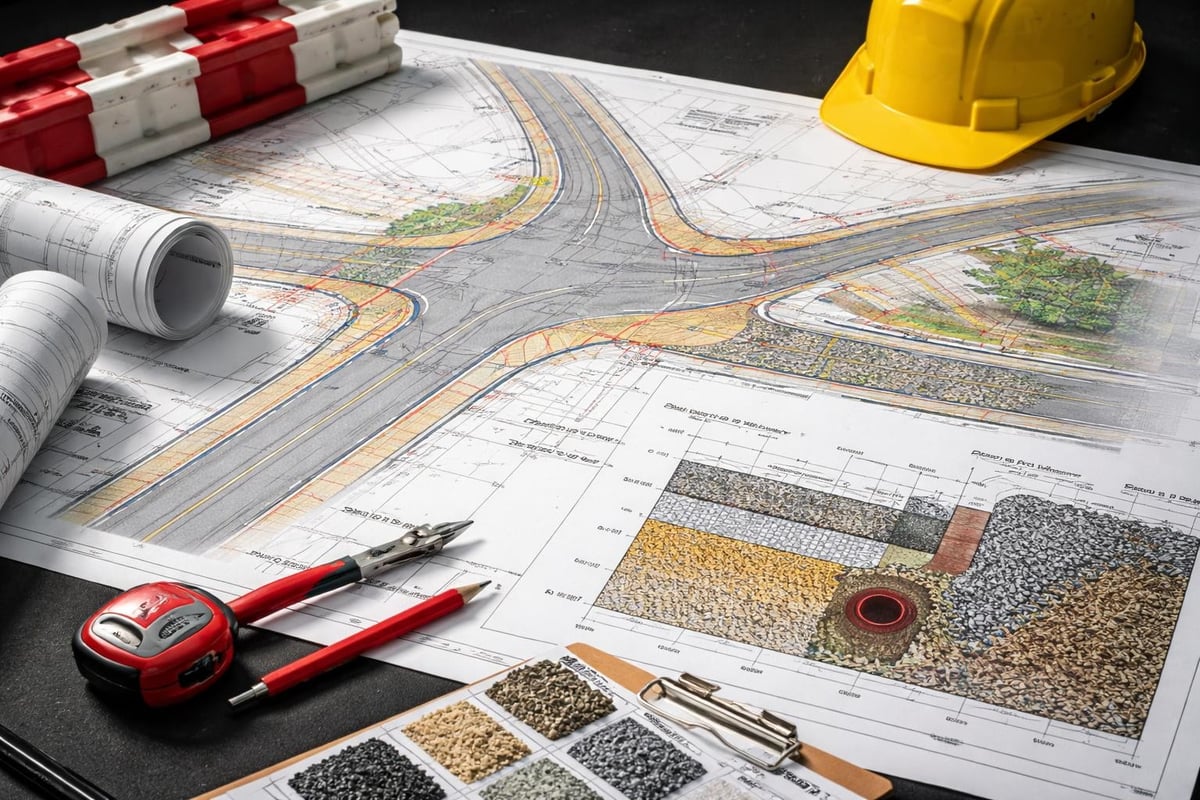
Once the highway authority provides feedback on preliminary designs, detailed technical designs must be prepared. These designs require considerably more precision than planning drawings and must comply with relevant design standards.
The detailed design phase involves:
- Preparation of construction drawings to adoptable standards
- Specification of materials and construction methodologies
- Drainage calculations and detailed proposals
- Street lighting designs (where applicable)
- Traffic management plans for construction period
- Safety audit processes (typically Stage 1 and 2)
Highway authorities employ experienced engineers who scrutinise every aspect of the submitted designs. This thorough review process, whilst sometimes frustrating for developers eager to progress, ensures that completed works will function safely and require minimal future maintenance.
Costs and Financial Considerations
Understanding the financial implications of section 278 agreement highways is essential for accurate project budgeting. The costs extend beyond the physical construction works themselves and can represent a significant proportion of overall development expenditure.
Direct Construction Costs
The physical works constitute the largest expense. Costs vary dramatically depending on the scope of improvements required:
- Simple access creation: £15,000 to £50,000
- Junction modifications: £50,000 to £200,000
- Significant junction improvements with signals: £200,000 to £500,000+
- Major highway realignment: £500,000 upwards
These figures reflect 2026 pricing and include materials, labour, traffic management during construction, and site supervision. Highway works often require working during unsociable hours to minimise traffic disruption, which increases labour costs substantially.
Additional Financial Obligations
| Cost Component | Typical Range | Purpose |
|---|---|---|
| Design fees | £10,000 – £75,000 | Technical drawings and specifications |
| Highway authority fees | 10-15% of works value | Administration and supervision |
| Commuted sum | 10-20 years maintenance | Future maintenance provision |
| Bond/security | 125% of works value | Completion guarantee |
| Safety audits | £3,000 – £15,000 | Independent safety reviews |
| Legal fees | £2,000 – £8,000 | Agreement drafting and completion |
The commuted sum deserves particular attention. This payment compensates the highway authority for maintaining the new or modified highway infrastructure. Guidance from Kirklees Council provides detailed explanation of how these sums are calculated, typically based on a twenty-year maintenance period.
Section 278 vs Section 38 Agreements
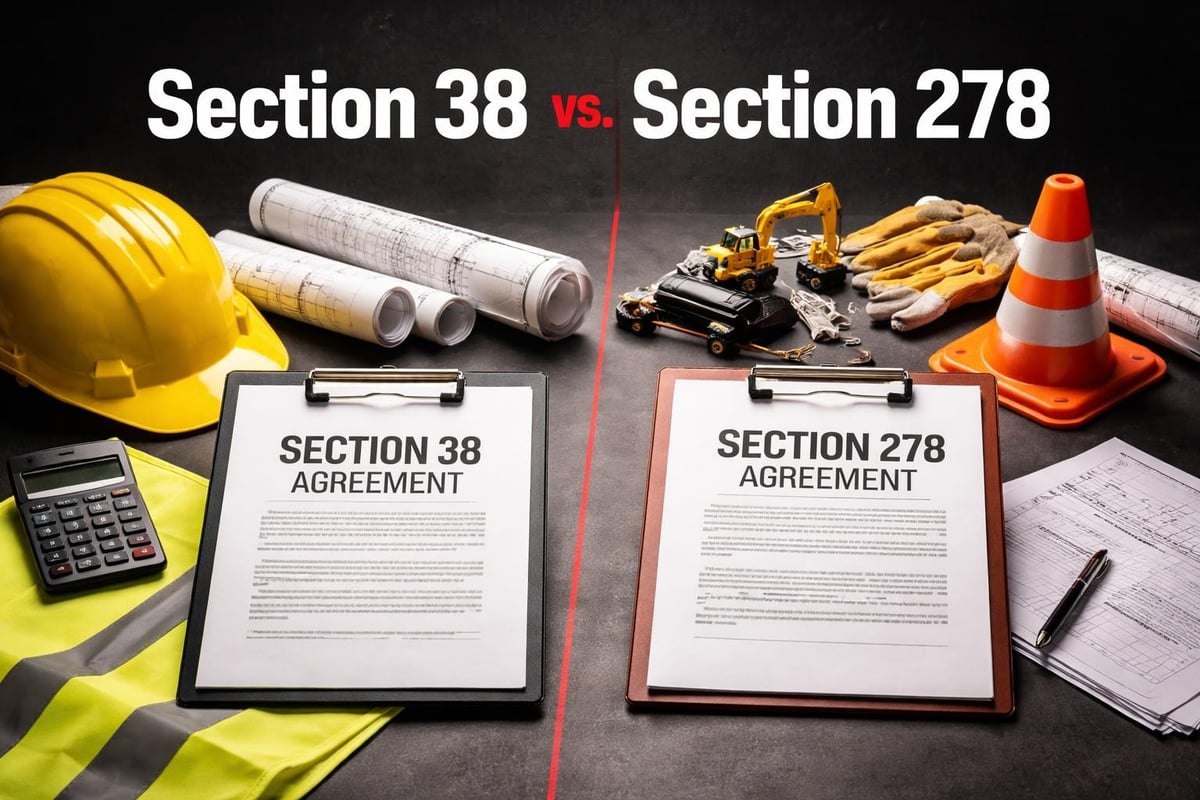
Developers often encounter confusion between section 278 agreement highways and Section 38 agreements. While both relate to highway works, they serve distinctly different purposes and apply to different scenarios.
Section 278 Agreements apply to works on existing public highways. These agreements allow developers to fund improvements or modifications to roads already maintained by the highway authority. The works typically facilitate development access or mitigate traffic impacts.
Section 38 Agreements relate to new roads within a development that will eventually become publicly maintainable highways. These agreements establish the technical standards for construction and set out the adoption process whereby the highway authority assumes maintenance responsibility.
The distinction between Section 38 and Section 278 agreements becomes clearer through practical examples. A new residential estate would require a Section 38 agreement for internal estate roads destined for adoption, whilst also needing a section 278 agreement highways for the junction improvements where the estate connects to the existing road network.
When Both Agreement Types Apply
Many developments require both agreement types simultaneously. A commercial development might need:
- Section 278: Junction improvements on the existing A-road providing site access
- Section 38: New internal access roads serving multiple units within the development
Managing both agreements concurrently requires careful coordination. The timelines, technical requirements, and financial securities differ between the two mechanisms, and ensuring both progress in harmony prevents delays to the overall development programme.
Practical Considerations for Developers
Successfully delivering section 278 agreement highways requires more than understanding legal and technical requirements. Practical project management, realistic programming, and proactive communication determine whether these works proceed smoothly or become sources of frustration and delay.
Timeline Planning
Developers frequently underestimate the time required for section 278 agreement highways. From initial discussions to completed works can easily span twelve to eighteen months, sometimes considerably longer for complex schemes.
Realistic Timeline Breakdown:
- Pre-application discussions: 4-8 weeks
- Formal application and initial review: 6-12 weeks
- Detailed design development: 8-16 weeks
- Design approval and agreement completion: 8-16 weeks
- Construction period: 12-30 weeks (highly variable)
- Inspection and remedial works: 4-8 weeks
- Defects liability period: 12 months
These timelines run alongside, not sequentially with, other development activities. However, planning conditions often prevent occupation of development until section 278 agreement highways works complete satisfactorily, making them critical path activities.
Choosing Contractors and Consultants
Selecting experienced professionals makes an enormous difference to project outcomes. Highway works demand specialist knowledge of materials, construction techniques, and quality standards that exceed those required for standard construction projects.
For projects like drive-through facilities, choosing contractors with proven experience in similar schemes provides confidence that works will meet exacting standards first time. Quality issues identified during highway authority inspections lead to abortive works, programme delays, and additional costs.
Working with Highway Authorities
The relationship between developer and highway authority fundamentally shapes the section 278 agreement highways experience. Highway authorities balance facilitating development with their statutory duty to maintain safe, efficient road networks. Understanding their perspective helps developers navigate the process more effectively.
Authority Expectations and Requirements
Highway authorities expect developers to demonstrate competence through quality submissions. Incomplete applications, designs that ignore established standards, or inadequate supporting information create delays and frustration for all parties.
Different authorities maintain varying standards and procedures. North Yorkshire Council's detailed flowcharts for Section 278 processes exemplify best practice in providing clear guidance to applicants, though not all authorities offer such comprehensive documentation.
Key Success Factors:
- Engage early, before planning applications if possible
- Prepare thoroughly researched, complete submissions
- Respond promptly to queries and requests for information
- Accept technical guidance from authority engineers
- Maintain open, professional communication throughout
- Build realistic contingency into programmes
Construction Phase Management
Once construction begins under section 278 agreement highways, the highway authority exercises close supervision. Inspectors visit regularly, checking construction methods, material quality, and compliance with approved drawings.
Developers must provide adequate notice before commencing works, typically at least ten working days. The construction sequence often requires approval, particularly where works affect traffic management or interact with utilities. Unexpected ground conditions, adverse weather, or utility conflicts can disrupt programmes, requiring flexibility and proactive problem-solving.
Quality control during construction cannot be overstated. Highway works using substandard materials or poor workmanship face rejection, requiring complete reconstruction at the developer's expense. Using experienced civil engineering contractors familiar with adoptable standards minimises these risks considerably.
Common Challenges and Solutions
Even well-managed projects encounter obstacles when delivering section 278 agreement highways. Anticipating common challenges and having mitigation strategies prepared helps maintain programme momentum.
Utility Conflicts
Existing services beneath highway carriageways present frequent complications. Gas mains, water pipes, telecommunications cables, and electricity supplies occupy the highway corridor, often in unexpected locations or undocumented positions.
Mitigation Strategies:
- Commission comprehensive utility searches early
- Allow budget contingency for diversions (typically 10-15%)
- Programme additional time for statutory undertakers' works
- Consider design alternatives that minimise utility impacts
- Maintain dialogue with utility companies throughout design development
Third-Party Land Requirements
Section 278 agreement highways works occasionally require land beyond the existing highway boundary. Acquiring these additional land interests from third parties introduces complexity and potential delay.
Early identification of land requirements through accurate topographical surveys prevents late-stage surprises. Where third-party land proves necessary, parallel negotiations with landowners alongside the section 278 process help maintain programme.
| Challenge | Impact | Solution |
|---|---|---|
| Utility diversions | 3-6 month delay, £20,000-£100,000 cost | Early searches, design flexibility |
| Ground conditions | Programme slippage, cost overruns | Intrusive ground investigation |
| Traffic management restrictions | Limited working hours | Night/weekend working allowance |
| Design amendments | Re-approval cycles | Thorough initial design |
Traffic Management Constraints
Highway authorities impose strict limitations on when and how works can proceed to minimise traffic disruption. Peak hour restrictions, weekend working prohibitions, or requirements for lane closures only during off-peak periods extend construction durations.
Understanding these constraints during design development allows realistic programme preparation. Some authorities offer more flexible approaches for works completed rapidly, incentivising efficient construction methods and weekend working to minimise overall disruption.
Technical Standards and Specifications
Section 278 agreement highways must comply with rigorous technical standards covering every aspect of construction. These standards ensure longevity, safety, and compatibility with existing highway infrastructure.
Pavement Construction
Road construction follows detailed specifications covering foundation preparation, sub-base materials, binder course, and surface course layers. The specification varies according to anticipated traffic loading, with heavy commercial vehicles requiring substantially more robust construction than residential access roads.
Modern specifications increasingly emphasise sustainable drainage systems, requiring permeable materials or positive drainage to prevent surface water entering the highway drainage network. Climate change adaptation also influences design, with increased rainfall intensity requiring enhanced drainage capacity.
Materials Approval
All materials require highway authority approval before use. Aggregates, bituminous materials, kerbs, drainage components, and ancillary items must meet British or European standards. Many authorities maintain approved product lists, streamlining the approval process.
Quality assurance extends to testing during construction. Compaction tests, binder content analysis, and surface regularity measurements verify construction quality. Failed tests require remedial works, emphasising the importance of experienced contractors using calibrated equipment and proven methodologies.
Long-Term Maintenance Implications
Once section 278 agreement highways works complete and any defects period expires, maintenance responsibility typically transfers to the highway authority. However, the commuted sum payment reflects the additional maintenance burden created by the new or modified infrastructure.
Understanding maintenance implications influences design decisions. Durable materials with proven longevity, whilst more expensive initially, reduce whole-life costs. Traffic signal installations require ongoing electrical supply, maintenance contracts, and eventual replacement, all captured in commuted sum calculations.
Developers should recognise that poorly designed or constructed works create ongoing problems for the community and the highway authority. A professional approach considering long-term performance alongside construction cost delivers better outcomes for all stakeholders.
Regional Variations in Processes
While section 278 agreement highways operate under consistent national legislation, individual highway authorities implement the framework differently. These variations reflect local circumstances, resource availability, and policy priorities.
Some authorities operate delegated approval schemes where pre-approved contractors can proceed with certain works types without detailed authority supervision. Others maintain stringent inspection regimes for all works regardless of contractor track record. Blackstone Solicitors’ analysis of different agreement approaches highlights these regional variations.
Regional Factors Affecting Processes:
- Urban authorities often impose stricter traffic management requirements
- Rural authorities may have different design speed expectations
- Authorities with chronic congestion prioritise traffic flow differently
- Some authorities offer fast-track services for certain development types
- Fee structures vary considerably between authorities
Developers operating across multiple authority areas must adapt to these variations. Building relationships with local authority highway teams and understanding their specific requirements facilitates smoother project delivery.
Section 278 agreement highways represent a critical interface between development aspirations and public highway safety standards, requiring careful navigation of legal, technical, and procedural requirements. With extensive experience delivering infrastructure for major commercial projects including drive-through facilities and comprehensive civil engineering capabilities, JRG Civils understands the complexities of highway works and can guide your project from initial design through to successful completion.