
Sandstone kerbing represents a timeless choice for defining edges in civil engineering projects, from residential driveways to commercial developments. This natural stone material combines aesthetic appeal with functional durability, making it particularly valuable for projects requiring both heritage sensitivity and modern performance standards. Whether you're planning a driveway installation, highway surfacing project, or commercial site development, understanding the properties and applications of sandstone kerbing can help you make informed decisions that balance visual impact with long-term value.
Material Properties and Selection
Sandstone kerbing offers distinct advantages over concrete and other manufactured alternatives. The natural formation process creates a material with inherent strength and character that synthetic products struggle to replicate. Each piece carries unique grain patterns and colour variations, ensuring no two installations appear identical.
Understanding Sandstone Composition
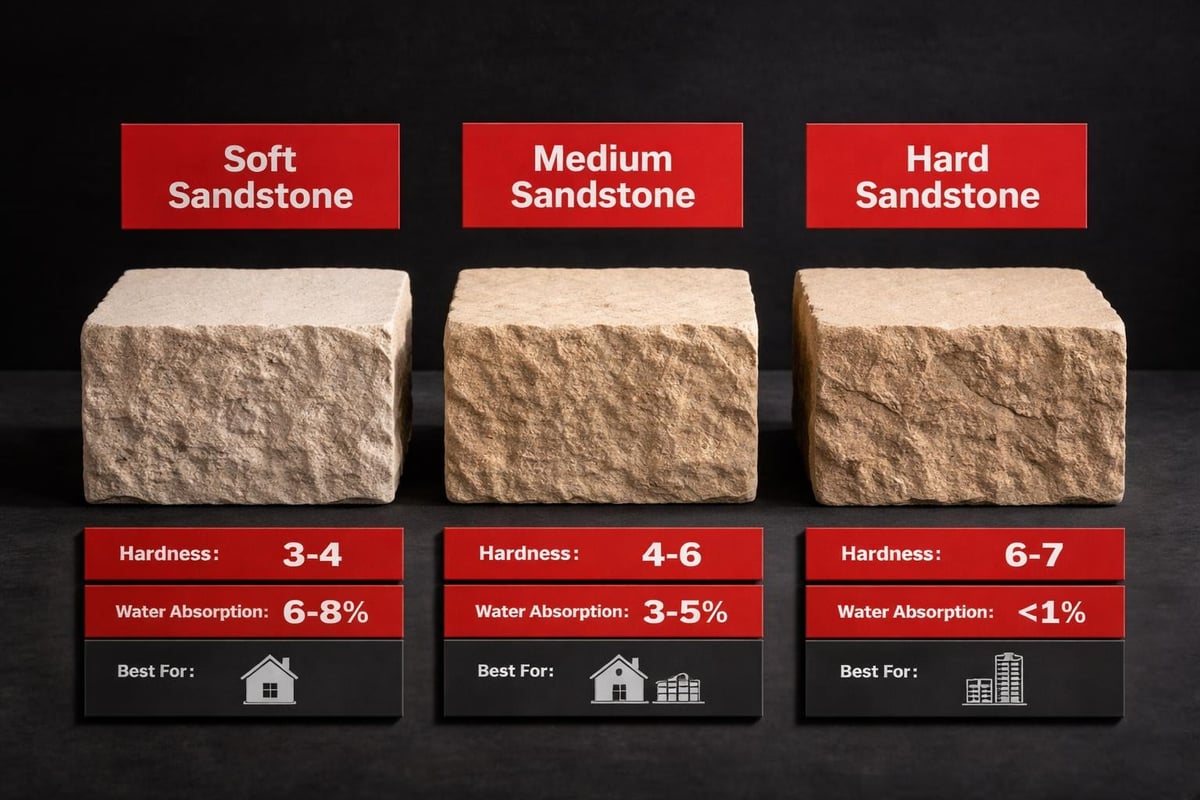
The geological composition of sandstone directly influences its performance as kerbing material. Formed from compressed sand particles over millions of years, sandstone contains silica-based minerals that provide excellent resistance to weathering and mechanical stress. The bonding agents between sand grains determine the stone's hardness and water absorption rates.
Key performance characteristics include:
- Compressive strength ranging from 20 to 170 MPa depending on grade
- Water absorption rates typically between 2% and 8%
- Freeze-thaw resistance suitable for UK climate conditions
- Natural slip resistance beneficial for edge definition
- UV stability preventing colour degradation over time
When selecting sandstone for kerbing applications, consider the specific grade and finish. Different quarry sources produce varying hardness levels and colour palettes. Australian sandstone varieties, for instance, have been used extensively in heritage kerbing projects throughout Charters Towers, demonstrating exceptional longevity.
Colour and Finish Options
Natural sandstone provides an extensive colour range from pale cream through honey tones to deep browns and greys. Regional variations affect the available palette, with certain quarries producing distinctive hues that become signature elements in local architecture.
| Colour Category | Typical Shades | Best Applications | Durability Rating |
|---|---|---|---|
| Light Range | Cream, buff, pale yellow | Heritage areas, residential driveways | High |
| Mid-tones | Honey, golden brown, tan | Commercial developments, patios | Very High |
| Dark Range | Brown, grey, charcoal | Modern projects, contrast edging | Exceptional |
Surface finishes significantly impact both appearance and functionality. Sawn faces deliver clean, contemporary lines ideal for modern commercial projects like drive-throughs and retail developments. Natural cleft finishes preserve the stone's raw character, providing enhanced grip and traditional aesthetics suited to heritage-sensitive locations.
Design Applications for Different Projects
Sandstone kerbing adapts to diverse civil engineering contexts, from intimate residential schemes to substantial highway infrastructure. Understanding how to specify and design with this material ensures projects achieve their full potential whilst managing costs effectively.
Residential Driveways and Pathways
For residential applications, sandstone kerbing creates premium edge definition that elevates property value. The material works particularly well when coordinating with paved surfaces, providing visual continuity between driveways, pathways, and patio areas.
Design considerations for residential projects:
- Select kerb heights between 100mm and 150mm for standard driveways
- Specify 200mm to 250mm widths for adequate edge support
- Plan for 600mm to 900mm lengths to minimise joint frequency
- Consider radiused pieces for curved sections and turning circles
- Match stone colour to existing architectural features
The natural texture of sandstone complements tarmac, block paving, and resin-bound surfaces equally well. When designing driveway edges, ensure the kerbing sits 25mm to 40mm above the finished surface level to prevent water migration and maintain clear boundaries.
Commercial and Highway Applications
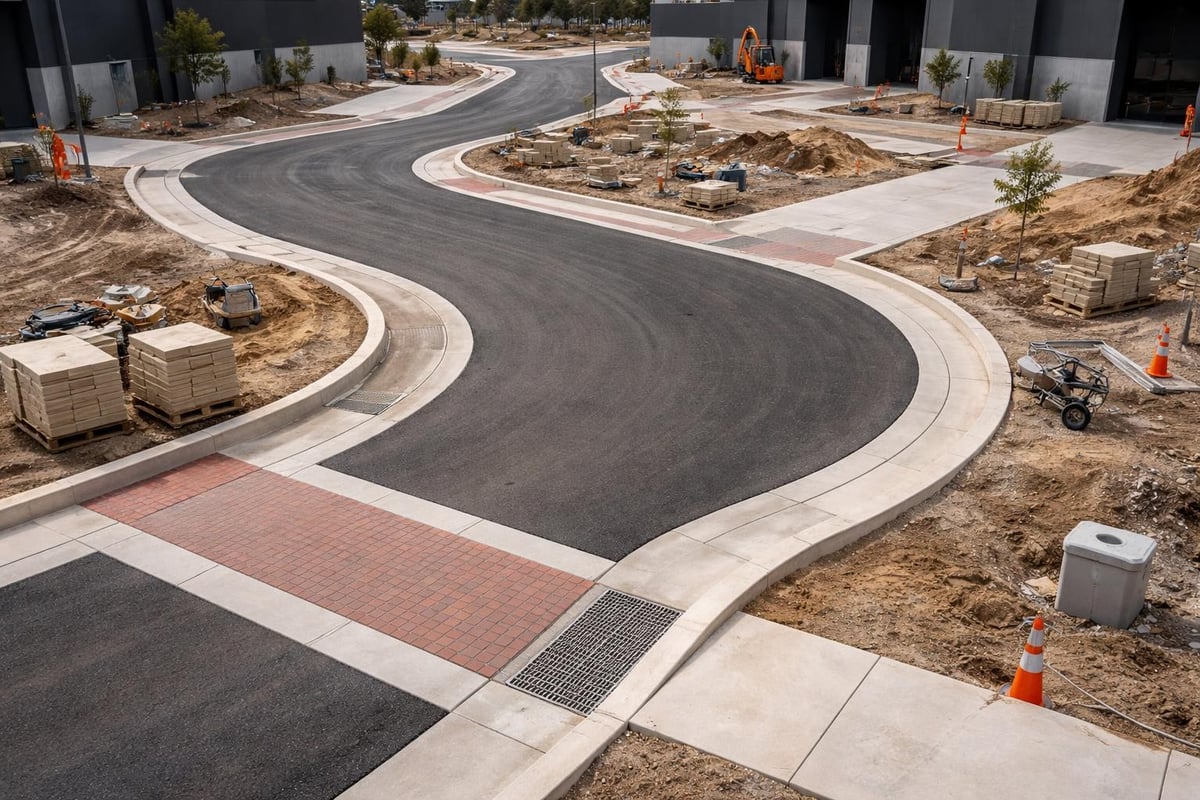
Large-scale commercial projects demand robust kerbing solutions that withstand heavy vehicle movements and intensive maintenance regimes. Sandstone kerbing specified for road construction and highway surfacing must meet stringent performance standards whilst contributing to the overall design vision.
Commercial franchise developments, including drive-through restaurants and retail parks, benefit from sandstone's ability to soften hard landscaping whilst maintaining professional standards. The material integrates seamlessly with modern drainage systems and complies with current highway design specifications.
Heritage and Conservation Projects
Conservation work often mandates sandstone kerbing to maintain historical authenticity. The City of Sydney’s paving design policy specifically references sandstone kerbing requirements for heritage areas, demonstrating how planning authorities recognise the material's cultural significance.
When working in conservation contexts, match existing stone as closely as possible. Quarry records and geological surveys help identify original sources, though many historic quarries no longer operate. Salvaged sandstone offers an alternative, though supply limitations often necessitate mixing reclaimed pieces with carefully matched new materials.
Installation Methods and Best Practices
Proper installation determines whether sandstone kerbing delivers decades of reliable service or requires premature replacement. Civil engineering contractors must follow proven methodologies that account for the material's natural characteristics whilst meeting modern construction standards.
Ground Preparation and Foundation Requirements
Adequate foundation preparation prevents settlement, cracking, and misalignment. The ground conditions and intended use dictate foundation specifications, with heavier applications requiring more substantial support structures.
Standard foundation specifications:
- Residential driveways: 150mm minimum concrete base (C20/25 mix)
- Commercial access roads: 200mm to 250mm concrete base (C25/30 mix)
- Highway applications: Engineered foundations per design specifications
- Heritage restoration: Match original construction methods where possible
Excavate to sufficient depth to accommodate the foundation layer plus the kerb height, allowing the finished kerb to project above the paving surface. Compact the sub-base thoroughly using mechanical equipment to achieve minimum 95% maximum dry density.
Setting and Alignment Techniques
Precision during installation ensures straight lines, consistent levels, and professional appearance. Establish reference lines using string lines and profile boards before laying begins. For curved sections, create radius guides using flexible material or pre-mark the curve path.
- Mix concrete bedding: Use a semi-dry mix (ST2 or equivalent) for immediate stability
- Apply bedding layer: Lay 50mm to 75mm thick beneath each kerb unit
- Position kerb stones: Press firmly into bedding, achieving correct alignment
- Check levels continuously: Verify both longitudinal and cross-fall gradients
- Apply haunching: Add concrete support to the rear face, typically one-third kerb height
- Joint filling: Point between units using appropriate mortar or resin compounds
Temperature considerations affect installation success. Avoid laying sandstone kerbing when temperatures fall below 3°C or during heavy rainfall. The stone's natural porosity means moisture absorption can compromise bedding adhesion and long-term stability.
Maintenance and Longevity
Sandstone kerbing requires minimal maintenance compared to many alternatives, yet strategic care extends service life and preserves appearance. Understanding common degradation mechanisms allows property owners and facilities managers to implement preventative measures.
Routine Cleaning and Preservation
Natural stone accumulates organic growth, dirt deposits, and staining over time. Regular cleaning prevents permanent discolouration and maintains the professional appearance essential for commercial properties.
| Maintenance Task | Frequency | Method | Benefits |
|---|---|---|---|
| Surface washing | Quarterly | Pressure washing (low-medium pressure) | Removes surface dirt and organic matter |
| Weed removal | As needed | Manual extraction or appropriate herbicide | Prevents root damage to joints |
| Joint inspection | Annually | Visual assessment of mortar condition | Early identification of repair needs |
| Re-pointing | 5-10 years | Remove deteriorated mortar, repoint gaps | Maintains structural integrity |
Avoid aggressive cleaning chemicals that can damage sandstone's surface or alter its natural colour. Acidic cleaners prove particularly problematic, potentially dissolving the calcium-based cements within the stone matrix. Opt for pH-neutral stone cleaning products designed specifically for sedimentary rocks.
Addressing Common Issues
Despite sandstone's durability, certain issues occasionally arise. Settlement represents the most common problem, typically resulting from inadequate foundation preparation or ground movement. Early detection allows remedial work before major failures occur.
Problem identification and solutions:
- Sinking sections: Lift and re-bed on improved foundations
- Cracked units: Replace damaged pieces, investigate cause
- Joint failure: Re-point using compatible mortar specifications
- Surface erosion: Apply appropriate stone sealers where permitted
- Staining: Use poultice treatments for oil or organic stains
For projects in coastal or industrial areas, consider the environmental exposure when specifying sandstone grades. Harder varieties with lower porosity resist aggressive atmospheres more effectively, reducing maintenance requirements over the installation's lifespan.

Cost Considerations and Value Analysis
Sandstone kerbing commands premium pricing compared to concrete alternatives, yet the investment often proves justified when considering lifecycle costs and aesthetic value. Accurate cost analysis requires examining both immediate expenditure and long-term benefits.
Material and Installation Costs
Current market prices for sandstone kerbing vary based on stone grade, finish specification, and supply distances. Expect material costs ranging from £45 to £95 per linear metre for standard kerb sections, with bespoke shapes and premium grades commanding higher rates.
Installation costs depend heavily on site conditions and project scale. Straightforward installations on prepared ground with good access typically cost £25 to £45 per linear metre for labour and ancillary materials. Complex sites with restricted access, extensive excavation requirements, or challenging ground conditions increase labour costs proportionally.
Total project cost components:
- Primary materials (kerb units): 40-50% of total budget
- Foundation materials (concrete, aggregates): 15-20%
- Installation labour: 25-35%
- Equipment and site setup: 5-10%
- Ancillary items (bedding, haunching, jointing): 5-10%
Bulk purchasing reduces unit costs on larger projects. Commercial developments installing several hundred metres of kerbing achieve better pricing than small residential schemes requiring just 20 to 30 metres.
Return on Investment Analysis
While initial costs exceed concrete kerbing, sandstone delivers superior long-term value through reduced maintenance, extended service life, and enhanced property values. Commercial properties benefit particularly from the professional image and reduced replacement frequency.
Expected service life for properly installed sandstone kerbing extends 50 to 100 years, significantly exceeding concrete's typical 25 to 40-year lifespan. This longevity reduces lifecycle replacement costs and minimises disruption to operational sites.
Property value enhancement proves difficult to quantify precisely, yet estate agents consistently report that quality hard landscaping, including natural stone edging, positively influences buyer perceptions and achieved sale prices. For commercial properties, professional external appearance directly impacts customer impressions and brand perception.
Specification and Procurement Guidance
Successful sandstone kerbing projects begin with comprehensive specifications that communicate requirements clearly to suppliers and contractors. Vague or incomplete specifications lead to mismatches between expectations and delivered results.
Writing Effective Specifications
Detailed specifications prevent disputes and ensure competitive quotations compare equivalent solutions. Include dimensional requirements, material standards, finish expectations, and installation methodologies within tender documentation.
Essential specification elements:
- Dimensions: Precise measurements including length, width, height, and tolerances
- Material grade: Hardness classification, porosity limits, strength requirements
- Finish specification: Surface treatment (sawn, natural cleft, tooled)
- Colour parameters: Acceptable range or specific quarry designation
- Quality standards: Defect limits, colour variation tolerances
- Installation requirements: Foundation specifications, bedding methods, joint details
Reference relevant British Standards and industry guidance documents. For highway works, ensure specifications align with Specification for Highway Works requirements and local authority adoption standards.
Supplier Selection and Quality Assurance
Choose suppliers with proven track records in natural stone supply and demonstrable quality management systems. Request samples before committing to large orders, verifying colour, finish, and dimensional accuracy match specification requirements.
Reputable suppliers provide technical data sheets confirming stone properties and performance characteristics. This documentation proves essential for projects requiring formal approval processes or adoption by highway authorities.
Quality assurance continues through delivery and installation phases. Inspect materials upon arrival, rejecting units with significant defects, dimensional errors, or damage. Monitor installation quality continuously, verifying alignment, levels, and workmanship standards throughout the construction period.
Environmental Sustainability Considerations
Specifying natural stone products like sandstone kerbing raises environmental questions that responsible contractors and clients increasingly prioritise. Understanding the material's environmental profile enables informed decision-making aligned with sustainability objectives.
Embodied Carbon and Energy
Sandstone extraction and processing requires significantly less energy than manufacturing concrete or fired clay products. The material arrives essentially ready to use after quarrying and basic shaping, avoiding high-temperature manufacturing processes that consume fossil fuels and generate substantial carbon emissions.
Transportation distances impact overall environmental footprint considerably. Sourcing sandstone from UK quarries minimises transport emissions compared to importing materials from distant locations. However, specific colour or technical requirements sometimes necessitate longer supply chains when local sources cannot meet specification demands.
Environmental comparison factors:
- Quarrying energy: Lower than manufacturing processes
- Processing requirements: Minimal compared to synthetic alternatives
- Transport distances: Variable depending on source location
- Installation machinery: Similar to alternative materials
- Maintenance over lifecycle: Reduced compared to shorter-life alternatives
- End-of-life disposal: Natural material, potential for reuse or recycling
Durability and Resource Efficiency
Extended service life represents sandstone's strongest environmental credential. Materials lasting 75 to 100 years require replacement less frequently, reducing overall resource consumption and waste generation across multiple replacement cycles of shorter-lived alternatives.
When sandstone kerbing eventually reaches end of service, the material retains value for reuse in other applications or recycling as aggregate. This contrasts with many synthetic products that become waste requiring landfill disposal.
For projects with sustainability reporting requirements, document material sourcing, transportation distances, and expected service life. This data supports environmental impact assessments and demonstrates commitment to resource-efficient construction practices.
Technical Standards and Regulatory Compliance
Sandstone kerbing installations must satisfy various technical standards and regulatory requirements, particularly when forming part of adopted highway infrastructure or public realm projects. Navigating these requirements ensures projects achieve approval and meet performance expectations.
British Standards and Highway Specifications
Several British Standards govern kerbing materials and installation methods. BS EN 1343 covers kerbs manufactured from natural stone, specifying dimensional tolerances, material properties, and marking requirements. Compliance with this standard provides assurance of product quality and suitability.
Highway projects must additionally satisfy requirements within the Specification for Highway Works (SHW). Series 800 covers road pavements and specifically addresses kerb installation, bedding specifications, and alignment tolerances. Contractors undertaking highway works should maintain current copies of relevant SHW sections.
Local authority adoption standards sometimes impose additional requirements beyond national specifications. Consult highway authority technical approval teams early in project planning to identify specific local requirements affecting material selection and installation methodologies.
Heritage and Planning Considerations
Projects within conservation areas or affecting listed buildings require careful navigation of planning restrictions and heritage considerations. Conservation management plans often specify exact material requirements for maintaining historical character, including kerbing materials and installation methods.
Planning applications should demonstrate how sandstone kerbing proposals respect and enhance heritage character. Submit samples, historical research, and precedent examples supporting material choices. Conservation officers generally respond positively to natural stone specifications that maintain or restore traditional streetscape character.
Integration with Modern Surfacing Systems
Contemporary civil engineering projects combine traditional materials like sandstone kerbing with advanced surfacing technologies. Understanding how natural stone edges integrate with modern paving systems ensures cohesive, high-performance installations.
Compatibility with Surface Materials
Sandstone kerbing works effectively alongside numerous surfacing options, from traditional tarmac to innovative resin-bound systems. The key lies in proper detailing at the interface between vertical kerb faces and horizontal paving surfaces.
Surfacing compatibility considerations:
- Tarmac surfaces: Standard detail with 25mm to 40mm upstand
- Block paving: Coordinate kerb and paving thickness for flush or stepped arrangements
- Resin-bound surfaces: Ensure clean edge detail preventing resin adhesion to stone
- Concrete paving: Match expansion joint locations to prevent sympathetic cracking
- Gravel surfaces: Provide adequate upstand to retain loose material
When working on civil engineering projects that combine multiple surface types, sandstone kerbing provides consistent edge definition that unifies disparate materials within a cohesive design language.
Drainage Integration
Effective surface water management requires careful coordination between kerbing and drainage infrastructure. Sandstone kerbs must accommodate gully connections, channel outlets, and surface water flow paths whilst maintaining structural integrity and visual continuity.
Specify purpose-made transition pieces at drainage locations rather than attempting field modifications to standard kerb units. Factory-cut openings ensure neat appearance and maintain stone strength. Plan drainage layouts during design development rather than retrofitting after kerbing installation.
Consider permeable paving systems that reduce surface water volumes requiring removal via traditional drainage. When combined with sandstone kerbing, permeable surfaces create sustainable drainage solutions that manage water at source whilst maintaining defined edges and professional appearance.
Sandstone kerbing delivers exceptional performance, aesthetic quality, and long-term value across residential, commercial, and highway applications. The material's natural durability, design versatility, and environmental credentials make it an increasingly relevant choice for discerning clients and forward-thinking contractors. Whether you're planning a residential driveway, commercial development, or highway infrastructure project, JRG Civils brings the expertise and attention to detail needed to deliver outstanding sandstone kerbing installations that enhance property value and stand the test of time.