
Railway sleeper kerbing has emerged as a popular and practical solution for defining edges in both residential and commercial landscapes. These robust timber borders offer exceptional durability, natural aesthetics, and versatility across various applications. From driveways and pathways to car parks and commercial developments, this kerbing method provides a sustainable alternative to traditional concrete or stone edging whilst delivering long-lasting performance and visual appeal.
Understanding Railway Sleeper Kerbing Materials
The materials used in railway sleeper kerbing projects significantly influence longevity, appearance, and maintenance requirements. Modern installations typically utilise either reclaimed hardwood sleepers or new treated softwood alternatives, each offering distinct advantages.
Reclaimed Hardwood Sleepers
Reclaimed hardwood sleepers bring exceptional character and proven durability to kerbing applications. These materials have already withstood decades of railway use, demonstrating their resistance to weathering, ground contact, and heavy loads.
Key characteristics include:
- Natural resistance to rot and insect damage
- Dense timber structure providing superior strength
- Weathered patina adding instant maturity to landscapes
- Environmental sustainability through material reuse
- Lower lifecycle costs despite higher initial investment
The aesthetic appeal of reclaimed railway sleepers for garden projects makes them particularly suitable for heritage properties, rural developments, and settings where natural character enhances the overall design.

New Treated Softwood Options
New softwood sleepers treated to British Standards offer consistent dimensions, predictable performance, and immediate availability. Modern pressure treatment processes ensure these materials achieve substantial service lives when properly installed.
| Material Type | Expected Lifespan | Initial Cost | Maintenance | Best Applications |
|---|---|---|---|---|
| Reclaimed Hardwood | 40+ years | High | Minimal | Heritage sites, premium residential |
| Treated Softwood | 15-25 years | Medium | Moderate | Commercial, budget-conscious projects |
| Oak Sleepers | 50+ years | Very High | Minimal | High-specification installations |
Design Considerations for Effective Kerbing
Successful railway sleeper kerbing requires careful planning that addresses both functional requirements and aesthetic objectives. The design phase determines material quantities, installation methods, and long-term performance outcomes.
Height and Profile Selection
Railway sleeper kerbing typically employs one of three profile configurations, each suited to specific applications and visual preferences.
Upright installation positions sleepers vertically, creating a substantial 200-250mm high kerb ideal for retaining soil, defining level changes, or providing robust edge protection. This method maximises visual impact whilst requiring deeper foundations.
Horizontal stacking layers sleepers flat, building height incrementally whilst maintaining stability through mass. Two or three courses create effective barriers for car parks, driveways, and commercial areas requiring vehicle containment.
Angled positioning sets sleepers at approximately 45 degrees, combining moderate height with reduced material usage. This approach suits pathways, garden borders, and areas where subtle definition suffices.
Functional Requirements Assessment
Different applications demand varying performance characteristics from kerbing installations. Commercial car parks require sleepers capable of withstanding vehicle impact, whilst residential pathways prioritise aesthetics and trip hazard prevention.
- Vehicle containment: Heavy-duty fixings, deeper foundations, potential steel reinforcement
- Pedestrian areas: Smooth top surfaces, secure anchoring, appropriate height selection
- Drainage management: Strategic gaps, gravel backfill, consideration of water flow patterns
- Load-bearing edges: Compacted sub-base, concrete haunching, reinforced fixing points
Installation Methods and Best Practices
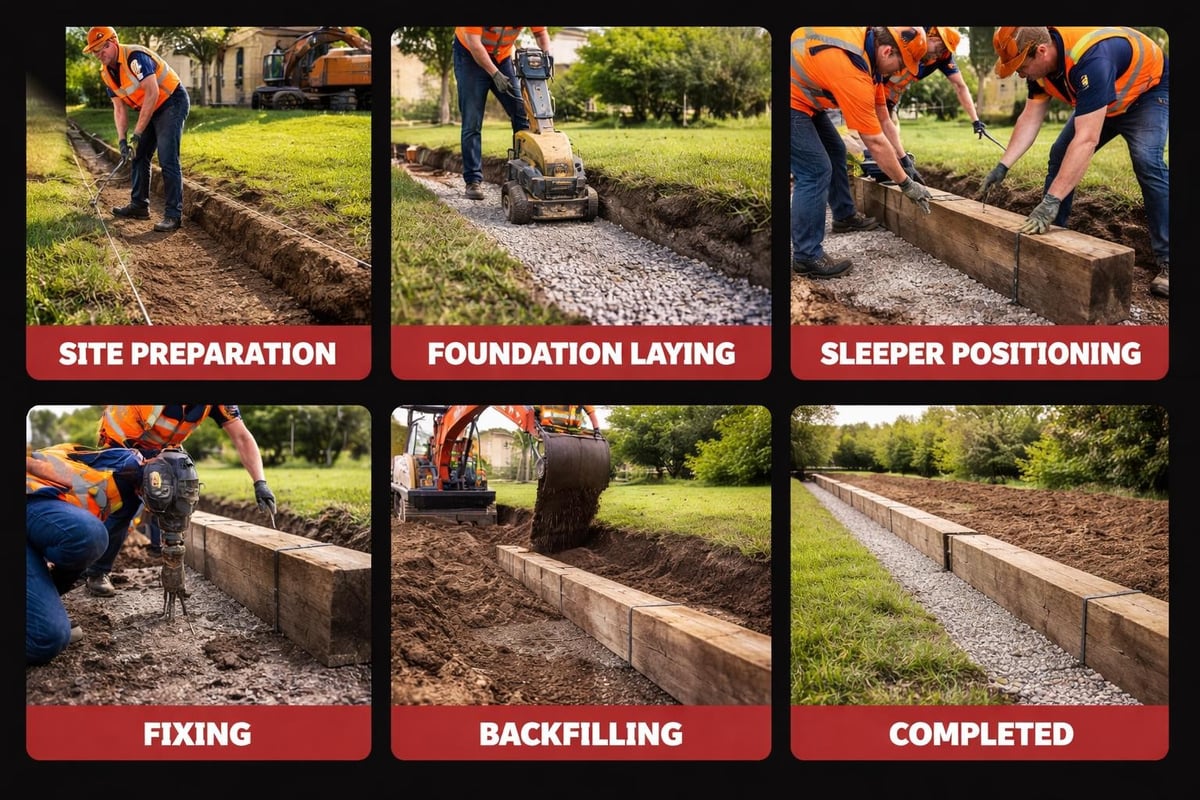
Professional installation ensures railway sleeper kerbing achieves its performance potential and service life expectations. The process involves systematic preparation, precise positioning, and secure fixing methods.
Foundation Preparation
Adequate foundation work prevents settlement, movement, and premature failure. The sub-base must provide stable support whilst accommodating drainage requirements.
- Excavate to appropriate depth (typically 150-200mm below finished kerb level)
- Install geotextile membrane to prevent soil migration and weed growth
- Compact type 1 MOT aggregate in 75mm layers for stable foundation
- Create concrete haunch where heavy loads or vehicle impacts anticipated
- Verify levels and alignment before placing sleepers
The quality of groundwork directly influences long-term performance, making this phase critical for both residential driveways and commercial installations requiring robust edge definition.
Fixing and Securing Techniques
Railway sleeper kerbing demands secure anchoring to resist ground movement, vehicle impact, and environmental forces. Multiple fixing methods suit different applications and site conditions.
Ground anchoring approaches:
- Heavy-duty steel pegs (600-900mm length) driven through pre-drilled holes
- Concrete haunching along the rear face for maximum stability
- Mechanical fixings connecting adjacent sleepers for continuous strength
- Steel reinforcement bars for high-stress applications
- Backfilling with compacted aggregate for additional support
Professional contractors ensure fixings penetrate sufficiently into undisturbed ground, achieving purchase beyond the zone affected by seasonal moisture changes or frost action.
Applications Across Commercial and Residential Projects
Railway sleeper kerbing adapts to diverse project types, from small residential driveways to large commercial developments. Understanding application-specific requirements ensures optimal material selection and installation approaches.
Commercial Infrastructure Projects
Large-scale commercial work demands kerbing solutions that balance durability, cost-effectiveness, and maintenance considerations. Franchise developments, retail car parks, and industrial estates benefit from the robust performance of properly installed sleeper kerbing.
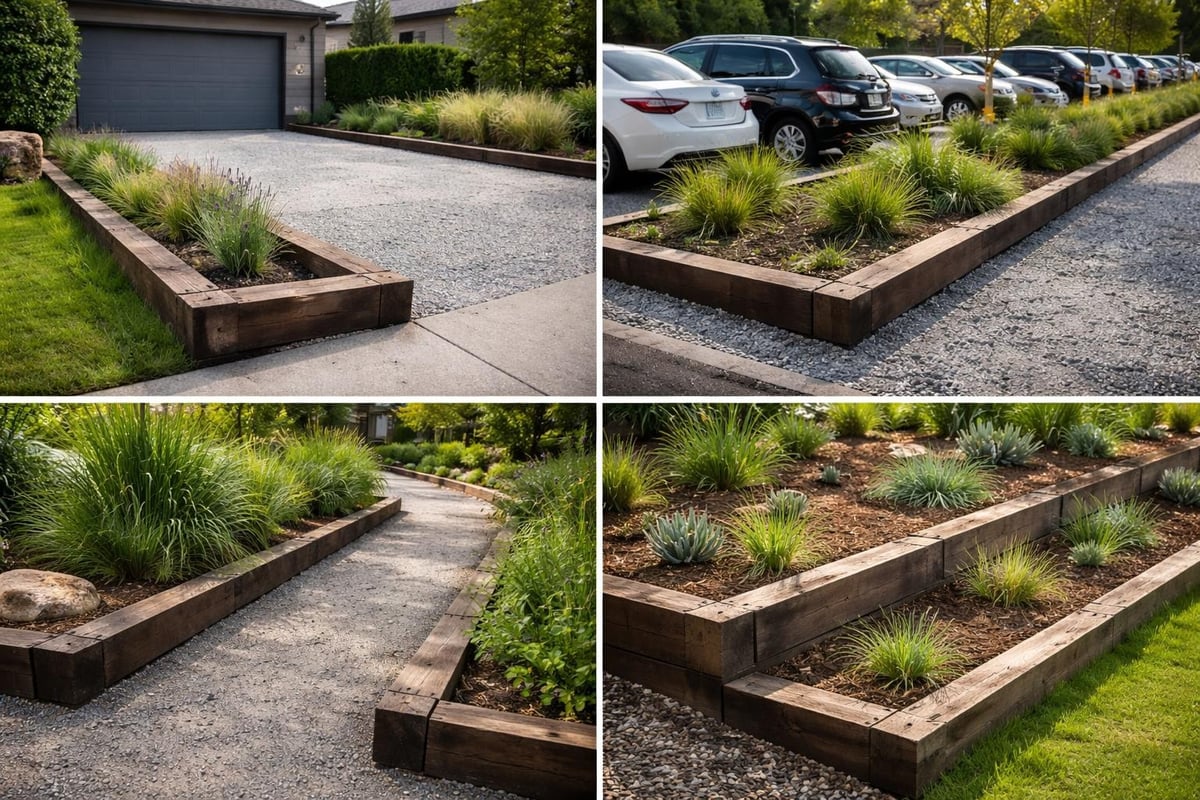
The edging solutions demonstrated in commercial settings showcase how railway sleepers create defined boundaries whilst complementing varied architectural styles. These installations must accommodate higher traffic volumes, potential vehicle impacts, and extended service life expectations without excessive maintenance interventions.
Commercial application benefits:
- Rapid installation reducing project timescales
- Cost competitiveness compared to engineered alternatives
- Natural appearance complementing landscaping schemes
- Proven performance in high-use environments
- Straightforward replacement if damage occurs
Residential and Domestic Uses
Homeowners increasingly specify railway sleeper kerbing for driveways, garden paths, and landscape features. The material's natural aesthetic integrates seamlessly with both traditional and contemporary property styles.
Driveway edging represents the most common residential application, where sleepers define the transition between surfacing materials and adjacent lawns or planting areas. This kerbing protects grass edges from vehicle overrun whilst providing visual clarity for drivers.
| Application | Typical Sleeper Size | Installation Method | Key Considerations |
|---|---|---|---|
| Driveway Edging | 200x100mm | Upright with pegs | Vehicle overrun protection |
| Garden Paths | 200x100mm | Horizontal single | Trip hazard prevention |
| Raised Beds | 200x100mm | Horizontal stacked | Soil retention capacity |
| Car Park Bays | 250x125mm | Upright with concrete | Impact resistance |
Maintenance and Longevity Factors
Properly installed railway sleeper kerbing requires minimal ongoing maintenance whilst delivering decades of service. Understanding preservation factors and periodic care requirements maximises return on investment.
Preservation and Treatment
Reclaimed hardwood sleepers generally need no additional treatment, their natural oils and dense structure providing inherent protection. New treated softwood benefits from periodic application of preservative oils or stains, particularly in exposed locations experiencing significant weathering.
Maintenance schedule recommendations:
- Annual inspection for movement, damage, or deterioration
- Cleaning to remove debris accumulation and organic growth
- Treatment application every 3-5 years for softwood installations
- Fixing verification and reinforcement where settlement detected
- Drainage clearance ensuring water flows away from timber
Common Issues and Remediation
Despite robust construction, railway sleeper kerbing occasionally experiences problems requiring intervention. Early detection and appropriate remediation prevent minor issues escalating into costly failures.
Settlement typically occurs when foundation preparation proves inadequate or ground conditions change. Lifting affected sections, improving the sub-base, and reinstalling with enhanced fixing addresses this problem effectively.
Biological attack from fungi or insects primarily affects inadequately treated softwood in persistently damp conditions. Improving drainage, applying fungicidal treatments, and replacing severely affected sections restores kerb integrity.
Cost Analysis and Value Considerations
Railway sleeper kerbing presents favourable economics when evaluated across its full service life. Initial material and installation costs compare favourably with alternatives whilst delivering superior longevity and aesthetic value.
Material and Installation Pricing
Current market prices for railway sleeper kerbing materials vary according to timber species, dimensions, and condition. Reclaimed hardwood sleepers typically cost between £25-45 per unit, whilst new treated softwood ranges from £15-30 depending on specification.
Professional installation costs reflect project scale, site accessibility, and complexity. Simple residential driveway edging might cost £60-90 per linear metre installed, whilst commercial work with concrete haunching and steel reinforcement reaches £100-150 per metre.
Cost-influencing factors:
- Site access affecting material delivery and equipment use
- Ground conditions determining foundation requirements
- Sleeper type and specification selected
- Fixing method and reinforcement needed
- Project scale and total linear metreage
Comparative Value Assessment
When compared against alternative kerbing solutions, railway sleepers offer compelling value propositions. Concrete block edging costs less initially but lacks character and may require replacement sooner. Natural stone delivers premium aesthetics at significantly higher material costs.
The natural appearance and environmental credentials of railway sleeper kerbing increasingly influence specification decisions, particularly where sustainability considerations matter to clients or planning authorities. Many commercial clients value the combination of practical performance and visual warmth that timber edging provides.
Regulatory and Safety Compliance
Professional installations must address relevant building regulations, health and safety requirements, and environmental considerations. Compliance ensures legal operation, protects end users, and maintains professional standards.
Health and Safety Considerations
Historic railway sleepers may contain creosote preservatives, requiring specific handling and disposal protocols. Modern regulations restrict creosote-treated timber use in certain applications, particularly where public contact occurs frequently.
Professional contractors implement appropriate risk assessments, use personal protective equipment when handling preserved timber, and ensure installations comply with current guidance regarding creosote materials. Many commercial projects now specify new treated sleepers to eliminate these concerns entirely.
Environmental and Sustainability Aspects
Railway sleeper kerbing aligns well with sustainability objectives through material reuse, carbon sequestration, and minimal processing requirements. Reclaimed sleepers embody significant environmental benefits by diverting substantial timber volumes from waste streams.
Specifiers increasingly request certification demonstrating sustainable sourcing for new timber products. FSC or PEFC certification provides assurance that softwood sleepers originate from responsibly managed forests, addressing environmental due diligence requirements.
Specification Guidelines for Professional Projects
Developing comprehensive specifications ensures railway sleeper kerbing meets project requirements, facilitates accurate tendering, and provides clear installation guidance. Professional specifications address materials, workmanship standards, and performance expectations.
Material Specifications
Clear material descriptions prevent misunderstandings and ensure appropriate products reach site. Specifications should define timber species, dimensions, treatment types, and quality standards.
Typical specification elements:
- Timber type (reclaimed hardwood/new treated softwood)
- Nominal dimensions with tolerances
- Treatment specification (preservative type, retention levels)
- Quality requirements (knots, splits, wane limitations)
- Delivery and storage requirements
Installation Standards
Workmanship specifications establish quality expectations and installation methodologies. These standards ensure consistent outcomes regardless of which contractor executes the work.
Reference to relevant British Standards, industry codes of practice, and manufacturer recommendations provides objective benchmarks for evaluating installation quality. Specifying inspection hold points allows verification before subsequent work proceeds.
Integration with Highway and Surfacing Works
Railway sleeper kerbing integrates effectively with various surfacing materials and highway construction techniques. Understanding these interfaces ensures seamless project delivery and optimal performance.
Coordination with Surfacing Operations
Kerbing installation typically precedes final surfacing works, establishing precise boundaries for asphalt, block paving, or resin-bound materials. Correct sequencing prevents damage to completed surfaces whilst ensuring tight joints between kerbs and adjacent materials.
The established edge guides surfacing operatives, controls material depths, and creates professional finished appearances. Commercial projects particularly benefit from this clear demarcation, facilitating efficient construction sequencing and quality control.
Experienced civil engineering contractors coordinate these activities systematically, ensuring each trade completes work at the appropriate project stage. This integration proves particularly critical in complex developments involving multiple surfacing types and detailed landscaping.
Railway sleeper kerbing combines practical performance with natural aesthetics, making it an excellent choice for diverse applications from residential driveways to commercial car parks. The material's durability, versatility, and environmental credentials deliver long-term value when professionally installed with appropriate foundations and secure fixing methods. Whether you're planning a small domestic project or a large commercial development, JRG Civils brings the expertise and attention to detail needed to deliver exceptional railway sleeper kerbing installations across the North East and throughout the UK.