
Professional earthworks represent the critical foundation phase of virtually every construction project, from commercial developments to residential driveways. Whether you're planning a new car park, preparing for highway surfacing, or developing a commercial site, understanding the principles of pro earthworks ensures your project starts on solid ground. The quality of earthwork directly influences structural integrity, drainage effectiveness, and long-term durability of any built environment. Companies specialising in civil engineering recognise that proper ground preparation isn't merely a preliminary step but rather the cornerstone of construction excellence.
Understanding Pro Earthworks in Modern Construction
Pro earthworks encompass the systematic modification and preparation of ground surfaces to create stable foundations for infrastructure development. This complex discipline combines engineering expertise, precise machinery operation, and thorough understanding of soil mechanics to transform natural terrain into construction-ready sites.
The scope of professional earthworks extends far beyond simple excavation. It involves detailed site surveys, soil analysis, strategic planning for material movement, and implementation of drainage solutions that prevent future structural issues. Experienced civil engineering teams assess ground conditions, identify potential challenges such as unstable substrates or high water tables, and develop tailored solutions.
Core Components of Earthwork Projects
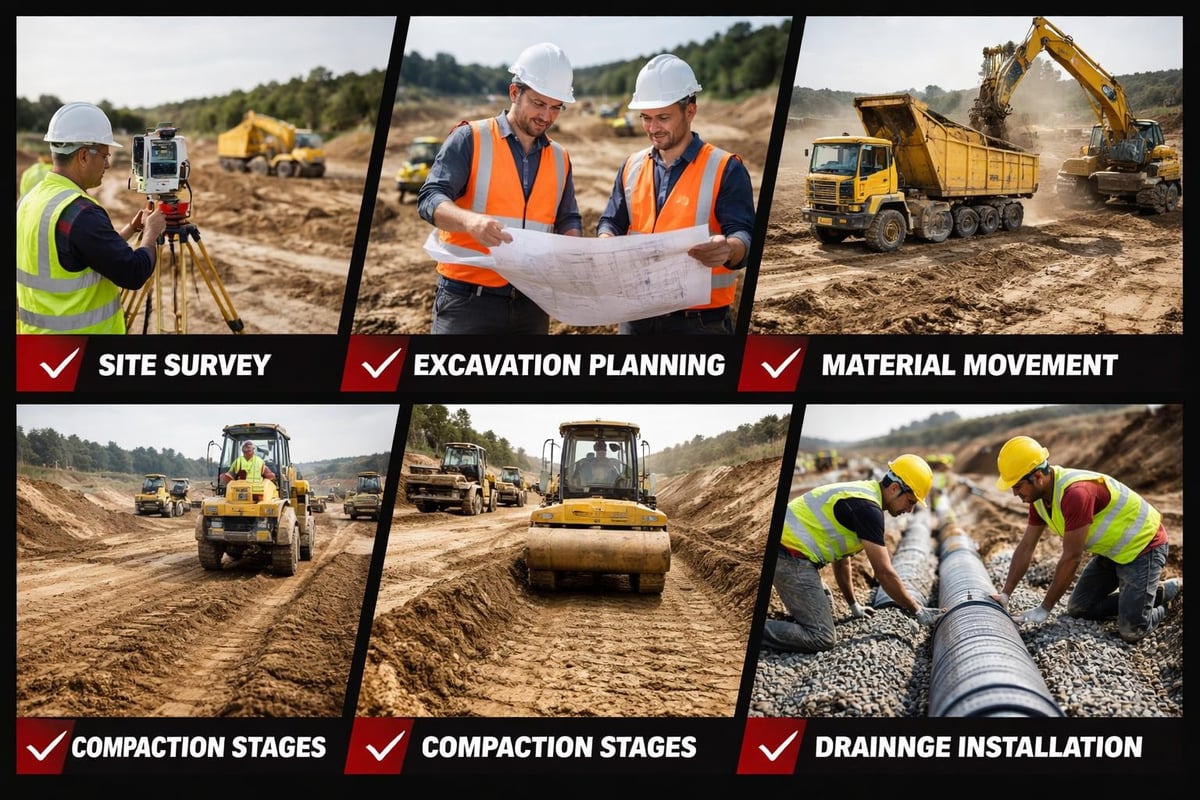
Every pro earthworks project comprises several interconnected phases that demand meticulous execution:
- Site assessment and surveying to establish existing levels and identify ground conditions
- Vegetation clearance and topsoil stripping to expose workable substrates
- Excavation and cut operations to achieve required depths and gradients
- Fill placement and compaction to build up levels or create embankments
- Grading and levelling to ensure precise final surfaces
- Drainage installation to manage water flow and prevent saturation
Professional contractors understand that shortcuts during these phases create compounding problems throughout construction and beyond. The environmental impacts of earthwork activities during development projects highlight why sustainable, well-planned approaches deliver superior outcomes whilst minimising ecological disruption.
Equipment and Machinery for Professional Earthworks
The machinery deployed on pro earthworks projects determines both efficiency and precision. Modern civil engineering operations utilise diverse equipment tailored to specific tasks and site conditions.
| Equipment Type | Primary Function | Typical Applications |
|---|---|---|
| 360° Excavators | Deep excavation, trenching | Drainage systems, foundations, underground services |
| Bulldozers | Large-scale ground movement | Site clearance, rough grading, material spreading |
| Graders | Precision levelling | Road construction, car park surfaces, fine grading |
| Compaction Rollers | Soil and aggregate consolidation | Sub-base preparation, embankment construction |
| Dumper Trucks | Material transportation | Spoil removal, aggregate delivery, site logistics |
Selecting appropriate machinery requires understanding project scale, ground conditions, and access constraints. Compact equipment suits residential driveways and restricted urban sites, whilst large-scale commercial developments demand heavy machinery capable of moving substantial volumes efficiently.
Technology Integration in Modern Earthworks
Contemporary pro earthworks increasingly incorporate technological advances that enhance accuracy and productivity. GPS-guided machinery enables operators to achieve precise levels without constant manual surveying, reducing time requirements whilst improving consistency. Laser levelling systems ensure surfaces meet exact specifications critical for drainage performance and structural integrity.
Digital site modelling allows engineers to calculate exact cut and fill volumes before machinery arrives on site. This planning minimises material wastage, reduces transportation costs, and streamlines project scheduling. Companies investing in these technologies deliver measurably superior results compared to traditional methods relying solely on operator experience.
Site Preparation and Ground Analysis
Thorough site preparation distinguishes professional earthworks from inadequate ground preparation that compromises construction quality. Before any machinery disturbs the ground, comprehensive investigation establishes what lies beneath the surface.
Geotechnical surveys reveal soil composition, bearing capacity, and moisture content. These factors dictate excavation methods, compaction requirements, and whether ground improvement becomes necessary. Clay soils behave differently from sandy substrates; ignoring these variations leads to settlement issues, drainage failures, and structural movement.
Trial pits and borehole investigations provide essential data for sites with unknown ground conditions. Previous land use, particularly on brownfield locations, may have left contamination or buried structures requiring specialist removal. Professional contractors factor these discoveries into project timelines and budgets rather than treating them as unexpected obstacles.
Drainage Considerations in Earthwork Planning
Water management fundamentally shapes pro earthworks design and execution. Poor drainage causes soil saturation, reduced bearing capacity, and accelerated deterioration of finished surfaces. Effective systems installed during earthwork phases prevent these issues through strategic planning.
- Assess natural water flow patterns across the site and surrounding areas
- Design gradients that direct surface water away from structures and towards drainage points
- Install permeable layers beneath impermeable surfaces to facilitate water movement
- Construct soakaways or connection to existing drainage infrastructure
- Implement surface water management features such as channels and gullies
The integration of sustainable drainage systems (SuDS) has become standard practice in pro earthworks projects. These approaches manage water at source, reducing flood risk whilst supporting environmental objectives that regulators and communities increasingly expect from development projects.
Excavation Techniques and Material Management
Strategic excavation forms the practical core of earthworks operations. Professional teams balance speed with precision, removing material efficiently whilst maintaining safe working conditions and protecting adjacent structures.
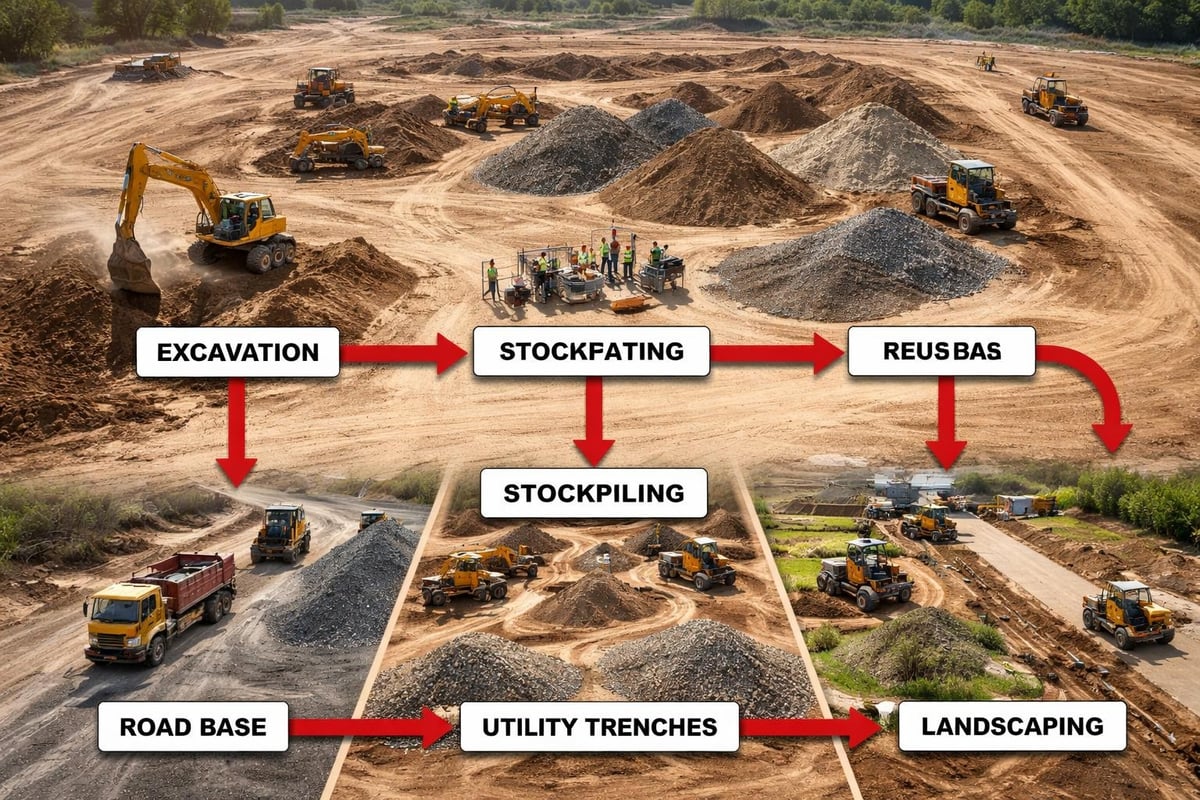
Cut and fill operations aim to balance excavated material with fill requirements elsewhere on site. This approach minimises transportation costs and environmental impact associated with importing or exporting vast quantities of soil and rock. Calculating these volumes accurately during planning prevents costly adjustments during construction.
Material Handling and Segregation
Different materials excavated from sites serve distinct purposes or require specific disposal methods:
- Topsoil: Stripped and stockpiled separately for landscaping and reinstatement
- Suitable fill material: Clean granular soils used for making up levels
- Unsuitable material: Contaminated or organic-rich soils requiring off-site disposal
- Hardcore and aggregate: Crushed materials forming structural layers
Professional earthworks contractors maintain organised stockpiles, preventing cross-contamination between materials and ensuring the right substance goes to the right location. This attention to detail reduces waste, controls costs, and maintains project schedules.
Compaction Standards and Quality Assurance
Achieving specified compaction represents one of the most critical yet often underestimated aspects of pro earthworks. Inadequately compacted ground settles under load, causing cracking in surfacing, structural movement, and drainage failures. Professional contractors implement rigorous compaction protocols that eliminate these risks.
Layer thickness determines compaction effectiveness. Attempting to compact excessively thick layers results in adequate surface consolidation but loose material beneath. Industry standards typically specify maximum 150-225mm layers for most mechanical compaction equipment, though specific requirements vary with soil type and project specifications.
Testing and Verification Methods
Quality assurance in earthworks relies on objective testing rather than visual assessment alone:
| Test Method | Purpose | Typical Frequency |
|---|---|---|
| Nuclear Density Gauge | Measures in-situ density and moisture | Per layer or specified intervals |
| Plate Bearing Tests | Assesses bearing capacity | At formation level before construction |
| CBR Testing | Determines material strength | During material selection and verification |
| Visual Inspection | Identifies surface defects | Continuous throughout operations |
Professional teams maintain comprehensive testing records demonstrating compliance with specifications. This documentation proves invaluable should disputes arise and provides clients with confidence in the work's quality. Regular testing also identifies problems early when remediation costs significantly less than addressing failures after subsequent construction.
Applications Across Different Project Types
Pro earthworks methodologies adapt to diverse construction scenarios whilst maintaining core principles of thorough preparation and precise execution. Understanding how earthworks requirements vary across project types helps clients appreciate the complexity involved.
Commercial and Industrial Developments
Large-scale commercial projects such as retail developments, industrial estates, and logistics facilities demand extensive earthworks creating level platforms from undulating terrain. These operations might move thousands of cubic metres of material, require robust drainage infrastructure, and accommodate heavy loading from buildings, machinery, and vehicle movements.
The franchise developments including drive-through facilities necessitate particular attention to vehicular circulation patterns, gradients suitable for all users, and drainage systems managing substantial surface water from paved areas. Professional contractors coordinate earthworks with subsequent highway surfacing and external works to create cohesive, functional environments.
Highway and Infrastructure Projects
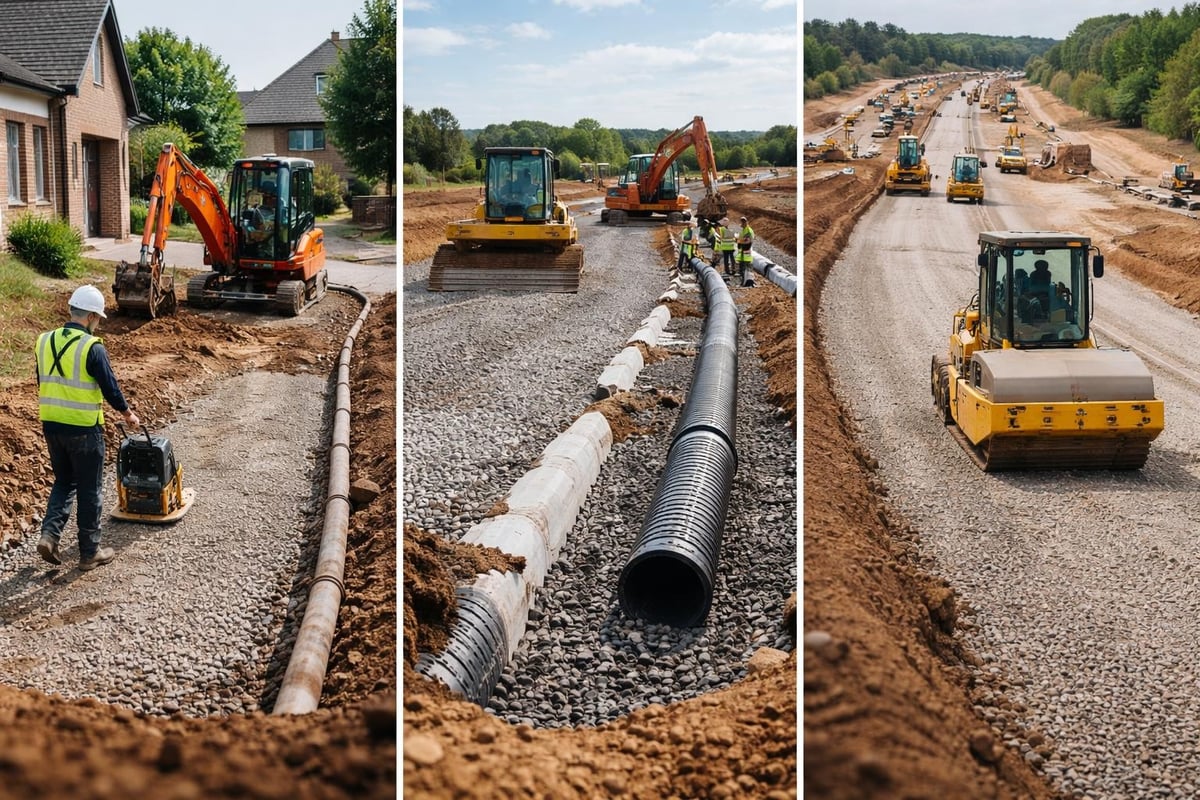
Road construction represents perhaps the most demanding application of pro earthworks principles. Highway projects require precise longitudinal and cross-sectional profiles ensuring proper drainage whilst providing safe, durable running surfaces. Embankments and cuttings must achieve long-term stability, and junctions demand complex three-dimensional grading.
Sub-base preparation for highways follows stringent specifications regarding material quality, layer thickness, and compaction levels. These foundations support not merely construction traffic but decades of heavy vehicle loading under varying weather conditions. The commitment to sustainable infrastructure increasingly influences how earthworks contractors approach environmental and social impacts of major development projects.
Residential and Domestic Projects
Driveways, patios, and residential developments require the same fundamental earthworks principles applied at different scales. Proper excavation to adequate depths, installation of appropriate sub-base materials, and effective drainage prove equally critical whether surfacing a small driveway or constructing an extensive housing estate's access roads.
Homeowners sometimes underestimate earthworks' importance, focusing instead on visible finishes. However, a beautifully paved driveway laid over inadequately prepared ground will crack, settle, and fail prematurely. Professional contractors educate clients about these foundations, ensuring realistic expectations and long-lasting results.
Environmental Considerations and Sustainability
Modern pro earthworks integrate environmental stewardship with construction efficiency. Responsible contractors recognise their role in minimising ecological disruption whilst delivering projects that serve communities for decades.
Minimising material movements reduces fuel consumption, emissions, and transportation impacts. Balancing cut and fill volumes on-site rather than importing or exporting material demonstrates both environmental responsibility and cost-effectiveness. Where material export becomes unavoidable, professional teams identify opportunities for beneficial reuse rather than disposal to landfill.
Protecting Existing Features and Adjacent Properties
Earthworks operations affect areas beyond immediate construction zones. Vibration from heavy machinery, altered drainage patterns, and dust generation all impact neighbours and existing structures. Professional contractors implement mitigation measures including:
- Vibration monitoring near sensitive structures to ensure safe working
- Dust suppression through water spraying or stabilisation treatments
- Erosion control preventing sediment washing onto adjacent land
- Tree and hedgerow protection preserving valuable ecological features
- Noise management scheduling operations appropriately and using modern machinery
These considerations reflect the broader understanding that construction projects exist within communities and ecosystems deserving respect and protection. Organisations dedicated to protecting communities and the environment from development impacts provide valuable frameworks that responsible contractors voluntarily exceed.
Weather and Seasonal Factors in Earthworks Planning
British weather significantly influences earthworks scheduling and methodology. Professional contractors plan operations recognising seasonal variations rather than treating weather as an unpredictable nuisance disrupting progress.
Winter months present challenges including frozen ground, excessive rainfall, and shortened working hours. Clay soils become unworkable when saturated, and compaction becomes impossible in freezing conditions. Experienced teams schedule weather-sensitive operations during drier months or implement protective measures such as covering exposed areas.
Conversely, summer's prolonged dry periods can create excessively hard ground complicating excavation or dust issues requiring constant suppression. Spring and autumn often provide optimal conditions balancing workability with reasonable weather expectations, though Britain's climate offers no guarantees regardless of season.
Contingency Planning and Weather Resilience
Professional earthworks contractors build weather contingencies into programmes and budgets. This realistic planning prevents the false economies of unrealistic schedules that inevitably overrun when weather intervenes. Clients benefit from honest timelines that acknowledge British weather rather than optimistic projections assuming perfect conditions.
Temporary works such as site roads, drainage diversions, and stabilised working areas enable operations to continue through varied conditions. These investments maintain progress and protect work quality when less experienced contractors might simply cease operations, extending project durations indefinitely.
Selecting Professional Earthworks Contractors
Choosing the right contractor for earthworks significantly impacts project success, costs, and timelines. Several factors distinguish truly professional operations from those offering superficially similar services.
Relevant experience in your project type provides invaluable insight. Contractors familiar with highway surfacing, commercial developments, or residential work understand the specific challenges, standards, and expectations these sectors demand. Reviewing completed projects similar to yours offers confidence in their capabilities.
Key Selection Criteria
| Criterion | Why It Matters | Questions to Ask |
|---|---|---|
| Equipment Investment | Modern, well-maintained machinery ensures efficiency and precision | What equipment do you own versus hire? |
| Insurance Coverage | Protects against accidents and damage | What levels of public and employer's liability do you carry? |
| Quality Assurance | Demonstrates commitment to standards | What testing regimes do you implement? |
| Environmental Credentials | Shows responsible practices | How do you manage waste and minimise environmental impact? |
| Financial Stability | Ensures project completion | Can you provide references from recent similar projects? |
Professional contractors welcome these questions, providing transparent answers supported by documentation. Evasive responses or reluctance to discuss quality measures should raise concerns about their actual capabilities and commitment to excellence.
Integration with Subsequent Construction Phases
Pro earthworks don't exist in isolation but rather form the foundation upon which all subsequent construction builds. Professional contractors recognise this relationship, coordinating their work with following trades to ensure seamless project progression.
Formation levels must precisely match architectural and engineering drawings. Even minor deviations create compounding problems for structural works, drainage installations, and finished surface levels. Regular liaison between earthworks teams, designers, and following contractors identifies potential conflicts before they materialise on site.
Timing earthworks completion to align with subsequent operations prevents deterioration of prepared surfaces and enables efficient site utilisation. Leaving exposed formation levels through winter months, for example, risks saturation and damage requiring remediation before construction can proceed. Professional project management coordinates these phases, protecting completed work whilst maintaining overall programme efficiency.
Handover Documentation and Verification
Upon completing earthworks, professional contractors provide comprehensive handover packages including:
- As-built drawings showing actual levels, drainage installations, and material locations
- Compaction test results demonstrating compliance with specifications
- Material certificates confirming aggregate and fill material quality
- Photographic records documenting progress and finished conditions
- Maintenance recommendations for protecting work until subsequent phases commence
This documentation enables informed decision-making by following contractors and provides essential records should future investigations become necessary. The transparency demonstrates professionalism and protects all parties' interests throughout the project lifecycle.
Cost Factors and Budget Considerations
Understanding cost drivers in pro earthworks helps clients establish realistic budgets and evaluate quotations effectively. Several variables influence pricing beyond simple site area or volume calculations.
Ground conditions discovered during investigations significantly affect costs. Rock requiring breaking, contaminated materials needing specialist disposal, or high water tables demanding dewatering all increase expenses compared to straightforward excavation in stable soils. Professional contractors conduct thorough investigations before providing firm quotations, minimising costly variations during construction.
Access constraints, working hour restrictions, and proximity to sensitive neighbours can substantially increase costs through reduced productivity or requirements for specialist equipment. Urban sites typically cost more per cubic metre than open rural locations due to these factors.
Achieving Value Rather than Minimum Price
The cheapest earthworks quotation rarely delivers best value. Contractors pricing below market rates typically compromise quality through inadequate compaction, inappropriate materials, or insufficient testing. These economies create expensive failures requiring complete reconstruction.
Value-focused clients evaluate quotations based on methodology, equipment, quality assurance, and relevant experience rather than price alone. Professional contractors justify their pricing through transparent breakdowns showing where investment occurs and explaining how their approach delivers lasting quality.
Companies such as JRG Civils demonstrate this value proposition through established track records across commercial and residential sectors, combining technical expertise with commitment to excellence that protects clients' investments for decades beyond project completion.
Professional earthworks establish the essential foundation for successful construction projects, whether commercial developments, highway infrastructure, or residential enhancements. The principles of thorough site preparation, precise execution, and rigorous quality control apply universally, adapted to each project's specific requirements and constraints. When you need civil engineering expertise that combines technical capability with unwavering commitment to quality, JRG Civils delivers pro earthworks solutions throughout the UK, ensuring your project starts on solid ground from initial site survey through to final handover.