
Mass earthworks represent one of the most fundamental yet complex aspects of civil engineering and construction. These large-scale operations involve the systematic excavation, movement, and placement of substantial quantities of soil, rock, and other ground materials to prepare sites for development. Whether creating new highway networks, commercial facilities, or residential estates, understanding the scope and methodology of mass earthworks proves essential for successful project delivery. The scale of these operations distinguishes them from smaller groundwork tasks, demanding specialised equipment, comprehensive planning, and rigorous management protocols to achieve desired outcomes efficiently and safely.
Understanding the Scope of Mass Earthworks Projects
Mass earthworks encompass a broad range of activities that fundamentally alter the topography of a site. These operations typically involve moving thousands or even millions of cubic metres of material, requiring careful orchestration of machinery, personnel, and logistics.
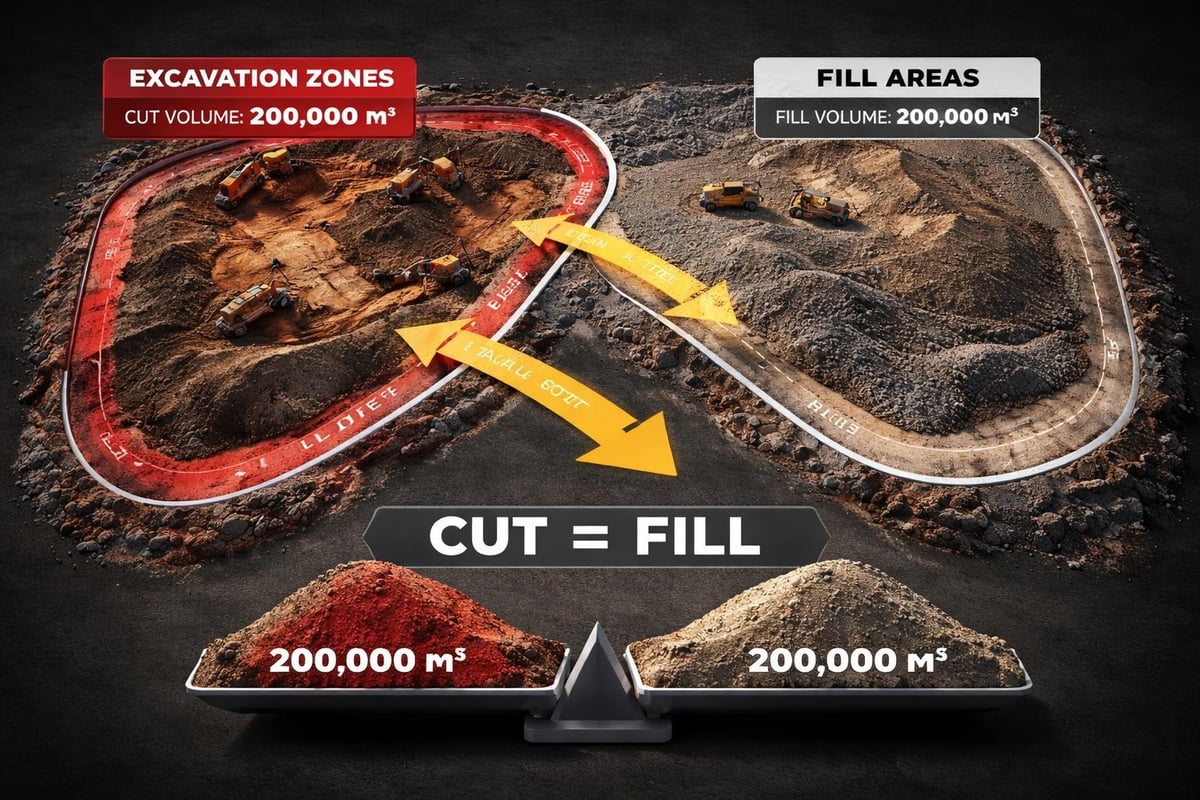
The core processes of earthworks include excavation, transportation, placement, and compaction of materials. Each phase demands specific expertise and equipment tailored to soil conditions, project requirements, and site constraints. The complexity multiplies when projects involve cut-and-fill operations, where material excavated from one area fills another, balancing earthwork volumes to minimise waste and transportation costs.
Key Components of Large-Scale Ground Operations
Understanding the constituent elements helps project managers and contractors approach mass earthworks systematically:
- Site investigation and soil analysis to determine ground conditions
- Volume calculations using survey data and topographical models
- Equipment selection based on material types and project scale
- Haul route planning for efficient material movement
- Drainage design to manage water during and after construction
- Compaction specifications ensuring structural stability
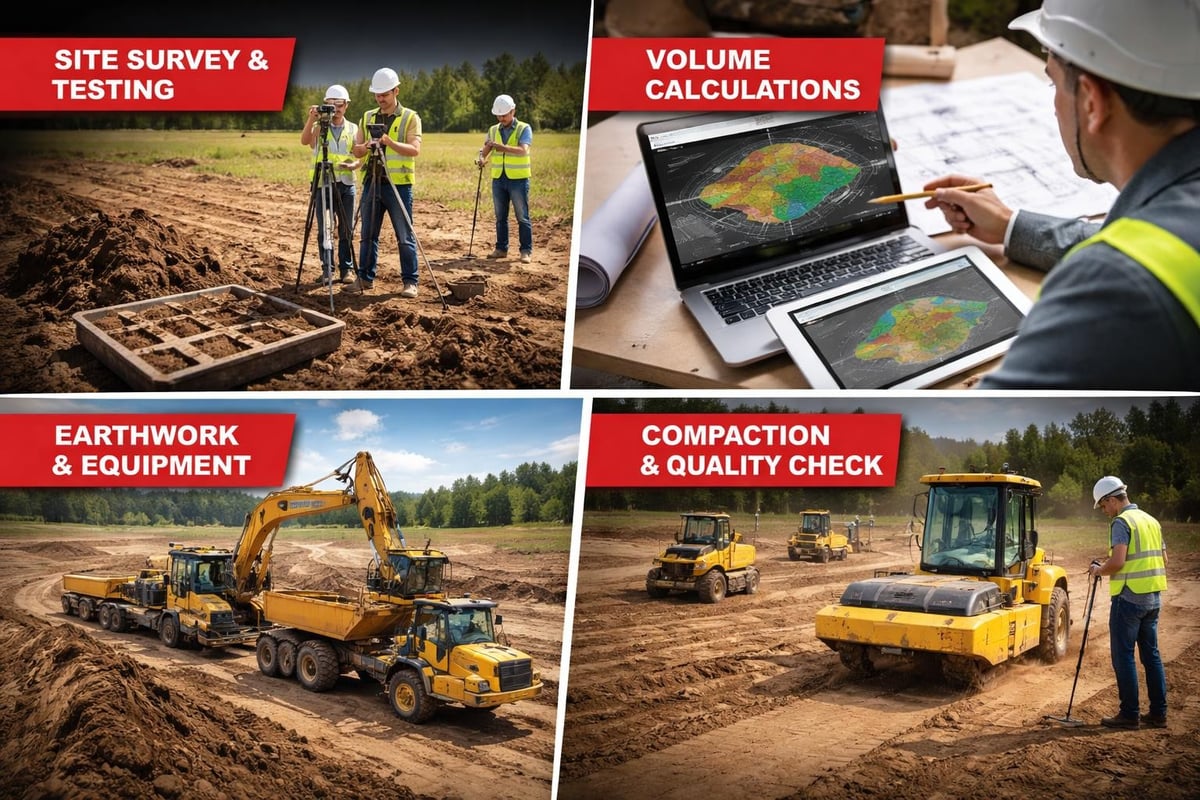
Commercial projects like drive-through restaurants and retail facilities demand precise grading to ensure proper drainage whilst accommodating parking areas, service access, and building foundations. These developments require meticulous attention to finished levels, often working within tight tolerances to meet accessibility requirements and local planning conditions.
Environmental Considerations in Mass Earthworks Operations
Modern mass earthworks operations must balance efficiency with environmental stewardship. The movement of large soil volumes inevitably affects surrounding ecosystems, water systems, and air quality, necessitating comprehensive mitigation strategies.
Potential environmental effects of earthworks include sediment runoff affecting waterways, dust generation impacting air quality, and habitat disruption for local wildlife. Responsible contractors implement erosion control measures, dust suppression systems, and phased working to minimise these impacts throughout the construction period.
Sustainable Earthworks Practices
Progressive civil engineering firms integrate sustainability into every stage of mass earthworks projects:
- Material reuse: Maximising on-site material recycling reduces transportation emissions and disposal costs
- Topsoil preservation: Stripping and stockpiling valuable topsoil for later reinstatement
- Water management: Installing sediment traps and settling ponds to protect local watercourses
- Fuel efficiency: Optimising haul routes and equipment utilisation to reduce carbon footprint
- Biodiversity protection: Scheduling works to avoid sensitive periods for local fauna
| Environmental Aspect | Impact Without Mitigation | Mitigation Strategy |
|---|---|---|
| Soil erosion | Significant sediment loss, watercourse pollution | Silt fencing, vegetation retention, phased clearing |
| Dust generation | Air quality degradation, health risks | Water bowsers, speed limits, wheel washing |
| Noise pollution | Community disturbance, wildlife stress | Equipment selection, working hours control, barrier installation |
| Habitat disruption | Biodiversity loss, ecosystem damage | Ecological surveys, seasonal restrictions, compensatory planting |
The environmental impacts from road earthworks extend beyond the immediate construction phase, influencing long-term sustainability outcomes. Selecting appropriate materials and construction techniques significantly affects the environmental footprint of infrastructure projects.
Technical Planning and Site Preparation
Successful mass earthworks projects begin long before machinery arrives on site. Comprehensive planning ensures operations proceed safely, efficiently, and within budget constraints.
Site investigation provides crucial data about ground conditions, including soil classification, bearing capacity, groundwater levels, and contamination presence. This information directly influences methodology selection, equipment choices, and risk assessments. Geotechnical engineers analyse soil samples to determine optimal excavation techniques and compaction requirements for different material types.
Volume Calculation and Material Balance
Accurate volume calculations form the foundation of effective mass earthworks planning. Modern surveying technologies, including GPS-enabled equipment and drone photogrammetry, enable precise measurement of existing ground conditions and design levels.
Creating a balanced cut-and-fill scenario minimises the need to import or export material, reducing costs and environmental impact. However, achieving perfect balance rarely proves possible, particularly when accounting for bulking factors during excavation and settlement during compaction.
Bulking factors describe how excavated material expands compared to its in-situ volume, typically ranging from 10% to 40% depending on soil type. Clay soils generally exhibit lower bulking factors than granular materials, whilst rock can increase volume by 60% or more when blasted and excavated.
Equipment and Machinery for Mass Earthworks
The scale and efficiency of mass earthworks operations depend heavily on appropriate equipment selection. Modern civil engineering projects employ diverse machinery, each suited to specific tasks and ground conditions.
Excavators form the workhorses of mass earthworks, available in sizes from compact machines for restricted access to massive tracked excavators moving 5 cubic metres per bucket. Hydraulic excavators offer precision and versatility, handling everything from bulk excavation to final trimming operations.
Articulated dump trucks transport material efficiently across challenging terrain, their six-wheel drive and articulated chassis providing stability and traction. Capacities range from 25 to 50 tonnes, with larger rigid dump trucks employed on extensive sites with established haul roads.
Compaction Equipment Selection
Achieving specified compaction density ensures long-term structural stability for pavements, foundations, and embankments. Different materials and applications demand specific compaction equipment:
- Smooth drum rollers: Ideal for granular soils and asphalt layers
- Padfoot rollers: Designed for cohesive soils like clay
- Pneumatic tyred rollers: Providing kneading action for various soil types
- Vibrating plate compactors: Suited for confined areas and trench work
| Equipment Type | Typical Application | Operating Weight | Compaction Depth |
|---|---|---|---|
| 3-tonne roller | Driveways, small car parks | 3,000 kg | 200-300 mm layers |
| 12-tonne roller | Highways, commercial developments | 12,000 kg | 300-450 mm layers |
| Padfoot roller | Clay embankments, fill areas | 8,000-15,000 kg | 250-400 mm layers |
| Grid roller | Rock fill, large stone materials | 10,000-20,000 kg | 400-600 mm layers |
Quality Control and Testing Protocols
Maintaining quality throughout mass earthworks operations protects project integrity and prevents costly remediation. Systematic testing verifies that materials meet specifications and compaction achieves design requirements.
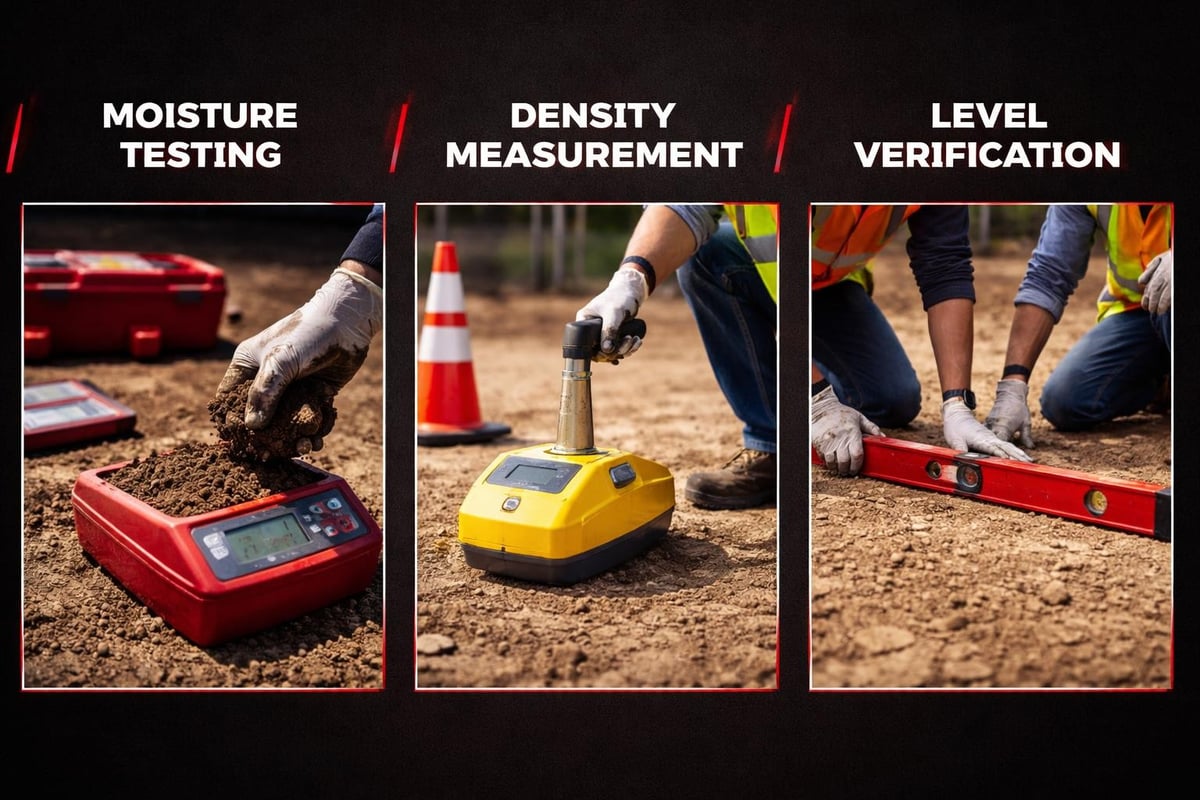
Field density testing measures the degree of compaction achieved, typically expressed as a percentage of maximum dry density determined through laboratory testing. Standard Proctor or Modified Proctor tests establish baseline values, whilst site testing employs nuclear density gauges or sand replacement methods to verify field compaction.
Moisture content significantly influences compaction effectiveness, with each soil type having an optimum moisture content producing maximum density. Working material too wet or too dry reduces compaction efficiency and may compromise structural performance.
Testing Frequency and Documentation
Rigorous documentation demonstrates compliance with specifications and provides records for future reference:
- Visual inspection: Continuous monitoring by experienced site personnel
- Density testing: Typically one test per 500-1000 cubic metres of compacted fill
- Level checks: Regular surveying to verify finished levels against design
- Material certification: Documentation of imported materials meeting specifications
- Photographic records: Visual evidence of critical stages and conditions
Highway projects demand particularly stringent quality control, as pavement longevity depends fundamentally on well-prepared subgrades and sub-bases. Testing frequencies often increase for critical infrastructure, ensuring every layer meets exacting standards before subsequent construction proceeds.
Managing Mass Earthworks on Commercial Developments
Commercial projects present unique challenges for mass earthworks contractors. Sites often occupy constrained urban or suburban locations, requiring careful coordination with existing infrastructure, neighbouring properties, and ongoing business operations.
Drive-through restaurant developments, for instance, demand precise grading to accommodate vehicle circulation, queuing lanes, and service areas whilst maintaining accessibility standards. Surface water drainage requires particular attention, directing runoff away from buildings and preventing ponding in circulation areas.
The expedited timescales typical of franchise developments add pressure to earthworks operations. Contractors must mobilise quickly, work efficiently, and achieve specified outcomes within compressed programmes. This demands experienced teams, well-maintained equipment, and robust planning to anticipate and resolve challenges promptly.
Coordination with Other Trades
Mass earthworks typically occur early in construction programmes, but their quality influences every subsequent phase. Poor preparation creates problems cascading through building foundations, pavement construction, and service installations.
Effective contractors coordinate closely with:
- Structural engineers: Ensuring foundation designs suit actual ground conditions
- Drainage specialists: Integrating surface and subsurface water management systems
- Highway authorities: Complying with adoption standards for public roads
- Utility providers: Protecting existing services and accommodating new installations
- Landscaping teams: Preserving topsoil and preparing planting areas
Regional Considerations and Ground Conditions
Ground conditions vary dramatically across the United Kingdom, influencing mass earthworks methodology and costs. Understanding regional characteristics helps contractors anticipate challenges and plan appropriately.
The North East features diverse geology, from glacial deposits and boulder clay to sandstone and limestone bedrock. These varying conditions demand flexible approaches, adapting techniques to suit encountered materials whilst maintaining programme progress.
Clay soils common throughout many regions expand when wet and shrink during dry periods, potentially causing movement in structures. Managing moisture content during earthworks and specifying appropriate foundation solutions mitigates these risks.
Contaminated Land Remediation
Former industrial sites often require remediation before development proceeds. Mass earthworks on contaminated land demand specialised approaches, including:
- Segregation of contaminated materials from clean fill
- Treatment or disposal at licensed facilities
- Validation testing to confirm successful remediation
- Environmental monitoring throughout operations
- Compliance with Environment Agency requirements
These additional complexities increase costs and extend programmes, but responsible contractors manage contaminated land effectively whilst protecting workers, the public, and the environment.
Programme Management and Logistics
Large-scale earthworks operations require meticulous programme management to coordinate machinery, personnel, materials, and external factors. Weather conditions significantly influence productivity, particularly for mass earthworks dependent on stable ground conditions and effective compaction.
Winter working presents challenges through shorter daylight hours, frozen ground, and excessive moisture. Experienced contractors build contingencies into programmes, recognising that productivity decreases during adverse weather whilst maintaining realistic client expectations.
Material stockpiling provides buffer capacity, allowing work to continue when deliveries face delays or excavation outpaces fill placement. Properly managed stockpiles remain segregated by material type, protected from contamination, and positioned for efficient loading and transport.
Cost Management and Value Engineering
Mass earthworks represent a substantial proportion of civil engineering project costs. Optimising operations delivers significant savings without compromising quality:
| Cost Factor | Optimisation Strategy | Potential Saving |
|---|---|---|
| Material import/export | Maximising cut-fill balance | 15-25% |
| Haul distance | Efficient site layout, material placement | 10-20% |
| Equipment utilisation | Right-sizing plant, minimising idle time | 12-18% |
| Programme duration | Weather planning, resource coordination | 8-15% |
Understanding the broader context of earthworks in engineering helps contractors appreciate how mass earthworks integrate within comprehensive infrastructure development strategies, informing decisions that optimise both immediate project outcomes and long-term asset performance.
Safety Management in Mass Earthworks
Safety remains paramount throughout mass earthworks operations. The combination of heavy machinery, ground instability risks, and dynamic site conditions demands comprehensive safety management systems.
Principal hazards include:
- Vehicle and pedestrian interaction: Segregation through barriers and designated routes
- Ground collapse: Proper excavation support and edge protection
- Overhead services: Surveys, protective measures, and safe working clearances
- Underground utilities: Locating existing services before excavation
- Machinery operation: Competent operators, maintenance regimes, visibility aids
Regular toolbox talks, site inductions, and method statement reviews ensure all personnel understand risks and control measures. Creating a positive safety culture where workers feel empowered to raise concerns prevents incidents and demonstrates professional standards.
Successful mass earthworks demand technical expertise, comprehensive planning, and meticulous execution throughout every project phase. From initial site investigation through final compaction verification, each step influences overall project success and long-term asset performance. Whether you're planning highway improvements, commercial developments, or residential infrastructure, JRG Civils brings the experience, equipment, and commitment to excellence that ensures your mass earthworks project achieves its objectives efficiently and safely.