
Key curb edging represents a critical component in modern highway surfacing, driveway construction, and commercial civil engineering projects. This essential infrastructure element provides structural integrity, defines boundaries, and enhances both functionality and aesthetics across diverse applications. From major highway developments to residential driveways and commercial parking areas, understanding the principles and practices of key curb edging ensures projects meet exacting standards whilst delivering long-term durability and visual appeal. As civil engineering continues to evolve in 2026, the demand for precision-installed curb edging has never been more pronounced, particularly for contractors managing multiple project types simultaneously.
Understanding Key Curb Edging Applications
Key curb edging serves multiple functions across different project types, each demanding specific technical requirements and installation methodologies. The term "key" refers to the interlocking foundation mechanism that anchors the curb securely to the surrounding surface, preventing movement and ensuring structural stability.
Commercial Highway Projects
Commercial highway applications represent the most demanding environment for key curb edging. These installations must withstand heavy traffic loads, weather extremes, and constant vehicular impact whilst maintaining precise alignment over extended distances.
Key requirements for highway curb edging include:
- Load-bearing capacity sufficient for HGV traffic
- Resistance to de-icing salts and chemical exposure
- Compliance with national highway construction standards
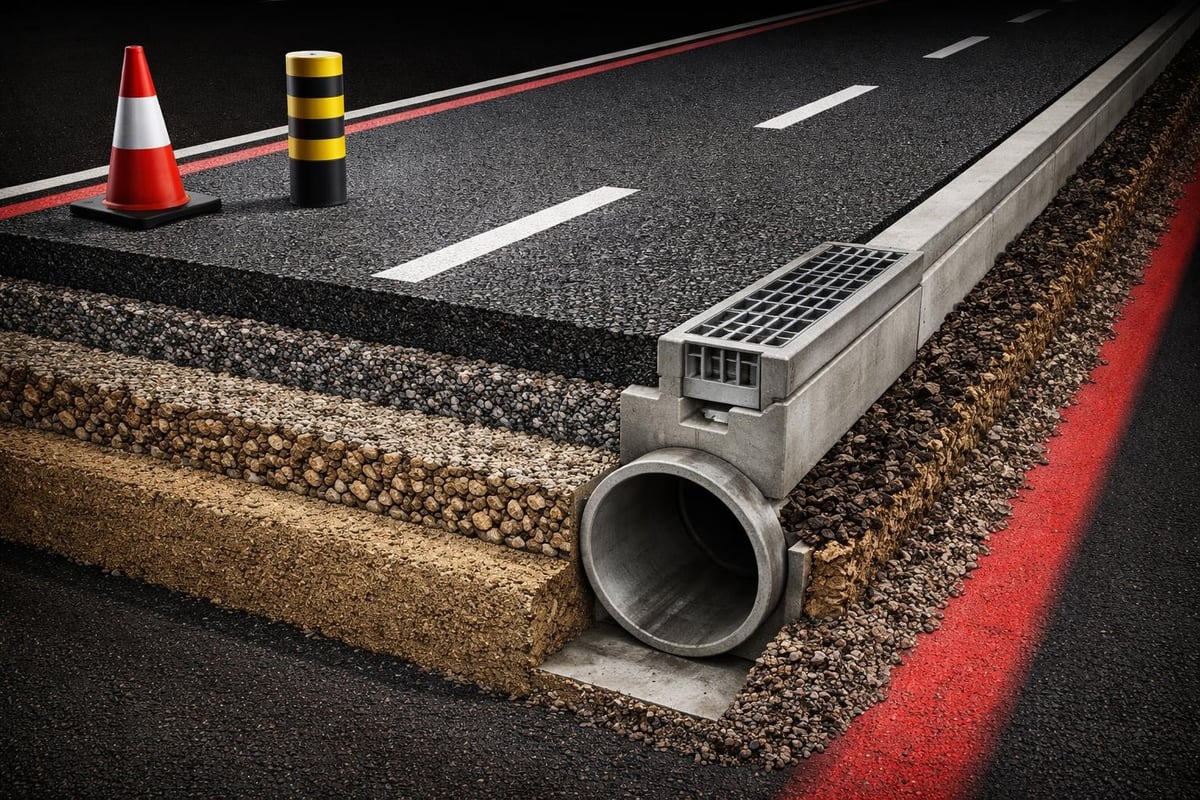
- Integration with drainage systems and road geometry
- Long-term dimensional stability
The Texas Department of Transportation’s design guidelines provide comprehensive specifications for curb and gutter installations that influence best practices across the industry. Highway curb edging typically employs concrete with specific strength ratings, reinforcement requirements, and joint spacing calculated to accommodate thermal expansion and contraction.
Drive-Through and Parking Facilities
Drive-through facilities for major franchises such as Costa Coffee and Greggs require specialised key curb edging that balances durability with precise vehicular guidance. These installations direct traffic flow whilst protecting landscaping and building foundations from vehicle encroachment.
| Application Type | Typical Height | Key Depth | Primary Function |
|---|---|---|---|
| Highway Barrier | 150-225mm | 300-450mm | Traffic separation |
| Drive-Through Lane | 100-150mm | 250-350mm | Vehicle guidance |
| Parking Bay Edge | 75-125mm | 200-300mm | Boundary definition |
| Driveway Residential | 100-150mm | 200-300mm | Surface retention |
The requirements for concrete parking curbs emphasise mass, stability, strength, and visibility as essential characteristics. Key curb edging in these contexts must be clearly visible to drivers whilst providing sufficient structural resistance to prevent displacement from regular vehicular contact.
Installation Techniques and Best Practices
Proper installation methodology determines the longevity and performance of key curb edging across all applications. The process demands precision excavation, correct base preparation, and adherence to established standards throughout execution.
Foundation Preparation
The foundation layer constitutes the most critical element in successful key curb edging installation. Inadequate base preparation leads to settlement, cracking, and premature failure regardless of surface quality.
Essential foundation steps include:
- Excavation to specified depth plus 50mm tolerance
- Removal of all organic material and unsuitable substrates
- Compaction of subgrade to minimum 95% maximum dry density
- Installation of granular sub-base material in 75-100mm lifts
- Each lift compacted before proceeding to the next layer
- Final grade verification using laser or string line controls
The "key" element typically extends 150-300mm below the finished surface level, creating a T-shaped or L-shaped profile that mechanically locks into the surrounding construction. This depth variation depends on application requirements, with highway installations demanding deeper keys than residential driveways.
Formwork and Alignment
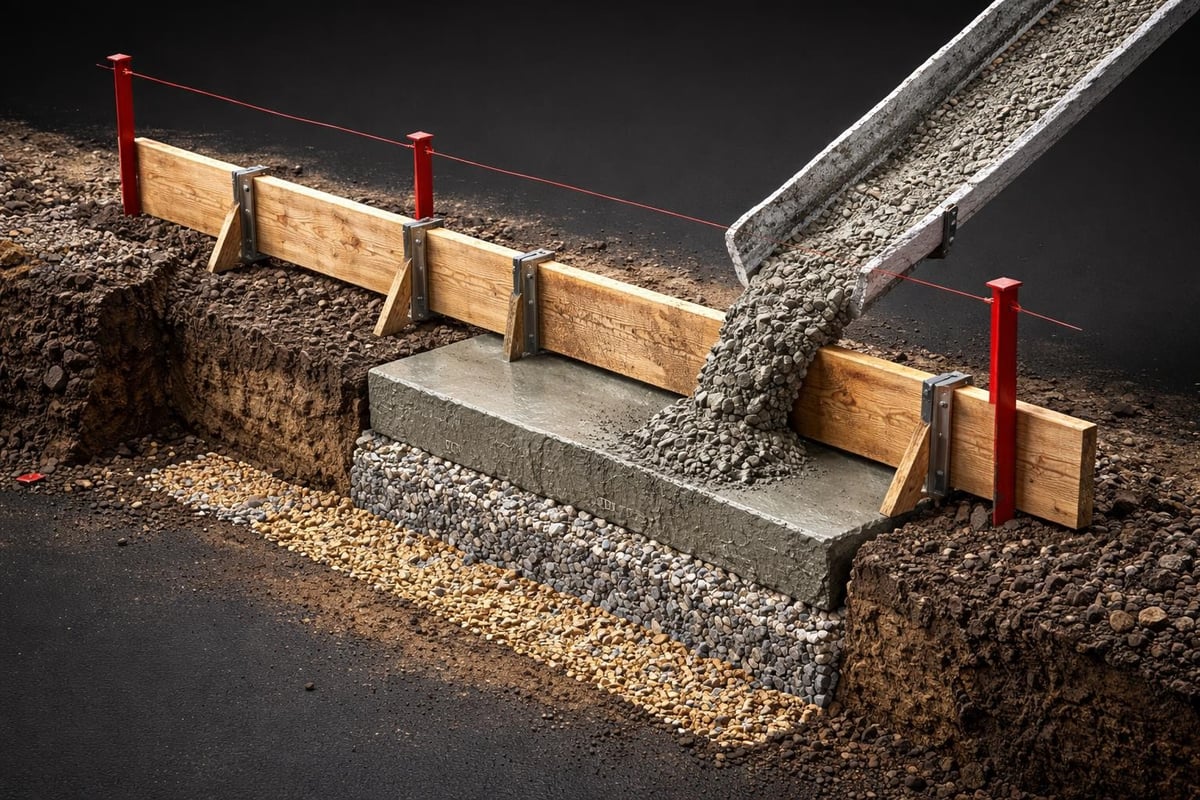
Accurate formwork ensures dimensional consistency and proper concrete placement. Professional installations employ adjustable steel forms or purpose-designed plastic formwork systems that maintain alignment throughout the concrete curing process.
Modern projects increasingly utilise laser-guided screeding equipment that maintains precise grades over extended runs. This technology proves particularly valuable on large commercial developments where maintaining consistent levels across hundreds of metres determines both functionality and appearance.
Material Selection and Specifications
Material choices significantly impact key curb edging performance, maintenance requirements, and project costs. Understanding the properties and applications of different materials enables informed decision-making aligned with project objectives.
Concrete Specifications
Concrete remains the predominant material for key curb edging across commercial and residential applications. Specification requirements vary based on exposure conditions and loading expectations.
Standard concrete specifications include:
- Minimum compressive strength: 30-40 N/mm² at 28 days
- Maximum water-cement ratio: 0.45-0.50
- Air entrainment: 4-7% for freeze-thaw resistance
- Slump range: 50-100mm for workability without segregation
- Cement content: 300-350 kg/m³ depending on aggregate size
The industry standards for concrete landscape edging provide detailed guidance on mix design, installation procedures, and quality control measures. These standards prove particularly relevant for contractors managing diverse project portfolios requiring consistent quality outcomes.
Reinforcement Options
Reinforcement enhances tensile strength and crack resistance in key curb edging, particularly for longer continuous runs or areas subject to ground movement. Steel reinforcement, fibre additives, or combinations thereof address specific performance requirements.
| Reinforcement Type | Application | Advantages | Considerations |
|---|---|---|---|
| Steel Bar (A142 mesh) | Highway, heavy commercial | Maximum strength, proven performance | Requires proper cover, potential corrosion |
| Steel Fibre | All applications | Consistent distribution, crack control | Higher material cost, specialist mixing |
| Polypropylene Fibre | Residential, light commercial | Corrosion-free, cost-effective | Lower strength enhancement |
| Glass Fibre | Specialist applications | Chemical resistance, lightweight | Limited availability, higher cost |
Highway projects typically mandate steel reinforcement meeting specific standards, whilst residential driveways may achieve adequate performance with fibre-reinforced concrete. The decision balances performance requirements against budget constraints and expected service life.
Quality Control and Testing Procedures
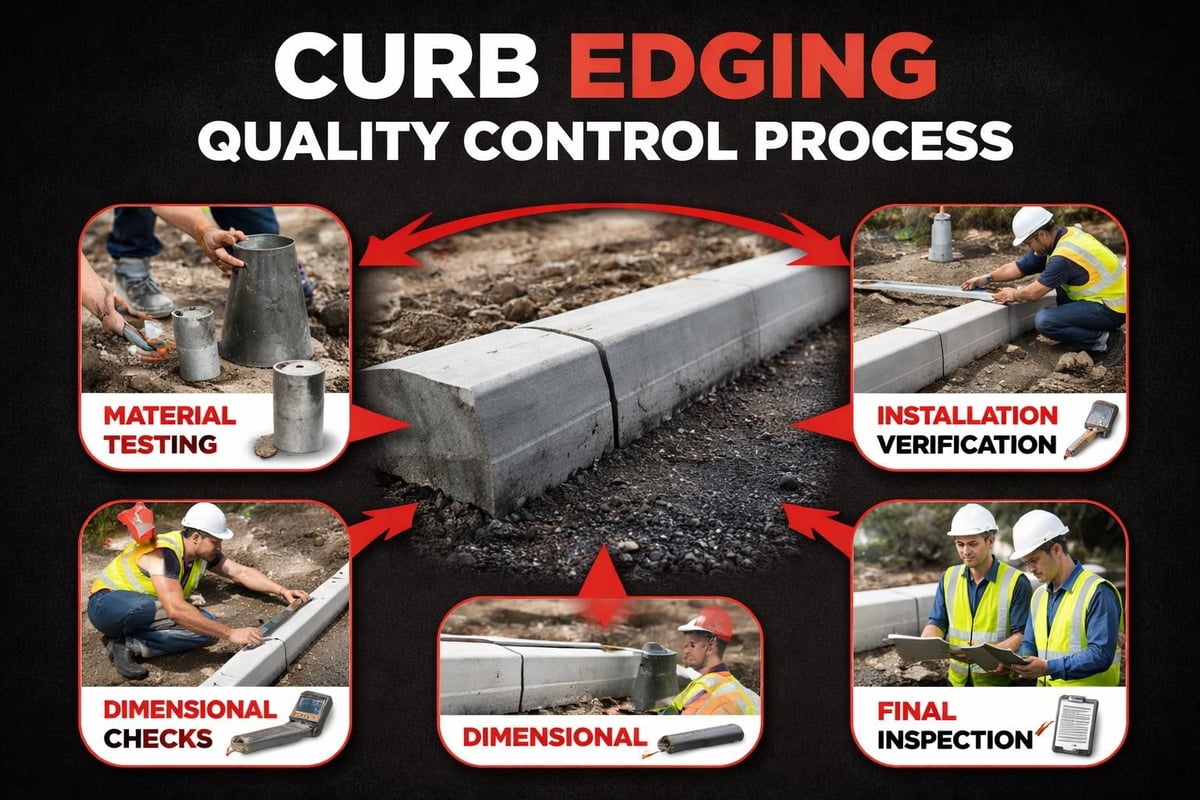
Rigorous quality control throughout key curb edging installation ensures compliance with specifications and long-term performance. Professional contractors implement systematic testing protocols that verify material properties and workmanship standards.
Pre-Installation Verification
Before concrete placement commences, multiple verification steps confirm readiness for installation. Base compaction testing using nuclear density gauges or plate bearing tests documents subgrade adequacy. Formwork alignment checks using surveying equipment ensure dimensional accuracy.
Concrete delivery documentation must confirm mix design compliance, including cement content, aggregate grading, and admixture dosages. Slump testing at the point of placement verifies consistency and workability within specified tolerances.
Post-Installation Inspection
Following installation, systematic inspection identifies potential issues requiring remediation before project completion. Visual inspection examines surface finish, alignment, joint spacing, and any visible defects such as honeycombing or surface crazing.
Critical inspection points include:
- Joint spacing and alignment with designed locations
- Surface finish consistency and texture uniformity
- Dimensional accuracy against specification tolerances
- Integration with adjacent surfaces and drainage features
- Proper curing methodology implementation
The Massachusetts DOT construction standards illustrate the comprehensive documentation and testing requirements typical of major infrastructure projects. Whilst residential projects may not demand such extensive protocols, adopting similar principles ensures quality outcomes.
Integration with Surfacing Systems
Key curb edging must integrate seamlessly with adjacent surfacing materials to create cohesive, functional installations. The interface between curbing and surfacing represents a critical detail requiring careful planning and execution.
Asphalt Surface Integration
When key curb edging adjoins asphalt surfacing, timing and methodology determine interface quality. Ideally, curb installation precedes asphalt placement, allowing the surfacing crew to achieve tight joints against the installed edge.
The curb face should be treated with tack coat before asphalt placement to promote adhesion and prevent water infiltration. Asphalt thickness typically reduces slightly at the curb interface, creating a gradual transition that prevents edge failure and improves compaction.
Block Paving Applications
For block paving driveways and parking areas, key curb edging provides essential edge restraint preventing lateral movement of the pavement structure. The edge restraints for interlocking concrete pavements must meet specific strength and stability criteria.
Block paving edge restraint requirements:
- Concrete curb minimum 100mm width, 150mm depth below paving surface
- Bedding layer continuous beneath edge restraint
- Haunch support on non-traffic side minimum 100mm width
- Top of curb level with or slightly below finished paving surface
- Expansion joints aligned with paving pattern where applicable
This integration ensures the entire pavement system functions as intended, distributing loads effectively and preventing premature failure at vulnerable edges.
Design Considerations for Different Project Types
Design requirements for key curb edging vary substantially across project types, demanding tailored approaches that address specific functional and aesthetic objectives.
Residential Driveway Projects
Residential driveways prioritise aesthetics alongside functionality, with key curb edging enhancing property appearance whilst providing practical surface retention. Homeowners increasingly specify decorative finishes, coloured concrete, or exposed aggregate surfaces that complement architectural styles.
Height selection balances visual impact with practical snow removal and landscaping maintenance. Standard residential installations typically employ 100-125mm exposed height with 200-250mm key depth, providing adequate structural performance without excessive visual prominence.
Commercial Development Requirements
Commercial projects demand robust installations capable of withstanding intensive use whilst meeting corporate design standards. Drive-through facilities require precise geometry ensuring safe vehicle circulation, with curb radii and sight lines carefully calculated.
The design professional requirements for curb cuts illustrate the regulatory complexity surrounding commercial installations in urban environments. Whilst specific requirements vary by jurisdiction, the principles of accessibility, safety, and durability remain universal.
Maintenance and Longevity Factors
Properly installed key curb edging requires minimal maintenance whilst delivering decades of service life. Understanding deterioration mechanisms and implementing preventive measures maximises return on investment.
Common Deterioration Modes
Several deterioration mechanisms affect key curb edging over its service life. Freeze-thaw cycling causes surface scaling and spalling in inadequately air-entrained concrete. Chemical attack from de-icing salts accelerates deterioration in highway applications. Joint deterioration from inadequate sealing allows water infiltration and subsequent damage.
Preventive maintenance activities include:
- Annual joint inspection and resealing where necessary
- Cleaning of drainage channels to prevent water ponding
- Repair of minor spalls before extensive deterioration develops
- Vegetation control preventing root damage to foundations
- Salt application management minimising chemical exposure
Proactive maintenance extends service life substantially compared to reactive approaches that address only visible failures.
Expected Service Life
Well-designed and properly installed key curb edging typically achieves 25-40 years service life in highway applications, with residential installations potentially exceeding 50 years. Service life depends on exposure conditions, traffic loading, maintenance quality, and initial installation standards.
| Application | Expected Service Life | Primary Deterioration Factors |
|---|---|---|
| Highway (high traffic) | 25-35 years | Salt exposure, heavy loading, freeze-thaw |
| Commercial parking | 30-45 years | Vehicular impact, weathering, maintenance quality |
| Residential driveway | 40-60 years | Freeze-thaw, settlement, aesthetic obsolescence |
| Pedestrian areas | 50+ years | Weathering, root damage, minimal loading |
These expectations assume compliance with appropriate standards and specifications during installation. Substandard workmanship or material quality significantly reduces achievable service life regardless of application type.
Cost Considerations and Value Engineering
Budget constraints influence material selection, specification levels, and construction methodology. Understanding cost drivers enables value engineering without compromising essential performance characteristics.
Installation Cost Components
Key curb edging costs comprise material supply, labour, equipment, and ancillary items such as excavation disposal and traffic management. Material costs remain relatively stable, whilst labour and equipment charges vary by location and project complexity.
Typical cost breakdown:
- Materials (concrete, reinforcement): 25-35% of total
- Labour (skilled operatives): 35-45% of total
- Equipment (excavation, compaction, placing): 15-25% of total
- Ancillary (disposal, traffic management): 10-15% of total
Larger projects achieve economies of scale through bulk material procurement and efficient crew utilisation. Mobilisation costs represent a higher proportion of total expenditure on small residential projects compared to extensive commercial developments.
Value Engineering Opportunities
Several value engineering approaches reduce costs whilst maintaining acceptable performance standards. Fibre reinforcement may substitute for steel mesh in low-traffic applications, eliminating placement labour and material costs. Standardised profiles reduce formwork complexity and installation time compared to custom profiles.
Material specification optimisation balances performance against cost, selecting appropriate strength grades and admixtures for specific exposure conditions. Over-specification increases costs unnecessarily, whilst under-specification risks premature failure and expensive remediation.
Regulatory Compliance and Standards
Key curb edging installations must comply with relevant standards, building regulations, and highway authority requirements. Navigation of regulatory frameworks ensures project approval and long-term compliance.
National and Local Standards
Highway projects must comply with national standards governing geometric design, structural adequacy, and construction quality. The Specification for Highway Works provides detailed requirements for materials, workmanship, and testing protocols applicable to publicly funded infrastructure.
Local planning authorities impose additional requirements governing appearance, dimensions, and integration with existing streetscape. Conservation areas may restrict materials or finishes permitted, requiring consultation during design development.
Accessibility Requirements
Modern developments must accommodate accessibility requirements ensuring safe passage for pedestrians with mobility limitations. Dropped kerbs, tactile paving integration, and gradient limitations all influence key curb edging design.
Understanding concrete landscape curbing fundamentals provides context for the diverse applications and regulatory considerations surrounding these installations. Professional contractors maintain current knowledge of evolving standards through continuous professional development and industry engagement.
Advanced Installation Technologies
Technology adoption improves installation efficiency, accuracy, and quality outcomes for key curb edging projects. Professional contractors increasingly employ sophisticated equipment and methodologies that enhance productivity whilst reducing physical demands.
Laser-Guided Systems
Laser-guided concrete placement systems maintain precise elevation and alignment over extended runs, eliminating manual grade checking and improving productivity. These systems prove particularly valuable on large commercial developments where maintaining consistent levels determines both functionality and aesthetics.
Modern laser systems integrate with GPS positioning, enabling automated verification against design models and immediate identification of deviations requiring correction. This technology reduces rework and ensures first-time quality compliance.
Slip-Form Paving Techniques
Continuous slip-form paving technology enables rapid key curb edging installation on major highway projects. Specialised machines extrude concrete continuously whilst travelling along predetermined alignment, consolidating and finishing the material in a single pass.
This methodology achieves production rates exceeding 500 metres per day under favourable conditions, dramatically reducing project duration compared to conventional formed construction. However, the technique demands substantial mobilisation investment, making it economically viable only for extensive installations.
Environmental Considerations
Sustainable construction practices increasingly influence key curb edging specification and installation. Environmental considerations span material selection, construction methodology, and long-term performance characteristics.
Sustainable Material Options
Recycled aggregate substitution reduces virgin material consumption whilst typically maintaining adequate performance for most applications. Blast furnace slag or pulverised fuel ash cement replacements lower embodied carbon without compromising durability.
Environmental specification options include:
- Minimum 30% cement replacement with supplementary cementitious materials
- Recycled aggregate content up to 20% of total aggregate volume
- Locally sourced materials reducing transportation impacts
- Permeable joint designs enhancing surface water management
- Light-coloured surfaces reducing urban heat island effects
These specifications align with broader sustainability objectives whilst delivering compliant installations meeting performance requirements.
Construction Impact Minimisation
Construction methodology influences environmental impact through energy consumption, waste generation, and site disturbance. Optimised concrete placement schedules minimise waste from partial loads, whilst careful excavation planning reduces disposal volumes.
Equipment selection balancing productivity against fuel consumption delivers environmental benefits without excessive cost penalties. Modern plant typically offers superior fuel efficiency compared to older alternatives, justifying investment through operational savings and reduced emissions.
Key curb edging demands careful attention to design, materials, and installation methodology to achieve optimal performance across diverse applications. Whether undertaking major highway infrastructure, commercial drive-through facilities, or residential driveways, the principles outlined ensure durable, functional, and aesthetically pleasing outcomes. At JRG Civils, we bring extensive experience across commercial and residential projects throughout the UK, delivering excellence in every aspect from initial excavation through to final finishing touches. Contact us today to discuss how our civil engineering expertise can enhance your next surfacing or edging project with the professionalism and quality workmanship that defines our reputation.