
Professional kerbing transforms ordinary surfaces into defined, durable spaces that enhance both functionality and visual appeal. Whether for commercial developments, residential driveways, or extensive highway projects, the expertise of kerbing specialists ensures that every edge meets exacting standards. These professionals combine technical knowledge with practical skills to deliver installations that withstand heavy traffic, weather conditions, and the test of time. From precast concrete to innovative sustainable materials, the field of kerbing requires precision, experience, and a thorough understanding of civil engineering principles.
Understanding the Role of Kerbing Specialists
Kerbing specialists focus on the design, installation, and maintenance of kerbs across various infrastructure projects. Their work extends far beyond simply placing concrete edges along roads. These professionals assess ground conditions, calculate drainage requirements, and ensure compliance with local authority specifications.
The responsibilities encompass selecting appropriate materials for each application, preparing foundation layers, and executing installations with millimetre-level accuracy. Specialist knowledge includes understanding load-bearing requirements for different contexts, from pedestrian pathways to heavy goods vehicle access routes.
Technical Skills Required
Professional kerbing demands a comprehensive skill set that combines traditional craftsmanship with modern techniques:
- Ground preparation and excavation to correct depths and gradients
- Concrete mixing and laying for bespoke installations
- Machine operation for slip-form and extruded kerbing methods
- Surveying abilities to ensure precise alignment and levels
- Drainage integration to prevent water pooling and surface damage
Many kerbing specialists work alongside broader civil engineering teams on large-scale projects, whilst also managing smaller residential installations independently. This versatility requires adaptability and project management capabilities that ensure timely completion across diverse environments.
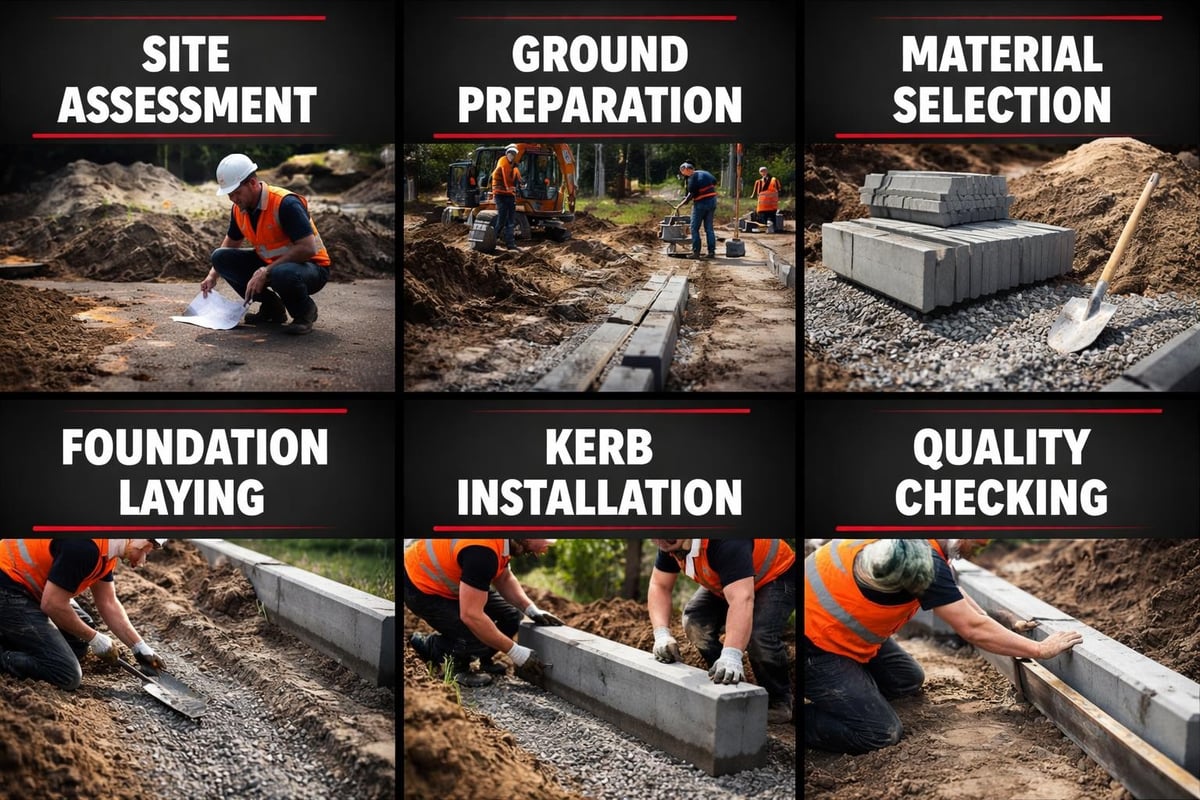
Materials and Methods in Professional Kerbing
The choice of materials significantly impacts the longevity and performance of kerbing installations. Kerbing specialists must evaluate project requirements against available options, considering factors such as budget, aesthetic preferences, and environmental conditions.
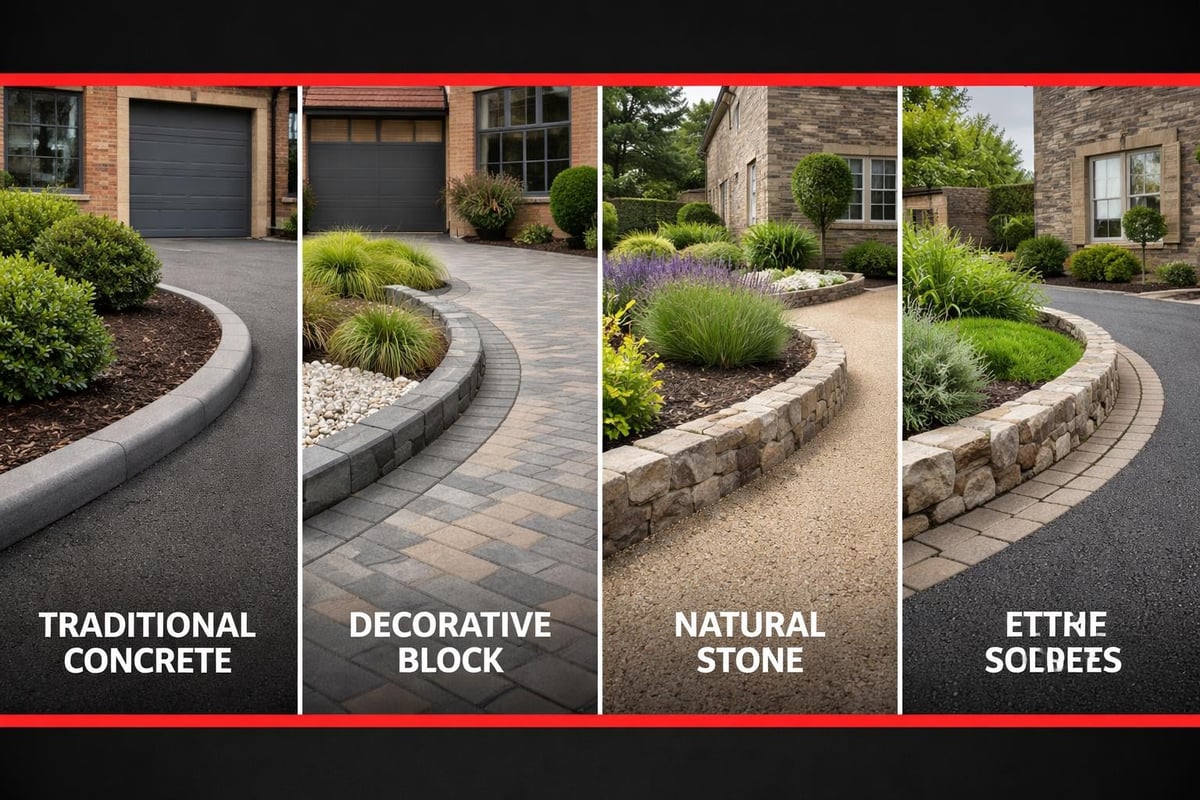
| Material Type | Primary Applications | Key Benefits | Typical Lifespan |
|---|---|---|---|
| Precast Concrete | Highways, commercial sites | Consistency, quick installation | 25-30 years |
| In-situ Concrete | Bespoke designs, curves | Flexibility, seamless finish | 20-25 years |
| Natural Stone | Heritage areas, premium driveways | Aesthetic appeal, durability | 40+ years |
| Recycled Plastic | Sustainable projects, landscaping | Environmental benefits, lightweight | 15-20 years |
Traditional precast concrete remains the most common choice for highway and commercial applications. Technicrete’s SABS certification for precast concrete kerbing demonstrates the importance of quality standards in manufacturing these essential infrastructure components.
Sustainable Alternatives
Environmental considerations increasingly influence material selection in civil engineering projects. Skanska’s trial of recycled plastic kerbing represents innovative thinking in reducing carbon footprints whilst maintaining structural integrity.
Kerbing specialists evaluating sustainable options must balance environmental benefits against practical performance requirements. Recycled materials often suit landscaping and lower-traffic applications, whereas critical highway infrastructure demands materials with proven long-term durability under extreme conditions.
Installation Techniques and Quality Standards
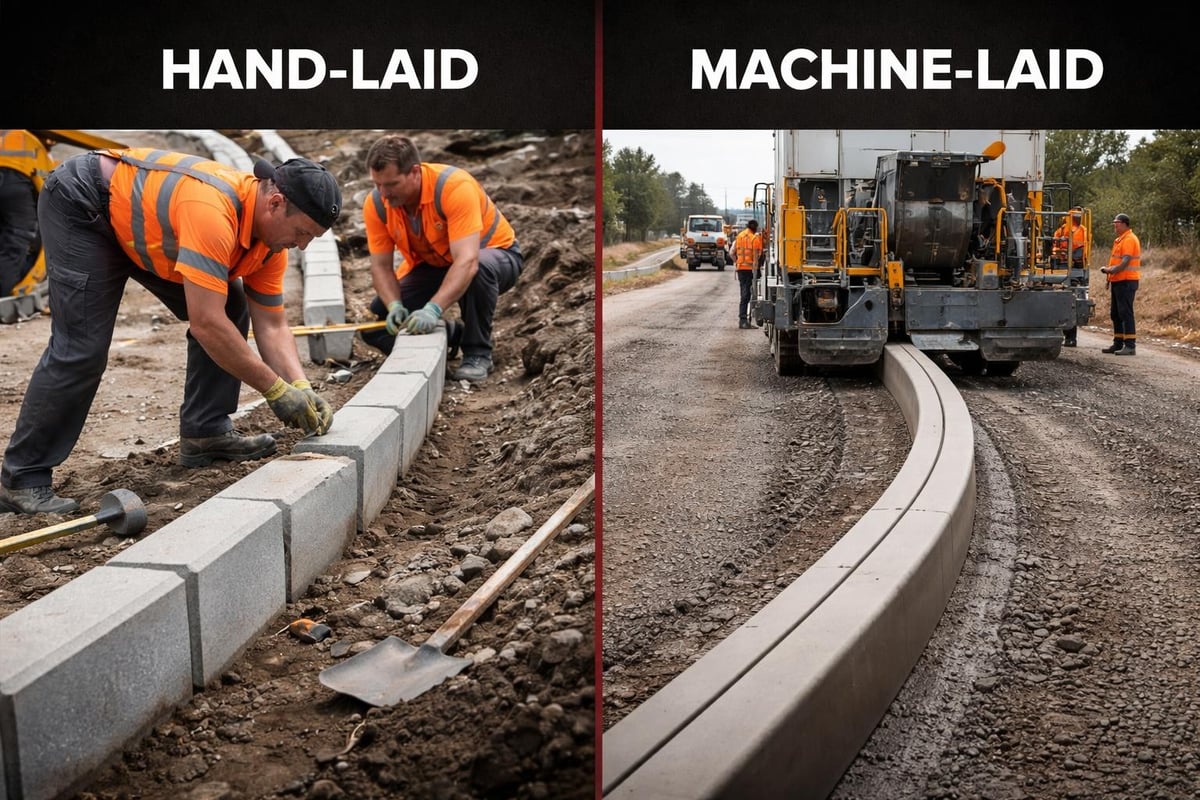
Modern kerbing installation employs both traditional hand-laying methods and advanced machinery, depending on project scale and complexity. Kerbing specialists select appropriate techniques based on site conditions, budget constraints, and timeline requirements.
Hand-Laid Kerbing
This traditional approach offers maximum flexibility for complex layouts and bespoke designs. Skilled operatives position each kerb section individually, using string lines and levels to maintain precise alignment. Hand-laid installations excel in:
- Residential driveways with intricate curves
- Heritage conservation areas requiring sensitive approaches
- Small-scale commercial entrances and forecourts
- Repairs and modifications to existing kerblines
The method requires significant labour input but allows real-time adjustments to accommodate unforeseen ground conditions or design refinements. Quality control happens continuously as each section is positioned, checked, and secured.
Machine-Laid Kerbing
For extensive highway projects and large commercial developments, machine-laid kerbing techniques deliver efficiency and consistency. Slip-form and extrusion equipment creates continuous kerblines with uniform profiles and precise dimensions.
Specialist machinery requires trained operators who understand concrete consistency, machine settings, and environmental factors affecting curing times. The initial investment in equipment and training pays dividends on substantial projects where hand-laying would prove impractical.
Commercial and Highway Applications
Large-scale projects demand kerbing specialists who coordinate with multiple stakeholders whilst maintaining rigorous quality standards. Commercial developments such as drive-through restaurants, retail parks, and industrial estates require kerbing that manages vehicle movements, defines parking areas, and channels surface water effectively.
Highway kerbing serves critical safety functions beyond simple edge definition. Properly installed kerbs guide drivers, protect pedestrians, and support road drainage systems that prevent surface deterioration. The University of Massachusetts Transportation Center’s analysis of highway curbing solutions provides valuable insights into long-term cost considerations that inform material selection and installation approaches.
Project Coordination
Successful commercial kerbing projects require seamless coordination between various trades and disciplines:
- Groundworks contractors establishing foundation levels
- Drainage engineers integrating channel systems
- Surfacing teams coordinating kerb heights with finished levels
- Landscape architects ensuring aesthetic consistency
- Local authority inspectors verifying compliance with specifications
Kerbing specialists often work to tight programmes where delays cascade through subsequent trades. Professional project management skills ensure that installations proceed efficiently without compromising quality standards.
Residential and Driveway Kerbing
Domestic projects present different challenges and opportunities for kerbing specialists. Homeowners typically seek installations that enhance property appearance whilst providing practical benefits such as preventing gravel migration or defining planting areas.
Driveway kerbing options include:
- Traditional half-battered kerbs for classic appearance
- Bullnose profiles creating softer visual transitions
- Conservation kerbs matching period property characteristics
- Decorative block edging offering colour and pattern variety
The residential sector values craftsmanship and attention to detail. Kerbing specialists working on private properties must balance structural requirements with aesthetic considerations, often creating bespoke solutions that complement existing features.
Quality Assurance in Residential Work
Homeowners investing in professional kerbing expect installations that enhance property value and withstand decades of use. Quality assurance processes include:
- Thorough site surveys identifying potential complications
- Detailed quotations specifying materials and methodologies
- Proper foundation preparation to prevent settlement
- Precise level setting ensuring effective drainage
- Appropriate concrete mixes for ground conditions
- Adequate curing times before adjacent surfacing
- Final inspections confirming alignment and finish quality
Reputable kerbing specialists guarantee their work, providing homeowners with confidence that installations will perform as intended. This commitment to excellence builds reputations that generate referrals and repeat business.
Specialist Applications and Innovative Solutions
Beyond traditional highway and driveway applications, kerbing specialists increasingly work on projects requiring specialised expertise. Urban infrastructure developments demand diverse kerbing products including bike lane separators and precast kerbs that address evolving transportation needs.
Industrial environments present unique requirements where stainless steel kerbing solutions provide hygienic barriers essential for food processing facilities, pharmaceutical manufacturing, and healthcare settings. These applications require specialists familiar with regulatory standards and installation techniques specific to controlled environments.
Continuous Kerbing Systems
Modern aesthetic preferences in both commercial and residential contexts increasingly favour seamless, continuous kerbing that eliminates visible joints. Continuous kerbing and concrete services create flowing lines that enhance visual appeal whilst maintaining structural integrity.
This approach particularly suits:
- Contemporary architectural designs emphasising clean lines
- Curved pathways and circular features in landscaping
- High-end commercial forecourts projecting premium brand images
- Feature driveways where traditional sectional kerbing appears intrusive
Kerbing specialists offering continuous installation services require specialised equipment and expertise in managing concrete consistency across extended laying periods. The aesthetic advantages often justify premium pricing for clients prioritising distinctive appearance.
Maintenance and Repair Considerations
Even the highest quality kerbing eventually requires maintenance or repair. Kerbing specialists provide ongoing services that extend infrastructure lifespan and maintain safety standards. Common issues include settlement due to ground movement, impact damage from vehicle strikes, and deterioration from freeze-thaw cycles in exposed locations.
| Issue Type | Typical Causes | Repair Approach | Prevention Strategies |
|---|---|---|---|
| Settlement | Poor foundation, ground subsidence | Lift and re-lay affected sections | Proper ground preparation, adequate sub-base |
| Cracking | Thermal stress, excessive loads | Replace damaged units | Appropriate material selection, expansion joints |
| Joint failure | Water ingress, inadequate pointing | Re-point or seal joints | Quality mortar mixes, regular inspections |
| Surface damage | Chemical exposure, de-icing salts | Clean and seal or replace | Protective treatments, appropriate materials |
Professional maintenance programmes identify emerging issues before they escalate into major failures. Regular inspections by experienced kerbing specialists detect early warning signs such as minor settlement, hairline cracks, or joint deterioration that respond effectively to proactive intervention.
Repair Versus Replacement
Determining whether to repair existing kerbing or undertake complete replacement requires careful assessment. Factors influencing this decision include:
- Extent of damage across the kerbline
- Underlying cause and likelihood of recurrence
- Age and condition of surrounding infrastructure
- Budget constraints and funding availability
- Disruption implications for ongoing operations
Experienced kerbing specialists provide honest assessments that balance short-term cost savings against long-term value. Sometimes localised repairs prove false economy if underlying issues will soon affect adjacent sections, whereas other situations allow targeted interventions that extend serviceable life economically.
Integration with Road Surfacing Projects
Kerbing work rarely occurs in isolation. Most projects integrate kerbing installation with broader road surfacing and civil engineering works, requiring coordination that ensures compatible levels, adequate drainage, and logical work sequencing.
Professional kerbing specialists understand relationships between different elements of highway construction. They recognise that kerb heights must accommodate final surfacing depths, that drainage channels integrate with kerb profiles, and that construction sequencing affects project efficiency and quality outcomes.
Highway Surfacing Coordination
Major highway projects demand precise collaboration between kerbing teams and surfacing contractors. Comprehensive approaches to kerbing installation and road surfacing demonstrate how integrated planning delivers superior results.
Critical coordination points include:
- Level datum establishment ensuring kerb heights match design intentions
- Drainage integration connecting gully pots and channel systems
- Construction sequencing protecting completed kerbing during surfacing operations
- Joint detailing where kerbing meets surfacing materials
- Traffic management coordinating road closures across multiple work fronts
Poor coordination between trades results in remedial works, programme delays, and compromised quality. Kerbing specialists working on major infrastructure projects must communicate effectively with project managers, engineers, and other contractors to maintain seamless workflows.
Commercial Project Expertise
Commercial developments present opportunities for kerbing specialists to demonstrate versatility across diverse applications. Drive-through restaurants, retail parks, distribution centres, and office complexes each present unique requirements that demand tailored solutions.
The complexity of commercial kerbing extends beyond installation techniques to encompass understanding client operational needs, brand presentation standards, and local planning requirements. Successful specialists recognise that commercial clients value reliability, programme certainty, and quality outcomes that support their business objectives.
Franchise and Branded Developments
National franchises maintain strict standards for site appearance and functionality. Kerbing specialists working on branded developments must deliver installations that meet corporate specifications whilst accommodating site-specific constraints.
Key considerations include:
- Precise adherence to approved materials and profiles
- Coordination with other trades maintaining brand standards
- Programme delivery that minimises disruption to opening dates
- Quality documentation satisfying franchise approval processes
Experience with franchise projects builds expertise that benefits subsequent commissions. Kerbing specialists familiar with corporate approval processes navigate requirements efficiently, avoiding delays that compromise project timelines.
Selecting Quality Kerbing Specialists
Property owners, developers, and local authorities seeking professional kerbing services should evaluate potential contractors against several critical criteria. The cheapest quotation rarely delivers best value when quality, reliability, and long-term performance matter.
Essential Evaluation Criteria
Reputable kerbing specialists demonstrate:
- Proven track record with verifiable completed projects
- Technical knowledge of materials, methods, and standards
- Appropriate insurance covering public and employer liability
- Qualified personnel with relevant training and certifications
- Quality assurance processes ensuring consistent standards
- Health and safety commitment protecting workers and public
- Professional communication throughout project lifecycle
- Realistic pricing reflecting genuine project requirements
References from previous clients provide valuable insights into working relationships, problem-solving abilities, and quality outcomes. Site visits to completed projects reveal craftsmanship standards and attention to detail that distinguish exceptional specialists from adequate contractors.
Future Trends in Kerbing Technology
The kerbing sector continues evolving through material innovations, installation techniques, and design approaches. Kerbing specialists who embrace technological advances whilst maintaining traditional craftsmanship values position themselves for continued success.
Emerging trends include increased adoption of sustainable materials, digital surveying and setting-out technologies, and modular systems that accelerate installation whilst maintaining quality. Environmental considerations drive innovation in recycled content materials and permeable kerbing solutions that support sustainable drainage systems.
Smart city developments may integrate kerbing with lighting systems, traffic monitoring equipment, and electric vehicle charging infrastructure. Forward-thinking kerbing specialists develop expertise in these integrated solutions, ensuring relevance as urban infrastructure requirements evolve.
Quality kerbing forms the foundation of successful infrastructure projects, whether extensive highway developments or residential driveways. Professional installations require specialist knowledge, appropriate materials, and meticulous attention to detail that ensures long-term performance. If you're planning a project requiring expert kerbing services, from commercial developments to private driveways across the North East or throughout the UK, JRG Civils delivers the technical expertise and commitment to excellence that transforms your vision into durable reality.