
Unlock the future of Tyneside’s infrastructure with expert insights into civil engineering tyneside. This essential handbook is designed for professionals, students, and property owners seeking up-to-date knowledge and practical advice.
Discover the evolving landscape of civil engineering tyneside, from historic landmarks to emerging trends, new regulations, and sustainable solutions. Whether you are planning a project, managing assets, or aiming to stay ahead in your field, this guide provides actionable steps and highlights the region’s leading firms. Use this handbook as your go-to resource for navigating opportunities and challenges in Tyneside’s booming infrastructure sector.
The Civil Engineering Landscape in Tyneside: 2026 Snapshot
Tyneside stands at the crossroads of tradition and innovation as it enters 2026. The region’s civil engineering landscape reflects a blend of industrial heritage and forward-thinking development. Let’s explore how the past shapes today’s projects, the current sectors powering growth, and the opportunities and challenges ahead.

Historical Context and Growth
Tyneside’s reputation as a civil engineering powerhouse dates back to the industrial revolution. Iconic structures such as the Tyne Bridge and the Metro system symbolise the region’s commitment to connectivity and innovation. The Quayside regeneration transformed derelict docks into vibrant cultural and commercial spaces, breathing new life into the riverfront.
Major infrastructure milestones have shaped the civil engineering tyneside story. The ongoing Tyne Bridge restoration project underlines the importance of preserving historic assets while upgrading them for future needs. Between 2024 and 2026, over £2 billion in infrastructure investment is projected, reflecting strong public and private sector confidence.
The region’s growth has been marked by adaptability. From shipbuilding to smart cities, Tyneside continues to evolve, ensuring civil engineering tyneside remains at the forefront of UK infrastructure development.
Current Civil Engineering Sectors
Today, civil engineering tyneside encompasses a broad array of sectors. Transport projects dominate, with upgrades to roads, rail, and metro networks supporting urban mobility. The public realm is being revitalised through new parks, cycling infrastructure, and improved streetscapes.
Commercial and residential developments are increasing, driven by demand for modern office space and sustainable housing. Utilities projects, including water, energy, and digital infrastructure, ensure the region’s resilience and future readiness.
Employment statistics show that over 7,500 professionals are working in civil engineering tyneside, with transport and public realm projects accounting for 60% of activity. Notable ongoing schemes include riverbank flood defences and mixed-use developments that are reshaping the skyline.
Regional Opportunities and Challenges
Civil engineering tyneside faces both significant opportunities and complex challenges in 2026. Urban expansion is creating demand for brownfield redevelopment, while the proximity to the North Sea raises the stakes for coastal resilience. The drive to regenerate underused land opens up possibilities for sustainable growth.
Yet, challenges persist. Ageing infrastructure requires urgent upgrades, and climate adaptation measures must be integrated into every project. Funding constraints can slow progress, and the sector faces a persistent shortage of skilled professionals, especially those with digital expertise.
A focus on innovation and collaboration will be essential for civil engineering tyneside to overcome these hurdles and unlock its full potential.
Local Authorities and Key Stakeholders
Local government plays a pivotal role in shaping civil engineering tyneside. Newcastle City Council, Gateshead Council, and North Tyneside Council each oversee planning, regulation, and funding for major schemes. Their policies directly impact the scope and pace of infrastructure delivery.
Collaboration is a defining feature of civil engineering tyneside. Councils work closely with private contractors, developers, and regional universities to drive innovation. For example, joint urban mobility initiatives have improved public transport links and reduced congestion across the city.
Engagement with stakeholders ensures that projects reflect community needs, maintain high standards, and deliver lasting value.
Future Outlook
Looking ahead, civil engineering tyneside is poised for continued growth. Government and private sector investment forecasts remain strong, with billions earmarked for transport, housing, and digital infrastructure through 2026. Sustainability mandates are shaping project design, with net zero targets driving greener solutions.
Emerging technologies such as digital twins, smart sensors, and advanced materials are set to transform the sector. These innovations promise greater efficiency, safety, and environmental performance. The outlook for civil engineering tyneside is one of adaptation, resilience, and leadership in the UK’s infrastructure renaissance.
Essential Steps in Planning a Civil Engineering Project in Tyneside
Planning a successful project in civil engineering tyneside requires a clear roadmap, robust due diligence, and local expertise. Each phase, from site assessment through to post-completion, brings unique challenges and opportunities. By following these essential steps, professionals can deliver safe, compliant, and future-ready infrastructure for the region.

Step 1: Initial Feasibility and Site Assessment
Every civil engineering tyneside project should begin with a thorough feasibility study and site assessment. This includes geotechnical surveys to analyse soil stability, as well as environmental impact assessments to identify risks such as flooding, contamination, or protected habitats.
Typical Tyneside challenges involve brownfield land and proximity to the River Tyne, requiring careful consideration of flood risk and historic land use. For riverbank developments, protocols involve staged soil sampling, groundwater analysis, and engagement with local stakeholders.
For those seeking tailored support, Civil Engineering Services in Tyneside offers a comprehensive overview of solutions suited to the region’s unique conditions.
Step 2: Regulatory Compliance and Permissions
Navigating the regulatory landscape is crucial in civil engineering tyneside. Securing planning permissions involves understanding Building Regulations, local authority requirements, and environmental standards. Section 278 agreements are essential for any works affecting highways, ensuring public safety and legal compliance.
A typical mixed-use development might require detailed submissions, consultations with Newcastle City Council, and close coordination with statutory consultees. Early engagement with planning officers can help avoid delays and ensure all permissions align with regional policy.
Up-to-date knowledge of regulations streamlines approvals and mitigates compliance risks.
Step 3: Design and Engineering Specifications
Once approvals are in place, the design phase of civil engineering tyneside projects leverages digital tools such as BIM and CAD for accuracy and collaboration. Integrating sustainable design principles is increasingly important, with energy efficiency and low-carbon materials becoming standard.
Close cooperation between architects, civil engineers, and local stakeholders ensures designs meet both functional and community needs. Early digital modelling allows for the identification of potential issues, reducing costly revisions later.
Design reviews should incorporate both regulatory and client requirements, ensuring a holistic approach.
Step 4: Procurement and Contractor Selection
Procurement is a critical stage in civil engineering tyneside, whether for public or private sector projects. Tendering processes must be transparent, with clear evaluation criteria including contractor accreditations, relevant experience, and health and safety records.
For public realm projects, local authorities often require contractors to demonstrate a proven track record and adherence to frameworks such as SafeContractor or ConstructionLine Gold. Comparing proposals side by side helps identify the best value and fit for the project.
Selecting the right contractor is pivotal to achieving project goals and maintaining quality standards.
Step 5: Project Delivery and Quality Assurance
Effective project management underpins successful civil engineering tyneside delivery. This involves setting clear milestones, managing risks proactively, and maintaining open communication with all stakeholders. Quality assurance is monitored through adherence to standards such as ISO and UKAS.
Health and safety remain paramount throughout, with regular site inspections and compliance checks. A recent Tyneside transport project highlighted the value of robust risk management and strong stakeholder collaboration in overcoming unexpected challenges.
Continual monitoring ensures the project stays on track and meets all regulatory and client expectations.
Step 6: Post-Completion and Maintenance
The final step in civil engineering tyneside projects is a structured handover and ongoing maintenance planning. This stage includes detailed documentation, asset registers, and scheduled inspections to maximise asset lifespan.
Community engagement is vital, with feedback mechanisms in place to address concerns and improve future projects. Ongoing maintenance of cycle infrastructure, for example, ensures safety, encourages active travel, and protects long-term investment.
Lifecycle management and local input help create resilient, user-focused infrastructure for Tyneside.
Regulatory Environment and Compliance in Tyneside Civil Engineering
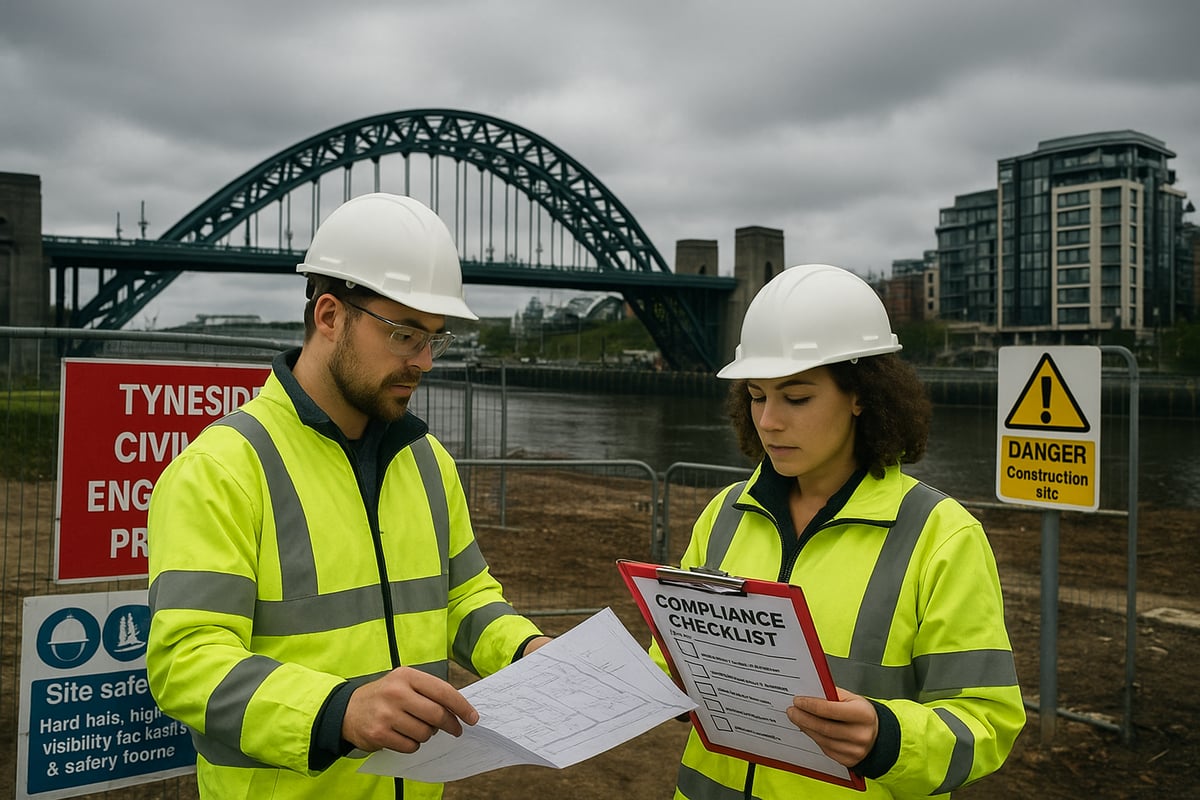
Navigating the regulatory landscape is crucial for anyone involved in civil engineering tyneside projects. Compliance ensures not only legal operation but also the safety, sustainability, and long-term success of infrastructure developments in the region.
Local and National Regulatory Framework
Civil engineering tyneside projects operate within a robust legal framework. The Town and Country Planning Act governs land use, while the Building Regulations ensure construction standards are met. Local authorities, such as Newcastle City Council, set supplementary planning policies to address regional needs.
For instance, Newcastle’s Local Plan outlines requirements for new developments, focusing on sustainable growth and community benefit. Compliance with these policies is essential from the earliest planning stages. The Health & Safety at Work Act also underpins all site operations, mandating risk assessments and safe working environments.
Collaboration between developers and councils helps streamline approvals. This partnership is especially important as Tyneside experiences significant infrastructure growth. Understanding the interplay between national law and local guidance is key to successful project delivery.
Environmental and Sustainability Regulations
Environmental responsibility is central to civil engineering tyneside. Flood risk assessments and sustainable drainage systems (SuDS) are mandatory for most developments, especially those near rivers or the coast. These measures reduce flood risk and enhance local ecology.
New biodiversity net gain regulations mean projects must deliver measurable improvements for habitats. Achieving net zero targets is now a priority, with decarbonisation strategies required for planning consent. Compliance with DEFRA and Environment Agency standards is non-negotiable, ensuring protection of watercourses and natural resources.
Sustainable practices are not just regulatory requirements, but also opportunities to futureproof projects. They demonstrate commitment to both the environment and the community, supporting Tyneside’s reputation for responsible development.
Health and Safety Standards
Ensuring health and safety is fundamental across all civil engineering tyneside works. The Construction (Design and Management) Regulations 2015 set out obligations for all parties, from clients to contractors. These rules cover risk management, site welfare, and incident reporting.
Contractor accreditation schemes, such as SafeContractor and ConstructionLine Gold, are widely adopted. These certifications confirm a firm’s commitment to safety and quality. Recent years have seen a measurable decrease in on-site incidents, attributed to strict compliance and regular training.
Employers must continually monitor and improve health and safety procedures. This culture of vigilance protects workers, the public, and the reputation of the industry throughout Tyneside.
Navigating Permits and Approvals
Securing permits is a step-by-step process that underpins every civil engineering tyneside project. Applications may be required for highways, drainage, or demolition works, each with their own documentation and approval timelines. Early engagement with local authorities helps avoid delays.
For works impacting roads, compliance with Section 278 Highway Works North East is vital. These agreements detail how new developments connect to public highways, specifying design, construction, and safety standards.
Staying proactive is essential. Fast-tracking permissions for urgent repairs is possible with the right evidence and stakeholder support. By following clear protocols and maintaining open communication, projects can move smoothly from planning to completion.
Leading Civil Engineering Firms and Contractors in Tyneside
Tyneside is home to a dynamic civil engineering tyneside sector, with firms delivering projects that shape the region’s future. The marketplace is competitive, featuring contractors who specialise in everything from major infrastructure to bespoke residential works. Understanding the landscape is crucial for those seeking the right partner for their next project.
Major Players and Their Specialisms
Several leading firms drive civil engineering tyneside forward, each bringing unique expertise and regional knowledge. Large contractors often focus on transport and public realm projects, while mid-sized firms excel in utilities, drainage, and commercial schemes. Notable contributions include the successful delivery of highways, bridges, and urban regeneration works.
A snapshot of sector specialisms:
| Firm Name | Sector Focus | Notable Project |
|---|---|---|
| Firm A | Transport, highways | Newcastle Metro upgrades |
| Firm B | Utilities, drainage | Quayside flood defences |
| Firm C | Commercial, public | Gateshead public realm |
These firms contribute significantly to the ongoing transformation of Tyneside, ensuring projects are completed to high standards and on schedule. Their work supports economic growth and community wellbeing across the region.
Selection Criteria for Choosing a Civil Engineering Partner
Choosing the right civil engineering tyneside partner involves more than comparing costs. Local knowledge, accreditations, and a proven track record are essential. Look for firms with strong client testimonials, a comprehensive service portfolio, and transparent pricing models.
Use this checklist when vetting contractors for residential or commercial developments:
- Confirm local experience and completed project types
- Check accreditations such as SafeContractor, SMAS, and ConstructionLine Gold
- Review client feedback and case studies
- Assess digital capabilities (BIM, CAD)
- Compare aftercare and maintenance offerings
A thorough selection process mitigates risk and ensures your project aligns with both regulatory requirements and community expectations.
JRG Civils Ltd: Civil Engineering Excellence in Tyneside
JRG Civils Ltd stands out in the civil engineering tyneside market for its blend of quality, professionalism, and local expertise. Established in 2020 and based in Wallsend, JRG Civils Ltd provides highways, surfacing, driveways, drainage, foundations, and public realm services across the North East and the UK.
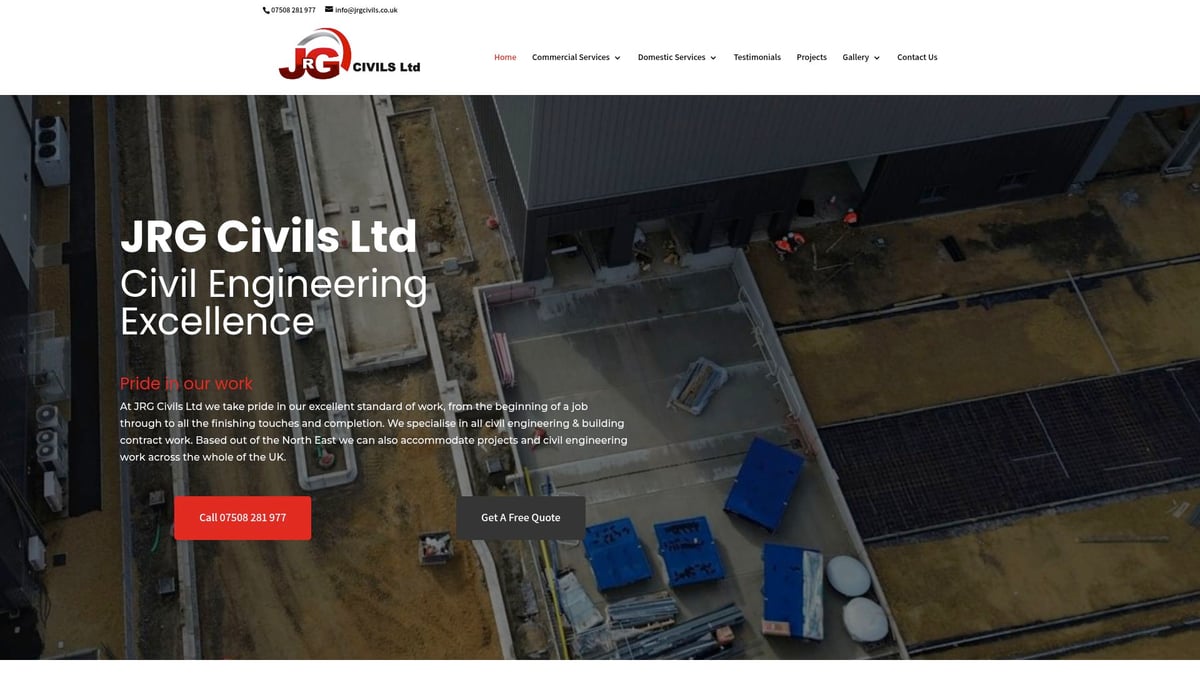
Their accreditations include SafeContractor, ConstructionLine Gold, SMAS, PQS, UKAS, and SSIP, reflecting a commitment to safety and quality. The team has delivered commercial projects for well-known brands and offers tailored solutions for private clients, from patios to driveways.
Clients benefit from a free quote service and end-to-end project management, ensuring every phase is handled with care. For further insight into local projects and expertise, see Civil Engineer North Tyneside. JRG Civils Ltd is dedicated to supporting Tyneside’s growth through reliable, high-quality civil engineering solutions.
Innovations and Sustainability in Tyneside Civil Engineering
The future of Tyneside’s built environment is being shaped by a wave of innovation and a growing commitment to sustainability. Civil engineering tyneside projects are now defined by smart technology, eco-friendly materials, and a focus on community value. These advances are setting new standards for quality, resilience, and social impact across the region.
Digital Transformation and Smart Infrastructure
Digital innovation is revolutionising civil engineering tyneside. The adoption of Building Information Modelling (BIM), Geographic Information Systems (GIS), and digital twins has transformed the way projects are planned and managed.
For example, Newcastle’s smart traffic management systems use real-time data to optimise transport flows and reduce congestion. These digital tools enable engineers to visualise designs, anticipate maintenance needs, and collaborate more effectively. The result is improved project efficiency, enhanced safety, and better outcomes for residents.
Key benefits include:
- Faster project delivery through coordinated planning.
- Enhanced safety monitoring via real-time data.
- Reduced costs with predictive maintenance.
Digital transformation is now an essential part of every major civil engineering tyneside scheme.
Sustainable Materials and Construction Techniques
Sustainability is at the heart of modern civil engineering tyneside. Local projects increasingly use recycled aggregates, low-carbon concrete, and modular construction to reduce environmental impact. These materials support the region’s net zero ambitions by lowering carbon emissions and minimising waste.
For instance, public realm upgrades now feature sustainable surfacing materials that are both durable and environmentally friendly. A recent initiative reported a significant reduction in emissions by choosing recycled over traditional aggregates.
Comparison Table: Sustainable Materials Impact
| Material Type | Emissions Reduction | Durability | Cost Savings |
|---|---|---|---|
| Recycled Aggregates | High | Moderate | Significant |
| Low-carbon Concrete | Moderate | High | Moderate |
| Modular Components | High | High | High |
By prioritising these solutions, civil engineering tyneside is leading the way in green construction.
Green Infrastructure and Climate Resilience
Civil engineering tyneside is driving climate resilience through the integration of green spaces, sustainable drainage systems (SuDS), and urban tree planting. These features are critical in managing flood risk and improving urban biodiversity.
A standout example is the riverbank flood protection schemes, which blend innovative engineering with ecological enhancements. The Holborn Riverside development update showcases how these approaches are transforming South Tyneside’s waterfront, providing both flood defence and public amenities.
Impact highlights:
- Improved biodiversity in urban areas.
- Reduced urban heat and better air quality.
- Enhanced community spaces for recreation.
Green infrastructure is now a cornerstone of civil engineering tyneside, delivering lasting value for people and the environment.
Community Engagement and Social Value
Community engagement is fundamental to the success of civil engineering tyneside projects. Involving local residents in project design ensures that new developments meet real needs and foster a sense of ownership.
Recent community-led regeneration schemes in Gateshead have demonstrated how collaborative planning can unlock social value. These projects prioritise local employment, skills development, and inclusive public spaces. Measuring social value is increasingly important, with metrics such as apprenticeships created and local spend now standard in project evaluations.
Key social value metrics:
- Number of local jobs created.
- Training and upskilling opportunities.
- Community satisfaction scores.
By embedding social value, civil engineering tyneside delivers not just infrastructure, but also stronger, more connected communities.
Future Trends and Opportunities
Looking ahead, civil engineering tyneside is poised for rapid transformation. Emerging technologies like artificial intelligence, robotics, and the Internet of Things are set to redefine how projects are delivered and maintained. According to the UK construction projects forecast 2026, the sector is expected to see substantial growth, with billions invested in smart and sustainable infrastructure.
Predictions for 2030 include:
- Widespread adoption of AI-driven design and monitoring.
- Increased use of robotics for safer, more efficient construction.
- Expansion of smart infrastructure to support urban growth.
With these innovations, civil engineering tyneside is ready to lead the region into a sustainable, technologically advanced future.
Career Pathways and Skills for Civil Engineers in Tyneside
Embarking on a career in civil engineering tyneside offers a wealth of opportunities for both newcomers and seasoned professionals. With the region’s infrastructure projects expanding, a diverse range of education and training options, skills, and professional networks are available to help you thrive.
Education and Training Routes
Tyneside is home to respected institutions such as Newcastle University and Northumbria University, both offering accredited civil engineering degrees. These programmes blend theoretical knowledge with practical experience, often including placements with local firms.
Apprenticeships are a popular alternative, providing hands-on training while earning a wage. Many local colleges and employers offer apprenticeship schemes, covering everything from site management to digital design.
Continuous Professional Development (CPD) is also essential, with courses available in new technologies and regulations. For example, Tyneside-based civil engineering degree programmes often include modules on project sustainability and digital engineering tools.
In-Demand Skills and Qualifications
Success in civil engineering tyneside requires a blend of technical and soft skills. Key technical abilities include structural analysis, geotechnical investigation, project management, and digital literacy with tools like BIM and CAD.
Soft skills are equally valued. Communication, teamwork, and problem-solving are crucial for effective project delivery. Industry accreditations such as ICE, CIOB, and CITB are highly regarded by employers.
For those interested in site-based roles, practical expertise in areas like Foundations and Piling Solutions can set candidates apart. Staying current with industry standards and safety regulations is vital for long-term career growth.
Employment Opportunities and Salary Data
The civil engineering tyneside job market is robust, with steady demand projected through 2026. Infrastructure investment is fuelling opportunities across transport, utilities, and regeneration projects.
Average salaries reflect experience and specialisation. For example, a graduate civil engineer might start at £28,000, while a chartered engineer can command upwards of £45,000. Employers value candidates who combine technical skills with local project knowledge.
Below is a quick salary comparison:
| Role | Average Salary |
|---|---|
| Graduate Engineer | £28,000 |
| Site Engineer | £35,000 |
| Chartered Engineer | £45,000+ |
Professional Networks and Industry Bodies
Joining professional networks is key for anyone pursuing civil engineering tyneside. Local chapters of the Institution of Civil Engineers (ICE), Chartered Institute of Building (CIOB), and Women in Construction offer valuable networking events and seminars.
Attending the annual Tyneside civil engineering conference helps professionals stay informed about industry trends and meet potential employers. These networks also provide access to mentoring, job boards, and continued learning resources.
Career Progression and Future Prospects
Career progression in civil engineering tyneside is dynamic, with clear pathways from site engineer to project manager or consultant. Many professionals choose to specialise in areas such as highways, sustainability, or digital engineering.
Infrastructure investment in Tyneside is set to drive job growth, making the sector attractive for both entry-level and experienced engineers. With the right skills and connections, advancing your career in this region is highly achievable.