
As Gateshead gears up for a wave of major infrastructure projects by 2026, the demand for civil engineer gateshead expertise has never been greater. These professionals are central to shaping the city’s future, from revitalising urban spaces to enhancing transport links and driving sustainability.
Civil engineers in Gateshead will encounter new opportunities and face unique challenges as the region invests in regeneration and smart technology. Their work will define the skyline and quality of life for years to come.
This essential guide explains the profession, explores local market trends, and offers clear advice on engaging top talent. Discover career pathways, project highlights, local regulations, and tips for hiring or becoming a civil engineer in Gateshead.
The Role of a Civil Engineer in Gateshead
Civil engineers are fundamental to Gateshead’s transformation as the city gears up for a new era of infrastructure and regeneration. The role of a civil engineer gateshead is both dynamic and evolving, shaped by local demands, urban growth, and the drive towards sustainability. Understanding their responsibilities, required skills, typical projects, and collaborative efforts is essential for anyone interested in the profession or planning development in the region.
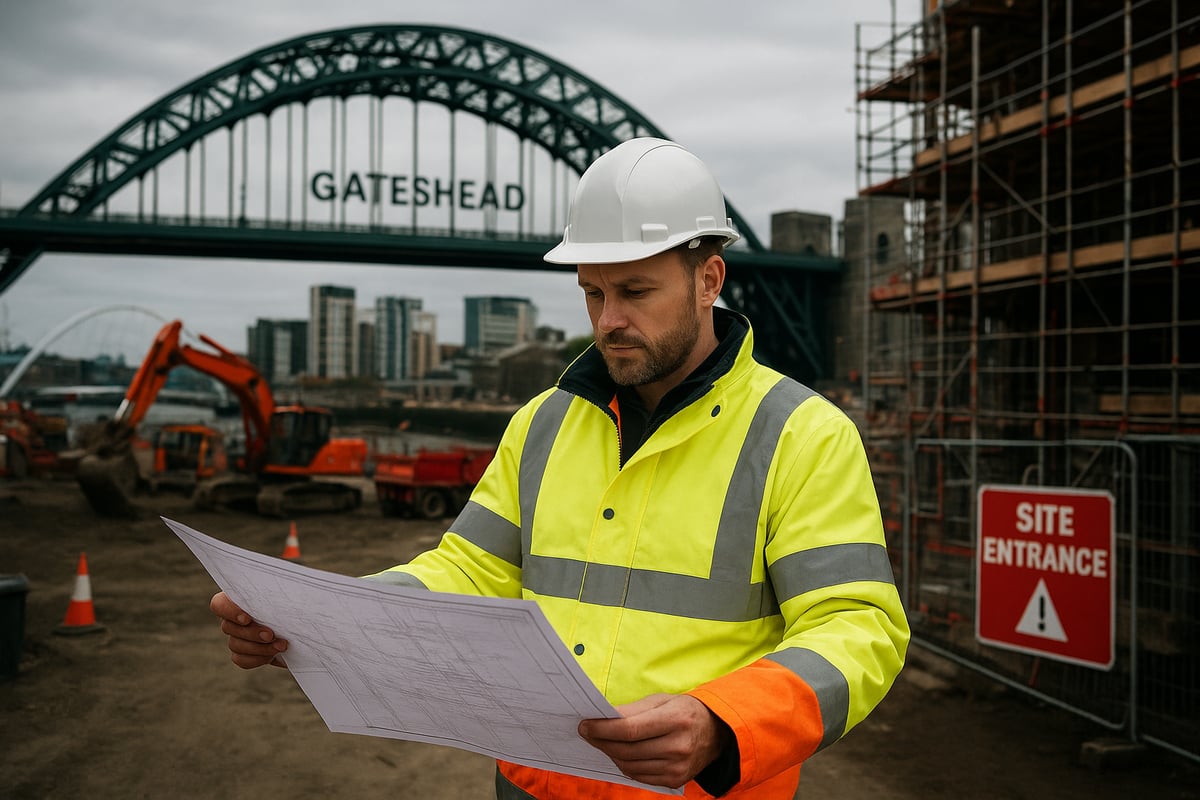
Core Responsibilities and Specialisations
The core responsibilities of a civil engineer gateshead include planning, designing, and managing a diverse range of infrastructure projects. These span essential community assets such as roads, bridges, and drainage systems.
Civil engineers may specialise in fields like structural engineering, transportation, environmental, or geotechnical disciplines. Each specialisation addresses unique challenges, whether ensuring the stability of the Tyne Bridge during recent maintenance, or delivering complex upgrades to the A1 corridor.
In Gateshead, the urban environment is rapidly expanding, and civil engineers are at the heart of regeneration schemes. Their work directly influences how the city adapts to modern needs, enhances connectivity, and achieves long-term sustainability goals.
Skills and Qualifications Needed
To succeed as a civil engineer gateshead, a strong academic foundation is vital. Most professionals hold a BEng or MEng in Civil Engineering, with many progressing towards chartered status through recognised institutions.
Technical skills such as proficiency in CAD software, project management, and site supervision are highly valued. Equally important are soft skills like effective communication, teamwork, and analytical problem-solving.
Local employers in Gateshead often seek graduates who can demonstrate adaptability and a solid grasp of regional challenges. Recent statistics show a growing demand for new entrants, especially those with digital engineering and sustainable design expertise.
Typical Civil Engineering Projects in Gateshead
Civil engineers in Gateshead contribute to a wide array of projects that shape the city’s public and private spaces. Notable examples include the regeneration of the Gateshead Quayside, Team Valley improvements, and transportation upgrades such as Metro extensions and road resurfacing efforts.
Water management is another key area, with flood defences and drainage enhancements vital to protecting both new and established communities. The refurbishment of the Gateshead Civic Centre demonstrates the blend of historical preservation with modern functionality.
For a comprehensive overview of the range of civil engineering services in Gateshead, including recent local projects, readers can explore detailed case studies and service offerings relevant to current market needs.
Collaboration with Local Authorities and Stakeholders
Collaboration is central to every civil engineer gateshead project. Professionals routinely work alongside Gateshead Council, Highways England, and private developers to deliver projects that meet the city’s evolving requirements.
Community engagement is a key component, with public consultations ensuring that local voices are heard in the planning process. Adhering to regulatory frameworks and securing planning permissions are non-negotiable steps for successful delivery.
A standout example is the Low Carbon Heat Network project, which brought together multiple stakeholders to create sustainable energy solutions for the borough. These partnerships highlight the importance of teamwork and regulatory compliance in every stage of development.
Gateshead’s Civil Engineering Landscape in 2026
Gateshead is entering a transformative era as it approaches 2026. Ambitious infrastructure projects, innovative technologies, and a strong commitment to sustainability are shaping a dynamic environment for every civil engineer gateshead can offer. The following sections explore the most significant trends, opportunities, and case studies defining the local sector.

Major Infrastructure Projects and Trends
Gateshead’s civil engineering sector is witnessing unprecedented growth as the city prepares for 2026. One of the most prominent projects is the Gateshead’s £350m Sage Arena project, which is set to become a landmark for both business and leisure. This development is part of a wider regeneration strategy that also includes the East Gateshead Link and new housing initiatives.
Funding for these projects comes from a mix of local government budgets, private investors, and national grants. This financial diversity ensures stability and drives innovation in the sector. Gateshead is also focusing on smart city technology, integrating digital tools into transport and infrastructure planning.
Civil engineer gateshead professionals are now expected to deliver not just on scale but also on sustainability and digitalisation. The move towards green infrastructure, such as energy-efficient buildings and eco-friendly public spaces, is a clear trend. These changes are helping to future-proof the city while creating a wealth of job opportunities for local talent.
Sustainability and Innovation in Local Projects
Sustainability is at the heart of every major initiative in Gateshead. Civil engineer gateshead specialists are increasingly using recycled materials and adopting low-carbon construction techniques. New housing estates, for example, feature permeable pavements and sustainable drainage systems to manage rainfall and reduce flood risk.
Digital innovation is also a defining feature of local projects. The use of Building Information Modelling (BIM) and Geographic Information Systems (GIS) allows teams to plan, monitor, and deliver complex schemes with greater efficiency. Drone surveying is becoming commonplace, providing accurate site data and helping to streamline construction processes.
These sustainable and technological advances are positioning Gateshead as a leader in modern civil engineering. They also reflect the evolving expectations of clients and regulators who demand projects that are both efficient and environmentally responsible.
Challenges Facing Civil Engineers in Gateshead
Despite the positive outlook, civil engineer gateshead professionals face several challenges unique to the region. Urban density is increasing, placing pressure on existing infrastructure and making land availability a key concern. Preserving heritage sites while enabling urban regeneration adds another layer of complexity to project planning.
Climate resilience is a growing priority, particularly as the city is vulnerable to flooding. Engineers must design solutions that protect the community and adapt to changing weather patterns. Skills shortages are also a pressing issue, with local statistics showing a gap in digital and sustainability expertise.
Diversity within the profession is another challenge. Efforts are being made to attract more women and underrepresented groups into civil engineering roles, but progress remains gradual. Addressing these challenges will be crucial for Gateshead’s continued growth and resilience.
Opportunities for Growth and Investment
The civil engineer gateshead market is ripe with opportunities, especially in investment hotspots like Team Valley, Baltic Quarter, and Follingsby Park. These areas are attracting significant government incentives for green infrastructure, encouraging both established firms and specialist contractors to expand their operations.
Demand for consultancy and project management services is on the rise, reflecting the complexity of modern projects. Local authorities are prioritising transport upgrades, low-carbon heat networks, and public realm improvements, opening doors for innovative firms.
A table summarising investment hotspots:
| Area | Focus Projects | Investment Type |
|---|---|---|
| Team Valley | Business parks, roads | Private, public |
| Baltic Quarter | Mixed-use, tech hubs | Government grants |
| Follingsby Park | Logistics, infrastructure | Private investment |
For any civil engineer gateshead based, these trends represent a chance to shape the city’s future while advancing their own careers.
Case Studies: Recent Success Stories
Recent projects in Gateshead showcase the impact and versatility of local civil engineering talent. The Gateshead Millennium Bridge has undergone essential maintenance and upgrades, ensuring its continued status as an iconic structure. Metrocentre access improvements have enhanced connectivity and boosted the local economy.
Local SMEs have played a pivotal role in public realm enhancements, delivering high-quality results on time and within budget. These successes highlight the collaborative spirit between the public and private sectors, as well as the technical excellence of the civil engineer gateshead workforce.
Each of these case studies demonstrates how innovative approaches and strong partnerships are helping Gateshead achieve its ambitious regeneration goals. As the city looks ahead to 2026, these achievements provide a solid foundation for future growth.
Becoming a Civil Engineer in Gateshead: Pathways and Prospects
Embarking on a career as a civil engineer gateshead offers a unique blend of technical challenge, community impact, and professional growth. Whether you are just starting out or planning your next step, Gateshead’s infrastructure boom in 2026 means more opportunities than ever before. Here’s how you can navigate your journey in this rewarding field.

Education and Training Routes
To become a civil engineer gateshead, a strong educational foundation is essential. Most professionals begin with a BEng or MEng in Civil Engineering from respected institutions such as Newcastle University or Gateshead College. These programmes combine theoretical knowledge with practical skills, preparing students for real-world challenges.
Work placements and apprenticeships are vital for hands-on experience. Gateshead College collaborates with local employers to offer apprenticeships, allowing students to earn and learn simultaneously. Graduate schemes provided by major consultancies and the local council are popular entry points, offering structured progression and mentorship.
Continued professional development is encouraged. Membership with bodies like the Institution of Civil Engineers (ICE) or the Chartered Institution of Highways and Transportation (CIHT) is highly regarded, providing access to resources and networking.
Career Progression and Salary Expectations
The career ladder for a civil engineer gateshead typically starts with a graduate engineer role, progressing towards chartered status. Early career stages focus on project support, design, and site supervision. With experience, engineers move into project management, technical lead, or consultancy positions.
Salary prospects are competitive, reflecting the region’s demand for expertise. In 2024, entry-level salaries average £28,000–£32,000, with chartered engineers earning £45,000–£60,000. By 2026, these figures are expected to rise, especially for those with digital engineering and sustainability skills.
For more information on job roles, skills in demand, and the typical career path, see Civil engineering jobs and careers. Upskilling in areas like Building Information Modelling (BIM) and project management can further accelerate career growth.
Employment Outlook and Key Employers
The outlook for a civil engineer gateshead remains strong, driven by major regeneration projects and ongoing investment. Local authorities, engineering consultancies, and contractors are the main employers. Major players involved in Gateshead Quays, A1 improvements, and public realm works regularly seek skilled professionals.
According to CITB and local data, job growth in civil engineering is outpacing other sectors, with particular demand for project managers and digital specialists. Skills shortages remain a concern, creating opportunities for graduates and experienced engineers alike.
Key employers include Gateshead Council, regional consultancies, and contractors such as Southbay Civil Engineering, all of whom contribute to the area’s infrastructure pipeline. The dynamic market ensures varied roles and steady career progression.
Diversity and Inclusion in Civil Engineering
Efforts to foster diversity and inclusion benefit every civil engineer gateshead and the wider industry. Local initiatives focus on attracting women and underrepresented groups through targeted STEM outreach and mentoring. Gateshead schools and colleges run programmes to spark early interest, while employers offer inclusive recruitment and flexible working policies.
Progress is measurable. The proportion of women in North East civil engineering is now over 15 percent, up from previous years. Success stories from local professionals inspire the next generation, demonstrating that the sector is open to all backgrounds and perspectives.
Mentoring, networking, and support groups continue to break down barriers, building a more diverse and resilient workforce for the future.
Professional Networking and Industry Events
Networking is crucial for any civil engineer gateshead seeking to advance their career. The North East hosts regular conferences, such as ICE North East events, which offer opportunities to learn about the latest project trends and technologies. Local networking groups and online forums provide platforms for sharing experiences and insights.
Engaging with industry events helps engineers stay informed and connected. It also opens doors to job opportunities, collaborations, and professional development. For newcomers and seasoned professionals alike, building a network is as important as technical expertise.
Active participation in these communities ensures that every civil engineer gateshead remains at the forefront of industry developments and best practices.
Regulations, Standards, and Planning in Gateshead Civil Engineering
Navigating regulations is essential for every civil engineer gateshead. Local rules, national standards, and planning processes guide how infrastructure projects are designed, approved, and built. Understanding these requirements helps ensure safe, compliant, and sustainable outcomes for Gateshead’s growing urban landscape.
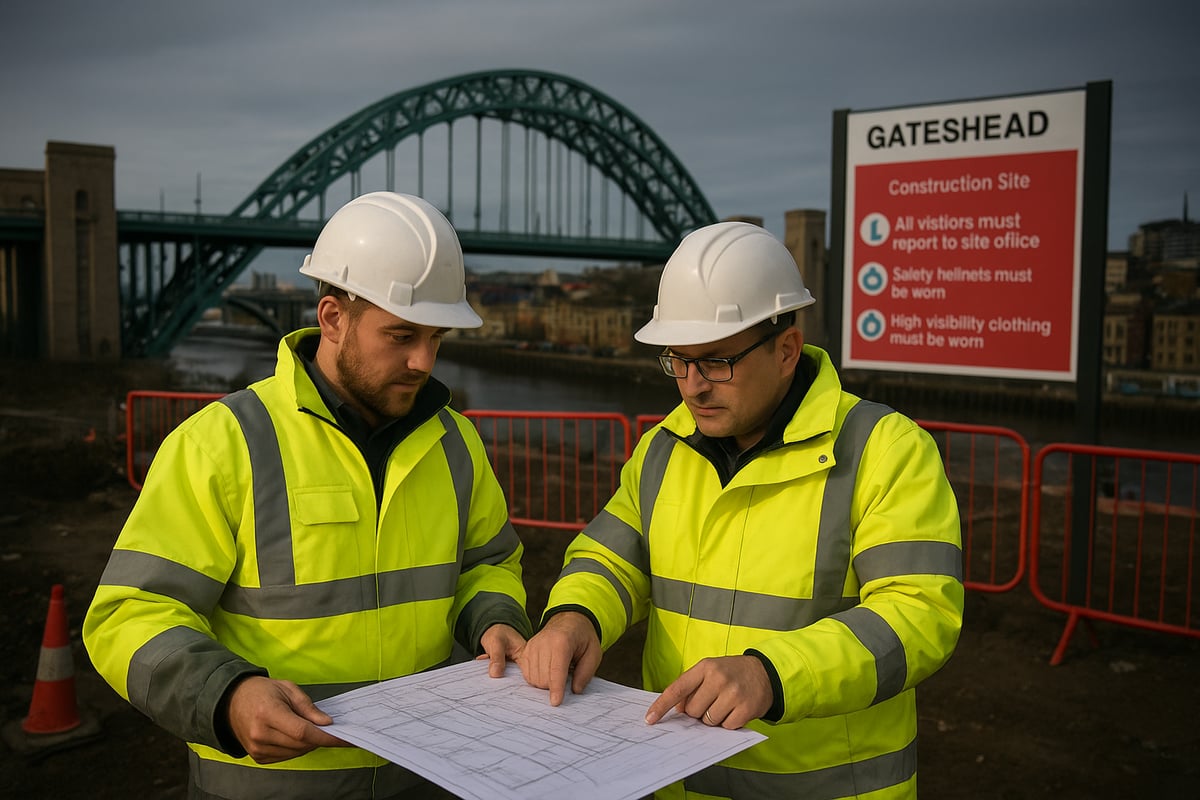
Local Planning Permission and Building Regulations
For a civil engineer gateshead, securing planning permission is the first step in any major project. Gateshead Council manages applications, requiring detailed plans, environmental assessments, and community consultations. The process ensures developments align with local priorities and national policies.
Key regulations include the Building Regulations 2010, which set minimum standards for safety, sustainability, and accessibility. The Construction (Design and Management) Regulations 2015 (CDM 2015) mandate risk management and safe working practices. For highway projects, Section 278 agreements are critical. These agreements outline how developers can make alterations to public highways, with Section 278 works explained in detail for Gateshead projects.
Typical requirements:
- Submit detailed plans and supporting documents.
- Obtain planning consent before starting work.
- Engage with stakeholders and meet statutory consultation periods.
Health, Safety, and Environmental Standards
Every civil engineer gateshead must comply with strict health, safety, and environmental standards. The Health and Safety Executive (HSE) oversees workplace safety, requiring site risk assessments, safe systems of work, and regular inspections.
Environmental management is equally important. ISO 14001 certification is often expected for larger contractors, demonstrating robust environmental controls. Local authorities may impose additional policies to safeguard habitats, manage waste, and reduce pollution.
Best practices include:
- Implementing SafeContractor-accredited procedures.
- Ensuring PPE use and site inductions for all staff.
- Monitoring environmental impact and acting promptly on issues.
A summary of key regulatory bodies and their roles:
| Body | Role |
|---|---|
| HSE | Enforces health and safety law |
| Gateshead Council | Planning and environmental oversight |
| Environment Agency | Flood risk and ecological protection |
Sustainability and Compliance Expectations
Sustainability is at the heart of every civil engineer gateshead project. Gateshead’s commitment to Net Zero 2050 means all new developments must minimise carbon footprints and maximise resource efficiency.
Environmental Impact Assessments (EIA) are required for significant projects, evaluating effects on air, water, and biodiversity. Local guidelines encourage the use of green roofs, permeable paving, and energy-efficient materials in both public and private schemes.
For example, new developments often feature:
- Sustainable drainage systems (SuDS) to manage rainwater.
- Recycled and locally sourced materials.
- Enhanced landscaping for biodiversity.
Meeting these standards not only ensures compliance but also improves project reputation and long-term value for the community.
Working with Local Authorities and Stakeholders
Collaboration is vital for any civil engineer gateshead. Engaging with Gateshead Council, statutory consultees, and local communities helps streamline the planning process and avoid costly delays.
Early involvement with stakeholders enables better design, risk management, and public buy-in. Community consultations allow residents to share concerns and suggestions, which can be addressed before construction begins.
Steps for effective collaboration:
- Schedule pre-application meetings with planning officers.
- Prepare clear, accessible communication materials.
- Document feedback and adjust plans as needed.
This approach fosters trust and transparency, ensuring projects meet both regulatory standards and community expectations.
Funding, Permits, and Project Approvals
Securing funding and permits is a key responsibility for a civil engineer gateshead. Projects may be financed through government grants, private investment, or public-private partnerships. Each funding source comes with its own approval criteria and reporting obligations.
Permit applications typically involve:
1. Prepare all supporting documentation.
2. Submit to the relevant authority (e.g., Gateshead Council).
3. Await statutory consultation and feedback.
4. Address any conditions or required changes.
5. Receive final approval and start on-site work.
For major schemes like the Metro extension, the approval timeline can be several months. Proactive engagement, thorough documentation, and clear communication with authorities are essential for success.
A civil engineer gateshead who understands these processes will be well-positioned to deliver projects efficiently and compliantly.
How to Choose the Right Civil Engineering Firm in Gateshead
Selecting the right civil engineer gateshead partner is a critical step for any project, whether you're planning a large commercial development or a smaller residential improvement. The right choice ensures quality, compliance, and value, making your investment future-proof.
Key Criteria for Selecting a Civil Engineering Partner
When choosing a civil engineer gateshead, start by reviewing the firm’s accreditations. Look for memberships with the Institution of Civil Engineers (ICE), ConstructionLine Gold, and SafeContractor. These credentials demonstrate a commitment to industry standards and safety.
Assess their portfolio of completed projects in Gateshead and the wider North East. A strong track record, such as involvement in local regeneration or transport upgrades, signals proven expertise. Client testimonials are equally important, offering insight into reliability and service quality.
For an overview of regional expertise, consider consulting the North East civil engineers overview, which highlights firms active in Gateshead and their recent achievements.
Finally, ensure the firm understands Gateshead’s regulatory landscape and has experience collaborating with local stakeholders.
Project Management and Communication
Effective project management is essential for any civil engineer gateshead. Clear timelines, defined milestones, and transparent reporting keep projects on track and clients informed.
Ask how the firm approaches project delivery. Do they use regular progress meetings, digital reporting tools, or client portals? Well-established communication channels foster trust and ensure swift issue resolution.
Successful project management in Gateshead often involves coordination with multiple agencies. Firms with experience in local schemes, such as major transport or public realm improvements, typically excel in these complex environments.
Cost, Value, and Contract Types
Understanding contract options is important when hiring a civil engineer gateshead. Most firms offer fixed-price or cost-plus contracts, each with distinct advantages.
| Contract Type | Description | Best For |
|---|---|---|
| Fixed-price | Set total cost for the project | Defined scope, clear budget |
| Cost-plus | Pay for actual costs plus fee | Flexible or evolving scope |
Always request detailed quotes that outline what is included. Balance your budget with the quality of materials, technical expertise, and long-term value. Lowest price does not always mean best value, especially for complex infrastructure work.
JRG Civils Ltd: Trusted Civil Engineering Services in Gateshead
JRG Civils Ltd stands out as a leading civil engineer gateshead partner. The company brings extensive experience in highways, surfacing, and driveways, serving both commercial clients such as Costa Coffee and Greggs, and domestic customers.
Fully accredited and known for its client-focused approach, JRG Civils Ltd offers free, tailored quotes and maintains a strong local presence in the North East. Their portfolio includes successful delivery of projects across Gateshead, underpinned by attention to detail and robust site management.
With nationwide capabilities and a deep understanding of regional requirements, JRG Civils Ltd is a reliable choice for those seeking expertise and accountability.
Questions to Ask Before Hiring
Before appointing a civil engineer gateshead, prepare a set of questions to guide your decision. Consider asking:
- What experience do you have with similar projects in Gateshead?
- How do you ensure compliance with local regulations and planning requirements?
- What project management processes do you use to handle timelines and risks?
- Can you provide recent references or arrange site visits to completed projects?
A well-prepared client can better assess a firm’s suitability, ensuring the selection of a partner who will deliver results and protect your investment.
Future Outlook: Civil Engineering in Gateshead Beyond 2026
Gateshead’s transformation is set to accelerate beyond 2026, driven by innovation, policy shifts, and the growing influence of the civil engineer gateshead workforce. As technology evolves and infrastructure demands rise, professionals and stakeholders must stay ahead of the curve to ensure resilient, future-proof developments.
Emerging Technologies and Digital Transformation
The civil engineer gateshead profession is embracing rapid digital transformation. Building Information Modelling (BIM) is now standard practice, enabling smarter design and collaboration. Artificial intelligence is being used for predictive maintenance and risk analysis, while drones and IoT sensors support real-time site monitoring.
Engineers are also exploring digital twins for managing complex assets. These virtual replicas allow for proactive decision-making and lifecycle optimisation. Such technologies not only boost efficiency but also improve safety and sustainability across Gateshead’s infrastructure.
The adoption of these tools ensures that civil engineer gateshead specialists remain at the forefront of innovation, delivering projects that meet tomorrow’s standards.
Skills for the Next Generation of Engineers
As the civil engineer gateshead landscape evolves, so too must the skills of its workforce. Digital literacy is now essential, with employers seeking professionals adept in data analysis, coding, and advanced modelling software.
Sustainability awareness is equally critical. Engineers must understand low-carbon solutions and environmental impact assessments. Interdisciplinary skills—combining engineering, IT, and project management—are in high demand.
Local training initiatives, often in partnership with tech firms, help close the skills gap. According to industry forecasts, the civil engineer gateshead sector will prioritise adaptability and continuous learning to keep pace with emerging trends.
Anticipated Infrastructure Needs and Policy Changes
Looking ahead, population growth and urban densification are shaping the priorities for every civil engineer gateshead. The Levelling Up Agenda and Net Zero commitments are driving investment in sustainable transport, housing, and public spaces.
Policy changes will increasingly favour green infrastructure, with planners adopting the latest standards for climate resilience. Gateshead Council’s regeneration plan highlights future transport upgrades, new housing, and digital connectivity as top priorities.
For the civil engineer gateshead community, staying informed on policy and regulatory updates is key to securing project approvals and funding in this dynamic environment.
Community Impact and Social Value
The civil engineer gateshead profession is uniquely positioned to create lasting social value. Inclusive design and stakeholder engagement are central to modern project delivery. Firms are now embedding local employment, apprenticeships, and social procurement into their strategies.
Examples such as the Metrocentre access improvements show how civil engineer gateshead projects can enhance accessibility and quality of life. Community engagement is a core part of developments like Gateshead Quays, where public consultations shape final outcomes.
By focusing on social value, civil engineer gateshead professionals help ensure that infrastructure works for everyone, not just for today, but for generations to come.
Strategic Recommendations for Stakeholders
For anyone invested in the future of Gateshead, the civil engineer gateshead role is vital. Aspiring engineers should pursue digital and sustainable skills through local courses and professional bodies. Local authorities are encouraged to foster collaboration and innovation with industry partners.
Investors and developers should focus on resilience, ensuring that projects can adapt to future challenges. Continuous learning and early engagement with stakeholders are essential for long-term success.
Ultimately, the civil engineer gateshead community is at the heart of Gateshead’s growth. By working together, all stakeholders can help shape a sustainable, thriving urban landscape.