
The landscape of civil engineering site work is transforming at an unprecedented pace. As we approach 2026, new regulations, technologies, and sustainability targets are reshaping the way projects are planned and delivered.
This guide offers essential insights and practical steps to help you navigate the changing world of civil engineering site work. Whether you are a contractor, project manager, or industry professional, you will find up-to-date advice for planning, execution, and risk management.
Explore pre-construction planning, regulatory updates, innovative technologies, sustainability practices, and strategies for success. Stay ahead of the curve and implement best practices to achieve project excellence in 2026.
Pre-Construction Planning: Laying the Groundwork for Success
Effective pre-construction planning is the backbone of every successful civil engineering site work project. By investing time and resources at this stage, professionals can reduce risks, control costs, and ensure smooth progress from concept to completion. In 2026, with new regulations and economic pressures, robust planning is more crucial than ever.

Understanding Project Scope and Requirements
Defining the scope for civil engineering site work starts with clear objectives and documented deliverables. Accurate site surveys and geotechnical investigations set the foundation for informed decisions, reducing the risk of surprises once construction begins.
Stakeholder engagement is equally important, ensuring alignment and managing expectations early. Major UK infrastructure projects, such as HS2, demonstrate the necessity for detailed scope documentation.
A recent RICS report revealed that up to 75% of project overruns are linked to poor initial planning, highlighting why scope clarity is vital. For deeper insights into planning, see Pre-construction planning in civils.
Budgeting and Cost Estimation
Accurate budgeting is essential for civil engineering site work. Modern cost estimation software helps forecast expenses and track changes, especially important given inflation and volatile material prices expected in 2026.
It is wise to account for potential fluctuations, such as those seen in steel and concrete after 2024. Contingency planning for unexpected costs is now standard practice, ensuring projects stay financially viable.
Industry data from Glenigan shows that average cost overruns reached 12% in civil projects during 2023, making precise estimation and robust financial controls a top priority.
Regulatory Compliance and Permitting
Navigating the UK’s regulatory landscape is a core aspect of civil engineering site work. Securing planning permissions, complying with building regulations, and completing environmental impact assessments (EIA) require careful attention.
For 2026, updates include new Net Zero Building Regulations and a shift to digital permitting systems. Incomplete EIA submissions often cause delays, so thoroughness is vital.
According to Construction News, 30% of large projects experienced setbacks due to regulatory issues in 2023. Staying ahead of compliance requirements reduces risk and keeps projects on track.
Site Assessment and Risk Analysis
Assessing environmental, geological, and logistical risks is a key step in civil engineering site work. Digital risk assessment tools now offer greater precision, helping teams address potential hazards before construction starts.
Health and safety considerations must be integrated from the outset, with modern techniques like GIS-based flood risk mapping becoming standard. For example, many sites in the UK now use advanced technology to proactively identify and mitigate risks.
The ICE reported that 45% of UK sites required additional risk mitigation in 2024, reinforcing the importance of thorough risk analysis.
Scheduling and Resource Allocation
Creating realistic project timelines is central to effective civil engineering site work. Digital project management tools enable teams to plan labour, materials, and equipment needs with greater accuracy.
Supply chain disruptions remain a concern, as seen during the 2025 concrete delivery crisis. Proactive scheduling and resource allocation help to anticipate and avoid such delays.
Build UK found that 60% of projects faced changes to their schedules in 2023, highlighting the need for flexible and responsive planning from the outset.
Site Preparation: From Survey to Breaking Ground
Effective site preparation is the foundation of any successful civil engineering site work. Before construction can begin, professionals must transform raw land into a safe, compliant, and build-ready environment. This process involves precise surveys, careful earthworks, robust access planning, utility management, and rigorous environmental protection. Each step is essential for minimising risks and setting the stage for seamless project delivery.
Topographical and Geotechnical Surveys
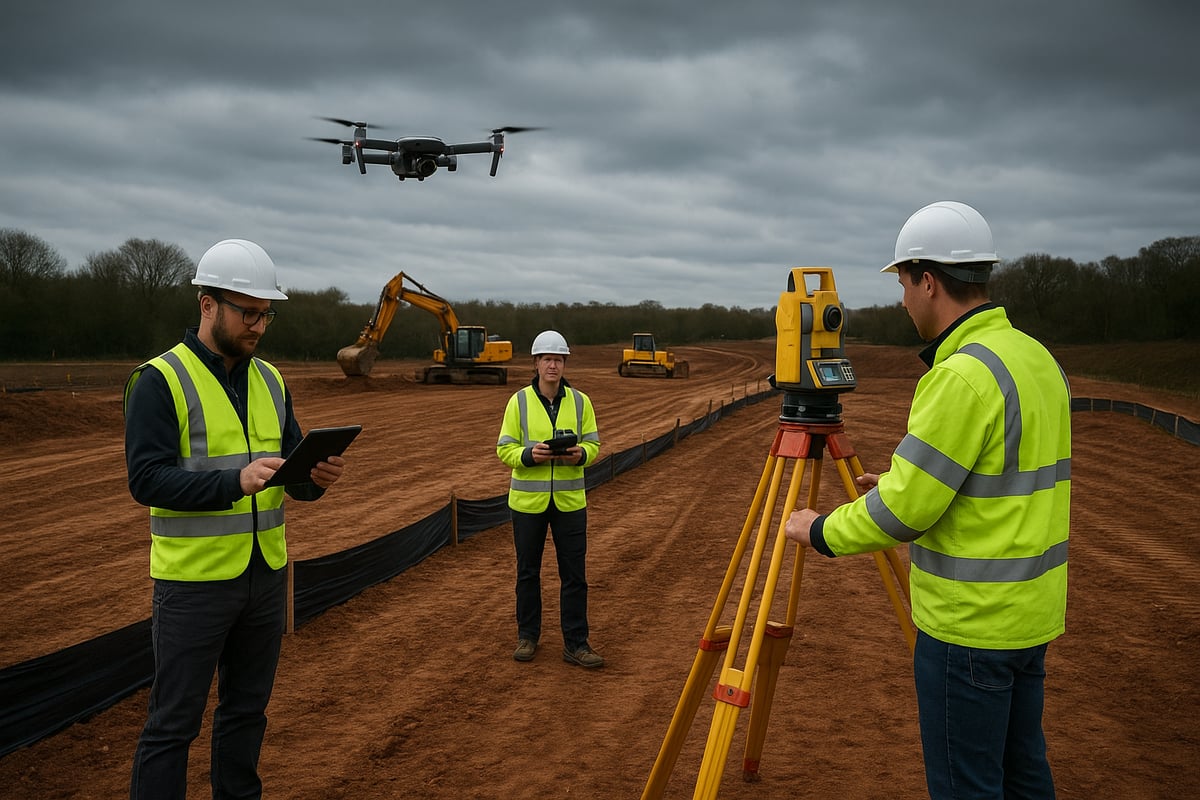
Accurate data collection is vital for civil engineering site work. Topographical surveys map the land’s surface, identifying contours and features, while geotechnical investigations assess soil and sub-surface conditions. Today, drones, 3D laser scanners, and ground-penetrating radar provide high-resolution data, integrating seamlessly with Building Information Modelling (BIM) systems.
For example, drone surveys played a crucial role in the HS2 rail project, delivering rapid and detailed site models. According to NBS, 70% of UK contractors now use drone technology for surveys. For a deeper dive into site-specific practices, see Civil engineering site preparation.
Clearing, Grading, and Earthworks
Once surveys are complete, clearing, grading, and earthworks begin. This phase of civil engineering site work includes removing vegetation, levelling ground, and shaping the site for proper drainage. Machinery such as excavators, bulldozers, and graders are essential for efficient progress.
Special attention is required when managing contaminated land or hazardous materials, particularly on brownfield sites like those in Manchester. Earthworks represent up to 25% of overall site work costs, making accurate planning and waste management critical for budget control.
Temporary Works and Access Roads
Safe and efficient access is a cornerstone of civil engineering site work. Temporary works include access roads, hoardings, scaffolding, and welfare facilities. These solutions support daily operations and ensure compliance with health and safety requirements.
Traffic management plans are essential to minimise disruption and keep the site secure. On large motorway upgrade projects, such as the installation of temporary bridges, bespoke access solutions are often required. Highways England reports that 80% of major projects demand custom access planning to meet unique site challenges.
Utilities and Service Diversions
Identifying and managing existing utilities is a crucial step in civil engineering site work. Teams must locate water, gas, electricity, and telecoms, then coordinate with providers for any diversions or upgrades needed.
Careful planning helps minimise disruption to local communities, especially in busy city centre developments. Utility issues are a common cause of delay, accounting for 10% of project setbacks in the UK. Early engagement with utility companies reduces risk and keeps projects on track.
Environmental Protection Measures
Environmental safeguards are integral to modern civil engineering site work. Measures such as silt fencing, erosion control, and pollution prevention are implemented to protect local ecosystems. Biodiversity and wildlife, including protected species like bats, must be considered during site clearance.
Compliance with UK environmental legislation is non-negotiable. DEFRA notes that 40% of projects now include biodiversity net gain plans, reflecting the sector’s commitment to ecological enhancement. These steps ensure regulatory approval and foster positive community relations.
Technological Innovations Transforming Site Work in 2026
The pace of technological advancement is reshaping civil engineering site work in profound ways. As we look towards 2026, digital tools, automation, and innovative materials are becoming integral to project success. Embracing these advancements not only drives efficiency but also ensures compliance with evolving industry standards.

Building Information Modelling (BIM) and Digital Twins
BIM has become the backbone of civil engineering site work, streamlining planning, coordination, and clash detection. With the integration of digital twins, teams can now monitor assets in real time, enhancing decision-making and predictive maintenance.
For example, the Crossrail project leveraged BIM to improve asset management across its complex infrastructure. By 2026, 85% of UK civil projects use BIM, reflecting its central role. Digital twins add another layer by mirroring the physical site, allowing instant data access.
Staying ahead of top civil engineering trends 2026 ensures that professionals maximise the benefits of these technologies in civil engineering site work.
Automation and Robotics on Site
Automation is transforming repetitive and hazardous tasks on site. Automated excavators, bulldozers, and pavers are now a common sight, improving both safety and productivity in civil engineering site work.
Robotics are increasingly used for bricklaying and other labour-intensive activities. In large-scale housing developments, robotic systems deliver consistency and reduce manual workload. Since 2022, there has been a 20% increase in automation adoption, demonstrating its impact on the sector.
The integration of automation helps address skills shortages while maintaining project timelines and quality standards.
Drones, Sensors, and IoT for Real-Time Monitoring
Drones and IoT sensors are revolutionising real-time monitoring on civil engineering site work. Drones provide aerial surveys, progress tracking, and safety inspections, delivering accurate data quickly.
IoT sensors monitor structural health, track assets, and measure environmental conditions. In smart motorway projects, sensor networks have enabled proactive maintenance and reduced incidents. Notably, sites using IoT have seen a 50% reduction in safety incidents.
These technologies offer unparalleled visibility, allowing teams to react swiftly to on-site issues.
Prefabrication and Modular Construction
Prefabrication is accelerating the pace of civil engineering site work by shifting much of the construction process off-site. Structural elements are manufactured in controlled environments, then assembled on location.
This approach was pivotal in the A14 upgrade, where modular bridge components cut build times significantly. Prefabrication reduces waste, enhances quality, and shortens project schedules by up to 30%.
By 2026, modular construction methods are expected to become standard practice, particularly on large infrastructure projects.
Advanced Materials and Sustainable Solutions
New materials are reshaping the future of civil engineering site work. High-performance concretes, recycled aggregates, and low-carbon alternatives are increasingly specified to meet sustainability goals.
Innovations such as self-healing concrete and graphene-enhanced mixes are being piloted on UK sites. For example, graphene-enhanced concrete offers superior strength and durability.
Currently, 15% of projects specify low-carbon materials, signalling a strong shift towards greener solutions. These advances support both environmental targets and long-term asset resilience.
Digital Project Management and Collaboration Platforms
Digital platforms are central to successful civil engineering site work in 2026. Tools like Procore and Autodesk Construction Cloud enable document sharing, scheduling, and real-time communication among project teams.
These platforms increase transparency, accountability, and overall productivity. UK firms report a 60% boost in efficiency after adopting digital collaboration tools.
By streamlining workflows and improving information access, digital project management platforms are essential for managing complex, multi-stakeholder projects.
Sustainability and Environmental Best Practices
Sustainability is now at the heart of civil engineering site work, shaping how projects are planned, delivered, and managed. As 2026 approaches, meeting environmental standards is no longer optional. From net zero targets to biodiversity gains, every stage of site work demands a sustainable approach. Let’s explore the best practices that are leading the way for responsible and successful civil engineering site work.
Meeting Net Zero and Green Building Targets
The UK government’s 2050 net zero strategy is driving rapid change in civil engineering site work, with 2026 interim targets already influencing project delivery. Achieving these goals means using low-carbon materials, investing in energy-efficient processes, and prioritising green building certifications such as BREEAM. For example, public sector projects now routinely target BREEAM Excellent, with 40% of new builds aiming for this standard (BRE, 2024).
Success in this area requires early integration of sustainability into design and procurement. Digital tools can help track emissions and ensure compliance with new regulations. For a more detailed look at integrating sustainability into your site processes, see Site engineering work processes.
Waste Minimisation and Circular Economy
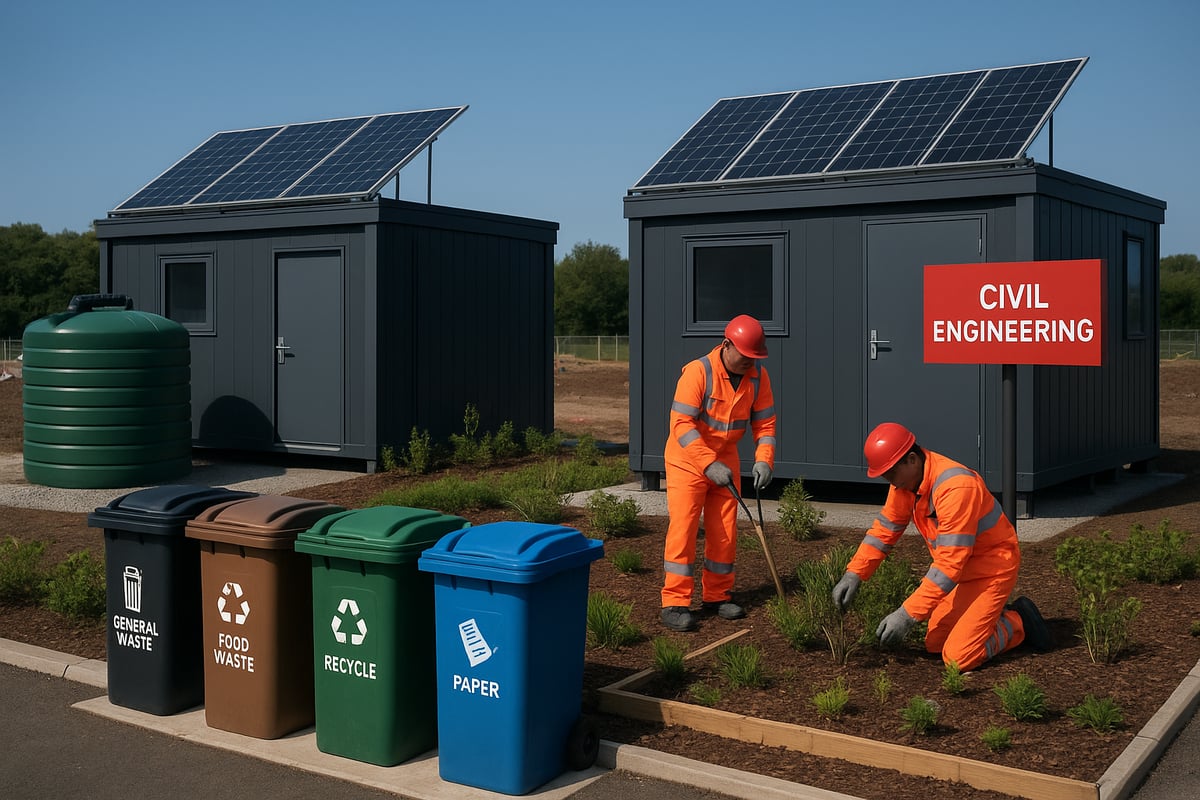
Reducing waste is essential in modern civil engineering site work. Top projects now divert up to 95% of construction waste from landfill by prioritising on-site segregation, recycling, and reuse of materials (WRAP). Embracing circular economy principles, such as designing for disassembly and planning for material recovery, is becoming standard practice.
On major projects like HS2, demolition materials are reused wherever possible, lowering both costs and environmental impact. By focusing on waste minimisation, teams can meet regulatory requirements and improve project sustainability while maintaining efficiency.
Water and Energy Efficiency on Site
Water and energy efficiency are critical components of sustainable civil engineering site work. Leading firms are incorporating rainwater harvesting systems, energy-efficient lighting, and solar-powered site cabins to cut resource consumption. These measures not only reduce environmental impact but also lower operating costs by up to 18% (CIOB, 2023).
Practical steps include monitoring water usage, selecting energy-saving equipment, and encouraging behavioural change among staff. Every small improvement adds up, helping sites meet both sustainability targets and client expectations.
Biodiversity and Ecological Enhancement
Protecting and enhancing biodiversity is a legal and ethical responsibility for civil engineering site work. From 2024, biodiversity net gain is mandatory in England, requiring projects to leave nature in a better state than before (DEFRA). This means creating wildlife corridors, installing green roofs, and safeguarding habitats during site clearance.
Urban projects are leading the way, adding pollinator-friendly green spaces and ecological features. Early collaboration with ecologists ensures compliance and unlocks opportunities for innovation in site design and management.
Community Engagement and Social Value
Delivering social value is now a core expectation for civil engineering site work. Engaging local communities, minimising disruption, and providing local employment or training opportunities all contribute to a project’s success. On major infrastructure schemes, apprenticeship programmes and skills training are boosting social value, with 60% of UK projects making formal commitments (Social Value Portal).
Building trust with communities and stakeholders is key. Teams can achieve this by clear communication, supporting local initiatives, and measuring the wider benefits delivered by the project.
Health, Safety, and Risk Management in Site Work
The safety landscape for civil engineering site work is continually evolving. As we move into 2026, regulatory updates and digital innovations are reshaping how professionals approach safety and risk. Staying current is essential for project success and compliance. For a comprehensive overview of industry best practices, see this guide on Health and safety in civil work.
Evolving Health & Safety Regulations for 2026
UK regulations for civil engineering site work are seeing significant updates. The Construction (Design and Management) Regulations (CDM) are being revised to include stricter digital documentation and site safety compliance by 2026.
Digital induction systems are now mainstream, replacing paper-based processes. These tools ensure every worker receives up-to-date safety briefings before entering the site. The result is a 15% reduction in site accidents since digital adoption, according to HSE in 2023.
Project managers must monitor regulatory changes closely. Staying proactive ensures civil engineering site work remains compliant, safe, and efficient.
Managing Site Risks and Emergency Preparedness
Effective risk management is the backbone of successful civil engineering site work. Project teams must identify and mitigate physical, environmental, and operational risks before ground is broken.
Key risk factors include site-specific hazards, weather impacts, and the presence of hazardous materials. Regular emergency drills and detailed response plans are now mandatory on most sites, especially those at risk from flooding or fire.
A recent shift is the adoption of real-time risk assessment tools, allowing teams to update emergency plans instantly as conditions change. In 2023, 25% of sites updated their emergency protocols following severe weather events, highlighting the importance of ongoing preparedness.
Mental Health and Wellbeing in Construction
Mental health is now a central concern in civil engineering site work. The industry faces unique pressures, from tight deadlines to challenging environments, which can take a toll on workers.
Forward-thinking employers are implementing on-site support programmes and mental health first aiders. Training sessions encourage open discussions and offer resources for those in need. According to Mates in Mind, one in four construction workers reported mental health concerns in 2023.
Promoting wellbeing is not just ethical but also practical, as it leads to improved productivity and a safer workplace for everyone involved in civil engineering site work.
Digital Tools for Safety and Compliance
Digital transformation is revolutionising safety management in civil engineering site work. Wearables, mobile apps, and AI-powered safety platforms are now commonplace.
These tools provide real-time hazard identification, incident reporting, and compliance tracking. Many contractors use cloud-based dashboards to monitor site safety metrics and respond rapidly to issues. In 2024, NBS reported that 35% of UK contractors had adopted digital safety tools, resulting in greater transparency and accountability.
Embracing digital solutions ensures that civil engineering site work meets the highest safety standards and remains adaptable to future regulatory demands.
Future Trends and Skills for Civil Engineering Site Work
Civil engineering site work is entering a new era, shaped by rapid technological change and evolving industry needs. Staying ahead in this dynamic landscape requires understanding future trends, upskilling, and adapting to new challenges. The following insights will help professionals prepare for the demands of 2026 and beyond.
The Evolving Role of the Civil Engineer
In 2026, the civil engineer’s role is expanding well beyond technical design. Professionals are now expected to lead on digital innovation, sustainability, and project management. This shift is driven by the integration of advanced technologies, stricter environmental standards, and the demand for resilient infrastructure.
Civil engineering site work increasingly requires multidisciplinary skills. Engineers are coordinating with environmental scientists, data analysts, and digital modellers. Leadership in sustainability is also essential, as firms aim to meet net zero targets and adopt greener methods.
The Institute of Civil Engineers highlights that 70% of professionals are actively upskilling in digital tools, reflecting a proactive approach to industry change. As a result, those working in civil engineering site work must embrace flexibility and continuous learning.
Skills Shortages and Workforce Development
The skills gap remains a pressing concern for civil engineering site work. With major infrastructure projects in the pipeline, the sector needs an estimated 30,000 new civil engineers by 2026. This shortage is intensified by the growing complexity of projects and the push for digital expertise.
Efforts to address this gap include apprenticeships, targeted training, and diversity initiatives. Programmes supporting women and underrepresented groups are helping to broaden the talent pool and bring fresh perspectives to site work.
For detailed employment trends and sector data, see the civil engineering employment statistics 2025. Proactive workforce planning is crucial for firms aiming to deliver successful civil engineering site work in a highly competitive market.
Embracing Continuous Professional Development (CPD)
Ongoing professional development is now a core expectation in civil engineering site work. With advances in digital construction, sustainability standards, and safety regulations, knowledge quickly becomes outdated.
Organisations such as ICE and CIHT offer online and blended CPD opportunities, making it easier for engineers to stay current. Digital platforms track learning progress and provide access to the latest research.
According to ICE, 80% of civil engineering professionals engage in annual CPD. This commitment to lifelong learning ensures that site teams are equipped with the latest skills, boosting productivity and project quality in every phase of civil engineering site work.
Preparing for Future Challenges and Opportunities
The future of civil engineering site work will be defined by adaptability and resilience. Climate change, urbanisation, and digital disruption are reshaping how projects are planned and delivered. Foresight in project planning is becoming essential for long-term success.
Many firms are incorporating climate resilience assessments and future-proofing strategies into their workflows. Embracing innovation and scenario planning helps teams anticipate risks and capitalise on new opportunities.
For an expert analysis of emerging trends and industry outlook, refer to the 2026 engineering and construction outlook. By preparing now, professionals can ensure their civil engineering site work meets the challenges of tomorrow.