
The landscape of uk civils is evolving rapidly, playing a pivotal role in shaping the nation’s infrastructure. Civil engineering professionals and stakeholders face both significant challenges and exciting opportunities as the sector heads towards 2026.
Understanding future trends, regulatory changes, and strategic approaches is essential to stay ahead in a competitive environment. This article offers clear insights into market developments, evolving regulations, innovation, sustainability, and practical strategies to help you succeed in the uk civils sector in 2026.
The State of UK Civils in 2026: Market Overview and Key Trends
The landscape of uk civils is evolving rapidly as we approach 2026. The sector is experiencing renewed momentum, shaped by economic recovery, digital adoption, regulatory shifts, and a heightened focus on sustainability. Understanding these trends is essential for industry professionals aiming to navigate the complexities and opportunities ahead.

Post-Pandemic Recovery and Growth Projections
The uk civils sector has demonstrated resilience following the COVID-19 pandemic, with economic forecasts pointing to robust growth. Government infrastructure spending is set to exceed £100bn in 2026, fuelling significant activity across the country. Key regional growth hotspots include the North East, Midlands, and London, each benefiting from targeted investment and regeneration initiatives.
Major projects such as HS2, Northern Powerhouse Rail, and urban renewal schemes are driving demand for skilled professionals. However, the labour market continues to face acute skills shortages, particularly in specialist roles. This challenge is compounded by ongoing material cost volatility and supply chain disruptions.
For a comprehensive look at the market's direction, the UK Construction Outlook 2026 by NatWest offers valuable insights into growth forecasts, regional trends, and the sector's recovery trajectory.
Digital Transformation in Civil Engineering
Digital transformation is reshaping uk civils, with widespread adoption of Building Information Modelling (BIM), Geographic Information Systems (GIS), and digital twins. These technologies are enhancing project efficiency, reducing costs, and improving risk management practices.
A notable example is the Thames Tideway project, where digital project management tools have streamlined complex processes and improved real-time communication. The integration of digital solutions is also helping contractors meet tighter deadlines and stricter client expectations.
Adoption rates for these technologies continue to rise, positioning the sector at the forefront of innovation. As digital maturity increases, firms that invest in technology are better equipped to manage project complexity and deliver value.
Regulatory Environment and Policy Shifts
The regulatory landscape for uk civils is undergoing significant change. Anticipated updates to building regulations and planning policies are expected to come into effect by 2026, with a strong emphasis on safety, environmental standards, and accessibility.
The government's Levelling Up agenda is influencing regional investment, directing resources towards areas with the greatest need for infrastructure improvement. Brexit continues to impact supply chains and industry standards, prompting firms to adapt their procurement strategies and compliance processes.
These policy shifts require proactive engagement from industry stakeholders. Staying informed about proposed changes is crucial for maintaining project momentum and avoiding regulatory pitfalls.
Sustainability and Green Infrastructure
Sustainability is now a central pillar of the uk civils sector. The drive to achieve Net Zero by 2050 is accelerating the adoption of sustainable materials and low-carbon construction techniques. Projects like London's Super Sewer and green bridges are setting benchmarks for environmental performance.
The sector is witnessing a surge in the use of recycled aggregates, modular construction, and innovative green infrastructure. These initiatives not only reduce carbon footprints but also enhance community resilience and biodiversity.
Clients increasingly demand evidence of sustainable practices, making environmental credentials a key differentiator for contractors. As a result, firms are investing in new technologies and materials to meet these expectations.
Key Industry Challenges and Opportunities
Despite strong growth prospects, uk civils faces several challenges. Inflation and material cost volatility remain persistent concerns, affecting project budgeting and delivery timelines. The resilience of supply chains is under scrutiny, with firms seeking ways to diversify suppliers and manage risk.
Client expectations are evolving, with a greater focus on transparency, social value, and community engagement. This shift creates opportunities for SMEs and specialist contractors to carve out niches in emerging markets.
The ability to adapt to changing demands, embrace innovation, and foster collaboration will be critical for success. By strategically addressing these challenges, the uk civils sector is well positioned to deliver lasting value for the nation’s infrastructure.
Strategic Planning for Civil Engineering Projects in 2026
Strategic planning is the backbone of success for any uk civils project as we move towards 2026. The industry faces a fast-evolving landscape, with higher expectations for resilience, digital adoption, and value-driven delivery. Proactive planning allows teams to anticipate challenges, adapt to new regulations, and seize emerging opportunities.

Risk Assessment and Mitigation Strategies
Identifying and managing risks is crucial for uk civils projects. The top risks in 2026 include regulatory changes, environmental impacts, and financial volatility. Teams must use digital tools for scenario planning and robust risk modelling. For example, flood risk management in urban areas now relies on predictive analytics and geospatial data.
A typical risk register might include:
| Risk Type | Description | Mitigation Method |
|---|---|---|
| Regulatory | New planning policies | Early engagement |
| Environmental | Flooding, climate impacts | Scenario modelling |
| Financial | Inflation, funding delays | Contingency budgeting |
Early identification and transparent reporting ensure that uk civils projects remain resilient and adaptable.
Effective Project Management Approaches
Project management methodologies are evolving rapidly within uk civils. Agile and Lean Construction principles focus on continuous improvement, while Integrated Project Delivery fosters open collaboration. These approaches help teams adapt to shifting requirements and keep projects on track.
Successful collaboration is vital. For instance, Crossrail 2’s collaborative frameworks have demonstrated the value of regular stakeholder meetings and shared digital platforms. Embedding these methods in project delivery boosts efficiency and client satisfaction, allowing uk civils teams to outperform traditional models.
Procurement and Supply Chain Optimisation
Procurement strategies are a key differentiator for uk civils contractors. Both public and private sector clients are shifting towards models that emphasise local sourcing and supplier diversity, particularly in the post-Brexit environment. Digital procurement platforms are increasingly popular, streamlining supplier selection and contract management.
To optimise the supply chain, uk civils teams must:
- Vet suppliers for financial stability
- Prioritise ethical and sustainable sourcing
- Use real-time data for inventory management
Resilient supply chains reduce delays and help projects meet evolving compliance standards, ensuring long-term project success.
Budgeting and Financial Planning
Effective financial planning is essential for uk civils projects, especially with inflation and cost pressures on the rise. Project managers must regularly review budgets, account for escalation, and identify opportunities for government funding or innovation grants. Accessing reliable cost forecasts, such as those provided in the BCIS Infrastructure Forecast 2025-2030, can inform more accurate pricing and resource allocation.
Local authority upgrades often combine multiple funding streams to maximise impact. By integrating comprehensive financial planning, uk civils teams can deliver projects within budget, even in challenging market conditions.
Stakeholder Engagement and Communication
Strong engagement practices are a hallmark of high-performing uk civils projects. Engaging with communities, regulators, and clients from the outset helps to build trust and ensure buy-in. Digital platforms make it easier to provide transparent updates and gather feedback.
Prioritising social value and public consultation ensures that projects align with local needs. For uk civils teams, effective communication is not just about compliance, it is about delivering outcomes that benefit all stakeholders and foster long-term relationships.
Innovation and Technology Shaping UK Civils
The pace of innovation is reshaping the landscape of uk civils, with technology driving efficiency, sustainability, and new opportunities across the sector. By 2026, civil engineering professionals must embrace digital tools and smarter materials to remain competitive and meet evolving client and regulatory demands.

Digital Construction and Automation
Digital construction is transforming the way uk civils projects are delivered. Robotics, drones, and automated machinery are now commonplace on major sites, streamlining operations and boosting productivity. Drones, for example, have become indispensable for surveying, monitoring progress, and improving safety. Their use on HS2 sites has set new benchmarks for accuracy and efficiency.
The adoption of Building Information Modelling (BIM) and digital project management platforms is accelerating. These technologies enable better collaboration and real time data sharing, reducing errors and driving cost savings. For those interested in a deeper dive on these trends, the Digital transformation in civil engineering post provides useful insights.
Automation also plays a key role in risk reduction, as robots handle hazardous or repetitive tasks. This minimises human exposure and enhances overall site safety. The impact of digital construction on uk civils cannot be overstated, as it lays the foundation for smarter, more resilient projects.
Smart Infrastructure and IoT Integration
Smart infrastructure is at the forefront of the uk civils evolution. The integration of sensors and Internet of Things (IoT) devices allows real time monitoring of bridges, roads, and tunnels. These sensors continuously collect data, enabling engineers to detect faults early and schedule preventive maintenance.
For instance, the M25 smart motorway project uses IoT to manage traffic flow and monitor road conditions. This approach improves safety, reduces congestion, and extends asset life. Predictive maintenance, powered by these technologies, helps avoid costly repairs and downtime.
IoT integration is also transforming asset management. By providing detailed insights into infrastructure performance, it allows for more effective resource allocation and decision making. As smart technologies become more widespread, uk civils projects are set to become even more efficient and reliable.
Materials Science and Sustainable Solutions
Materials science is revolutionising sustainability in uk civils. Advances in low carbon concrete, recycled aggregates, and modular construction are driving significant reductions in carbon emissions. These materials are not only eco friendly but also offer enhanced durability and faster installation times.
Graphene enhanced concrete, trialled in several pilot schemes, exemplifies the innovative spirit of the sector. This material boasts superior strength and longevity, making it ideal for demanding environments. Adoption rates for such solutions are increasing, though challenges remain in scaling up and standardising new materials.
Sustainable construction techniques are now a core requirement for major projects. By embracing these innovations, uk civils professionals are helping the industry move closer to net zero targets while maintaining high quality standards.
Data-Driven Decision Making
Data driven decision making is becoming essential in uk civils. Artificial intelligence (AI) and machine learning tools are being used to optimise design, forecast project outcomes, and allocate resources more efficiently. These technologies process vast amounts of information, offering insights that were previously impossible to obtain.
For example, predictive analytics were used during Crossrail's tunnelling operations to anticipate ground conditions and avoid delays. Big data also enables project managers to monitor progress in real time and respond quickly to emerging risks.
The adoption of data analytics tools is helping the sector become more agile and resilient. By leveraging these advances, uk civils firms can deliver projects on time, within budget, and to the highest standards of safety and quality.
Training and Upskilling for the Digital Era
The digital revolution in uk civils is driving demand for new skills across the workforce. There is a growing need for engineers, surveyors, and project managers who are proficient in digital tools and data analysis. Industry led training programmes and university partnerships are addressing this gap, offering courses in BIM, automation, and smart infrastructure.
Reports from ICE and CITB highlight persistent skills shortages, particularly in digital competencies. Apprenticeships and graduate schemes are playing a key role in upskilling both new entrants and existing staff.
To thrive in the rapidly evolving uk civils sector, businesses must invest in continuous learning and embrace a culture of innovation. By prioritising skills development, the industry will be well positioned to capitalise on future opportunities.
Regulatory Compliance, Safety, and Quality Assurance
Staying ahead of regulatory compliance is a cornerstone for success in uk civils. As the sector advances towards 2026, civil engineering firms must adapt to new standards, safety expectations, and quality benchmarks. The regulatory landscape is evolving rapidly, reflecting lessons learned from recent events and a drive towards safer, more sustainable infrastructure.
Evolving UK Building Regulations for 2026
The UK government is preparing significant updates to building regulations by 2026, focusing on fire safety, accessibility, and structural integrity. These changes follow high-profile incidents, prompting a renewed commitment to public safety. The Building Safety Act drives stricter standards, especially for high-rise and complex projects.
One major shift is the move toward a unified regulatory body. The UK Government’s Single Construction Regulator Consultation outlines plans to streamline oversight, making it easier for uk civils professionals to navigate requirements. Guidance from the Health and Safety Executive (HSE) remains central, ensuring that all new developments meet robust criteria.
Health, Safety, and Environmental (HSE) Best Practices
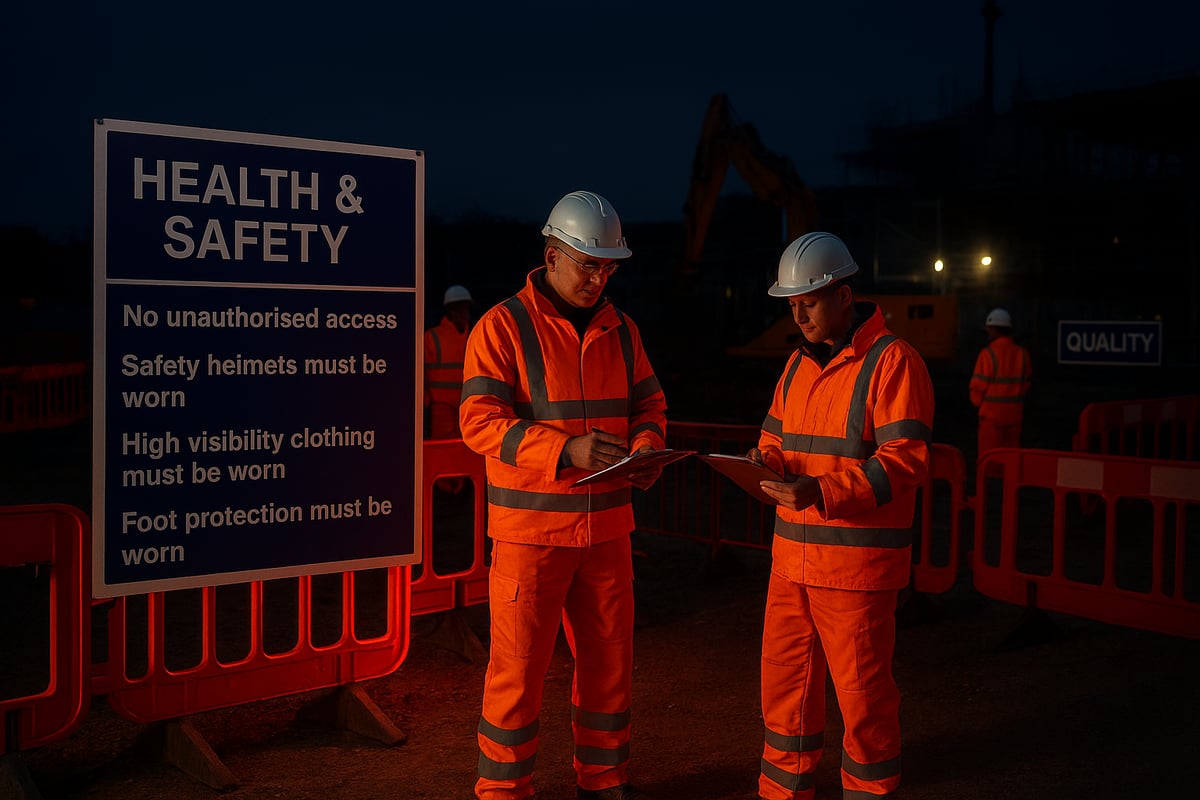
Health and safety remain top priorities in uk civils. The latest HSE statistics reveal a downward trend in site incidents, thanks to industry-wide adoption of ISO 45001 and proactive safety management systems. Major contractors are embracing behavioural safety programmes, fostering a culture of vigilance and shared responsibility.
Key best practices include:
- Regular risk assessments and toolbox talks
- Compulsory PPE and site-specific inductions
- Continuous monitoring and reporting of near-misses
Environmental management is equally vital. Firms are expected to demonstrate compliance with evolving environmental standards, reducing their impact and aligning with national targets.
Quality Assurance and Accreditation
Clients in uk civils expect rigorous quality control at every stage. Accreditation through schemes such as ConstructionLine, CHAS, and ISO certifications signals a commitment to excellence. These frameworks help firms standardise processes, minimise defects, and ensure consistency across projects.
A comparison of leading accreditations:
| Scheme | Focus Area | Benefit for uk civils |
|---|---|---|
| ConstructionLine | Supplier assessment | Streamlined tendering |
| CHAS | Health and safety | Reduced compliance risk |
| ISO 9001 | Quality management | Continuous improvement |
High-profile projects, like the Thames Tideway, showcase the importance of robust quality management systems in delivering successful outcomes.
Environmental Compliance and Biodiversity Net Gain
Environmental compliance has become integral to planning consents in uk civils. New legislation requires measurable biodiversity net gain, making it essential to integrate green corridors and wildlife habitats into urban regeneration. Environmental Impact Assessments (EIA) are now standard, guiding mitigation strategies and community engagement.
Examples include the creation of green corridors and sustainable drainage systems, which enhance urban biodiversity while managing flood risks. These initiatives align with the sector's broader shift towards sustainability and responsible stewardship.
Addressing Modern Slavery and Ethical Sourcing
Ethical compliance is non-negotiable in the future of uk civils. The Modern Slavery Act mandates transparent supply chains, requiring regular auditing and detailed reporting. Firms must ensure all suppliers adhere to ethical labour practices, from recruitment to remuneration.
Key steps for compliance:
- Supplier audits and due diligence
- Staff training on ethical sourcing
- Public reporting of anti-slavery measures
By taking these actions, businesses not only meet legal obligations but also build trust with clients and communities.
Sustainability and Social Value in UK Civils
Sustainability and social value are now central to every conversation in the uk civils sector. As 2026 approaches, the drive for greener infrastructure and meaningful community outcomes is shaping how civil engineering firms plan, deliver, and measure success. Staying ahead requires not only technical expertise but a true commitment to positive change. For a deeper look at sustainable practices, visit Sustainability in civil engineering projects.
Net Zero Targets and Decarbonisation Strategies
The uk civils sector is under increasing pressure to align with the UK’s net zero by 2050 ambitions. Firms are integrating low-carbon technologies, such as hybrid machinery and all-electric site fleets, to cut emissions. Major projects now routinely deploy renewable energy, like solar-powered compounds, to reduce their carbon footprint. The adoption of sustainable construction methods is no longer optional but essential for compliance and competitiveness. Civil engineering teams are investing in carbon tracking and reporting systems, ensuring every phase meets the latest environmental standards. This clear focus on decarbonisation drives innovation and positions uk civils as a leader in climate action.
Circular Economy and Resource Efficiency
Embracing the circular economy is transforming material use across uk civils projects. Design for deconstruction, material reuse, and recycling are now standard practice on flagship schemes like King’s Cross regeneration. The sector is guided by robust data, with the Considerate Constructors Scheme reporting significant reductions in waste sent to landfill. For example, the table below summarises recent progress:
| Initiative | Waste Reduction (%) |
|---|---|
| Material Reuse | 30 |
| Recycling Onsite | 25 |
| Landfill Diversion | 45 |
These approaches not only cut costs but help uk civils meet tough sustainability benchmarks, while supporting a resilient supply chain.
Social Value and Community Benefits
Delivering social value is now a contractual requirement for public sector uk civils projects, guided by the Social Value Act. Civil engineers are embedding community benefits, such as apprenticeships and local employment, into project delivery. Many firms run outreach programmes, providing skills training and engaging with residents during planning. Impact measurement frameworks are used to track success, ensuring transparency and accountability. By prioritising social value, uk civils projects build trust with stakeholders and deliver lasting benefits beyond the construction phase.
Nature-Based Solutions and Green Infrastructure
Nature-based solutions are increasingly prominent in uk civils, supporting both environmental and social goals. Green roofs, rain gardens, and urban biodiversity corridors are being incorporated into new developments, enhancing city resilience. The implementation of Sustainable Urban Drainage Systems (SuDS) in major schemes helps manage stormwater and reduce flood risk. These green infrastructure elements not only improve local air quality but create attractive spaces for communities. As demand for climate adaptation grows, uk civils projects are leading the way in integrating nature with engineering.
Equity, Diversity, and Inclusion in the Workforce
Equity, diversity, and inclusion (EDI) remain a top priority for uk civils employers. The sector is working towards ambitious targets for gender and ethnic diversity, recognising the benefits of a varied workforce. Initiatives to attract underrepresented groups include partnerships with schools, scholarships, and flexible working policies. According to recent ICE and WISE statistics, gradual progress is being made, but more effort is needed to close the digital skills gap and ensure career progression for all. By fostering a culture of inclusion, uk civils can unlock new talent and drive innovation across the industry.
Future-Proofing Your Civil Engineering Business for 2026 and Beyond
Staying ahead in uk civils means more than just adapting to today’s challenges. It demands a proactive approach to digital innovation, resilience, talent, collaboration, and performance measurement. By future-proofing your business, you prepare for both the opportunities and uncertainties that 2026 will bring.
Embracing Digital Transformation
Digital adoption is no longer optional in uk civils. SMEs and contractors must integrate tools like BIM, cloud collaboration, and project management platforms to remain competitive. Common barriers include upfront investment, training challenges, and resistance to change.
To overcome these, start with a digital roadmap that:
- Assesses current capabilities
- Sets measurable milestones
- Invests in staff training
- Engages leadership support
For a broader perspective on how innovation is reshaping the UK civil engineering sector, explore sector-wide insights and case studies.
Building Resilience and Adaptability
Resilience is critical for uk civils businesses facing economic, regulatory, and climate risks. Scenario planning helps anticipate disruptions, while robust business continuity plans ensure operations can withstand shocks.
Key strategies include:
- Diversifying supply chains
- Regularly updating risk registers
- Investing in climate adaptation measures
Learning from recent supply chain issues, many firms now map suppliers and assess vulnerabilities, helping them pivot quickly during crises.
Talent Attraction, Retention, and Development
The future of uk civils relies on attracting young talent and upskilling the current workforce. Apprenticeships, graduate schemes, and professional development are essential tools. Industry leaders are increasingly investing in tailored programmes to close the skills gap.
For more on emerging opportunities and practical steps to nurture talent, visit Civil engineering opportunities in UK.
Collaboration and Strategic Partnerships
Strategic partnerships are reshaping project delivery in uk civils. Joint ventures and alliances bring together complementary skills, resources, and innovation. Cross-sector collaboration, such as public-private partnerships, supports large-scale infrastructure and sustainability goals.
Successful partnerships share common goals, clear communication, and a focus on mutual benefit. These alliances are pivotal for delivering complex projects on time and within budget.
Measuring Success: KPIs and Continuous Improvement
Continuous improvement is essential for long-term growth in uk civils. Establishing robust KPIs for project delivery, quality, and sustainability helps track progress and drive better outcomes.
Use data analytics to:
- Benchmark performance
- Identify areas for improvement
- Share results transparently with stakeholders
Case studies show that businesses embracing this approach are better positioned to adapt and thrive in an evolving sector.