
Civil works projects are at the heart of every thriving community, shaping the way we live, travel, and connect. As we look towards 2026, these initiatives become even more vital, driving the transformation of cities, towns, and regions across the UK.
This handbook is designed to be your essential guide for navigating civil works projects. Whether you are a project manager, developer, or stakeholder, you will find practical advice to help you deliver successful outcomes.
Inside, you will discover clear steps for planning, design, and execution, as well as up-to-date regulatory requirements and innovative trends set to define the industry in 2026. Our aim is to provide you with actionable insights for efficient, compliant, and high-quality project delivery.
Are you ready to lead the next generation of civil works projects? Let’s get started.
Understanding Civil Works Projects: Scope and Significance
Civil works projects form the backbone of society’s infrastructure. They encompass a wide range of activities aimed at developing, upgrading, or maintaining essential public assets. From roads and bridges to water systems and public spaces, these projects impact daily life and long-term growth. For a comprehensive explanation of their scope and value, visit the Civil works and services overview page, which details the breadth of services and sectors involved in civil works projects.

Defining Civil Works Projects
Civil works projects focus on infrastructure development, public utilities, and urban improvements. They are distinct from general building works, which often involve single structures or vertical construction. Key sectors include transportation, water management, energy, and public spaces.
Examples of civil works projects:
- Road construction and widening
- Drainage and flood defence systems
- Bridges and tunnels
- Urban public realm enhancements
Each project type brings unique technical requirements and considerations.
The Importance of Civil Works in 2026
In 2026, civil works projects will play a pivotal role in driving economic growth and supporting community development. They are essential for addressing ageing infrastructure, meeting sustainability targets, and ensuring resilience against climate change.
The UK government has committed over £100bn to infrastructure investment for 2024-2029. This commitment supports job creation, modernises transport networks, and improves quality of life across regions. Civil works projects are central to achieving these national goals.
Types of Civil Works Projects
Civil works projects range from large-scale national initiatives to local community improvements. Large projects include motorways, airports, and major bridges. Local projects might involve driveways, cycle paths, or public parks.
Projects also differ by sector:
- Public sector: Highways, railways, utilities
- Private sector: Business parks, commercial sites
- Domestic: Patios, private roads
Commercial and domestic projects each require tailored approaches and compliance measures.
Stakeholders Involved
Delivering successful civil works projects demands input from a wide array of stakeholders. These typically include:
- Project owners and developers
- Civil engineers and designers
- Contractors and subcontractors
- Local authorities and regulators
- Members of the public
Collaboration and clear communication are vital throughout every project phase.
Key Challenges and Considerations
Civil works projects must balance budget constraints, site conditions, and regulatory demands. Managing these challenges requires:
- Effective cost control and resource allocation
- Navigating complex approval processes
- Addressing environmental and community concerns
Striking the right balance between cost, quality, and timelines is critical for project success.
Notable UK Projects as Case Studies
Several high-profile UK civil works projects stand out as benchmarks for best practice. High Speed 2 (HS2) exemplifies large-scale rail infrastructure, while the Thames Tideway Tunnel addresses vital water management needs. Local council regeneration schemes showcase how civil works projects can revitalise communities and stimulate local economies.
These case studies offer valuable lessons for future planning, delivery, and innovation.
Planning and Design: The Foundation of Successful Civil Works
Planning and design form the bedrock of all successful civil works projects. A well-structured approach ensures projects stay on track, meet regulatory requirements, and deliver long-term value for communities. Each stage, from conception to resource planning, demands careful attention. Let’s break down the essential steps.

Step 1: Project Initiation and Feasibility Studies
Every civil works project begins by identifying clear needs and objectives. Understanding the ‘why’ behind a project sets the direction for all subsequent decisions.
A thorough feasibility study evaluates:
- Technical viability (site conditions, engineering challenges)
- Environmental impact (sensitive habitats, flood risk)
- Financial feasibility (budget, funding sources)
Stakeholder engagement is vital at this stage. Early dialogue with communities, local authorities, and future users helps shape the project’s scope and boosts support. For civil works projects, these initial steps minimise surprises later and build a strong foundation for success.
Step 2: Conceptual and Detailed Design
Once feasibility is established, the design phase takes centre stage. Surveying and site analysis, often using modern tools like GIS and BIM, inform the initial concepts. Engineers develop layouts and refine them into detailed drawings, specifying materials, alignments, and construction techniques.
Sustainability and resilience are now integral to design choices. Projects must consider lifecycle impacts, climate adaptation, and future expansion. For deeper insight into these processes, see this resource on planning and design in civil engineering.
Civil works projects benefit from collaborative design reviews, ensuring all disciplines are coordinated and goals are aligned.
Step 3: Budgeting and Cost Estimation
Accurate budgeting is critical for civil works projects. Estimators use unit rates, historical data, and digital tools to forecast costs. It’s essential to include allowances for inflation and potential risks, especially given recent increases in construction costs across the UK.
Value engineering plays a key role. This process reviews design and materials, seeking opportunities for cost savings without compromising quality. A robust budget sets realistic expectations and supports decision-making throughout the project.
Step 4: Regulatory Approvals and Planning Permission
Navigating the UK planning system is a pivotal step for civil works projects. Securing planning permission from local authorities requires careful preparation, including comprehensive Environmental Impact Assessments (EIA) and transparent public consultations.
Key legislation shapes the process, such as the Town and Country Planning Act and Building Regulations. Understanding these frameworks helps project teams anticipate requirements and avoid costly delays. Early engagement with regulators ensures compliance and builds trust with stakeholders.
Step 5: Procurement Strategy
Selecting the right procurement route is vital for civil works projects. Options include:
- Traditional contracts (separate design and construction)
- Design and build (single point of responsibility)
- Framework agreements (pre-approved suppliers)
The pre-qualification and tendering process ensures only competent contractors are considered. Bid evaluation focuses on technical expertise, safety record, and value for money. The chosen strategy must reflect project complexity, risk profile, and timeline.
Step 6: Scheduling and Resource Planning
Effective scheduling underpins timely delivery of civil works projects. Project managers use Gantt charts and critical path analysis to map activities, dependencies, and milestones.
Digital project management tools provide real-time visibility and help coordinate labour, materials, and equipment. Accurate resource planning ensures the right teams and assets are available when needed, minimising downtime and boosting efficiency.
Example: Planning a New Urban Roadway
Consider a new urban roadway as a practical example. The process starts with identifying transport needs and consulting local residents. Feasibility studies assess traffic patterns, ground conditions, and funding.
Designers use digital surveys to create detailed plans, integrating features for pedestrians and cyclists. The budget includes contingencies for unforeseen issues. Planning permission is secured after public engagement and environmental assessment.
A suitable procurement strategy is chosen, and construction is scheduled to avoid peak traffic times. This step-by-step approach ensures civil works projects like urban roads are delivered successfully.
Regulations, Compliance, and Risk Management in 2026
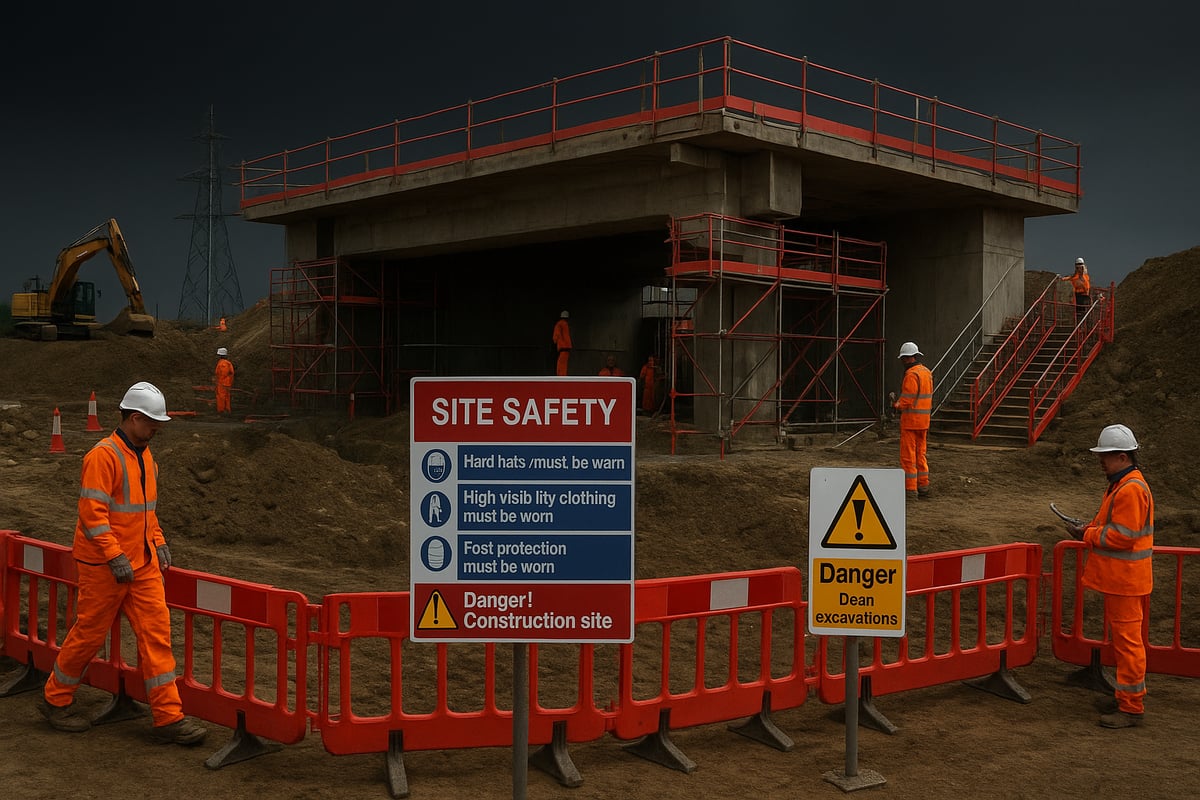
Navigating the regulatory environment is crucial for the success of civil works projects in the UK. In 2026, a range of evolving standards, sustainability targets, and compliance challenges shape how these projects are delivered. Understanding the latest requirements ensures civil works projects are safe, lawful, and future-proofed.
Navigating Regulatory Requirements
Civil works projects in the UK must comply with a robust framework of laws and standards. These include the Health & Safety at Work Act, the Construction (Design and Management) Regulations, and a suite of British Standards. In 2026, new digital compliance rules and sustainability requirements are coming into force, making it essential to stay updated.
Key regulatory bodies, such as the Building Safety Regulator, play a pivotal role in oversight and enforcement. For more on the regulator's establishment and its impact, see the Building Safety Regulator establishment. Project managers must ensure all civil works projects are designed and executed in accordance with planning permissions, environmental assessments, and industry codes.
- Key legislation: Health & Safety at Work Act, CDM Regulations, Town and Country Planning Act.
- Standards: BS EN ISO 9001, BS 7671 Wiring Regulations.
- Anticipated 2026 changes: digital record-keeping, stricter sustainability thresholds.
Environmental and Sustainability Obligations
Modern civil works projects are under pressure to meet ambitious net zero and carbon reduction targets. The UK government has mandated the use of sustainable materials and responsible waste management practices across all infrastructure schemes.
Typical obligations include:
- Incorporating recycled or low-carbon materials.
- Managing site waste to minimise landfill.
- Designing for biodiversity net gain and effective flood risk mitigation.
Civil works projects must demonstrate environmental stewardship at every stage, from planning to completion.
Health and Safety Best Practices
Safety is paramount on every civil works project. In 2026, best practices involve rigorous site protocols, continuous worker training, and the integration of advanced technology.
- Site inductions and regular toolbox talks.
- Use of drones and wearables for real-time safety monitoring.
- Compliance with updated accident reporting and near-miss tracking.
Recent statistics show a decline in accident rates, reflecting a strong safety culture across civil works projects.
Managing Project Risks
Risk management is essential for civil works projects. Risks can be financial, legal, environmental, or operational. A structured approach to risk assessment and mitigation reduces costly delays and disputes.
| Risk Type | Example | Mitigation |
|---|---|---|
| Financial | Budget overruns | Contingency planning |
| Legal | Contract disputes | Clear documentation |
| Environmental | Pollution incidents | Environmental management plans |
| Operational | Equipment breakdowns | Preventive maintenance |
Insurance and contractual risk allocation are vital parts of civil works projects, protecting stakeholders from unforeseen events.
Quality Assurance and Control
Quality is non-negotiable in civil works projects. Implementing robust QA/QC systems ensures compliance and builds client confidence.
- Adoption of ISO-certified quality management systems.
- Frequent site inspections and material testing.
- Comprehensive documentation and reporting.
These measures help civil works projects maintain consistency and meet regulatory expectations.
Lessons from Recent Compliance Failures
Recent high-profile compliance failures in the UK highlight the consequences of neglecting regulations on civil works projects. Delays, fines, and reputational damage have affected even major infrastructure schemes.
Learning from these cases, successful teams adopt proactive risk management and regular compliance checks. Early engagement with regulators and thorough documentation are proven strategies to avoid costly setbacks in civil works projects.
Execution: Delivering Civil Works Projects On Time and On Budget
Delivering civil works projects efficiently requires methodical planning, skilled coordination, and rigorous attention to quality. Each stage, from mobilisation to final completion, presents unique challenges and opportunities for improvement. Ensuring projects remain on schedule and within budget is vital for stakeholders and community trust.

Mobilisation and Site Preparation
Mobilisation sets the scene for successful civil works projects. This phase involves clearing the site, setting up temporary facilities, and ensuring all access routes are safe and clearly marked.
Site surveys are performed to identify underground utilities and assess ground conditions. Coordination with local authorities and utility providers is crucial. Early planning helps prevent delays and ensures that environmental controls, such as silt fences and dust suppression, are in place from the outset.
Construction Phase Management
Effective management during the construction phase is critical for civil works projects. Activities are sequenced logically, beginning with earthworks, followed by foundations, structural elements, and surfacing.
Modern construction methods, like modular components and prefabrication, can accelerate progress while maintaining high standards. Digital tools enable real-time tracking of progress, allowing teams to quickly respond to any issues that arise and keep the project moving forward.
Subcontractor and Supply Chain Coordination
Coordinating subcontractors and managing the supply chain is a key aspect of civil works projects. Vetting subcontractors for experience and compliance ensures reliable performance.
Timely delivery of materials and equipment is essential to avoid costly delays. Robust communication channels between project managers, suppliers, and on-site teams help address challenges such as post-pandemic supply chain disruptions, maintaining momentum throughout the project.
Health, Safety, and Environmental Controls
Maintaining rigorous health, safety, and environmental standards is non-negotiable on all civil works projects. Regular site audits, toolbox talks, and ongoing worker training foster a culture of safety.
Technology, including sensors and drones, assists with monitoring compliance and identifying risks. Environmental controls focus on waste management, pollution prevention, and minimising disruption to local communities, safeguarding both workers and the public.
Monitoring Quality and Progress
Quality assurance underpins every stage of civil works projects. Routine inspections, milestone reviews, and testing procedures ensure that construction meets all specifications and regulatory requirements.
Digital tools, such as drones and cloud-based reporting systems, enhance visibility and accuracy. Early detection and resolution of defects or non-conformance issues prevent rework and keep the project on track for timely delivery.
Managing Changes and Variations
Change is inevitable in civil works projects, whether due to unforeseen site conditions or evolving client needs. Effective change control procedures ensure all variations are documented, assessed for impact, and communicated clearly.
Transparent processes help manage client expectations and control additional costs. Flexibility, combined with robust documentation, reduces the risk of disputes and keeps the project aligned with its objectives.
Practical Example: Major Road Resurfacing Project
A recent major road resurfacing project illustrates the execution process in civil works projects. The team began with detailed surveys and stakeholder engagement, addressing challenges such as traffic management and weather delays.
By sequencing works efficiently and using prefabricated materials, the project was completed ahead of schedule. For further insights and examples, review these infrastructure project case studies that showcase real-world applications and solutions.
Innovations and Trends Shaping Civil Works in 2026
Civil works projects in the UK are evolving rapidly, shaped by digital innovation, sustainability, and shifting societal needs. As we look towards 2026, these trends are redefining how infrastructure is designed, built, and maintained for future generations.
Digital Transformation in Civil Works
Digital transformation is revolutionising civil works projects across the UK. Building Information Modelling (BIM) and digital twin technology allow teams to visualise, plan, and manage infrastructure with unprecedented accuracy. Drones, AI, and IoT sensors are now standard for site monitoring, progress tracking, and safety management.
These tools streamline collaboration and reduce costly errors. Real-time data sharing keeps every stakeholder informed, driving efficiency. As technology advances, civil works projects are set to become even more connected and intelligent, enhancing both performance and compliance.
Sustainable Construction Materials and Methods
Sustainability is at the core of civil works projects in 2026. Recycled aggregates, low-carbon concrete, and green asphalt are increasingly specified to reduce environmental impact. Modular and off-site construction methods are gaining traction, minimising waste and speeding up delivery.
UK projects are leading the way by adopting innovative materials and construction techniques. These approaches not only support net zero targets but also improve durability and value for money. Sustainability is no longer optional, it is a fundamental driver of project success.
Smart Infrastructure and Future-Proofing
Civil works projects are integrating smart infrastructure to meet future demands. Smart sensors and data analytics enable predictive maintenance and efficient asset management. Infrastructure is being designed for electric vehicles, renewable energy, and adaptive lighting.
Examples include the rollout of smart motorways and connected public spaces. The latest regulatory updates, such as Amendment 4 to BS 7671:2018, ensure that civil works projects remain safe, compliant, and ready for tomorrow’s technologies.
Workforce Development and Skills Shortages
A skilled workforce remains vital for successful civil works projects. The industry faces a growing skills gap, with demand for digital expertise and sustainable construction knowledge outpacing supply. Investment in training, apprenticeships, and upskilling initiatives is increasing.
Collaboration between industry, education providers, and government is essential to bridge this gap. By 2026, workforce development will be a top priority, ensuring civil works projects benefit from both technical proficiency and innovative thinking.
Resilience and Climate Adaptation
Climate adaptation is shaping the design and delivery of civil works projects. Flood-resistant structures, permeable surfaces, and robust drainage systems are being prioritised to mitigate climate risks. Recent UK case studies highlight the importance of resilience in safeguarding communities and assets.
Government guidance is promoting practical adaptation measures. As extreme weather becomes more frequent, resilience will continue to be a central focus in civil works projects.
Funding and Financing Trends
Funding models for civil works projects are evolving. Public-private partnerships, infrastructure investment funds, and innovative procurement approaches are supporting major developments. Economic trends and government policy are influencing how projects are financed and delivered.
According to recent UK civil engineering market size data, investment is set to rise, reflecting the sector’s vital role in the economy. Understanding these trends helps stakeholders secure the resources needed for successful civil works projects.
The Role of Community Engagement
Community engagement is a critical trend in civil works projects. Early and ongoing involvement of stakeholders helps identify local needs, manage concerns, and foster project transparency. Digital platforms are making it easier to gather public feedback and build trust.
Effective engagement ensures projects are designed with end users in mind. This collaborative approach leads to better outcomes, stronger community support, and long-term project success.
Expert Strategies for Successful Civil Works Projects
Delivering successful civil works projects in the UK requires more than technical expertise. It demands robust leadership, meticulous planning, and a relentless focus on collaboration and quality. By applying proven strategies at every stage, project leaders can navigate complexity, manage risk, and achieve exceptional outcomes.
Building a Strong Project Team
The foundation of effective civil works projects is a skilled, cohesive team. Each role plays a vital part in steering the project. The project manager coordinates activities, engineers design solutions, quantity surveyors manage costs, and site supervisors oversee daily operations.
Clear communication channels and digital collaboration tools are essential for aligning efforts and sharing information quickly. Strong leadership fosters trust and empowers team members to address challenges proactively.
- Project manager: overall coordination and leadership
- Engineers: technical design and problem-solving
- Quantity surveyors: cost control and procurement
- Site supervisors: on-site management and safety
A well-structured team ensures each phase of civil works projects is executed with precision and accountability.
Stakeholder Management and Communication
Success in civil works projects hinges on engaging stakeholders early and maintaining open lines of communication. Stakeholders may include local authorities, utility providers, residents, and business owners. Mapping their interests and influence helps anticipate concerns and priorities.
Consultation strategies should combine public meetings, digital feedback platforms, and regular updates. This approach builds trust, manages expectations, and reduces the risk of opposition that could delay progress.
When disagreements arise, active listening and transparent dialogue help resolve issues before they escalate. Effective stakeholder management minimises disruption and fosters community support for civil works projects.
Setting Realistic Goals and KPIs
Defining what success looks like for civil works projects is essential. Clear goals provide direction, while Key Performance Indicators (KPIs) enable objective measurement of progress. Common KPIs include schedule adherence, budget control, quality benchmarks, and safety records.
Benchmarking against industry standards helps set achievable targets. Involving the project team in goal-setting ensures buy-in and clarifies responsibilities.
Establishing regular review cycles allows teams to track performance, celebrate achievements, and address shortfalls quickly. Transparent reporting keeps all stakeholders informed and invested in the success of civil works projects.
Robust Project Scheduling and Control
Scheduling is the backbone of civil works projects. Advanced techniques such as critical path analysis, Gantt charts, and earned value management provide detailed visibility into timelines and dependencies.
Digital project management tools enable real-time tracking, allowing teams to identify bottlenecks and make informed decisions. When delays occur, acceleration measures like overtime or resequencing tasks can recover lost time.
Regular progress meetings and milestone reviews ensure everyone remains aligned and responsive to changes. Robust scheduling underpins the on-time delivery of civil works projects, even in dynamic environments.
Cost Control and Value Engineering
Maintaining financial discipline is crucial for civil works projects. Accurate cost forecasting, regular budget monitoring, and early identification of cost overruns are essential practices. Value engineering workshops encourage creative solutions that reduce costs without sacrificing quality.
Lifecycle costing looks beyond initial expenses to assess long-term value. Leveraging construction output statistics can help benchmark costs and improve financial planning.
Transparent procurement processes and regular financial reviews keep projects on track. Effective cost control protects margins and ensures civil works projects deliver value for money.
Quality Management and Continuous Improvement
Quality is non-negotiable in civil works projects. Implementing a Quality Management System (QMS) aligned with ISO standards ensures consistent processes and outcomes. Routine site inspections, material testing, and compliance checks maintain high standards.
Capturing lessons learned and sharing best practices across teams drives continuous improvement. Holding regular knowledge transfer sessions helps embed a culture of excellence.
Pursuing industry certifications demonstrates commitment to quality and can enhance a company's reputation in the civil works projects sector.
Navigating Disputes and Claims
Disputes can arise in civil works projects due to contract ambiguities, scope changes, or unforeseen conditions. Early identification of potential issues, combined with clear documentation, reduces the risk of claims.
Resolution options include negotiation, adjudication, and arbitration. Establishing a fair process for addressing claims preserves relationships and minimises costly delays.
Preventing disputes starts with transparent contracts, thorough risk assessments, and a collaborative approach throughout the project lifecycle.
Post-Completion and Handover
The successful completion of civil works projects involves more than finishing construction. Final inspections, snagging, and commissioning ensure all elements meet required standards. Thorough handover documentation provides clients with the information needed for ongoing maintenance and asset management.
Training sessions for the client team support smooth transition to operational use. Early planning for handover reduces last-minute issues and enhances client satisfaction.
A structured approach to post-completion activities ensures civil works projects deliver lasting benefits.
Real-World Example: Delivering a Multi-Phase Urban Infrastructure Project
Consider a multi-phase urban regeneration scheme involving road upgrades, public realm improvements, and new drainage systems. The project began with a comprehensive stakeholder map and robust team structure. Early engagement with local businesses and residents ensured feedback shaped the design.
The team set clear KPIs for completion dates, budget adherence, and quality standards. Digital project management tools provided real-time updates, while value engineering identified cost savings in material selection.
Throughout construction, the team held weekly progress meetings and used lessons learned from previous phases to refine processes. Dispute resolution protocols were established before work began, preventing escalations. The handover included detailed maintenance manuals and training for council staff.
This example illustrates how integrating expert strategies at every stage can result in civil works projects that are delivered on time, on budget, and with strong community support. For more on project types, see Types of civil engineering projects.