
In 2026, commercial civil engineering is transforming the UK’s business landscape, shaping the places where people work, shop, and connect. As the nation experiences a surge in infrastructure projects, understanding commercial civil engineering has never been more critical for developers and businesses.
This expert guide unpacks the latest trends, innovative technologies, and best practices defining the field. Discover essential services, project stages, regulatory shifts, and the rising importance of sustainability. Explore real examples from leading UK projects, and use these insights to plan and deliver successful commercial developments.
The Evolving Landscape of Commercial Civil Engineering in 2026
In 2026, commercial civil engineering stands at a pivotal crossroads in the UK, responding to a host of social, economic, and technological shifts. The sector’s ability to adapt is shaping the future of business, retail, and urban environments nationwide.
Key Market Trends and Drivers
The commercial civil engineering industry is evolving rapidly due to several key drivers. Post-pandemic recovery and Brexit have created new demands for resilient, future-ready commercial spaces. Businesses are prioritising flexibility, leading to a surge in mixed-use developments and urban regeneration projects.
Digital transformation is at the heart of this shift. Advanced Building Information Modelling (BIM), artificial intelligence, and the Internet of Things (IoT) now underpin project management and execution. These technologies enable real-time collaboration and efficient resource allocation.
Labour market dynamics are also changing. The sector faces skills shortages, prompting investment in upskilling and increasing workforce diversity. Projects like major city centre redevelopments are harnessing digital twins to simulate outcomes before breaking ground, reducing risk and improving outcomes.
Key trends include:
- Urban regeneration and revitalisation of brownfield sites
- Integration of digital twins for planning and monitoring
- Greater emphasis on sustainability and resilience
- Focus on workforce training and inclusion
These factors are redefining the way commercial civil engineering projects are planned and delivered.
Regulatory and Policy Changes
The regulatory landscape for commercial civil engineering is undergoing significant transformation. Updates to UK building regulations and health and safety standards are raising the bar for compliance. Environmental mandates are stricter, with net-zero targets and Sustainable Drainage Systems (SuDS) now a legal requirement for many projects.
Local authority planning processes have shifted, especially around Section 278 works, necessitating close collaboration between developers and councils. The introduction of new SuDS standards in London, for example, has prompted innovative approaches to stormwater management and urban design.
Key regulatory changes include:
- Stricter environmental compliance and reporting
- Enhanced safety protocols on construction sites
- Streamlined planning approvals for commercial developments
- Mandatory adoption of sustainable drainage solutions
Staying abreast of these changes is crucial for commercial civil engineering firms seeking to deliver compliant, future-proof projects.
Market Data and Forecasts
The outlook for commercial civil engineering in 2026 is robust. The UK’s commercial construction output is projected to reach £140bn by the end of the year, driven by growth in the retail, logistics, and office sectors. According to the UK construction sector growth forecast, demand is set to remain strong as businesses invest in modern infrastructure across key regions.
Regional hotspots include:
- Midlands: Logistics and distribution hubs
- North East: Office and mixed-use developments
- Greater London: Retail and urban regeneration
| Region | Sector Growth (%) | Major Drivers |
|---|---|---|
| Midlands | 8 | Logistics, transport |
| North East | 7 | Office, mixed-use |
| Greater London | 9 | Retail, regeneration |
With these trends, commercial civil engineering is positioned for sustained expansion, presenting significant opportunities for businesses and developers alike.
Core Services in Commercial Civil Engineering
Commercial civil engineering delivers a suite of essential services that form the backbone of every successful commercial project. From first site investigation to long-term maintenance, these services ensure that structures are safe, functional, and built to last.
Groundworks and Foundations
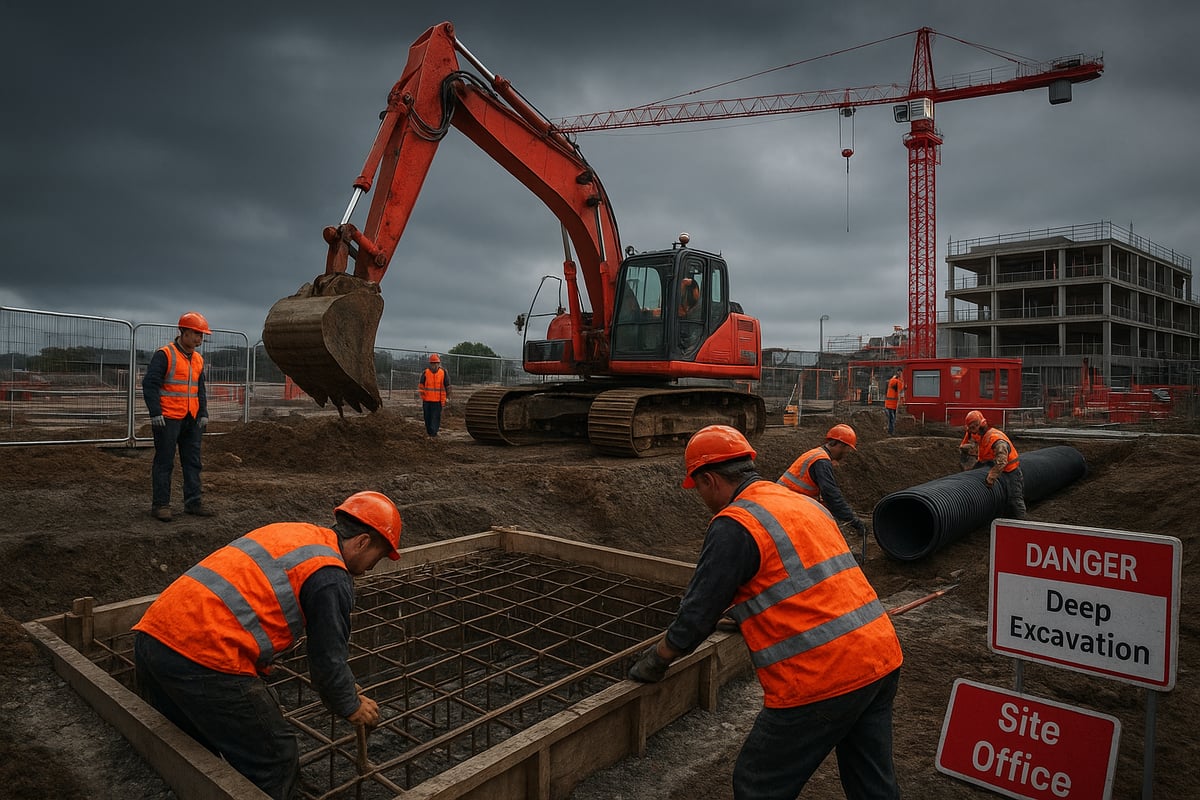
Every commercial civil engineering project begins with thorough groundworks and foundation solutions. This phase includes site investigation, clearance, and precise earthworks to prepare the ground for construction.
Specialist teams select the most appropriate foundation type, such as pad, strip, raft, or piling, tailored to the building's load and ground conditions. On challenging brownfield sites, ground improvement techniques stabilise soils and reduce settlement risks.
Key elements:
- Comprehensive site surveys and soil analysis
- Foundation installation for diverse structures
- Ground stabilisation for complex environments
These robust foundations set the stage for safe, resilient commercial developments.
Drainage and Water Management
Effective drainage is critical for commercial civil engineering, ensuring sites remain compliant and resilient against flooding. Modern projects employ advanced drainage systems, including CCTV surveys and no-dig repairs, to minimise disruption.
Flood risk management and strict adherence to Sustainable Drainage Systems (SuDS) requirements are now standard. For example, a commercial retail park might integrate stormwater management features to protect assets and the local environment. For more on these solutions, see Drainage services for commercial developments.
Key features:
- Installation of surface and foul water systems
- SuDS-compliant designs for new developments
- Smart monitoring and maintenance technologies
Well-designed drainage safeguards investments and supports long-term sustainability.
Road Construction, Access, and Car Parks
Access is a cornerstone of commercial civil engineering, with dedicated teams designing and building durable roads and car parks. Heavy-duty surfaces made from reinforced concrete or asphalt withstand high traffic volumes and harsh weather.
A standout example is the logistics hub where robust access roads facilitate smooth operations and efficient deliveries. Precision in design ensures seamless integration with local highways and safe entry for customers and staff.
Service highlights:
- Custom car park layouts and access routes
- Use of advanced surfacing materials
- Integration of pedestrian and vehicle safety features
This attention to access supports operational efficiency and user satisfaction.
Utilities and Ducting
Modern commercial civil engineering projects rely on seamless utility connections. Skilled engineers lay water, gas, electricity, telecoms, and fibre optic lines, coordinating closely with providers to avoid disruption.
Early planning and careful ducting help futureproof sites for technological upgrades. Integrated utilities ensure buildings are ready for immediate occupation and ongoing business needs.
Core tasks:
- Trenching and ducting for multiple services
- Coordination with statutory undertakers
- Futureproofing for smart building technologies
Reliable utilities are vital for any thriving commercial environment.
Structural and Retaining Works
Structural works underpin the integrity of commercial civil engineering schemes. This includes constructing retaining walls, culverts, and other structural supports to manage ground levels and protect assets.
Multi-storey car parks, for example, require engineered foundations and retaining systems to support significant loads safely. Attention to detail in this phase prevents settlement and structural issues over the building's lifespan.
Key activities:
- Design and build of retaining and structural walls
- Installation of culverts for drainage and access
- Engineering support for complex geometries
These works ensure commercial sites remain stable and secure.
Repair, Maintenance, and Emergency Response
Long-term success in commercial civil engineering depends on robust maintenance and rapid emergency response. Ongoing contracts cover routine inspections, repairs, and upgrades, reducing the risk of costly failures.
Specialist teams are on-call 24/7 to address sudden drainage blockages or structural issues, minimising downtime for businesses. Reliable aftercare extends the life of commercial assets and upholds safety standards.
Comprehensive maintenance is a hallmark of professional commercial civil engineering services.
The Commercial Civil Engineering Project Lifecycle: Step-by-Step
Understanding the commercial civil engineering project lifecycle is vital for seamless delivery and long-term success. Each phase builds on the last, ensuring projects meet client goals, regulatory standards, and sustainability targets. Let us walk through each critical step, illustrating how expert teams navigate challenges and drive commercial value.

Step 1: Initial Consultation and Feasibility
Every commercial civil engineering project begins with a thorough consultation. Here, engineers and clients discuss objectives, timelines, and budgets. Site surveys and feasibility studies are conducted to identify constraints and opportunities, such as ground conditions, access, and potential risks.
During this phase, risk assessments are critical, allowing teams to develop realistic costings and timelines. For example, when planning a new office park, early site investigations can reveal hidden challenges like contamination or existing utilities. Addressing these issues early prevents costly surprises later.
At this stage, commercial civil engineering professionals work closely with stakeholders to ensure all requirements are understood. This collaborative approach lays the foundation for a successful, well-managed project.
Step 2: Planning, Design, and Regulatory Compliance
Once feasibility is confirmed, projects move to detailed planning and design. This involves working with architects, planners, and local authorities to develop compliant designs and secure permissions. From submitting planning applications to negotiating build-over agreements, every detail must align with current regulations.
A crucial element is ensuring adherence to the latest UK building regulations and health and safety standards. For projects involving roadworks or highway access, understanding Section 278 works and regulatory compliance is essential, as it governs modifications to public highways and ensures safe integration with existing infrastructure.
By leveraging digital tools and proactive communication, commercial civil engineering teams streamline approvals and anticipate regulatory shifts. This step safeguards project viability and compliance from the outset.
Step 3: Mobilisation and Site Preparation
Mobilisation marks the transition from planning to physical activity on site. Teams coordinate resources, secure permits, and prepare the location for construction. This includes site clearance, demolition of existing structures, and undertaking enabling works to ready the ground for new development.
Environmental management is a top priority during mobilisation. Measures such as dust suppression, noise control, and pollution prevention protect both the local community and the environment. For commercial civil engineering projects, effective site preparation ensures safety and efficiency throughout the build.
Clear communication with all parties during this step minimises disruption and maintains project momentum. A robust mobilisation strategy helps avoid delays and sets the stage for a smooth construction phase.
Step 4: Construction and Implementation
Construction is where plans become reality. Activities are carefully sequenced, starting with groundworks, drainage, and foundations, then moving to superstructure and finishing works. Advanced construction technology, such as laser screed for concrete and GPS set-out for accuracy, ensures high standards and minimal rework.
Quality control is embedded at every stage, with regular inspections and health and safety management. Milestones are tracked to keep the commercial civil engineering project on schedule and within budget.
Collaboration between engineers, contractors, and specialist suppliers is crucial. By using modern methods and digital monitoring, teams adapt quickly to challenges, delivering robust and durable commercial spaces.
Step 5: Testing, Handover, and Aftercare
As construction concludes, rigorous testing and inspections confirm the project meets all specifications. Snagging and commissioning ensure systems function as intended, from drainage to structural supports. Detailed handover documentation is provided, including warranties and maintenance plans.
For commercial civil engineering projects, aftercare is just as important as construction. Post-completion support, such as ongoing maintenance and emergency response, helps clients protect their investment. For example, a retail development may require regular inspections and rapid repairs to maintain safety and compliance.
A successful handover marks the beginning of a long-term partnership, with engineers providing guidance and support as the commercial facility comes to life.
Innovations and Technologies Shaping 2026
The pace of innovation in commercial civil engineering is accelerating in 2026. New tools and approaches are reshaping how projects are designed, built, and maintained. Staying ahead means understanding these advancements and harnessing their potential for commercial success.

Digital Engineering and BIM
Building Information Modelling (BIM) is now the backbone of commercial civil engineering projects. Teams use BIM for seamless collaboration, integrating design, scheduling, and cost data in a single, accessible model.
Digital twins, virtual replicas of physical assets, have become standard for planning and monitoring. These tools enable stakeholders to visualise site progress, forecast risks, and test design changes before construction starts.
Real-time project monitoring, powered by cloud platforms, supports better decision-making and transparency. This transformation has made commercial civil engineering more precise and efficient than ever before.
Automation and Robotics
Automation is redefining how commercial civil engineering tackles complex site tasks. Automated earthmoving equipment, such as GPS-guided excavators and robotic concrete pourers, deliver higher accuracy and faster turnaround.
Drones are now routine for aerial surveys, progress tracking, and safety inspections. They reduce manual workload and provide up-to-the-minute data for project managers.
Robotics also enhance worker safety by managing hazardous tasks. The adoption of these technologies is helping commercial civil engineering companies overcome labour shortages and deliver projects on time.
Advanced Materials and Methods
The introduction of high-performance concretes and sustainable aggregates is a game changer for commercial civil engineering. These materials offer improved durability and reduce environmental impact.
Prefabrication and modular construction methods are gaining popularity. Components are built offsite, then assembled quickly on location, maintaining quality and minimising disruption.
These innovations not only speed up project delivery but also support compliance with increasingly strict environmental standards.
Sustainability Tech
Sustainability is now integral to commercial civil engineering. Smart drainage systems, equipped with IoT sensors, monitor water flow and detect blockages in real time.
Energy-efficient lighting and renewable energy integration are standard features in new commercial developments. These technologies contribute to lower operational costs and help meet net-zero targets.
Firms are also investing in digital platforms to track carbon footprints and ensure compliance with the latest sustainability mandates.
Example: Case study of a logistics centre using laser screed and GPS set-out for flawless concrete surfaces.
A leading logistics centre in the Midlands exemplifies the future of commercial civil engineering. The project team used laser screed technology and GPS set-out to achieve perfectly level concrete floors, essential for high-traffic areas.
This approach reduced construction time, improved accuracy, and minimised material waste. Advanced digital monitoring ensured every phase met strict quality standards, setting a new benchmark for commercial civil engineering excellence.
Sustainability and Environmental Compliance in Commercial Civil Engineering
Sustainability is now central to commercial civil engineering, shaping every stage from design to delivery. Developers and contractors must balance ambitious growth with strict environmental responsibilities. In 2026, the drive for greener practices is not only regulatory but also a business imperative, impacting reputation and long-term project viability.
Meeting Net-Zero and Green Building Mandates
Achieving net-zero emissions is a top priority in commercial civil engineering. Businesses must now adopt strategies to cut embodied carbon in both materials and construction methods. This includes using recycled aggregates, specifying low-carbon concrete, and sourcing materials responsibly.
Regulatory frameworks are evolving rapidly. The Future Homes Standard will soon influence not only residential but also commercial builds, setting higher expectations for energy efficiency and carbon reduction. For those planning new developments, understanding the Future Homes Standard implementation timeline is crucial to ensure compliance and futureproof investments.
Certifications such as BREEAM and LEED are increasingly required by clients and investors. These not only demonstrate environmental leadership but also enhance asset value and tenant demand.
Sustainable Drainage and Water Management
Effective water management is a core service within commercial civil engineering. Sustainable Drainage Systems (SuDS) are now a planning requirement for most new commercial sites, helping to reduce flood risk and improve water quality.
SuDS solutions include:
- Permeable paving for car parks and access roads
- Green roofs on retail and office buildings
- Rainwater harvesting systems for landscaping and facilities
Compliance with Environment Agency and local authority standards is essential. The integration of smart sensors and real-time monitoring ensures ongoing performance and adaptability to climate extremes. Every project must now demonstrate a robust approach to stormwater management as part of the planning process.
Waste Management and Circular Economy
Modern commercial civil engineering projects are measured by how effectively they manage waste. The circular economy model encourages the reuse and recycling of materials, minimising landfill and reducing environmental impact.
Key strategies include:
- On-site segregation and recycling of demolition and construction waste
- Sourcing recycled aggregates for fill and sub-base
- Partnering with suppliers committed to responsible material sourcing
Some leading developments have achieved recycling rates of up to 85 percent, setting new benchmarks for the industry. Waste management is not just about compliance, it is integral to cost control and sustainability targets.
Biodiversity and Community Impact
Beyond construction, commercial civil engineering must deliver lasting value to communities and the environment. Biodiversity enhancements are now routinely integrated into site plans, supporting local wildlife and improving public spaces.
Common practices involve:
- Creating green corridors and planting native species
- Installing bird and bat boxes in new developments
- Preserving existing trees and habitats
Community engagement is increasingly seen as a measure of project success. By involving local stakeholders and delivering social value, civil engineering firms build trust and ensure developments are welcomed and sustainable for the long term.
Choosing the Right Commercial Civil Engineering Partner
Selecting the right commercial civil engineering partner is a strategic decision that can define project success. With the growing complexity of commercial infrastructure in 2026, businesses need a partner who brings proven expertise, technical capability, and a commitment to quality.
Evaluating Experience and Accreditation
When evaluating commercial civil engineering partners, industry experience and relevant accreditations are essential. A strong track record in delivering commercial projects demonstrates reliability and sector-specific knowledge.
Look for contractors accredited by SafeContractor, ConstructionLine Gold, SMAS, UKAS, or SSIP. These certifications confirm adherence to strict safety, quality, and environmental standards. Case studies and references from similar projects can provide further assurance of a contractor’s ability to deliver successful outcomes.
Assessing Capabilities and Service Range
A comprehensive service offering is a key differentiator in commercial civil engineering. Some firms provide full-service solutions, managing every stage from groundworks to final surfacing, while others specialise in specific disciplines.
Assess whether your partner has in-house project management, technical teams, and the ability to coordinate complex works. For example, specialist foundation and piling services are critical for challenging sites. You can explore detailed information about these technical solutions through resources like Foundations and piling for commercial projects.
Technology and Innovation Adoption
The best commercial civil engineering partners invest in advanced technologies to boost efficiency and quality. Adoption of Building Information Modelling (BIM), digital project management tools, and automated machinery ensures precise delivery and cost control.
Ask potential contractors about their use of digital twins, drones for site surveys, and laser screed systems for concrete works. A commitment to innovation demonstrates forward-thinking and the ability to meet modern project demands.
Client Communication and Transparency
Transparent communication is fundamental throughout the commercial civil engineering process. Reliable partners provide clear quotations, regular progress updates, and detailed aftercare plans.
Look for contractors who prioritise client engagement with accessible project managers and responsive support. Testimonials from commercial clients about project delivery, problem-solving, and satisfaction can be invaluable when making your decision.
JRG Civils Ltd: A Trusted UK Civil Engineering Partner
JRG Civils Ltd stands out as a leading provider of commercial civil engineering and building contract services across the UK. The company delivers expertise in drainage, highways, foundations, surfacing, and public realm works, supporting both franchise and bespoke developments.
Accredited by major industry bodies, JRG Civils Ltd ensures compliance, safety, and high-quality outcomes. Their client-centric approach includes free, no-obligation quotes and tailored project management, making them a reliable partner for any commercial project.