
Civil construction work is at the heart of transforming cities and infrastructure, setting the pace for the built environment in 2026. As the industry faces new challenges and opportunities, staying informed is essential for success.
This guide offers a complete, step-by-step overview of civil construction work, highlighting the latest standards, best practices, and innovations shaping the year ahead. You will discover insights on industry trends, project planning, execution strategies, sustainability, digital technology, and compliance requirements.
Prepare to master the evolving civil construction landscape and gain the knowledge you need to lead projects with confidence in 2026.
Key Trends Shaping Civil Construction in 2026
Civil construction work is undergoing a period of rapid transformation, driven by technology, sustainability, and evolving regulations. In 2026, the sector is adapting to new challenges and opportunities that will redefine how projects are planned, executed, and delivered.
Digital Transformation and Smart Construction
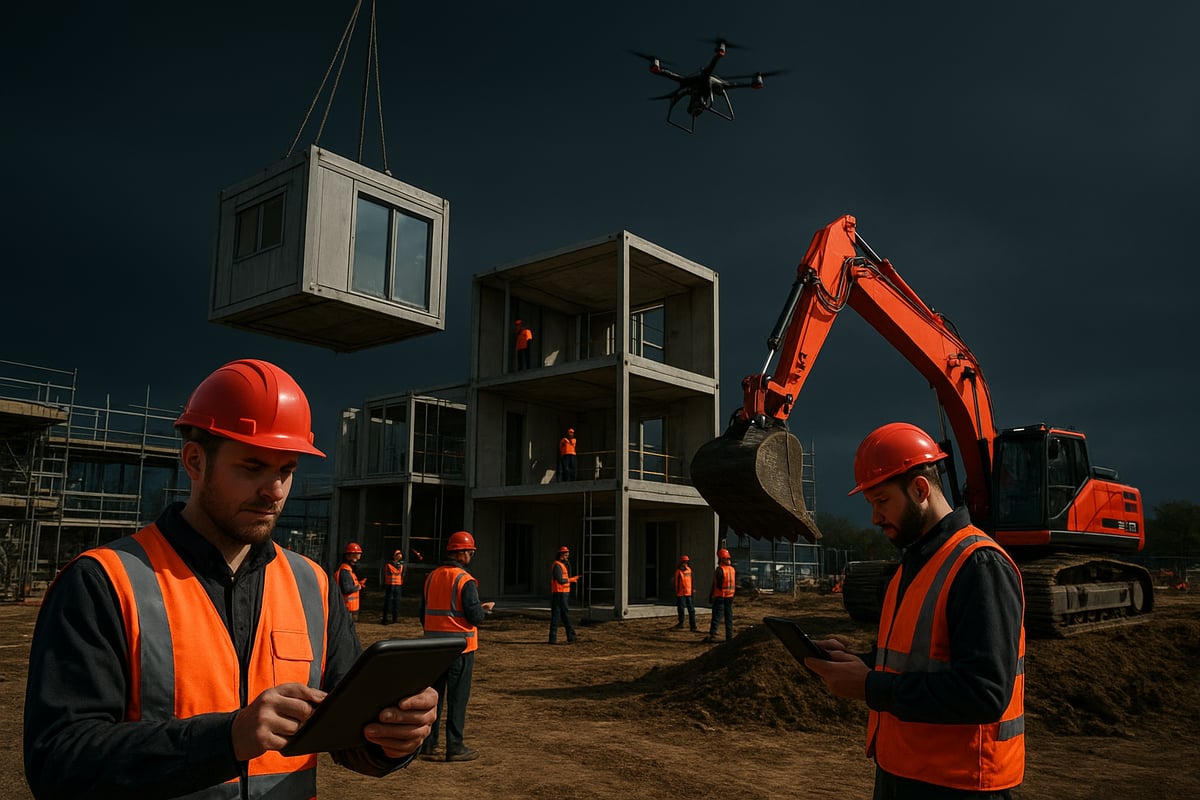
Digital transformation is at the forefront of civil construction work in 2026. The adoption of Building Information Modelling (BIM) has become a standard, enabling precise coordination between design, engineering, and on-site teams.
Project managers now rely on advanced digital tools for scheduling, document control, and progress tracking. Drones and IoT sensors are widely used for real-time site monitoring and quality control, capturing data to improve safety and efficiency. Artificial Intelligence is increasingly deployed for predictive analytics, helping to identify risks before they impact the project.
A standout example is the use of digital twins in major UK infrastructure projects, where virtual replicas of assets optimise performance and maintenance throughout the project lifecycle.
Sustainability and Green Building Mandates
Sustainability is now embedded in every aspect of civil construction work. Stricter environmental regulations and ambitious carbon reduction targets are shaping project planning and delivery. The use of recycled and low-carbon materials is growing, as clients and regulators demand greener solutions.
Over 70% of UK civil projects now include sustainability metrics, reflecting the industry’s commitment to responsible building (source: NBS 2024). Project teams are innovating with modular components and efficient construction techniques to minimise waste.
Sustainable design is not only a regulatory requirement but also an opportunity for competitive advantage, as clients seek partners who can deliver long-term environmental value.
Labour Market and Skills Development
The civil construction work sector faces a persistent skills shortage in 2026, driving significant investment in training and apprenticeships. Employers are prioritising health, safety, and the upskilling of their workforce to keep pace with new technologies.
Government incentives support training in digital construction skills, helping workers adapt to BIM, drones, and smart site solutions. For further insights into how the industry is tackling these challenges and embracing modern methods, see the latest UK construction trends for 2026.
The focus on workforce development ensures that projects are delivered safely, efficiently, and in compliance with evolving standards.
Regulatory and Safety Updates
Regulation is a driving force in civil construction work for 2026. The Health and Safety Executive (HSE) has introduced new guidelines to address emerging risks and technologies. Compliance requirements have been updated to reflect digital safety management practices, including the use of mobile apps for incident reporting and risk assessment.
Enhanced site safety protocols are mandatory, protecting workers and the public. Project teams must stay abreast of regulatory changes and invest in ongoing training to maintain high standards of safety and quality.
Market Opportunities and Investment
Substantial investment in infrastructure is boosting civil construction work across the UK. Both government and private sectors are increasing funding, with a projected £30bn spend in 2026 (source: ONS).
Key growth areas include transport, energy, and urban regeneration projects. These investments create opportunities for innovation, job creation, and the adoption of advanced construction methods.
Collaboration between public and private stakeholders is essential for delivering large-scale projects that meet the nation’s evolving needs.
Modular and Offsite Construction
Modular and offsite construction methods are transforming civil construction work by enabling faster, more efficient project delivery. Prefabricated components are manufactured offsite and assembled onsite, reducing build times and minimising disruption.
Major UK cities are seeing the deployment of modular bridges and road sections, demonstrating the benefits of flexibility and scalability. This approach also supports sustainability goals by reducing waste and improving quality control.
As these trends accelerate, modular construction is set to become a defining feature of the civil construction landscape in 2026.
Step-by-Step Guide to Planning a Civil Construction Project
Planning a civil construction work project in 2026 demands a structured, methodical approach. Each stage builds the foundation for successful delivery, regulatory compliance, and long-term asset value. Below, we break down the essential steps, from initial scoping through to procurement, ensuring your civil construction work project is robust, efficient, and future-ready.
Defining Project Scope and Objectives
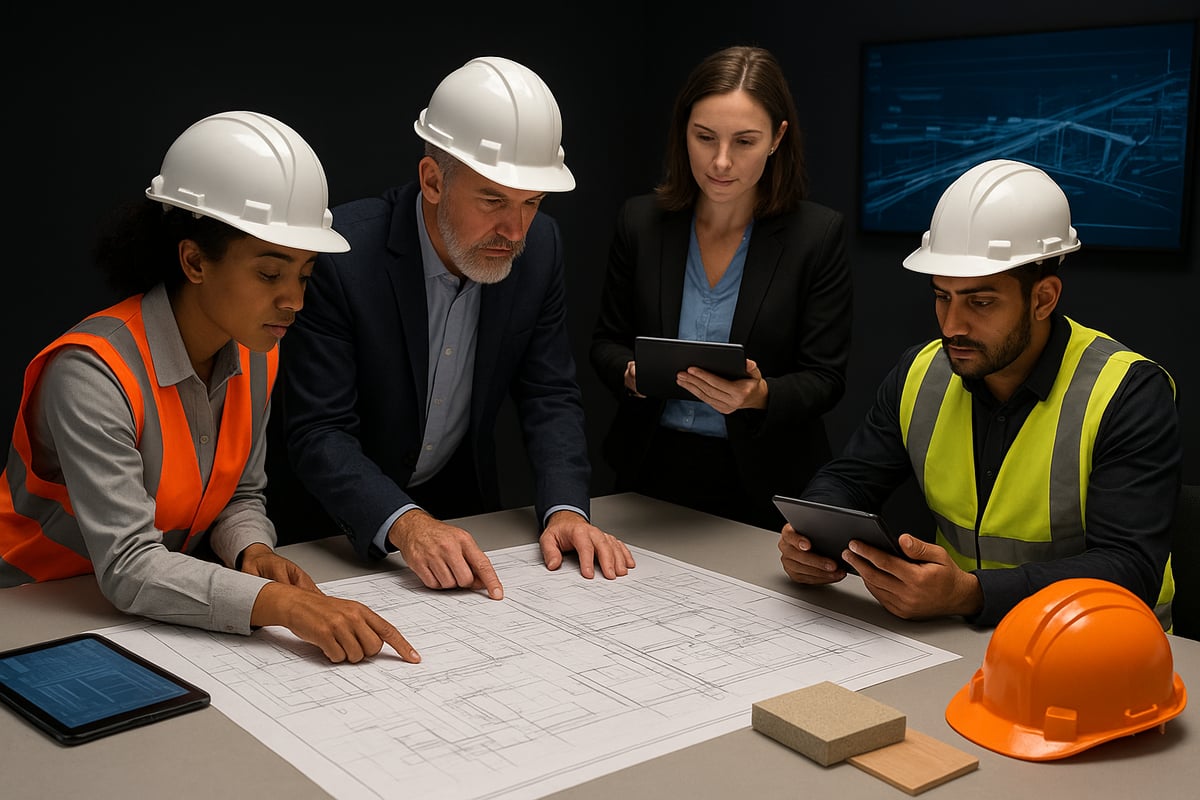
The first step in civil construction work is to define a clear project scope and set measurable objectives. This involves outlining what the project will deliver, key milestones, and performance indicators. For example, if the project is a new urban road scheme, you must specify its length, capacity, expected traffic flow, and environmental considerations.
Engage with stakeholders early to align expectations and regulatory requirements. Precise scope definition minimises costly changes later and ensures everyone has a shared understanding of the civil construction work ahead.
Feasibility Studies and Site Analysis
Before proceeding, conduct in-depth feasibility studies for your civil construction work. This includes environmental, geotechnical, and traffic impact assessments. Use tools like GIS and remote sensing to evaluate potential sites and identify risks or constraints.
A thorough site analysis is crucial, as 90% of failed projects cite inadequate site assessment as a core reason. Assess all data to confirm the project’s viability and flag any obstacles that could complicate future civil construction work stages.
Budgeting and Financial Planning
Robust financial planning is essential for successful civil construction work. Begin with accurate cost estimation, factoring in material costs, labour, equipment, and potential risks. Include contingency allowances to manage unexpected expenses.
Explore different funding sources, such as public funds, private investment, or public-private partnerships (PPP). A transparent budget process helps secure stakeholder confidence and keeps the civil construction work on track financially.
Regulatory Approvals and Permitting
Navigating regulatory approvals is a critical step in civil construction work planning. Secure planning permissions, environmental permits, and all necessary local authority sign-offs before breaking ground. Early engagement with regulatory bodies can streamline the process and reduce delays.
For green infrastructure projects, fast-tracked permitting may apply if the project meets sustainability criteria. Ensure all documentation is complete and up to date, as non-compliance can halt civil construction work at any stage.
Stakeholder Engagement and Communication
Effective communication is vital throughout any civil construction work project. Identify all stakeholders—clients, local authorities, community groups—and involve them early. Use digital platforms to share updates, gather feedback, and maintain transparency.
Proactive engagement helps address concerns and builds trust, which is particularly important for projects impacting local communities. Keeping stakeholders informed reduces the risk of disputes and ensures smoother civil construction work progress.
Scheduling and Resource Allocation
Careful scheduling ensures civil construction work stays on programme. Develop detailed Gantt charts, use critical path analysis, and apply resource levelling techniques. Tools like Primavera P6 or MS Project help visualise timelines and allocate resources efficiently.
Monitor progress regularly and adjust schedules as needed. Timely, accurate resource allocation prevents bottlenecks and supports seamless delivery of each civil construction work milestone.
Procurement and Supply Chain Management
The final planning step in civil construction work is managing procurement and the supply chain. Select contractors and suppliers based on experience, reliability, and compliance with standards. Prioritise ethical sourcing and local content where possible.
Adopting best practices for civil work ensures robust contract management and minimises risk. Effective procurement strategies, coupled with regular performance reviews, underpin successful civil construction work execution and long-term asset quality.
Modern Execution Methods and Best Practices
The landscape of civil construction work in 2026 demands precision, adaptability, and a forward-thinking mindset. Modern methods and best practices are redefining each project phase, ensuring every site is safe, efficient, and future-proof. Let us explore the step-by-step processes that shape successful outcomes in today’s civil construction work.
Site Preparation and Early Works
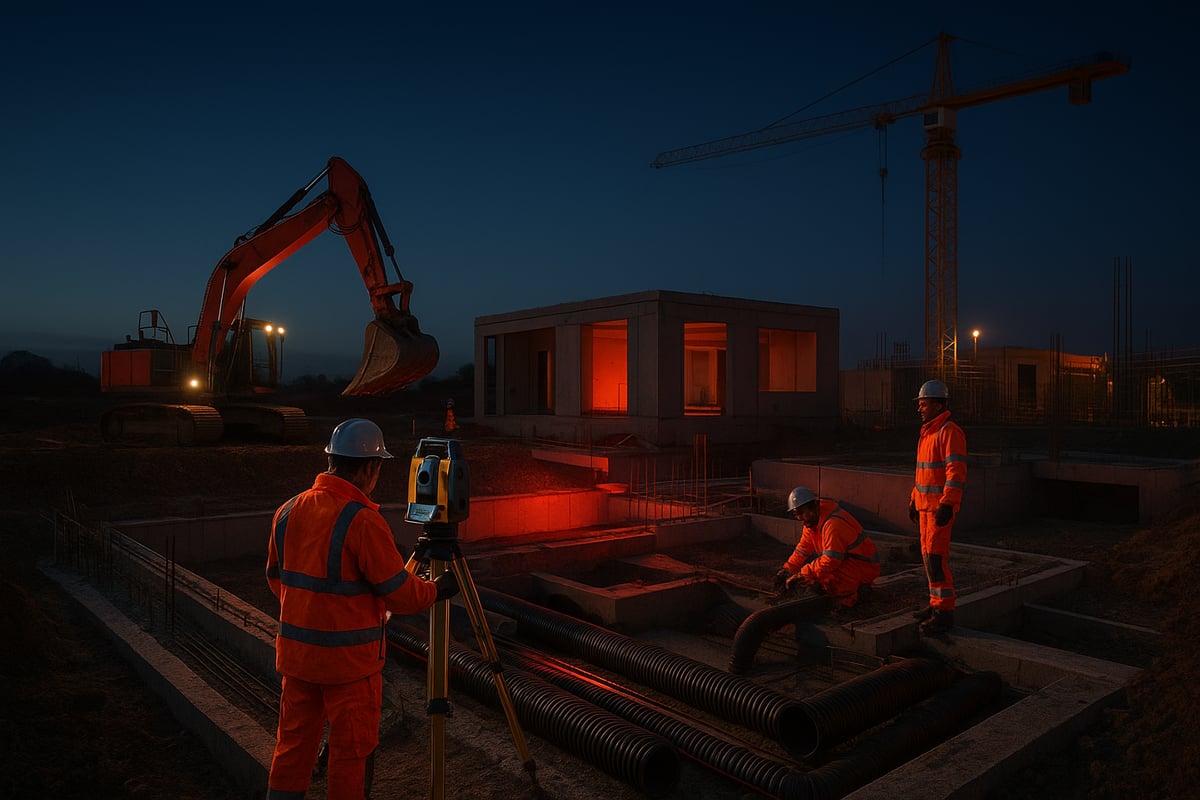
Every civil construction work project begins with meticulous site preparation. Ground investigation is essential, involving soil sampling and geotechnical analysis to identify potential risks before breaking ground.
Modern ground works techniques include advanced surveying tools, such as GPS and 3D scanners, to map the terrain accurately. Site clearance follows, removing vegetation and debris, while utility diversions ensure that existing services are protected or rerouted.
A phased approach for early works minimises delays and supports seamless transitions to subsequent construction stages. Thorough site preparation sets the foundation for project success.
Foundations and Structural Works
At the heart of civil construction work lies the integrity of its foundations. Engineers assess soil conditions, load requirements, and environmental factors to select the most suitable foundation type, whether piles, rafts, or pads.
Deep pile foundations are often chosen for high-rise developments or challenging ground conditions, providing stability and long-term resilience. For a comprehensive overview of these critical processes and best practices, visit the Foundations and Piling in Construction resource.
Quality assurance at this stage is paramount, as errors in foundation work can impact the entire structure. Modern techniques and digital monitoring tools help ensure every element meets or exceeds standards.
Highways, Roads, and Surfacing Techniques
Innovations in highways and road surfacing are transforming civil construction work. New materials, such as warm-mix asphalt and permeable concrete, offer superior durability and environmental performance.
Recycled aggregates are now commonly used in road bases, supporting sustainability goals. Permeable surfaces help manage rainwater, reducing surface runoff and flood risks.
Routine testing of surfacing materials, combined with modern laying equipment, guarantees consistent quality and longevity for roads and highways.
Drainage and Environmental Controls
Effective drainage is a cornerstone of civil construction work. Sustainable drainage systems (SuDS) are now standard, integrating permeable surfaces, swales, and soakaways to manage water flow naturally.
Engineers must comply with Environment Agency standards, ensuring that flood mitigation measures are robust and future-proof. Innovative solutions, such as smart monitoring of drainage capacity, allow real-time adjustments during heavy rainfall.
Proactive planning and design of drainage systems protect both the built environment and local ecosystems.
Quality Assurance and Control
Quality assurance is woven throughout every phase of civil construction work. On-site and off-site material testing, including compressive strength and compaction checks, ensures compliance with design specifications.
Digital QA/QC workflows, supported by mobile applications, enable real-time reporting and issue tracking. This approach improves transparency and allows project managers to address challenges without delay.
Continuous quality monitoring helps prevent costly errors and supports a culture of excellence on every site.
Health and Safety Management
Health and safety remain at the forefront of civil construction work in 2026. The latest HSE protocols are reinforced by digital safety management systems, which track incidents, monitor PPE compliance, and issue automated alerts.
Digital tools have led to a 40% reduction in safety incidents, according to HSE data. Training and toolbox talks are increasingly delivered via mobile platforms, ensuring that workers remain informed and engaged.
A proactive safety culture not only protects lives but also enhances project efficiency and reputation.
Integrating Sustainability and Innovation in Civil Construction
Sustainability and innovation are now at the core of civil construction work. These principles are transforming how projects are designed, delivered, and maintained. As clients demand greener solutions and regulations tighten, the industry must embrace new methods and materials. This section explores how civil construction work is evolving to meet these challenges, with a focus on low-carbon approaches, energy efficiency, biodiversity, waste management, and digital innovation.
Low-Carbon Materials and Construction Techniques
Adopting low-carbon materials is a major step forward in civil construction work. The use of recycled aggregates, low-carbon concrete, and green steel is now standard practice on leading UK sites. For example, geopolymer concrete is being trialled in public infrastructure, offering both strength and a smaller carbon footprint.
A notable innovation is the reuse of steel sheet piles, as recognised by the Sustainability award in highway construction, which highlighted their role in the M4 smart motorway project. These materials help projects meet tough carbon reduction targets and future-proof assets.
Energy Efficiency and Renewable Integration
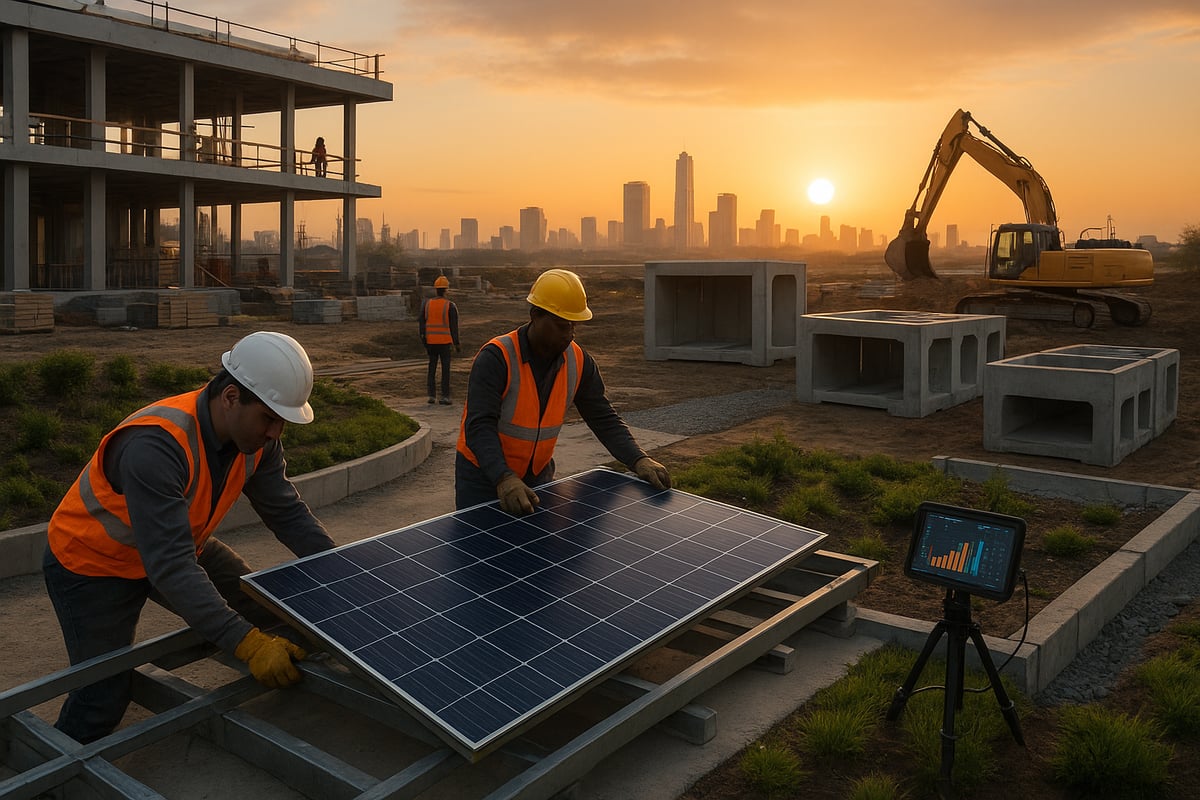
Energy efficiency is a priority across every stage of civil construction work. Sites increasingly use on-site renewable energy generation, such as solar panels and wind turbines, to power operations. Solar-powered cabins and electric plant equipment are replacing traditional diesel-powered options, cutting emissions and operational costs.
Integrating renewables not only reduces the environmental impact but also supports compliance with new energy standards. This shift is essential for clients aiming to achieve net zero targets through their civil construction work.
Biodiversity and Ecological Enhancement
Modern civil construction work must actively protect and enhance biodiversity. Projects are now required to deliver Biodiversity Net Gain, ensuring habitats are improved rather than harmed. This involves creating green spaces, wildlife corridors, and restoring natural habitats as part of the development.
Civil construction work teams collaborate with ecologists from the earliest planning stages, using innovative planting schemes and green infrastructure. These enhancements help meet regulatory requirements and leave a positive legacy for communities and wildlife.
Waste Minimisation and Circular Economy
Minimising waste is integral to sustainable civil construction work. On-site recycling, modular construction, and careful material selection all contribute to a circular economy approach. Leading projects have achieved up to a 50% reduction in construction waste, according to WRAP.
Prefabrication and offsite manufacturing further reduce material use and transport emissions. By rethinking waste, civil construction work not only saves resources but also delivers cost savings and environmental benefits.
Digital Tools for Sustainable Construction
Digital innovation is driving sustainable outcomes in civil construction work. Carbon tracking software and life-cycle analysis tools are now standard, allowing teams to monitor progress and identify hotspots in real time. Digital dashboards provide instant visibility on sustainability metrics, helping managers make informed decisions quickly.
The integration of these digital tools into civil construction work supports transparency, regulatory compliance, and continuous improvement across the project lifecycle.
Technology and Digital Transformation in Civil Construction
The landscape of civil construction work is being reshaped by rapid technological advancements. Digital tools and smart systems are now essential for delivering projects efficiently and meeting 2026’s demanding standards. Embracing innovation is no longer optional. It is the foundation of future-proof infrastructure.
Building Information Modelling (BIM) and Digital Twins
BIM has become the backbone of civil construction work, enabling integrated design and seamless collaboration across teams. Digital twins further enhance this by creating real-time, data-rich models of infrastructure assets, offering unprecedented insights into performance and maintenance.
For public projects, BIM Level 2 compliance is now standard, supporting coordinated design and efficient asset management. Major UK infrastructure schemes are already leveraging digital twins in UK infrastructure to streamline construction and improve outcomes. This approach helps reduce errors, control costs, and future-proof assets for evolving demands.
Automation, Robotics, and Drones
Automation is redefining civil construction work by increasing productivity and safety. Autonomous machinery now performs earthworks and material handling with precision, reducing manual intervention. Robotics are being deployed for repetitive or hazardous tasks, minimising on-site risks.
Drones play a vital role in surveying, progress tracking, and inspections, providing accurate data and improving project oversight. The integration of AI is accelerating these trends, as highlighted in the AI revolutionizing construction resource. This technology enables faster decision-making and enhances the quality of civil construction work.
IoT and Smart Site Monitoring
The use of IoT in civil construction work allows for real-time monitoring of equipment, materials, and worker safety. Smart sensors collect data from across the site, helping managers identify issues before they escalate. Predictive maintenance, enabled by IoT, minimises downtime and extends the life of machinery.
IoT-enabled monitoring also supports compliance with health and safety regulations. By tracking environmental conditions and workforce movements, it ensures that standards are maintained throughout every phase of civil construction work.
Cloud Collaboration and Mobile Apps
Cloud-based collaboration tools and mobile apps are transforming how teams manage civil construction work. These platforms enable remote project management and instant document sharing, ensuring that all stakeholders have access to the latest information.
With cloud technology, decision-making is up to 60% faster, supporting agile responses to on-site challenges. Mobile apps streamline quality control and safety reporting, providing transparency and accountability in every aspect of civil construction work.
Compliance, Quality, and Future-Proofing Civil Construction Projects
Meeting the ever-evolving demands of civil construction work in 2026 requires more than technical expertise. Compliance, quality management, and future-proofing are now fundamental for delivering safe, resilient, and sustainable infrastructure. This section explores the latest regulatory standards, best practices, and innovations that set the benchmark for excellence in civil construction work.
Meeting 2026 Regulatory Standards
The landscape of civil construction work is shaped by robust and regularly updated regulations. 2026 introduces significant changes to UK and EU frameworks, with a strong focus on health, safety, and environmental protection.
New CDM 2026 regulations demand more comprehensive planning and coordination, especially for complex projects. This means every stakeholder must understand their legal obligations from design through to delivery. Enhanced reporting and documentation are now required, with digital tools supporting compliance checks.
Staying informed of evolving standards is crucial. Engaging with professional bodies and leveraging resources like the Civil Engineering Services Overview helps teams meet and exceed their compliance targets.
Quality Management Systems
Quality is the cornerstone of successful civil construction work. Implementing robust frameworks such as ISO 9001 ensures that every stage, from procurement to completion, is systematically controlled and documented.
Continuous improvement is encouraged through regular audits, feedback loops, and training. Digital platforms now streamline quality assurance, making it easier to track non-conformities and implement corrective actions.
A culture of quality minimises rework, reduces costs, and enhances client satisfaction. For a thorough understanding of industry best practices, consulting relevant civil engineering resources can be invaluable.
Health, Safety, and Environmental Compliance
No aspect of civil construction work is more important than safeguarding people and the environment. The latest HSE guidance for 2026 introduces advanced protocols for risk assessment, site monitoring, and emergency planning.
Digital health and safety reporting tools now allow for real-time tracking of incidents and near-misses. Environmental compliance is equally stringent, with requirements for pollution prevention, waste management, and biodiversity protection.
Regular training and clear communication ensure that every team member understands their responsibilities. By embedding compliance in everyday operations, projects maintain momentum while protecting all stakeholders.
Risk Management and Resilience Planning
Managing risk in civil construction work goes beyond basic hazard identification. Modern risk management frameworks require proactive assessment, mitigation planning, and adaptive strategies for emerging threats.
Climate resilience is a growing priority, with projects needing to account for extreme weather, flooding, and shifting ground conditions. Scenario planning and flexible design help future-proof assets against these uncertainties.
Project teams use digital risk registers and predictive analytics to stay ahead. This integrated approach ensures that challenges are addressed early, maintaining safety, budgets, and timelines.
Future-Proofing Infrastructure Assets
To ensure civil construction work delivers long-term value, assets must be designed for adaptability and longevity. This involves selecting durable materials, integrating smart technologies, and planning for future upgrades like 5G connectivity or EV charging infrastructure.
A future-proof asset supports changing community needs and technological advances. Modular designs and digital twins enable easy adaptation, while robust maintenance strategies extend asset life.
By anticipating tomorrow’s demands, today’s civil construction work builds the foundation for resilient and thriving communities.
Documentation, Handover, and Asset Management
Thorough documentation is essential for civil construction work, ensuring a smooth transition from project completion to operation. Digital as-built records, comprehensive O&M manuals, and transparent handover protocols reduce errors and support ongoing maintenance.
Asset management software now tracks performance, schedules inspections, and manages lifecycle costs. This proactive approach maximises value and minimises downtime.
Effective documentation and asset management complete the quality cycle, empowering owners to maintain high standards long after project delivery.