
Roads shape how we live, move, and connect. In the UK, civil engineering road design stands at a crossroads, as 2026 brings sweeping changes to how roads are planned, built, and maintained.
This guide offers a clear path forward for professionals seeking to master civil engineering road design. Here you will find insights into new design standards, digital advancements, sustainability requirements, and safety breakthroughs.
Discover what is driving industry transformation, how to adapt, and what steps you can take now. Ready to design the future? Let us begin with the essentials.
The Foundations of Modern Road Design
Modern civil engineering road design is built on a set of robust principles, regulatory frameworks, and the integration of advanced technology. These foundations ensure that new and upgraded roads across the UK are safe, efficient, and sustainable, ready to meet the demands of 2026 and beyond. Let us explore the fundamentals shaping every successful project.

Key Principles of Road Design
At the heart of civil engineering road design are core principles that govern how roads are planned and built. Geometry, alignment, and cross-section all play a pivotal role in ensuring roads are both safe and efficient. Sight lines and visibility are critical for drivers, cyclists, and pedestrians, reducing the risk of accidents.
Effective drainage and stormwater management are essential for safety and durability. Design speed influences every aspect of layout, from curve radii to junction spacing. Every project must follow the Design Manual for Roads and Bridges (DMRB) and other UK-specific standards. Increasingly, 3D geometric modelling is being used to ensure the design fits the real-world terrain, with recent Reddit insights highlighting a surge in 3D adoption for accuracy.
For those seeking professional support in navigating these principles, engaging with civil engineering design services can be invaluable.
Stakeholder and Regulatory Considerations
Civil engineering road design requires close collaboration with local authorities, planners, and communities at every stage. Gaining planning permission and conducting environmental impact assessments (EIAs) are mandatory steps that shape the scope of each project.
Integration with existing infrastructure, such as utilities and public transport, is key for seamless operation. Regular liaison with geotechnical and structural teams ensures that technical challenges are addressed early. Balancing political, budgetary, and social demands is a constant, requiring transparency and adaptability throughout the project.
Stages of Road Design Projects
The civil engineering road design process unfolds in distinct phases:
- Feasibility studies and route selection establish initial viability.
- Preliminary and detailed design phases refine the alignment and technical details.
- Public consultation and stakeholder engagement gather feedback and address concerns.
- Construction documentation and tendering prepare the project for delivery.
- Monitoring and handover ensure the finished road meets all performance and safety requirements.
Each stage builds upon the last, ensuring a structured, accountable approach to road development.
Common Challenges and Solutions
Civil engineering road design projects often face tight budgets and ambitious schedules. Complex interchanges can demand more resources than routine resurfacing jobs, requiring careful planning and risk management.
Adapting to unique site constraints, such as existing infrastructure or environmental sensitivities, is a frequent challenge. Automation in the design phase has streamlined new builds, but repairs and maintenance still rely heavily on human expertise. Recent statistics confirm that repair work remains less automatable, preserving the essential role of skilled engineers.
The Impact of Technology and AI
The landscape of civil engineering road design is rapidly evolving thanks to software solutions like Civil 3D and OpenRoads. These tools enable digital terrain modelling and corridor generation, improving precision and efficiency.
However, AI has its limits. Human oversight is vital for complex repairs, fieldwork, and stakeholder management. For example, while automated modelling can accelerate new designs, manual decision-making is still required for addressing unforeseen site issues during repairs. The synergy between technology and professional judgement is what drives the best results in civil engineering road design today.
Essential Steps in the Road Design Process
Civil engineering road design is a structured, multi-phase journey, demanding precision and adaptability at every stage. Understanding each step ensures that projects meet safety, sustainability, and regulatory expectations. Here, we explore the essential phases shaping modern UK roads, highlighting how digital tools and stakeholder engagement drive quality outcomes.

Step 1: Site Analysis and Data Collection
Every civil engineering road design project begins with thorough site analysis. Engineers conduct topographical surveys, geotechnical investigations, and traffic studies to capture accurate site conditions.
Cutting-edge tools like drones and LiDAR generate digital terrain models, which are crucial for initial concept development. Environmental and social impact data are also gathered, ensuring the design considers both the ecosystem and local communities.
Digital terrain files serve as foundational input for design software, supporting efficient modelling and reducing errors. This comprehensive data collection lays the groundwork for a successful civil engineering road design.
Step 2: Conceptual and Preliminary Design
With a robust data set, engineers move into the conceptual and preliminary design phase. Alignment selection is guided by land use, safety, and project costs, ensuring the civil engineering road design aligns with both local needs and regulatory standards.
Initial cross-sections and profiles are developed, allowing multiple alignment options to be modelled for urban and rural scenarios. Early engagement with stakeholders and public consultations helps identify potential concerns and opportunities for improvement.
This collaborative approach ensures the chosen concept is both practical and widely supported, setting the stage for more detailed civil engineering road design work.
Step 3: Detailed Design and Modelling
In the detailed design and modelling stage, engineers finalise the horizontal and vertical geometry of the road. Material specifications for pavements, drainage integration, signage, lighting, and utilities are all detailed within the civil engineering road design framework.
Building Information Modelling (BIM) and 3D modelling tools support clash detection and coordination between different engineering disciplines. Contractors receive precise 3D models for automated machine control, improving construction accuracy and efficiency.
This stage is where innovative solutions and digital workflows truly influence the civil engineering road design process, enhancing constructability and reducing risks.
Step 4: Safety and Compliance Review
Safety and compliance are central to every civil engineering road design. Road safety audits are conducted at each design phase, ensuring potential hazards are identified and mitigated early.
Compliance with UK standards such as DMRB and the Manual for Streets is verified, with feedback from safety engineers and local authorities guiding necessary adjustments. For example, audit findings might prompt revisions to sight lines or drainage layouts.
This iterative review process strengthens the civil engineering road design, delivering safer and more reliable roads for all users.
Step 5: Documentation and Approvals
Preparing clear documentation is essential in civil engineering road design. Engineers develop construction drawings, specifications, and bills of quantities, then navigate the approvals process with authorities and stakeholders.
Projects often require public display and the management of objections, with departures from standards justified in detail. Understanding the Section 278 road works explained process is vital, as it governs agreements for works on existing public highways in the UK.
Effective documentation and regulatory navigation ensure the civil engineering road design meets all statutory and stakeholder requirements.
Step 6: Construction Support and Monitoring
The final phase of civil engineering road design involves construction support and ongoing monitoring. Site supervision ensures quality, while unforeseen conditions may require rapid design adjustments.
Continuous collaboration between design and construction teams helps implement field constraints into revised plans. Quality assurance processes and responsive communication maintain project momentum and safety.
Ultimately, this step ensures that the civil engineering road design translates into a durable, functional roadway that serves communities well into the future.
Sustainability and Environmental Integration in 2026 Road Design
Sustainability is now fundamental to every civil engineering road design project. As the UK heads towards 2026, new standards and expectations are driving the industry to consider every aspect of environmental responsibility. From material choices to climate resilience and community impact, every detail shapes the future of transport infrastructure.
Sustainable Materials and Construction Methods
Civil engineering road design in 2026 prioritises sustainable materials and innovative construction methods. Engineers are increasingly specifying recycled aggregates and low-carbon alternatives to traditional materials. Warm mix asphalts reduce energy consumption, while permeable pavements help manage stormwater.
Life cycle assessment tools are routinely used to guide material selection, ensuring choices deliver both performance and environmental benefits. For example, UK projects have started piloting recycled asphalt pavement, reducing both resource use and emissions. Research into Sustainable Road Infrastructure Development Using Recycled Asphalt Materials demonstrates the mechanical and environmental advantages of these approaches.
By embedding these innovations in civil engineering road design, the industry sets a benchmark for responsible infrastructure delivery.
Green Infrastructure and Biodiversity
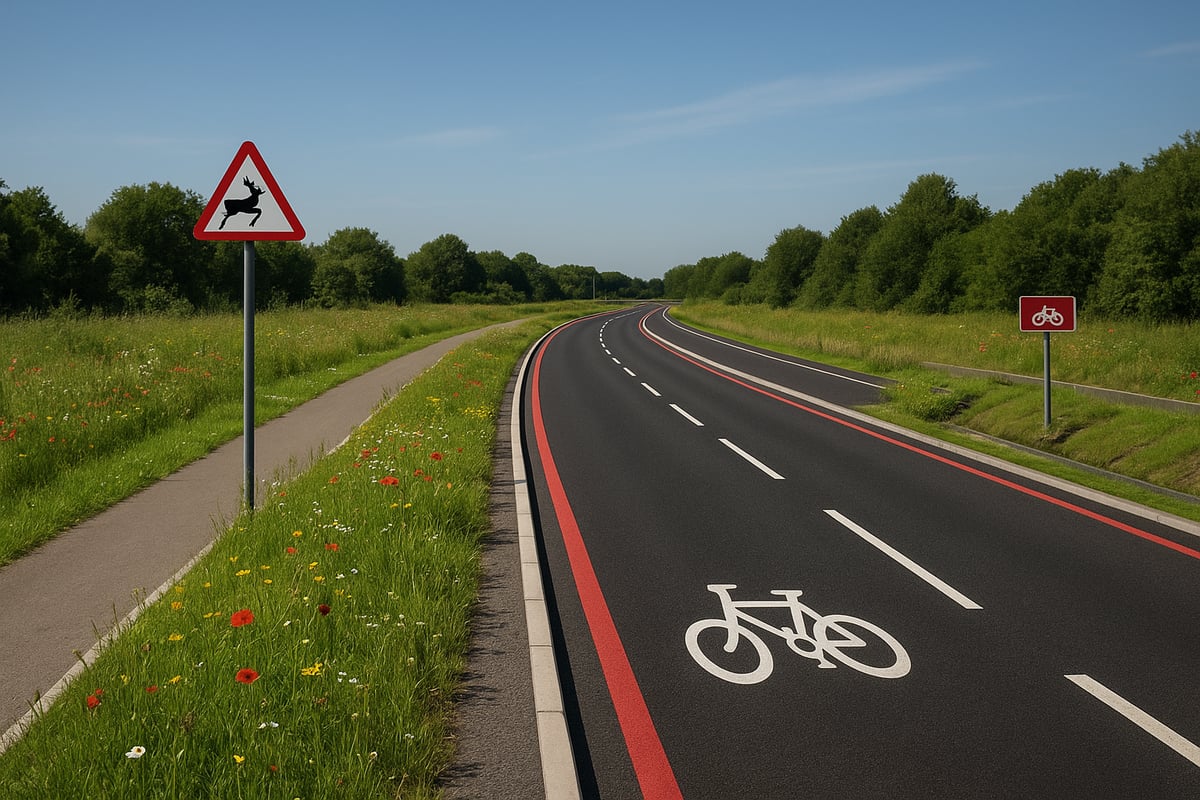
Integrating green infrastructure has become a core principle of civil engineering road design. Engineers now routinely incorporate wildlife crossings to connect habitats and reduce roadkill. Tree planting and green verges improve air quality and visual appeal, while supporting local ecosystems.
Sustainable drainage systems (SuDS) are essential for managing runoff and preventing flooding. These features also enhance biodiversity by creating habitats for plants and animals. Recent urban road schemes in the UK have successfully integrated SuDS, demonstrating benefits for both the environment and local communities.
Through these practices, civil engineering road design helps to balance transport needs with ecological stewardship.
Climate Resilience and Adaptation
With climate risks on the rise, civil engineering road design must build in resilience from the outset. Engineers assess local climate projections, considering increased rainfall, heatwaves, and flood potential. Material choices and road profiles are adapted to withstand these extremes.
For example, in flood-prone areas, raised carriageways and reinforced embankments help protect critical routes. Drainage capacity is upgraded to handle intense downpours. These adaptations ensure roads remain safe and reliable, whatever the weather.
By prioritising resilience, civil engineering road design supports a transport network prepared for future challenges.
Reducing Carbon Footprint in Road Design
Cutting carbon emissions is now a central goal for every civil engineering road design project. Designers minimise earthworks and optimise material transport to lessen environmental impact. Active travel is encouraged through segregated cycle lanes and pedestrian routes.
Calculating and reporting embodied carbon is standard practice, with digital carbon calculators informing design choices. Major UK infrastructure projects now use these tools to track and reduce emissions. By integrating low-carbon strategies, civil engineering road design aligns with national climate targets and delivers long-term value.
These efforts position the industry as a leader in sustainable practice.
Meeting UK and EU Environmental Regulations
Compliance with evolving environmental regulations is essential in civil engineering road design. Environmental impact assessments (EIA) are required for most road schemes, ensuring projects consider their effects on landscapes, habitats, and communities.
The UK’s biodiversity net gain mandate means every new road must leave the natural environment in a better state than before. Civil engineering road design teams work closely with ecologists to meet these requirements. Projects are now adapting to stricter biodiversity rules and preparing for further changes expected by 2026.
Staying ahead of regulatory developments keeps projects on track and upholds professional standards.
Community and Social Sustainability
Modern civil engineering road design places community needs at the centre of every project. Accessibility and inclusivity are prioritised, with features like tactile paving and step-free crossings. Engineers also address noise, air quality, and community severance through sensitive design.
Engagement with local residents ensures that roads serve both transport and social functions. Drive-through projects, for example, are balancing improved traffic flow with the needs of neighbourhoods and businesses.
By focusing on these aspects, civil engineering road design creates infrastructure that benefits everyone, both now and in the future.
Safety, Accessibility, and User Experience
Prioritising safety, accessibility, and user experience is fundamental in civil engineering road design. As the needs of the travelling public diversify, the sector must address both traditional and emerging challenges. By 2026, the focus will be on integrating advanced technologies, inclusive layouts, and smarter maintenance strategies to create roads that serve everyone safely and efficiently.
Road Safety Innovations
Recent years have seen a surge in innovative safety measures within civil engineering road design. Advanced signage and dynamic lighting systems are now commonplace, ensuring better visibility and real-time hazard alerts. High-performance roadside barriers and crash cushions further protect road users, especially in high-speed or high-risk locations.
Intelligent transport systems (ITS) are increasingly deployed at junctions to monitor traffic, detect incidents, and adjust signals responsively. Data-driven safety audits support continuous improvement, using accident statistics and on-site observations to refine design elements. For example, ITS installations at known collision hotspots have led to measurable reductions in accidents and improved overall user confidence.
Designing for All Users: Cars, Cyclists, and Pedestrians
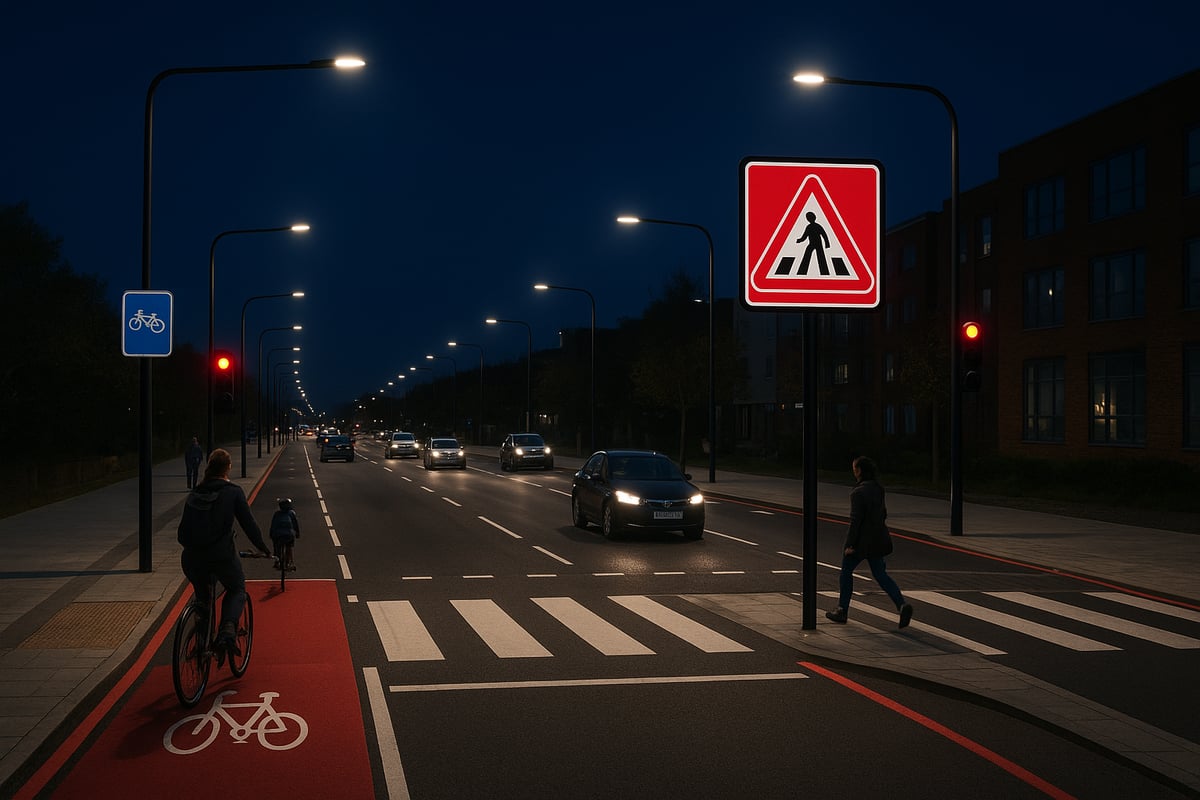
Inclusive civil engineering road design addresses the diverse needs of motorists, cyclists, and pedestrians. Segregated cycle lanes offer a safe, dedicated space for cyclists, separated from vehicle traffic. Well-marked pedestrian crossings with tactile paving and accessible signals enhance safety and independence for everyone, including those with disabilities.
Traffic calming measures, such as raised tables and chicanes, help control vehicle speeds in residential and urban areas. Universal design principles ensure that roads are accessible to all, regardless of age or ability. Urban schemes increasingly prioritise vulnerable road users, placing their safety and comfort at the heart of every new project.
Addressing Human Factors and Behaviour
Understanding human behaviour is critical in civil engineering road design. Designers consider how drivers, cyclists, and pedestrians interact with the environment, using psychology to create intuitive layouts. Clear sight lines, logical signage, and predictable road geometry help minimise user errors and support safe decision-making.
A notable example is the preference for roundabouts over signalised junctions, as roundabouts reduce conflict points and typically result in fewer severe collisions. By anticipating common mistakes and designing to mitigate them, engineers create roads that feel natural and safe to navigate for all users.
Future-Proofing for Autonomous and Connected Vehicles
Preparing for autonomous and connected vehicles (CAVs) is shaping the future of civil engineering road design. Roads now require high-contrast lane markings, robust digital mapping, and reliable communications infrastructure to support CAV technology. Retrofitting existing roads with these features presents unique challenges, particularly in urban settings.
Ongoing UK trials are evaluating CAV-ready corridors, testing how current infrastructure can be adapted. As vehicle technology evolves, so must the roads, ensuring that both human-driven and autonomous vehicles can operate safely side by side for years to come.
Maintenance, Operations, and Long-Term Safety
Civil engineering road design increasingly factors in long-term maintenance and operational efficiency. Roads are designed for ease of inspection, repair, and adaptation, supporting proactive asset management. Advanced monitoring technologies, such as embedded sensors, provide real-time data on road condition and usage patterns.
The integration of digital tools is further strengthened by initiatives like the Road Condition Data and Technology Review: Position Paper, which advocates for standardised approaches to road condition monitoring. These innovations help extend the lifespan of infrastructure and ensure safety remains paramount throughout the asset's life.
Digital Tools and Technological Advances in Road Design
Digital transformation is revolutionising civil engineering road design, making projects more efficient, precise, and collaborative. In 2026, engineers rely on an array of software platforms and digital solutions that streamline every stage from concept to construction. Let us explore the leading technologies shaping the future of road infrastructure.
Leading Road Design Software in 2026
Choosing the right software is fundamental in civil engineering road design. Platforms like Civil 3D and OpenRoads dominate the UK market, each offering unique strengths for different project needs. Civil 3D is favoured for its seamless integration with Autodesk products and robust corridor modelling capabilities. OpenRoads excels in handling complex geometry and large datasets, making it ideal for major highway projects.
| Feature | Civil 3D | OpenRoads |
|---|---|---|
| 3D Modelling | Yes | Yes |
| Corridor Design | Advanced | Advanced |
| GIS Integration | Good | Excellent |
| UK DMRB Support | Yes | Yes |
According to industry discussions, Civil 3D offers familiar workflows for many UK engineers, while OpenRoads is praised for interoperability. Selecting the optimal platform depends on the specific demands of each civil engineering road design project.
Building Information Modelling (BIM) and Digital Twins
BIM has become a cornerstone of civil engineering road design, fostering collaboration and reducing errors. By creating centralised 3D models, BIM enables teams to detect clashes, coordinate across disciplines, and manage data throughout the asset’s lifecycle. Digital twins take this further by providing real-time performance monitoring and predictive maintenance based on live data.
For public sector projects in the UK, BIM mandates ensure that all stakeholders work from a single source of truth. This transparency improves efficiency and reduces costly rework. Digital twins, meanwhile, allow asset managers to visualise and optimise road performance long after construction ends, demonstrating the enduring value of digital integration in civil engineering road design.
Automation and AI in Road Design
Automation and AI are rapidly transforming civil engineering road design. Modern software can now generate alignments, corridors, and even optimise material usage with minimal manual input. AI-driven tools assess terrain, traffic, and environmental constraints, producing design options in a fraction of the time.
Despite these advances, human expertise remains vital. Complex repairs, unique site challenges, and stakeholder engagement still require an engineer’s judgement. As the industry prepares for new standards such as PAS 4010:2026 – Maximising Productivity in Infrastructure Design and Delivery, the focus is on combining automation with skilled oversight. This ensures that digital innovation enhances, rather than replaces, the critical thinking central to civil engineering road design.
Data-Driven Decision Making
Big data and the Internet of Things are driving a new era in civil engineering road design. Sensors embedded in pavements, bridges, and traffic systems deliver real-time information on usage, wear, and safety. This data feeds directly into predictive analytics platforms, enabling teams to schedule maintenance, prioritise upgrades, and allocate resources with unprecedented accuracy.
For example, many UK infrastructure projects now leverage historical and live data to identify high-risk areas and target interventions. The result is a smarter, more proactive approach to asset management that enhances the safety and sustainability of every civil engineering road design.
Virtual and Augmented Reality for Stakeholder Engagement
Virtual and augmented reality are bridging the gap between technical teams and the public in civil engineering road design. VR allows users to immerse themselves in proposed road layouts, experiencing the design from a driver’s, cyclist’s, or pedestrian’s perspective. AR overlays digital models onto real-world environments, making complex plans easier to understand.
During public consultations, these tools help non-engineers provide meaningful feedback, resulting in designs that are more inclusive and better aligned with community needs. VR mock-ups are increasingly used in urban planning sessions, ensuring that every civil engineering road design is shaped by a broad range of voices and insights.
Future Trends and Challenges for Civil Engineering Road Design
The landscape of civil engineering road design is shifting rapidly as 2026 approaches. Professionals must anticipate new standards, population pressures, and technological advances. Keeping pace with these changes is essential for delivering resilient, efficient, and sustainable roads across the UK.
Evolving Standards and Regulatory Landscape
Civil engineering road design will be shaped by significant updates to UK and EU regulations by 2026. Anticipated revisions to the DMRB and the Manual for Streets will introduce stricter requirements for safety, sustainability, and climate resilience. These changes will demand close attention to road geometry, materials, and environmental integration.
A key trend is the global move towards sustainable infrastructure. For example, the ASCE Releases Groundbreaking Standard for Sustainable Infrastructure sets a new benchmark for project life-cycle sustainability, influencing UK best practices. Engineers must stay agile, updating methods to comply with evolving mandates and ensure robust, future-ready designs.
Demographic and Urbanisation Pressures
Urbanisation is accelerating, and civil engineering road design must address the needs of growing populations and shifting mobility patterns. Cities now require roads that accommodate more buses, cyclists, and pedestrians, not just private vehicles.
Designers are responding with multi-modal corridors and better integration with public transport. This approach helps manage congestion and supports sustainable travel. As demographics evolve, road layouts and features must remain adaptable, ensuring long-term relevance and user safety.
The Role of Civil Engineers in a Changing Industry
The role of civil engineers is transforming as automation and digital tools become commonplace. Civil engineering road design increasingly relies on software for modelling and analysis, yet human insight remains irreplaceable.
Engineers must now balance technical expertise with soft skills, including stakeholder engagement and environmental stewardship. According to recent insights from practising engineers, job satisfaction stems from mastering both digital workflows and people-focused collaboration. This blend of skills ensures that road design continues to meet complex, real-world demands.
Infrastructure Renewal and Retrofit
Much of the UK’s road network is ageing and requires smart upgrades to meet new standards. Civil engineering road design for retrofit projects involves integrating advanced safety features and digital systems into existing infrastructure.
Complex repairs and resurfacing demand tailored solutions that respect site constraints and user needs. For a deeper look at technical approaches, see Highways and road surfacing, which covers practical methods for both new and legacy roads. Upgrading roads also means preparing for future technologies, like autonomous vehicle systems, without disrupting current operations.
Funding, Budgets, and Political Constraints
Securing funding and managing budgets are perennial challenges in civil engineering road design. Public investment is often limited, prompting careful cost-benefit analysis and prioritisation of high-impact projects.
Political factors can cause delays or alter project scopes, especially when policies shift. Civil engineers must remain adaptable, advocating for efficient solutions and communicating value to stakeholders. Transparent processes and clear documentation help navigate these hurdles, ensuring projects progress even in uncertain times.
Innovation and Research Frontiers
Innovation is driving the next era of civil engineering road design. Emerging materials, such as self-healing asphalt and advanced composites, are being trialled in partnership with universities and industry leaders.
Digital workflows, including BIM and real-time data analytics, are improving design accuracy and project delivery. Ongoing research ensures that new techniques and technologies are rigorously tested before widespread adoption. By embracing collaboration and continuous learning, engineers are positioning themselves at the forefront of industry change.