
From the bridges that connect cities to the sustainable buildings shaping our skylines, civil engineering and design play a vital role in transforming the world around us. As technology and society evolve, understanding the foundations and future of this field is more important than ever.
This essential guide to civil engineering and design for 2026 breaks down complex concepts, highlights game-changing innovations, and maps out the educational pathways for tomorrow’s professionals. Our goal is to provide a trusted, up-to-date resource for students, industry experts, and stakeholders alike.
You will discover the core principles, key disciplines, and design processes driving the sector forward. We will explore sustainability, cutting-edge technology, and the trends shaping future careers. Through real-world examples and emerging opportunities, this guide will inspire you to take the next step in your journey.
Foundations of Civil Engineering
Civil engineering and design have shaped the very foundations of modern society. From the earliest stone bridges to today’s high-tech transport links, the discipline has consistently driven progress. The evolution of civil engineering and design reflects humanity’s quest for safety, efficiency, and resilience in the built environment.

Historical Evolution and Modern Role
The origins of civil engineering and design date back thousands of years. Ancient civilisations constructed roads, aqueducts, and monumental buildings, laying the groundwork for today’s infrastructure. Roman roads, medieval bridges, and Victorian railways all demonstrate how civil engineering and design have been vital to societal development.
Over time, the field evolved from relying on empirical knowledge to adopting scientific principles and advanced materials. The Industrial Revolution marked a turning point, as engineers harnessed iron, steel, and concrete to build larger, more durable structures.
In the 21st century, civil engineering and design have embraced digital tools and sustainable practices. Major UK infrastructure projects, such as the High Speed 2 (HS2) rail network and the Thames Barrier, showcase the sector’s ability to address modern challenges. These landmarks not only improve connectivity and safety but also highlight the growing emphasis on resilience and adaptability.
Today, civil engineering and design underpin urban growth, water management, and disaster mitigation. By integrating innovative solutions, the profession continues to transform the landscape, supporting both daily life and long-term societal goals.
Core Principles and Disciplines
At the heart of civil engineering and design lie several key disciplines. These include:
- Structural engineering: ensuring the stability of buildings and bridges.
- Geotechnical engineering: analysing soil and foundations.
- Environmental engineering: managing resources and minimising pollution.
- Transportation engineering: designing roads, railways, and airports.
- Water resources engineering: controlling floods and supplying clean water.
Each discipline contributes to a holistic approach, often working in tandem with architects and urban planners. Interdisciplinary collaboration is crucial for creating efficient, sustainable spaces. Regulatory frameworks, such as those established by the Institution of Civil Engineers (ICE) and the Engineering Council, set standards for safety, quality, and ethical practice.
Civil engineering and design also prioritise sustainability, ethics, and public welfare. The selection of materials, energy use, and long-term impacts are all considered during the planning process. For a deeper dive into the principles that guide the profession, see the Civil Engineering Design Overview.
Sustainability is now integral, with engineers tasked to balance societal needs against environmental impacts. Ethical decision-making ensures projects serve the public good, reinforcing the trust placed in civil engineering and design by communities.
Civil Engineering in the UK Context
The United Kingdom stands out as a global leader in civil engineering and design. According to the UI GreenMetric 2024 rankings, UK universities are ranked second worldwide for sustainability in civil engineering education. This achievement reflects the sector’s strong commitment to environmental responsibility and forward-thinking design.
Accredited qualifications play a central role in the UK. Professional bodies such as ICE and the Engineering Council ensure that education and practice meet rigorous standards. These organisations also support lifelong learning and professional development.
Demand for civil engineering and design expertise remains high. Recent data from HESA for 2023/24 shows that civil engineering ranks fifth among undergraduate subject choices in the UK, highlighting its popularity and relevance. This demand is driven by ongoing investment in infrastructure, urban regeneration, and climate resilience.
The UK context also emphasises the value of professional accreditation and continuous improvement. By combining world-class education with practical experience, the country continues to produce skilled engineers ready to tackle future challenges in civil engineering and design.
The Civil Engineering Design Process
The civil engineering and design process is a structured journey that transforms ideas into the physical infrastructure shaping our world. This process underpins every project, from bridges to water networks, ensuring safety, functionality, and longevity. Understanding each stage is essential for anyone entering the field or collaborating with civil engineers.

Stages of Design and Construction
Every civil engineering and design project follows a sequence of critical stages, each contributing to a successful outcome. The process typically begins with the concept stage, where project needs and goals are defined. This is followed by feasibility studies, which evaluate technical, financial, and environmental constraints.
Next, the preliminary design phase outlines early solutions, allowing for stakeholder feedback and adjustments. Detailed design then develops comprehensive plans, specifications, and risk assessments, ensuring regulatory compliance and safety. Construction follows, where plans are executed by contractors and engineers, often requiring adaptive problem-solving. Finally, ongoing maintenance ensures infrastructure remains safe and efficient throughout its life cycle.
Stakeholder involvement is crucial at every step. Clients, engineers, architects, contractors, and regulatory bodies all contribute expertise and oversight. For example, the design of a new bridge would involve public consultations, technical surveys, detailed modelling, and iterative reviews. Real-world examples, such as those found in Civil Engineering Projects Examples, demonstrate how theory translates into practice.
Throughout these stages, civil engineering and design principles guide decision-making, balancing innovation with tried-and-tested methods. This systematic approach ensures infrastructure meets the needs of modern society.
Key Tools and Methodologies
Modern civil engineering and design relies on a suite of advanced tools and methodologies. Computer-Aided Design (CAD) enables precise drawings and rapid iterations, while Building Information Modelling (BIM) fosters collaboration by integrating structural, architectural, and service elements in a digital environment.
Surveying technologies, such as laser scanning and GPS, provide accurate site data essential for planning and design. Simulation and modelling software, including Finite Element Method (FEM) tools, help predict structure behaviour under various loads and conditions. These digital resources allow engineers to test solutions virtually before construction begins.
Health and safety considerations are embedded from the start. Risk assessments, safety audits, and compliance checks ensure that designs protect both workers and end users. By integrating safety into every stage, civil engineering and design projects uphold the highest standards of public welfare.
Engineers also use sustainability assessment tools to evaluate the environmental impact of materials and methods. These methodologies support the profession’s commitment to responsible and ethical practice.
Project Management and Delivery
Effective project management is at the heart of every successful civil engineering and design venture. Planning starts with setting clear objectives, timelines, and budgets. Programming allocates resources and schedules activities, while procurement selects the right contractors and suppliers through transparent processes.
Contract administration ensures all parties fulfil their obligations, resolving disputes and managing changes as projects evolve. Risk assessment and mitigation strategies identify potential obstacles, allowing teams to adapt quickly and maintain progress.
Communication and teamwork are vital, especially in multidisciplinary projects involving diverse experts. Regular meetings, shared documentation, and digital collaboration tools keep everyone aligned. In university and professional settings, group project delivery mirrors real-world practice, teaching students how to coordinate, delegate, and deliver results.
Civil engineering and design projects succeed when technical excellence is matched by strong leadership and clear communication. This holistic approach prepares future engineers to manage complexity and deliver value to society.
Core Areas of Study and Professional Skills
A career in civil engineering and design begins with a strong technical foundation. Students immerse themselves in core disciplines such as structural analysis, geotechnics, hydraulics, and materials science. These subjects form the backbone of the field, enabling graduates to understand how buildings, bridges, and infrastructure behave under different conditions.
Mathematics and mechanics are integral, as they underpin most engineering solutions. For example, soil mechanics is essential for foundation design, especially when working on brownfield sites. Engineers must analyse soil properties, predict settlement, and ensure stability for safe and sustainable construction.
Practical skills are equally vital in civil engineering and design. Laboratory work, computer simulations, and field exercises bridge theory and real-world application. Students learn to use industry-standard tools, including CAD software and surveying equipment, to solve complex engineering challenges.
| Core Subject | Application |
|---|---|
| Structural Analysis | Designing safe bridges and buildings |
| Geotechnics | Foundation and earthworks design |
| Hydraulics | Flood risk and water supply management |
| Materials Science | Selection of sustainable construction materials |

Professional Development and Accreditation
Pursuing a career in civil engineering and design involves more than mastering technical skills. Professional development is a continuous journey, starting with an accredited degree. Most UK universities offer BEng or MEng courses that are recognised by the Joint Board of Moderators (JBM), ensuring graduates meet industry standards.
Achieving Chartered Engineer (CEng) status is a key milestone. The typical pathway includes:
- Completing an accredited degree
- Gaining relevant work experience
- Demonstrating professional competence through an interview and report
Professional responsibilities are central to civil engineering and design. Engineers must prioritise health, safety, and welfare at every stage of a project. Ethical decision-making and a commitment to public interest are fundamental expectations, embedded in codes of conduct from bodies like the Institution of Civil Engineers (ICE).
Preparation for graduate roles extends beyond technical knowledge. Skills in client management, stakeholder engagement, and sustainability are increasingly valued. Employers seek well-rounded engineers who can communicate effectively and adapt to evolving industry needs.
Continuous learning is vital. As the sector adopts new technologies and sustainable practices, professionals must stay updated to maintain their competence and relevance in civil engineering and design.
Real-World Application and Placement Opportunities
Applying knowledge in real-world settings is crucial for success in civil engineering and design. Many degree programmes offer a sandwich year or work placement, giving students hands-on experience with leading industry employers. These opportunities help students develop practical skills, build professional networks, and enhance their employment prospects.
Benefits of work placements include:
- Gaining exposure to live projects and industry practices
- Developing confidence and problem-solving abilities
- Building connections that may lead to graduate job offers
Study abroad options and international internships are also available, broadening students' perspectives and preparing them for global careers. According to recent statistics, placement students often command higher starting salaries and report stronger employability rates after graduation. For a deeper look at career pathways and job prospects, see Civil Engineering Opportunities in UK.
Practical experience, combined with academic study, ensures graduates are ready to contribute to the dynamic field of civil engineering and design.
Sustainability and Innovation in Civil Engineering
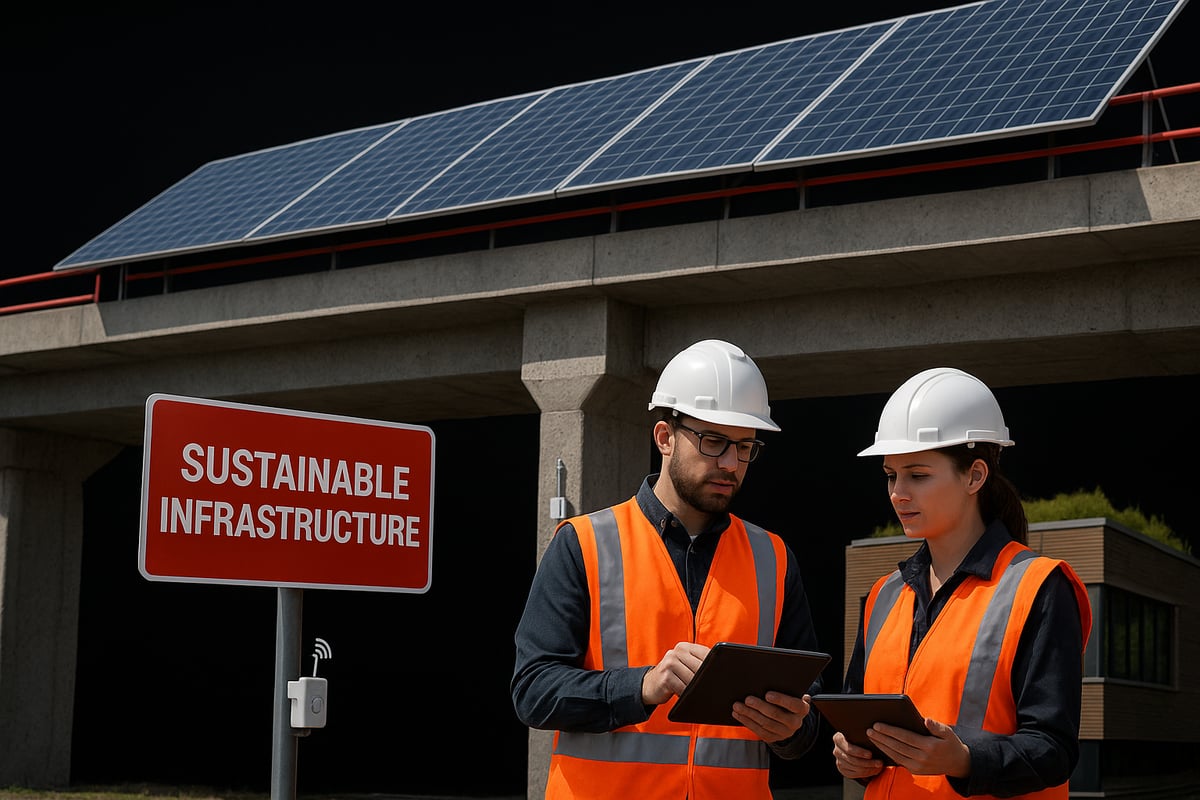
Sustainability and innovation are at the heart of civil engineering and design in 2026. As society demands greener infrastructure and smarter solutions, the profession is redefining its practices to build a better future. This section explores the materials, technologies, and case studies shaping a more sustainable and innovative industry.
Sustainable Materials and Construction Methods
The push for sustainability in civil engineering and design has led to the widespread adoption of eco-friendly materials and construction methods. Engineers now select materials not only for strength and durability but also for their environmental impact and lifecycle performance.
Common sustainable materials include:
- Low-carbon concrete: Utilising industrial by-products like fly ash and ground granulated blast furnace slag to reduce carbon emissions.
- Recycled aggregates: Sourced from demolition waste, these reduce the need for virgin resources and landfill usage.
- Timber and bamboo: Renewable and low embodied energy, ideal for specific structural applications.
Modern university modules, such as Sustainable Engineering Materials and Sustainable Concrete Technology, equip students with the knowledge to specify these materials effectively. Compliance with environmental legislation is essential. UK regulations require lifecycle assessments and responsible sourcing, ensuring every civil engineering and design project meets stringent standards.
Adopting these methods is not just about materials. It involves rethinking construction processes to minimise waste, optimise transport, and use prefabrication where possible. The result is infrastructure that is not only robust but also reduces its environmental footprint.
Innovation and Emerging Technologies
Innovation is transforming civil engineering and design through advanced technologies and smarter infrastructure. The integration of digital tools allows engineers to design, simulate, and monitor projects more efficiently and sustainably.
Key emerging technologies include:
- Building Information Modelling (BIM) and digital twins for real-time asset management.
- Internet of Things (IoT) sensors embedded in structures to monitor performance and detect faults.
- Advanced simulation and analytics: Tools like finite element analysis help predict structural behaviour and optimise resource use.
- Renewable energy systems: Solar panels, wind turbines, and ground source heat pumps are increasingly integrated into new developments.
Smart infrastructure uses these innovations to deliver safer, more resilient, and environmentally responsible solutions. For example, digital twins allow engineers to manage the entire lifecycle of assets, reducing maintenance costs and extending service life. IoT technologies enable continuous monitoring, helping to ensure that civil engineering and design projects remain efficient and safe.
Embedding innovation in every stage of a project not only enhances sustainability but also drives industry competitiveness. As technology evolves, engineers must continually update their skills to keep pace with new tools and methodologies.
Case Studies and Best Practices
The UK is home to some of the world’s most sustainable civil engineering and design initiatives. Nottingham Trent University (NTU), for example, ranked as the 2nd most sustainable university globally in the UI GreenMetric 2024 rankings, reflects the sector’s commitment to environmental leadership.
Leading projects showcase best practices:
- The Thames Barrier, which protects London from flooding, incorporates adaptive design for climate resilience.
- HS2, the high-speed rail project, uses sustainable concrete and extensive landscaping to offset environmental impact.
- Smart motorways equipped with digital monitoring systems improve safety and efficiency while reducing congestion.
Lessons learned from these projects highlight the value of collaboration between academia, industry, and government. Sustainable civil engineering and design is not a one-off initiative but a continuous effort to improve environmental performance, social value, and economic viability.
By embracing best practices and learning from successful case studies, the profession ensures that future engineers are equipped to tackle the world’s most pressing challenges through innovative and sustainable solutions.
Career Pathways and Industry Outlook
Navigating career pathways in civil engineering and design opens a world of opportunity, from shaping skylines to driving innovation in sustainable infrastructure. Whether you are a student planning your academic journey or a professional considering your next steps, understanding the evolving landscape is essential. This section explores educational routes, employment sectors, and the future skills that will define success in civil engineering and design.
Educational Routes and Qualifications
The journey into civil engineering and design typically begins with a choice between undergraduate (BSc, BEng) and integrated Master’s (MEng) degrees. Accredited programmes, particularly those recognised by the Joint Board of Moderators (JBM), are highly valued across the industry. Accreditation ensures that graduates meet the standards required for professional progression, such as Chartered Engineer (CEng) status.
Course content is diverse and rigorous. Students encounter modules in structural analysis, geotechnical engineering, project management, and environmental design. These modules provide a strong foundation in technical theory and practical application, preparing graduates for the complex challenges of civil engineering and design.
A typical degree structure includes design projects, group work, and management training. These elements foster critical thinking and collaboration, which are vital for success. Professional bodies play a significant role in supporting lifelong learning and ethical standards throughout a civil engineering and design career.
The UK consistently ranks as a global leader for civil engineering education and sustainability. According to UK civil engineering student statistics 2023/24, enrolment figures remain strong, reflecting continued interest and demand for skilled professionals in civil engineering and design.
Employment Sectors and Opportunities
Graduates in civil engineering and design enjoy a broad spectrum of career opportunities across both public and private sectors. Key employment areas include:
- Public sector organisations and local authorities
- Private engineering consultancies
- Major contractors and infrastructure firms
- Specialist geotechnical or environmental companies
Common roles encompass site engineer, design engineer, project manager, and infrastructure consultant. Many graduates secure placements with leading firms such as VolkerFitzpatrick, BAM Nuttall, and Arcadis, often through structured placement years or graduate schemes.
Real-world experience is highly valued. Work placements and internships provide hands-on exposure to live projects, client engagement, and cross-disciplinary teamwork. Such experiences not only build technical competence but also foster vital professional skills for a successful civil engineering and design career.
Employability rates for civil engineering and design graduates remain among the highest in the engineering sector. The diversity of roles and sectors ensures that career progression is dynamic, with opportunities to specialise or move into management as experience grows.
For further insights into education trends and diversity in the field, the Engineering in higher education report offers valuable analysis of current developments and skills demand.
Future Trends and Skills in Demand
The future of civil engineering and design is shaped by digital transformation, sustainability, and global challenges. Employers increasingly seek graduates who are adept with digital tools, such as BIM, data analytics, and simulation software. Skills in climate resilience, low-carbon design, and smart infrastructure are also in high demand.
Recent trends show a growing number of students pursuing civil engineering and design, driven by the sector's critical role in addressing climate change and urban growth. Workforce projections indicate sustained demand for professionals who can blend technical excellence with innovative thinking.
Continuous professional development remains essential. As civil engineering and design evolves, professionals must stay current with new technologies and regulatory changes. This commitment to learning ensures the sector remains agile and future-ready, supporting society’s most pressing infrastructure needs.
The Future of Civil Engineering and Design
As we look toward 2026 and beyond, civil engineering and design stand at the forefront of global transformation. The sector is redefining how we approach infrastructure, sustainability, and the built environment. With rapid advancements in technology and increasing pressure to address climate change, the future of civil engineering and design promises both opportunity and responsibility.
Adapting to Global Challenges
Civil engineering and design must continually adapt to evolving global challenges. Climate change, for example, shapes how infrastructure is planned and constructed. Flood risk management and resilient design are now central considerations in every major project.
Urbanisation is accelerating, especially in the UK’s largest cities. This trend creates a pressing need for smart, sustainable cities that balance population growth with environmental stewardship. Civil engineering and design professionals play a vital role in realising net-zero goals, integrating renewable energy, and ensuring infrastructure can withstand future demands.
Key focus areas include:
- Reducing carbon footprints in construction
- Enhancing flood defences and climate resilience
- Designing urban landscapes for accessibility and inclusion
The profession’s ability to address these challenges will define its impact for decades to come. Effective civil engineering and design is crucial for a sustainable and resilient future.
Technological Advancements and Digitalisation
Technology is reshaping every facet of civil engineering and design. The adoption of artificial intelligence, machine learning, and automation streamlines design and construction processes. Data-driven decision making is now standard practice, improving both accuracy and efficiency.
Building Information Modelling (BIM) and digital twins allow for lifecycle asset management, enabling teams to simulate, monitor, and optimise infrastructure throughout its lifespan. These tools reduce errors, minimise waste, and support predictive maintenance.
A comparison of traditional and digitalised approaches:
| Process Stage | Traditional Approach | Digital Approach (BIM/Digital Twins) |
|---|---|---|
| Design | Manual drafting | 3D modelling and data integration |
| Construction | Paper-based plans | Real-time updates and coordination |
| Maintenance | Reactive repairs | Predictive analytics and monitoring |
With these technologies, civil engineering and design teams can deliver more sustainable, cost-effective, and future-ready solutions.
Education, Lifelong Learning, and Professional Growth
The future of civil engineering and design depends on continuous education and professional development. Engineers are required to upskill regularly, particularly in digital tools, sustainability, and leadership. Continuous Professional Development (CPD) ensures that knowledge remains current and relevant.
Universities and industry partners are collaborating to design courses that equip graduates with advanced technical and management skills. Accredited programmes now emphasise digital literacy, ethical practice, and global awareness.
According to the UK higher education student statistics 2023/24, there is a steady rise in civil engineering enrolments, reflecting the sector’s appeal and the growing need for qualified professionals. Lifelong learning is not optional, but essential for career progression in civil engineering and design.
Global Collaboration and Mobility
Civil engineering and design have become truly global professions. International standards and cross-border projects require collaboration with teams from diverse backgrounds and disciplines. Study abroad programmes and global professional networks are expanding opportunities for students and professionals alike.
Accreditation by recognised bodies ensures qualifications are transferable, supporting mobility across regions and industries. Interdisciplinary collaboration is critical, as shown in the Building and Civil Engineering Integration resource, where the synergy between civil engineering and building design drives innovation and project success.
Those entering civil engineering and design can expect to work on projects that span continents, cultures, and regulatory environments, gaining valuable international experience.
Shaping the Built Environment of Tomorrow
Civil engineering and design professionals have a profound responsibility in shaping inclusive, accessible, and future-ready infrastructure. Community engagement and transparent stakeholder collaboration are central to every successful project.
The sector is also committed to inspiring the next generation of engineers. Outreach programmes, diversity initiatives, and mentorship are helping to broaden participation and ensure the profession reflects the communities it serves.
Ultimately, the future of civil engineering and design will be defined by its ability to create environments where people thrive. By combining technical excellence with ethical leadership, the profession will continue to transform society for the better.