As the UK moves closer to 2026, the demand for earth work services is rapidly increasing across construction and infrastructure projects. These services are now more critical than ever, with projects growing in both scale and complexity.
New regulations and technical requirements are making expertise essential. Understanding earth work services can lead to greater project efficiency, reduced costs, and improved compliance with evolving standards.
This guide is designed to help you plan, select, and manage earth work services effectively in 2026. You will find a comprehensive overview of processes, regulations, technologies, and best practices.
Explore definitions, types of services, project steps, compliance essentials, the latest innovations, and advice on choosing the right contractor for your next project.
What Are Earth Work Services?
Earth work services are the backbone of construction, civil engineering, and land development projects across the UK. These essential services involve the manipulation, movement, and treatment of soil and rock to prepare sites for new structures, roads, utilities, and landscapes.
Before any building or infrastructure can rise, earth work services lay the groundwork—literally—by transforming raw land into a stable, compliant, and engineered surface. Without expertly managed earth work services, projects risk delays, safety concerns, and regulatory setbacks.
Definition and Core Concepts
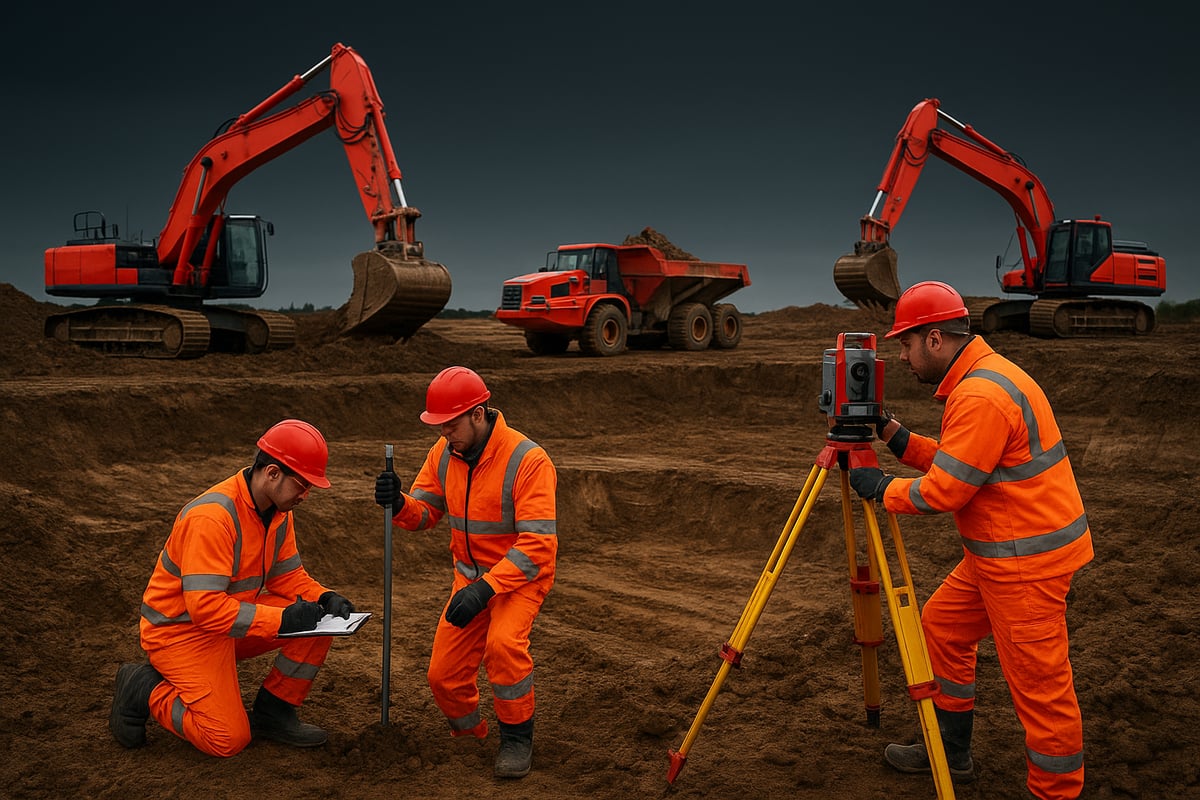
Earth work services encompass a range of specialist activities that shape the land to meet the needs of construction and infrastructure projects. At their core, these services include:
- Excavation: Removing soil or rock to create foundations, basements, or trenches.
- Grading: Leveling and contouring land for roads, drainage, or building platforms.
- Soil Stabilisation: Improving soil properties to support structures or prevent movement.
- Embankment Construction: Building raised earth structures for roads, railways, or flood defences.
- Site Clearance: Removing vegetation, debris, and unwanted materials to prepare for works.
These activities are crucial for establishing safe, stable foundations. For example, in major UK infrastructure projects, earth work services ensure that ground conditions meet strict engineering and environmental criteria before any further construction begins.
The scope of earth work services varies by project type:
| Project Type | Typical Activities | Core Requirements |
|---|---|---|
| Commercial | Bulk excavation, grading | High load capacity, speed |
| Residential | Foundation digging, landscaping | Precision, minimal disruption |
| Infrastructure | Embankments, remediation | Scale, regulatory compliance |
Key industry terms include cut and fill (balancing excavation and embankment), compaction (densifying soil for stability), and remediation (treating contaminated ground). Leading providers like SOCOTEC offer integrated solutions, combining geotechnical expertise, environmental management, and rapid reporting for efficient project delivery.
Types of Earth Work Services
Earth work services span a diverse set of applications tailored to the unique needs of each site. The main types include:
- Bulk earthworks: Large-scale movement and grading of soil for platforms, embankments, or landscapes.
- Trench and foundation excavation: Precision digging for utilities, drainage, and building bases.
- Environmental remediation: Cleaning or treating contaminated soils to meet regulatory standards.
- Site clearance and demolition: Essential first steps to remove existing structures and debris. For more insight into this process, see the Commercial earth works North East overview.
- Ground improvement and soil stabilisation: Techniques such as lime or cement treatment to enhance load-bearing capacity.
- Landscaping and topographical modifications: Shaping landforms for aesthetics, drainage, or erosion control.
A notable example is the redevelopment of UK brownfield sites, where earth work services combine bulk excavation and remediation. This approach transforms previously unusable land into safe, compliant spaces ready for new commercial or residential use.
By understanding the scope and types of earth work services, clients can better plan, select, and manage the right solutions for their projects in 2026.
The Earth Work Project Lifecycle: Step-by-Step in 2026
Understanding the modern earth work services project lifecycle is vital for delivering safe, efficient, and compliant results in 2026. Each phase builds on the last, with technology and regulation shaping every decision. Here, we guide you through the five fundamental steps to ensure your project runs smoothly from start to finish.

Step 1: Initial Site Investigation and Assessment
Every successful earth work services project begins with a thorough site investigation. This phase identifies ground conditions, potential hazards, and environmental constraints before any physical work starts.
Geotechnical surveys assess soil strength and stability. Environmental surveys check for contamination or protected habitats. Topographical and geophysical investigations map out surface and subsurface features.
Key activities include:
- Soil sampling and laboratory testing
- Groundwater monitoring
- Chemical analysis for contaminants
Early data collection enables risk mitigation and cost forecasting, reducing surprises later. Digital tools, such as drones and real-time sensors, speed up this process and improve accuracy. Choosing earth work services with robust assessment capabilities lays the foundation for compliant, efficient projects.
Step 2: Planning, Design, and Regulatory Compliance
In this step, the information gathered is transformed into actionable plans. Earth work services providers use survey data to develop detailed designs and method statements tailored to the site.
Risk assessments address health, safety, and environmental issues. Planning permissions and regulatory approvals are secured, ensuring the project aligns with UK standards and local authority requirements.
Key planning elements:
- Integration of geotechnical and environmental data into design
- Preparation of method statements and risk assessments
- Value engineering to optimise costs and sustainability
Collaboration between engineers, regulators, and contractors is essential. An experienced earth work services team ensures all documentation is in place, reducing delays and regulatory risks.
Step 3: Mobilisation and Site Preparation
Mobilisation marks the transition from planning to action. Earth work services teams clear the site, manage demolition if required, and establish site boundaries.
Preparatory activities include:
- Site clearance and vegetation removal
- Setting up welfare facilities and site access
- Installing environmental controls (e.g., dust and noise barriers)
Efficient mobilisation is crucial for tight timelines. Waste from demolition is sorted and disposed of according to environmental regulations. For a comprehensive breakdown of these processes, see site work processes explained. Early investment in well-organised site preparation enables earth work services to proceed without unnecessary interruptions.
Step 4: Execution of Earth Works
Execution is where the core earth work services are delivered. This includes excavation, grading, compaction, and soil movement, all performed to precise specifications.
Key execution tasks:
- Excavation and filling to achieve design levels
- Soil stabilisation and ground improvement
- Real-time monitoring for quality and safety
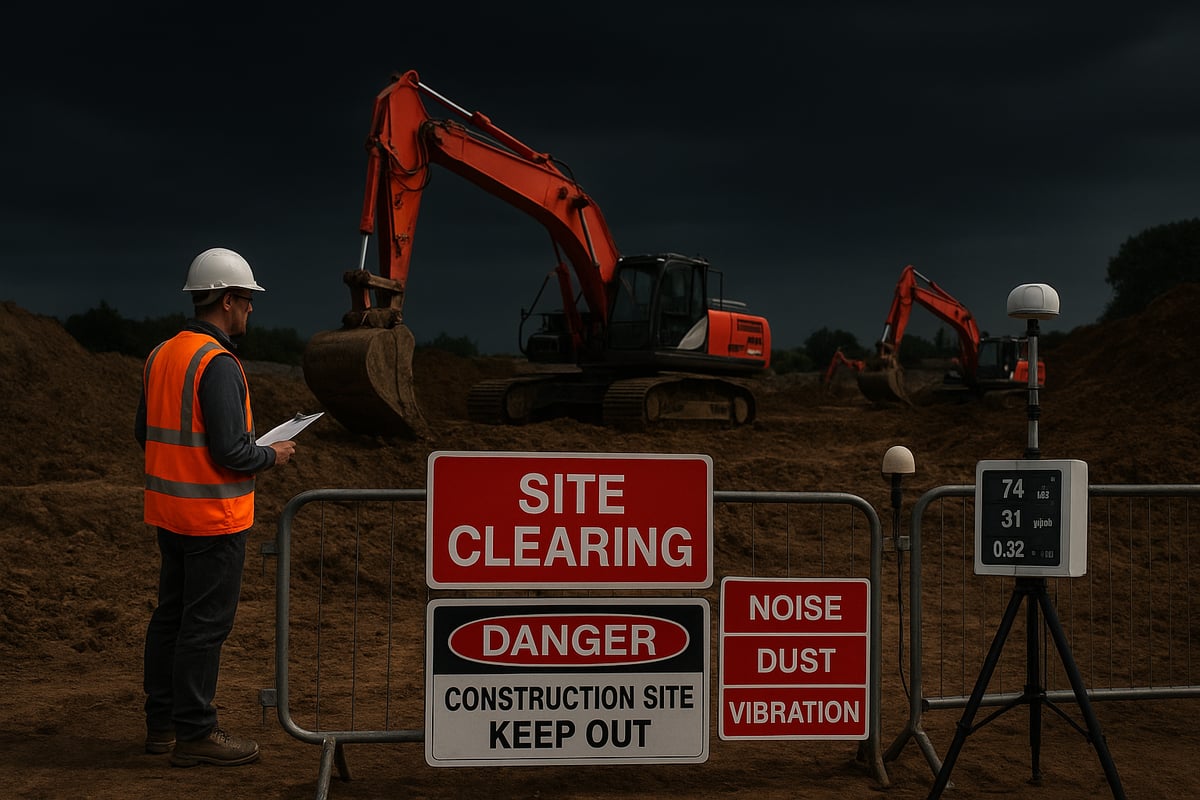
Materials management is critical, especially when handling contaminated soils or reusing excavated material. Health, safety, and environmental monitoring—such as noise, dust, and vibration control—are enforced throughout. Advanced equipment and automated reporting improve efficiency and compliance, keeping earth work services on schedule.
Step 5: Verification, Reporting, and Handover
To complete the lifecycle, earth work services teams verify all work meets agreed standards and regulatory requirements. On-site and laboratory testing validate that ground conditions and remediation targets have been achieved.
Essential handover steps:
- Compliance verification through testing and inspection
- Automated data interpretation and comprehensive reporting
- Regulator sign-off and final documentation
Thorough documentation supports future site use and regulatory audits. An organised handover ensures a smooth transition to subsequent construction phases, demonstrating the value of professional earth work services from start to finish.
Key Regulations and Compliance in UK Earth Work Services
As the UK construction sector evolves, regulatory compliance in earth work services is more important than ever. Meeting strict standards ensures project safety, environmental protection, and legal certainty. Both contractors and clients must stay informed about the latest rules to avoid costly delays or penalties.
Environmental and Geotechnical Standards
Earth work services in the UK operate under a robust regulatory framework. The Environment Agency sets out rules for managing soil and groundwater contamination, requiring thorough site assessments before work begins. British Standards, such as BS 6031 and BS 10175, guide best practices in excavation, soil handling, and remediation. Local authorities and the Health and Safety Executive (HSE) oversee planning permissions, environmental permits, and enforce safety regulations.
Contractors must assess contamination levels in soil and groundwater, particularly on brownfield sites. Limits are set for hazardous substances like hydrocarbons and heavy metals. If thresholds are exceeded, remediation becomes mandatory. Earth work services often include environmental remediation, with steps such as soil washing, encapsulation, or removal.
Health and safety are central to every project. Regulations require use of personal protective equipment (PPE), site inductions, regular risk assessments, and strict site management. Waste classification is also tightly controlled. Materials are tested and categorised as hazardous or non-hazardous, with disposal routes determined accordingly.
Compliance is more than a box-ticking exercise. Leading providers, such as SOCOTEC, integrate compliance into every stage of earth work services. For instance, real-time environmental monitoring is increasingly common, especially following official Urgent Safety Advice on Remote Earthwork Monitoring Equipment, which highlights the importance of automated systems to mitigate risks from ground movement and landslides.
A significant proportion of UK earth work services involve remediation, particularly in urban development. Staying current with evolving standards is essential for both legal and reputational reasons.
Documentation and Reporting Requirements
Documentation is the backbone of regulatory compliance for earth work services. Method statements outline how works will be carried out safely and in line with legal standards. Remediation statements detail steps taken to address contamination, including techniques used and validation criteria.
Verification reports are essential for project sign-off. They provide evidence that works have met environmental and safety requirements. Increasingly, automated data screening and analysis tools streamline this process, reducing the risk of human error and speeding up regulatory approval.
Negotiations with regulators, such as the Environment Agency or local planning authorities, often require detailed risk assessments and contingency planning. Effective earth work services providers prepare comprehensive documentation packages. These include site investigation reports, waste transfer notes, and environmental monitoring logs.
A compliance-driven approach is proven to deliver positive outcomes. For example, SOCOTEC’s multi-disciplinary teams have secured regulator sign-off for complex remediation projects by providing transparent, real-time data and thorough reporting. This not only satisfies legal obligations but also builds trust with stakeholders.
For 2026, expect documentation requirements for earth work services to become more rigorous as digital reporting and traceability become industry norms. Comprehensive records are crucial for future site use, audits, and dispute resolution.
Innovations and Trends in Earth Work Services for 2026
The landscape of earth work services in the UK is evolving rapidly as we approach 2026. New technologies, sustainability imperatives, and shifting market demands are reshaping how projects are delivered. Staying ahead of these trends is crucial for those seeking efficiency, compliance, and competitive advantage.

Advancements in Technology and Methodology
Cutting-edge technology is redefining earth work services in 2026. Digital tools such as drones and 3D modelling systems now enable teams to conduct site investigations with unprecedented accuracy and speed. Real-time sensors track ground movement, water levels, and environmental hazards, supporting data-driven decisions.
Automated data interpretation is streamlining workflows. Teams can deliver rapid reporting and compliance checks, reducing bottlenecks and minimising delays. The adoption of these systems not only enhances safety but also improves the overall quality of earth work services.
Sustainable practices are increasingly integral. The use of low-carbon materials, optimised logistics, and waste reduction strategies aligns with national net-zero goals. Modular and off-site earthwork solutions are gaining traction, allowing for faster, less disruptive project delivery. Environmental monitoring now covers water, air, noise, and vibration, helping contractors maintain compliance throughout the project lifecycle.
A notable example is Project Atlas, which has transformed geotechnical operations by integrating digital data collection, interpretation, and reporting. According to recent industry studies, technological adoption has led to a measurable reduction in project timescales and costs.
As engineering standards evolve, keeping informed about upcoming changes is essential. The Standards Review 2026 by Engineering Council will play a significant role in shaping best practices for earth work services in the coming years.
Market Developments and Future Outlook
Market dynamics are shifting as clients demand more sustainable and integrated earth work services. Brownfield remediation is now a primary focus, with many projects requiring advanced soil treatment and site restoration before development can begin. This trend is driven by both regulatory requirements and a broader commitment to environmental stewardship.
Clients increasingly expect single-point-of-contact solutions that combine investigation, demolition, remediation, and monitoring. Providers able to deliver comprehensive earth work services are better positioned to manage complex infrastructure and franchise projects.
Upskilling and training have become essential as new technologies and processes emerge. The sector is investing in workforce development to ensure teams are proficient with the latest digital tools and sustainable methodologies.
A recent case study highlighted the benefits of integrated services in a major infrastructure project, where a multi-disciplinary approach led to significant cost savings and timely project delivery. Looking ahead, earth work services will be instrumental in achieving the UK's net-zero targets and supporting national infrastructure ambitions.
In summary, embracing innovation and staying informed about market shifts will be key for anyone involved in earth work services in 2026.
How to Choose the Right Earth Work Services Provider
Selecting the right provider for earth work services is a pivotal decision for any construction or infrastructure project. The right choice safeguards project timelines, ensures compliance, and helps you maximise efficiency and cost-effectiveness.
Essential Criteria for Selection
When evaluating earth work services providers, start by checking their qualifications, accreditations, and industry experience. Look for memberships in recognised bodies and certifications such as ISO standards or CHAS accreditation. These credentials signal a commitment to quality and safety.
Examine the range of services on offer. A strong provider will cover the full project lifecycle, from site investigation through to remediation and ongoing monitoring. Integrated solutions are vital, especially for complex or multidisciplinary projects. For example, a provider that offers both ground works and remediation can streamline communication and reduce project risks.
Transparency matters. Insist on clear pricing structures, detailed project management plans, and open channels of communication. Ask for case studies or portfolios that showcase similar projects. Reviewing client testimonials and market reputation can reveal how well the provider delivers on promises.
Multi-disciplinary teams, such as those highlighted by SOCOTEC, can offer added value by bringing together specialists in geotechnical, environmental, and construction disciplines. For more on foundational aspects, see this ground works and foundations overview.
Questions to Ask Potential Contractors
Before appointing a contractor for earth work services, prepare a list of essential questions. This step helps you gauge their expertise and reliability.
- What is your experience with projects similar to ours and with comparable site conditions?
- How do you ensure regulatory compliance and quality assurance throughout the project?
- Which technologies and methodologies do you use to enhance project delivery?
- Can you provide examples of successfully completed projects, especially those involving remediation or complex earthwork?
- What processes do you follow when unexpected site challenges arise?
These questions reveal how the provider manages risk, adapts to unforeseen circumstances, and upholds standards. Clarifying these points helps you select an earth work services partner who delivers both technical competence and peace of mind.
A thorough approach to provider selection minimises delays and supports a successful, compliant project outcome.
Cost Factors and Budgeting for Earth Work Services in 2026
Careful budgeting and understanding of cost factors are essential for successful earth work services. As projects become more complex, knowing what drives costs can help you plan more effectively and avoid unpleasant surprises.
Main Cost Drivers
Several key components contribute to the overall price of earth work services. These include site investigation, design, mobilisation, execution, testing, and reporting. Each stage involves specialist labour, equipment, and materials, all of which must be factored into your budget.
Site complexity is a major cost driver. For example, brownfield sites with contamination require more intensive testing, remediation, and specialist handling than greenfield sites. Regulatory requirements, such as environmental permits and health and safety standards, can also increase costs.
The preparatory phase, including demolition and site clearance, often represents a significant portion of the budget. For a detailed look at these essential early-stage costs, see Demolition and site clearance services.
Below is a comparison of typical cost considerations:
| Cost Component | Greenfield Site | Brownfield Site |
|---|---|---|
| Site Investigation | Standard scope | Extensive, includes remediation |
| Mobilisation | Lower | Higher due to controls |
| Execution | Fewer constraints | Contaminant management needed |
| Reporting | Standard | Detailed, regulatory focus |
Integrated data collection and rapid reporting methods can reduce costs by streamlining communication and minimising delays. Leveraging technology in earth work services is increasingly seen as essential for cost efficiency.
Budgeting Best Practices
Effective budgeting for earth work services starts with comprehensive project planning. Build in contingencies for unexpected site conditions and regulatory changes. Always request transparent quotations that break down costs for each project phase.
Monitor spending at every stage to keep the project on track. Modern earth work services providers use digital tools to track progress and costs in real time, which helps prevent overruns and supports informed decision-making.
Value engineering is another strategy that can yield significant savings. By optimising design and construction methods, you can achieve better results for less. For example, using integrated teams to manage site investigation, remediation, and reporting can streamline workflows and reduce duplication.
Average costs for earth work services in the UK vary widely depending on site type and project scope. However, detailed planning, open communication, and the adoption of new technologies all help ensure accuracy and cost control.
By following these best practices, you can maximise the value of earth work services and minimise financial risks throughout your project.