
The North East is rapidly earning a reputation as a centre of engineering excellence and groundbreaking infrastructure. This region is undergoing a remarkable transformation, with major projects reshaping its cities, transport links, and green spaces.
At the heart of these changes are north east civil engineers who are driving progress and bringing innovative solutions to complex challenges. Their expertise is crucial for building sustainable, resilient communities and ensuring the region thrives.
This article introduces seven trailblazing professionals set to define the future of the North East’s built environment. Discover their achievements, specialisms, and the significant impact their work will have on both industry and local communities in 2026.
The Evolving Landscape of Civil Engineering in the North East
The North East is undergoing a remarkable transformation, with infrastructure at the heart of its progress. Civil engineering is driving regeneration, innovation, and sustainable growth across the region. As we look towards 2026, the landscape for north east civil engineers is defined by major investments, new challenges, and evolving technologies that shape both projects and communities.

Regional Growth and Investment
Significant investment is fuelling the North East’s civil engineering sector. Government and private sector funding are supporting flagship projects like Teesworks, Newcastle’s city centre regeneration, and the Tyne and Wear Metro upgrades. These developments have led to a notable increase in regional construction growth rates, with demand for north east civil engineers at an all-time high. The role of civil engineers in supporting economic development is evident in the delivery of complex, transformative projects. For a closer look at notable regional achievements, explore the North East Civil Engineering Projects that highlight the scale and diversity of recent work.
Key Challenges Facing North East Civil Engineers
North east civil engineers face an array of complex challenges in today’s environment. Adapting to climate change, implementing resilient infrastructure, and addressing skills shortages require innovative thinking. Engineers must also navigate ever-changing regulations and ambitious sustainability targets. For example, flood defences along the River Tyne and low-carbon initiatives are setting new standards. Overcoming these hurdles demands creative solutions and a commitment to continuous professional development.
Emerging Trends and Technologies
Innovation is at the core of the region’s civil engineering evolution. North east civil engineers are increasingly adopting digital tools such as BIM, drones, and AI to enhance project outcomes. Sustainable materials and green construction practices are now standard, while modular construction and off-site manufacturing improve efficiency. Smart infrastructure, including IoT sensors for bridges and roads, is being used in regional projects, ensuring that the North East stays at the forefront of technological advancement.
The Importance of Local Expertise
Local knowledge remains indispensable for north east civil engineers. Understanding the unique geology and community needs of the region enables engineers to deliver tailored solutions. Collaboration with councils, developers, and residents is crucial for project success. Site-specific flood mitigation and heritage conservation efforts underscore the value of regional expertise, resulting in higher success rates and lasting benefits for local communities.
Future Outlook for 2026 and Beyond
Looking ahead, the North East is set to see growth in renewable energy infrastructure, transport, and housing. North east civil engineers will play a central role in advancing the UK’s net zero ambitions. There are growing opportunities for young and diverse talent, with leadership and mentorship becoming ever more important. The featured engineers in this article exemplify the forward-thinking mindset and expertise needed to shape the region’s future for 2026 and beyond.
7 Essential North East Civil Engineers to Watch in 2026
The future of the North East’s infrastructure rests in the hands of visionary professionals. These seven north east civil engineers represent the region’s brightest talent, each bringing expertise, leadership, and innovation to their projects. Their work is actively shaping communities, driving sustainable growth, and inspiring the next generation of engineers.
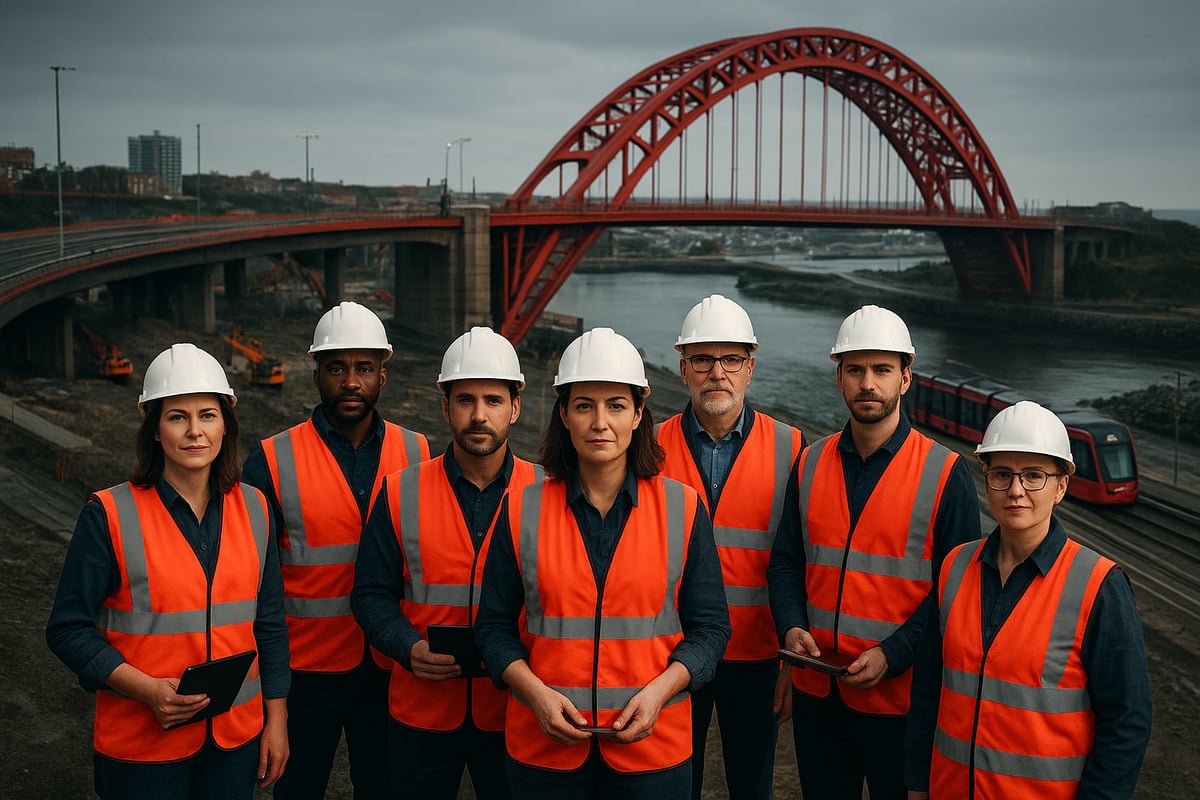
1. Sarah Jenkins – Sustainable Infrastructure Specialist, Newcastle City Council
Sarah Jenkins stands at the forefront of sustainable urban development among north east civil engineers. As the lead force behind Newcastle’s progressive green infrastructure, she has transformed the Ouseburn Valley with innovative flood mitigation and urban drainage solutions.
Her approach integrates biodiversity into city planning, championing green corridors and natural habitats within urban spaces. Sarah’s pioneering work earned her the ICE North East Sustainability Award 2024, underscoring her impact on resilient city design.
Key achievements:
- Led the Ouseburn Valley flood mitigation project, protecting thousands of residents.
- Advocated for climate-resilient public spaces across Newcastle.
- Mentored emerging talent at local universities.
Sarah’s vision for the future centres on embedding nature-based solutions into every project. She believes north east civil engineers must prioritise sustainability to address climate risks and urban growth. Her influence is set to expand as Newcastle continues its transformation towards a greener, more resilient city.
2. Dr. Amarjit Singh – Director, Teesworks Engineering
Dr. Amarjit Singh is a driving force in the industrial regeneration of Teesside, exemplifying the leadership found among north east civil engineers. As Director at Teesworks Engineering, he oversees the redevelopment of one of Europe’s largest brownfield sites.
His expertise in large-scale remediation has revitalised derelict land, using advanced soil stabilisation and circular economy principles. Dr. Singh’s collaboration with local councils has driven job creation and economic revival, making Teesworks a beacon of regional progress.
Notable contributions:
- Implemented innovative soil stabilisation techniques across Teesworks.
- Promoted circular economy approaches in construction.
- Key speaker at the North East Infrastructure Summit 2025.
Looking ahead, Dr. Singh is focused on hydrogen infrastructure integration, positioning Teesside at the heart of the UK’s green industrial revolution. His work continues to inspire north east civil engineers to pursue sustainable, large-scale transformation.
3. Rachel McDonald – Principal Engineer, Northumberland Highways
Rachel McDonald’s dedication to rural mobility and safety sets her apart among north east civil engineers. As Principal Engineer for Northumberland Highways, she has led transformative upgrades on key routes, including the A697.
Rachel’s data-driven approach to road maintenance, combined with her advocacy for recycled materials in surfacing, reflects a commitment to efficiency and environmental responsibility. Her leadership has reduced road-related incidents by 15%, setting a new standard for rural infrastructure.
Highlights of her work:
- Managed the A697 upgrade, introducing smart traffic systems.
- Championed STEM outreach, encouraging more women into engineering.
- Pioneered the use of recycled materials for sustainable roadworks.
Rachel envisions a future where north east civil engineers harness data, technology, and inclusivity to deliver safer, smarter rural transport networks.
4. Michael O’Connor – Head of Major Projects, Durham Infrastructure Group
Michael O’Connor exemplifies excellence in large-scale project delivery among north east civil engineers. As Head of Major Projects, he has steered the Durham Riverside Urban Expansion, a complex initiative balancing growth with community needs.
His expertise in bridge and viaduct construction, combined with his embrace of digital twins in planning, has delivered projects ahead of schedule and under budget. Michael’s commitment to local supply chains and social value is evident in every phase.
Project milestones:
- Oversaw the Durham Riverside Urban Expansion, integrating heritage and innovation.
- Advocated for digital twins to enhance project outcomes.
- Member of the ICE North East Committee, shaping regional standards.
Michael’s forward-thinking approach ensures that north east civil engineers remain at the cutting edge of delivery, collaboration, and community engagement.
5. JRG Civils Ltd – Civil Engineering Excellence in the North East
JRG Civils Ltd is a standout among north east civil engineers, renowned for versatility and high-quality delivery across commercial and residential sectors. Their flagship projects, including Costa Coffee and Greggs drive-throughs, showcase a commitment to practical innovation and meticulous attention to detail.
Key services:
- Drainage, highways, surfacing, foundations, patios, driveways.
- Accredited by SafeContractor, ConstructionLine Gold, SMAS, UKAS, PQS, SSIP.
- Bespoke project management for commercial developers, retail franchises, and homeowners.
JRG Civils Ltd’s approach centres on local expertise, tailoring solutions to the unique geology and needs of North East communities. The company offers free, no-obligation quotes, ensuring accessible, client-focused service.
For those seeking more on the breadth of services offered by north east civil engineers, the Civil Engineering Services in North East page provides a comprehensive overview of JRG Civils Ltd’s capabilities.
Contact details:
- Email: info@jrgcivils.co.uk
- Phone: 07508 281 977
JRG Civils Ltd sets a benchmark for reliability, adaptability, and technical precision in the region.
6. Tommy Patel – Lead Engineer, Tyne & Wear Metro Modernisation
Tommy Patel is at the forefront of transport innovation among north east civil engineers. As Lead Engineer for the Tyne & Wear Metro Modernisation, he has transformed the system through digital signalling upgrades and real-time infrastructure monitoring.
His efforts have significantly improved passenger experience, reducing system downtime by 22% since 2024. Tommy’s collaborations with European technology partners ensure the Metro remains resilient and future-ready.
Key initiatives:
- Introduced digital signalling and real-time tunnel monitoring.
- Enhanced reliability and safety for thousands of daily commuters.
- Envisions fully autonomous metro operations in the coming years.
Tommy’s leadership ensures that north east civil engineers continue to deliver world-class transport solutions, supporting sustainable urban mobility.
7. Emily Foster – Director, North East Coastal Engineering
Emily Foster’s expertise in coastal protection places her among the most influential north east civil engineers. As Director of North East Coastal Engineering, she has led major projects reinforcing the Hartlepool and Seaham sea walls, safeguarding communities from tidal threats.
Emily’s focus on nature-based solutions, such as dune restoration and habitat integration, aligns with the region’s climate adaptation goals. Her partnership with the Environment Agency and local councils drives collaborative, community-focused outcomes.
Major achievements:
- Delivered innovative coastal defence projects.
- Engaged communities in climate resilience planning.
- Published research on North Sea tidal impacts.
Emily’s vision extends to sustainable tourism and long-term coastal resilience, ensuring the region’s shorelines remain protected for generations.
These seven north east civil engineers are redefining what is possible in the built environment. Their dedication to innovation, sustainability, and community impact will shape the North East’s landscape well into 2026 and beyond.
The Impact of Civil Engineering Leadership on the North East’s Future
Civil engineering leadership is at the heart of the North East’s transformation. As infrastructure evolves, the role of north east civil engineers becomes increasingly vital in shaping communities, driving progress, and ensuring resilience for future generations.

Driving Innovation and Economic Growth
Visionary leadership among north east civil engineers is a catalyst for economic vitality. By championing new technologies and sustainable construction, these professionals attract investment and propel the region’s competitiveness. The success of flagship developments, such as those highlighted in Commercial Engineering Solutions North East, demonstrates how innovative approaches boost local supply chains and generate employment.
Major infrastructure projects deliver a multiplier effect, benefiting businesses across sectors. The collaborative mindset of north east civil engineers ensures that commercial and community needs align, creating a solid foundation for long-term prosperity.
Fostering Diversity and Skills Development
Inclusive leadership is vital to the future of north east civil engineers. By nurturing diverse talent and supporting skills development, the sector remains adaptable and forward-thinking. Initiatives like apprenticeships, mentoring, and outreach play a pivotal role in encouraging young people and underrepresented groups to pursue engineering careers.
Recognition platforms, such as the CECA North East Annual Awards 2025, celebrate achievements and inspire the next generation. These efforts ensure the profession reflects the communities it serves and is equipped for tomorrow’s challenges.
Building Sustainable and Resilient Communities
The commitment of north east civil engineers to sustainability is transforming urban and rural environments. By integrating green infrastructure and climate adaptation measures, engineers create spaces that are both liveable and robust against environmental threats.
Projects such as flood defences and low-carbon transport exemplify this approach. Through collaboration with local authorities and residents, north east civil engineers ensure that sustainability is embedded in every stage of development, strengthening community resilience.
Strengthening Regional Identity and Collaboration
Civil engineering projects are powerful symbols of regional identity in the North East. The leadership of north east civil engineers fosters civic pride, as iconic structures and revitalised spaces become part of local heritage.
Collaboration between councils, developers, and communities underpins project success. By prioritising local expertise and open dialogue, engineers create legacies that reflect the unique character of the North East, uniting stakeholders around shared goals.
Preparing for Future Challenges
Anticipating change is essential for north east civil engineers. The sector must remain agile in response to technological advances, environmental pressures, and evolving societal needs. Continuous professional development and a culture of innovation are key to meeting these demands.
The engineers profiled in this article set new benchmarks for excellence, ensuring the North East is prepared for whatever the future holds. Their leadership inspires confidence and sets a clear vision for the region’s continued progress.