The future of infrastructure is being transformed by advances in civil engineering services, directly shaping the way we live, work, and travel in 2026. As cities expand and technology accelerates, this sector is setting new standards for innovation, sustainability, and resilience.
This guide will help you navigate the evolving world of civil engineering services. You will discover emerging trends, essential service offerings, digital innovations, sustainability priorities, regulatory changes, and tips for selecting the right provider.
Ready to prepare for the next era of civil engineering? Read on to make informed decisions and stay ahead in a rapidly changing landscape.
The Evolving Landscape of Civil Engineering in 2026
The landscape of civil engineering services is transforming rapidly as we approach 2026. Innovations in technology, changing regulations, and shifting client needs are all shaping how infrastructure is designed, built, and maintained. Understanding these key changes is essential for anyone planning, commissioning, or benefiting from civil engineering services today and in the future.

Key Market Trends and Drivers
Civil engineering services in 2026 are being shaped by several powerful market forces. The demand for sustainable and resilient infrastructure is growing, as cities expand and populations increase. Urbanisation is driving more complex projects, while both government and private sectors prioritise investment in transport, energy, and public spaces.
Climate change and environmental regulations are influencing every stage of project delivery. Clients now expect civil engineering services to address risk, resilience, and long-term value. For a deeper look at these evolving demands, visit this Comprehensive civil engineering overview.
Impact of Technology and Digital Transformation
Technology continues to revolutionise civil engineering services, especially with the widespread adoption of Building Information Modelling (BIM) and digital twins. Automation and AI streamline design, project management, and maintenance, allowing for smarter, data-driven decisions.
Drones, sensors, and IoT devices are becoming standard for site monitoring and data collection. Cloud-based platforms enhance collaboration between teams, making civil engineering services more efficient and transparent. These digital tools are redefining productivity and accuracy across the sector.
Changing Client Expectations and Service Delivery Models
By 2026, clients will expect civil engineering services to be more integrated and multidisciplinary. There is a clear shift towards consultancies offering end-to-end solutions, combining design, engineering, and environmental expertise. This approach allows for faster project delivery and transparent cost management.
Stakeholder engagement is also more important, with public consultations and customised solutions for residential, commercial, and public sector clients. Civil engineering services must now demonstrate flexibility and responsiveness in every project.
Infrastructure Sectors in Focus: Transport, Water, Energy, and Urban Development
Transport, water, energy, and urban development are at the heart of civil engineering services in 2026. High-speed rail, mass transit, and electric vehicle charging networks are expanding to meet modern mobility needs.
Water management and flood resilience projects are critical, as are renewable energy initiatives like solar, wind, and hydrogen. Urban development focuses on placemaking and active travel, supporting healthier, more sustainable cities. Each sector benefits from tailored civil engineering services addressing specific challenges and opportunities.
Skills and Workforce Evolution
The workforce behind civil engineering services is evolving to keep pace with digital transformation and sustainability goals. There is an increasing need for professionals skilled in digital tools, green engineering, and multidisciplinary collaboration.
Recruitment and training remain challenging in a competitive market, but early careers and apprenticeship programmes are helping to bridge the skills gap. The future of civil engineering services depends on nurturing talent with a blend of technical, digital, and environmental expertise.
Core Civil Engineering Services: What’s Included in 2026?
Civil engineering services in 2026 continue to evolve, delivering more integrated, technology-driven solutions than ever before. As the sector adapts to new regulations, digital tools, and sustainability targets, clients can expect a broader and more sophisticated range of offerings. From initial site investigations to the final touches of public realm landscaping, these services form the backbone of modern infrastructure projects. For a deeper breakdown of the variety and scope, see the services of civil engineering explained.

Site Investigation and Feasibility Studies
Every successful project begins with robust site investigation and feasibility assessments. Civil engineering services in 2026 deploy advanced geotechnical surveys, topographical mapping, and environmental impact reviews to inform early decision-making. These processes identify ground conditions, potential risks, and necessary mitigation strategies. Digital tools, such as 3D simulation and risk modelling, allow for more accurate forecasting and planning.
Clients benefit from early-stage clarity, helping them understand constraints and opportunities before committing resources. This proactive approach ensures that subsequent stages of civil engineering services are built on a solid foundation, reducing costly surprises later on.
Design and Planning Services
Effective design and planning sit at the heart of civil engineering services. In 2026, multidisciplinary teams collaborate using Building Information Modelling (BIM) and 3D visualisation to create detailed, compliant designs for highways, bridges, drainage, and structures. These digital platforms facilitate stakeholder engagement, allowing clients and communities to review concepts and provide feedback.
Civil engineering services prioritise adherence to national and local standards, such as DMRB and SUDS, ensuring projects meet regulatory and operational requirements. Seamless coordination with architects and utility providers streamlines the transition from concept to construction.
Highways, Roads, and Transport Infrastructure
The delivery of highways, roads, and transport infrastructure remains a cornerstone of civil engineering services. Teams in 2026 are responsible for the design and construction of new roadways, junctions, and mass transit systems that support urban growth and mobility. Section 278 and Section 38 works enable integration with public and private developments, while road safety audits and signage design enhance usability and compliance.
Modern civil engineering services incorporate smart technology and sustainable materials, ensuring that new transport links are resilient, safe, and future-ready. Strategic upgrades often unlock new housing or commercial zones, supporting economic growth.
Water, Drainage, and Flood Management
Managing water resources is a critical part of civil engineering services. In 2026, this includes foul and surface water drainage design, Sustainable Urban Drainage Systems (SUDS), and comprehensive flood risk assessments. Teams use hydraulic modelling software to create efficient, adaptable solutions that account for climate change and regulatory demands.
Civil engineering services also guide clients through Section 104 and Section 185 agreements for water authority adoption, ensuring that systems are built to last. These services protect communities, support sustainable development, and promote environmental stewardship.
Structural Engineering and Foundations
Structural engineering and foundations form the bedrock of safe, functional buildings and infrastructure. Civil engineering services provide expertise in designing foundations, sub-structures, piling, and retaining walls to support a wide variety of projects, from multi-storey car parks to logistics hubs.
Integration with geotechnical engineering ensures stability, safety, and compliance with modern building codes. The latest materials and construction techniques are used to optimise performance and minimise long-term maintenance needs, making civil engineering services indispensable for complex projects.
External Works, Public Realm, and Landscaping
The final stage of many projects involves external works, public realm improvements, and landscaping. Civil engineering services deliver hardstandings, car parks, service yards, and urban green spaces tailored to accessibility and sustainability standards, including Building Regulations Part M.
Collaboration with landscape architects ensures that new spaces are not only functional but also visually appealing and environmentally responsible. Streetscape enhancements and city centre regeneration projects are prime examples of how civil engineering services contribute to vibrant, inclusive communities.
Technological Innovations Shaping Civil Engineering Services
The landscape of civil engineering services in 2026 is undergoing a profound transformation, led by rapid technological innovation. These advances are not just reshaping how projects are designed and delivered, but also setting new standards for efficiency, sustainability, and client value. Let us explore the technological pillars that are redefining the future of civil engineering services.

Digital Engineering: BIM, Digital Twins, and 3D Modelling
Digital engineering is now at the heart of civil engineering services. Building Information Modelling (BIM) has become standard, enabling seamless coordination across disciplines and delivering detailed asset management data throughout a project's lifecycle.
Digital twin technology takes this further, allowing real-time monitoring and predictive maintenance of infrastructure assets. By mirroring physical systems in a digital environment, engineers can detect issues early and optimise performance.
3D modelling tools such as Autodesk Civil 3D and Infraworks play a key role in visualising projects, conducting cut and fill analysis, and gaining stakeholder buy-in. These innovations support better decision-making and reduce risk for clients seeking advanced civil engineering services.
Automation, AI, and Smart Construction
Automation and artificial intelligence are revolutionising civil engineering services by improving both speed and accuracy. AI-powered software can optimise designs, streamline project schedules, and flag potential issues before they arise.
Robotics and automated machinery are being deployed for repetitive or hazardous tasks, increasing safety and efficiency on site. Drones now provide rapid aerial surveys, progress tracking, and safety inspections, reducing the need for manual checks.
For a deeper dive into how AI is shaping the industry, see AI in Civil Engineering Applications, which explores predictive analytics and design optimisation. These digital advances empower teams to deliver civil engineering services that are faster, safer, and more cost-effective.
IoT and Connected Infrastructure
The Internet of Things (IoT) is bringing connectivity to civil engineering services. Sensors embedded within roads, bridges, and utility networks gather real-time performance data, enabling predictive maintenance and early intervention.
This connected infrastructure approach reduces downtime and extends the life of assets. Integration with smart city platforms allows for enhanced mobility solutions, supporting efficient transport and energy management.
Civil engineering services now leverage IoT to deliver greater transparency, improve asset reliability, and respond quickly to changing urban needs.
Sustainable Materials and Low-Carbon Construction
Sustainability is a driving force behind innovation in civil engineering services. The adoption of recycled aggregates, low-carbon concrete, and green building materials is reducing the environmental footprint of projects.
Modular and offsite construction techniques are gaining traction, minimising waste and streamlining delivery. Life cycle analysis tools inform material selection, helping clients achieve their sustainability goals.
These practices ensure that civil engineering services in 2026 are aligned with net zero ambitions and support responsible resource use throughout a project's life.
Cybersecurity and Data Protection in Civil Engineering
As digital tools become integral to civil engineering services, cybersecurity takes centre stage. Protecting sensitive project data and critical infrastructure from cyber threats is essential.
Firms are implementing robust data protection measures, including compliance with GDPR and secure collaboration protocols. Training staff in digital security is now a standard part of delivering civil engineering services.
By prioritising cybersecurity, providers maintain client trust and safeguard the integrity of increasingly digital project environments.
Sustainability and Environmental Considerations in 2026
Sustainability is at the forefront of civil engineering services as we move into 2026. Clients demand solutions that not only meet technical and regulatory standards but also deliver long-term environmental benefits. The industry is responding with innovative strategies to reduce carbon, enhance resilience, and create social value for communities.
Net Zero and Decarbonisation Goals
Achieving net zero is now a defining principle for civil engineering services in the UK. National and local governments have set ambitious carbon reduction targets, driving every project to consider its carbon footprint from the outset.
Civil engineers are integrating carbon modelling and reporting as standard practice. This enables clients to understand embodied and operational emissions throughout a project’s life cycle. Whether developing new transport links or upgrading existing infrastructure, civil engineering services must align with net zero strategies for transport, buildings, and energy.
Clients can expect advice on low-carbon material choices, energy-efficient design, and sustainable construction methods. This ensures all civil engineering services contribute to achieving decarbonisation objectives while meeting regulatory and funding requirements.
Climate Resilience and Adaptation
With climate change accelerating, resilience is a core focus for civil engineering services in 2026. Infrastructure must be designed to withstand extreme weather, flooding, and changing environmental conditions.
Engineers are increasingly using nature-based solutions to enhance resilience. Examples include green roofs, living walls, and constructed wetlands to manage stormwater and reduce urban heat. Water resource management and drought mitigation are also prioritised, especially in regions prone to water scarcity.
Through early risk assessments and adaptive design, civil engineering services help clients future-proof their assets. This proactive approach minimises the long-term impacts of climate change and protects communities and investments.
Environmental Impact Assessment and Biodiversity Net Gain
A comprehensive Environmental Impact Assessment (EIA) is essential for major civil engineering services. The process evaluates potential effects on land, water, air, and biodiversity, ensuring developments comply with environmental law.
Biodiversity net gain is now a legal requirement for many projects. Civil engineering services must deliver measurable improvements to habitats, often through habitat creation, enhancement, and ecological integration. Collaboration between ecologists, landscape architects, and engineers is key to achieving these outcomes.
For example, integrating wildlife corridors, native planting, and green infrastructure into project planning supports both regulatory compliance and community wellbeing. This approach ensures civil engineering services deliver positive environmental legacies.
Circular Economy and Resource Efficiency
Resource efficiency is transforming civil engineering services, with a strong emphasis on the circular economy. Projects are designed for deconstruction, reuse, and minimal waste, supporting sustainable procurement and supply chain collaboration.
Material passports and tracking systems enable materials to be reused or recycled at the end of their life. The adoption of recycled aggregates, low-carbon concrete, and modular construction methods is increasing across the sector. For further insights into how cutting-edge materials are revolutionising the industry, explore Sustainable Materials in Construction.
Clients benefit from cost savings, reduced environmental impact, and alignment with corporate responsibility objectives. As circular principles become embedded, civil engineering services will continue to lead the way in resource stewardship.
Social Value and Community Engagement
Delivering social value is a fundamental aspect of civil engineering services in 2026. Projects are expected to generate lasting benefits for local communities, beyond the physical infrastructure delivered.
This includes:
- Employment and apprenticeship programmes
- Skills development and training opportunities
- Inclusive design for accessibility and social equity
Civil engineering services incorporate stakeholder engagement at every stage. Early consultation and transparent communication ensure that projects address the needs and aspirations of those they impact. By prioritising social value, civil engineering services help build stronger, more resilient communities.
Regulatory Changes and Compliance in Civil Engineering
The regulatory environment for civil engineering services is evolving rapidly as we approach 2026. Staying ahead of compliance requirements is essential for any provider or client embarking on infrastructure projects. This section explores the latest legislation, safety standards, approval processes, and quality benchmarks shaping the delivery of civil engineering services.
Key Legislation and Standards for 2026
In 2026, civil engineering services must operate within a framework of updated legislation and standards. The UK government is introducing new requirements to improve building safety, environmental performance, and accessibility. Key changes include revisions to Building Regulations, updates to the Design Manual for Roads and Bridges (DMRB), and stricter environmental laws.
Brexit has led to the development of UK-specific standards and planning frameworks. Providers must stay informed about local planning policies, which influence project funding and timelines. Early engagement with compliance experts is crucial to navigate these changes.
For design-focused projects, understanding the details of civil engineering design services helps ensure alignment with both national and local requirements. These evolving regulations directly impact project feasibility and delivery.
Health, Safety, and Risk Management
Health and safety remain at the core of civil engineering services. In 2026, enhanced protocols protect both site workers and the public. The Construction (Design and Management) Regulations (CDM) continue to set the standard for safe practices, while remote working and digital collaboration require robust online safety measures.
Providers use digital tools to conduct risk assessments, track incidents, and maintain safety logs. Industry accreditations such as SafeContractor and SMAS demonstrate a commitment to best practice. Continuous training ensures teams are up to date with the latest legislation and hazards.
Clients should expect their civil engineering services partner to adopt a proactive approach, using technology to reduce risks and promote a culture of safety and accountability.
Technical Approvals and Consents
Securing technical approvals and consents is a critical step in delivering civil engineering services. The process involves close coordination with local authorities, utility companies, and statutory consultees. Common approvals include Section 278 and Section 38 agreements for highways, as well as Section 104 for drainage adoption.
Digital submission platforms are making it easier to fast-track approvals and manage documentation. Providers must remain agile, responding quickly to changing requirements and feedback from stakeholders. Early consultation can help identify potential bottlenecks.
Documented processes, clear communication, and adherence to the latest standards are essential for efficient project delivery. Choosing a provider with a strong track record in navigating approvals ensures smoother progress and regulatory compliance.
Quality Assurance and Accreditation
Quality assurance is non-negotiable for civil engineering services in 2026. Accreditation with organisations such as ISO, ConstructionLine, and SafeContractor is increasingly required by clients and regulators alike. These frameworks provide confidence in a provider’s processes, safety, and technical competence.
Third-party audits and regular performance reviews help drive continuous improvement. Clients should look for transparency around quality management and evidence of robust systems in place. As expectations rise, demonstrating accountability through visible accreditation becomes a key differentiator.
Ultimately, selecting a provider that prioritises quality and compliance is vital for successful, future-ready projects.
Choosing a Civil Engineering Provider: What to Look for in 2026
Selecting the right partner for civil engineering services is more important than ever in 2026. The evolving landscape demands not just technical excellence but also forward-thinking, sustainability, and strong client relationships. Knowing what to look for will help you make informed decisions and ensure your project’s success.
Assessing Technical Expertise and Track Record
Begin by evaluating the provider’s technical proficiency and proven experience. Review their portfolio to see if they have delivered similar civil engineering services in your sector. Look for evidence of successful outcomes, professional memberships, and industry accreditations. A comprehensive civil engineering projects portfolio can give you insight into their capabilities and reliability. This helps you gauge whether they can manage complex requirements and deliver on time.
Key points to consider:
- Range of completed projects
- Relevant sector experience
- Recognised certifications
Embracing Innovation and Digital Readiness
Modern civil engineering services should leverage the latest digital tools. Assess whether the provider adopts BIM, uses AI, or integrates smart technologies for planning and delivery. Firms at the forefront are already implementing trends outlined in Emerging Civil Engineering Trends 2025, such as 3D modelling and data-driven design. Their investment in digital platforms ensures your project is both efficient and future-proof.
Look for:
- Use of BIM and digital twins
- Data-driven decision-making
- Evidence of ongoing tech adoption
Commitment to Sustainability and Social Value
Sustainability is now central to civil engineering services. Check the provider’s approach to environmental responsibility, including net zero targets, use of sustainable materials, and delivery of community benefits. A strong track record in social value initiatives, such as local employment or inclusive design, is increasingly important. Providers should demonstrate how they minimise environmental impact while maximising positive outcomes for people and places.
Consider:
- Carbon reduction strategies
- Community engagement programmes
- Evidence of sustainable procurement
Client-Centric Approach and Communication
Transparent communication and a collaborative attitude set leading providers apart. Civil engineering services should include clear pricing, structured project management, and regular updates. Look for testimonials and references from previous clients to confirm their reliability and aftercare. Providers who prioritise your needs build trust and ensure smooth project delivery from concept through to completion.
Key factors:
- Openness in quoting and scope changes
- Responsive communication channels
- Strong project management support
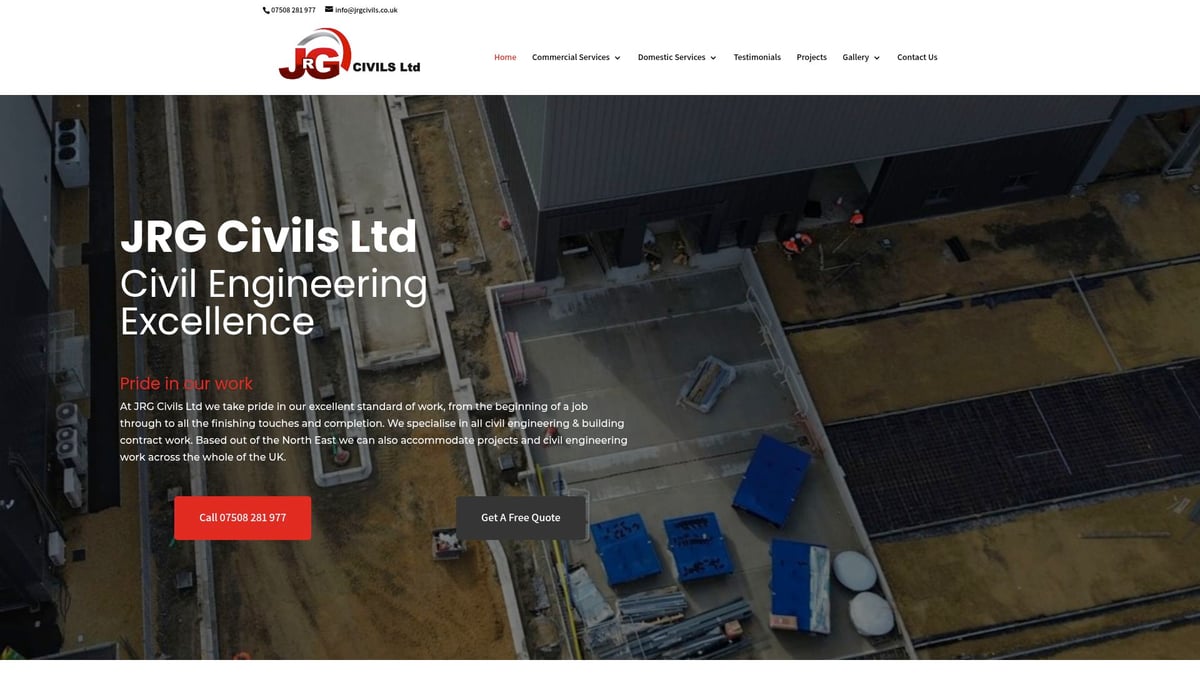
JRG Civils Ltd: Civil Engineering Excellence for 2026
JRG Civils Ltd stands out by offering comprehensive civil engineering services tailored to both commercial and domestic clients across the UK. Their solutions cover drainage, highways, foundations, surfacing, and more, all delivered to 2026 standards. With accreditations such as SafeContractor and ConstructionLine Gold, they guarantee compliance and quality. Their proven track record with national franchises and private projects, combined with a client-focused approach, makes them an ideal choice for future-ready civil engineering needs. Free consultations and transparent quoting ensure you receive support every step of the way.