
The civil engineering building sector is on the brink of remarkable transformation as we approach 2026. Rapid advancements are reshaping how structures are designed, constructed, and managed.
This expert guide equips professionals, developers, and stakeholders with the latest insights, step-by-step processes, and emerging trends.
You will explore industry advancements, planning and regulatory updates, sustainable practices, cutting-edge construction technologies, modern project management techniques, and the future skills essential for success.
Stay ahead of the curve—use this comprehensive resource to future-proof your projects and gain a competitive advantage in civil engineering building.
The State of Civil Engineering Building in 2026
The civil engineering building sector in 2026 is entering a period of extraordinary change. Rapid advances in technology, evolving regulations, and growing societal demands are transforming how professionals approach design, delivery, and management. Understanding these shifts is essential for anyone aiming to succeed in this dynamic environment.

Key Industry Trends and Drivers
Civil engineering building is being reshaped by several powerful trends. Urbanisation continues at pace, with UK cities expanding and infrastructure needs rising. Government figures show a surge in investment for large-scale infrastructure projects, reflecting the urgency to upgrade transport, utilities, and public assets.
A major driver is the push for climate resilience. Buildings now need to withstand extreme weather and adapt to changing environmental risks. Digital technologies such as Building Information Modelling (BIM), Internet of Things (IoT), and artificial intelligence are now standard tools, streamlining project delivery and enhancing collaboration. For example, the West Cambridge Civil Engineering Building demonstrates the integration of research, digital innovation, and sustainable design, setting a benchmark for new developments.
Sustainability and digitalisation are converging, as highlighted in the UK Construction Market 2026: Key Trends. These trends are driving the evolution of the civil engineering building sector, ensuring projects are smarter, greener, and more efficient.
Regulatory and Policy Developments
The regulatory environment for civil engineering building has undergone substantial reform. Updates to UK building regulations have introduced stricter standards for fire safety, structural integrity, and accessibility. Sustainability is at the forefront, with new policies incentivising low-carbon construction and mandating carbon reduction plans for major projects.
Government initiatives, including funding for net zero targets, are influencing how civil engineering building projects are planned and executed. Post-Brexit, the UK has also tailored health and safety regulations, with a renewed focus on workforce wellbeing and modern site management practices.
Recent public health events have prompted further adjustments, requiring robust risk assessment and contingency planning. Navigating these regulations is now a core skill for project leaders, ensuring compliance while maintaining innovation.
Market Outlook and Opportunities
The outlook for civil engineering building in 2026 is robust. Industry forecasts predict steady growth, with the sector benefiting from both public investment and private sector confidence. Large infrastructure schemes are creating a strong pipeline of opportunities, especially in transport, energy, and digital connectivity.
There is rising demand for skilled professionals who can blend technical expertise with digital literacy. New roles are emerging, such as BIM managers, data analysts, and sustainability consultants. Collaboration between public bodies and private developers is unlocking new funding models and delivering projects at scale.
Key opportunities include:
- Expansion of smart infrastructure and green building
- Increased focus on modular construction and offsite manufacturing
- Growth in research-driven projects at leading institutions
Civil engineering building professionals who adapt to these trends will be well positioned for long-term success.
Planning and Design: Foundations for Successful Projects
The planning and design phase forms the backbone of every successful civil engineering building. Each step, from initial assessment to risk management, demands meticulous attention, modern technology, and a holistic approach. As the sector evolves, leveraging advanced tools and collaborative methods ensures projects meet future standards for efficiency and sustainability.

Step 1: Site Assessment and Feasibility Studies
Every civil engineering building begins with a comprehensive site assessment. This foundation step involves geotechnical, environmental, and topographical investigations to ensure the site is suitable for the intended use.
Modern projects rely on advanced sensing and modelling tools for feasibility analysis. Techniques such as ground-penetrating radar and drone surveys provide precise data. The National Research Facility for Infrastructure Sensing exemplifies best practice, using real-time sensors and digital models to anticipate site challenges early.
Key actions in this phase:
- Conduct environmental impact assessments.
- Use GIS and 3D modelling for terrain analysis.
- Identify access, utilities, and constraints.
By investing in thorough site assessment, teams can prevent costly surprises and set the stage for a resilient civil engineering building.
Step 2: Conceptual and Detailed Design
The design stage is where vision becomes reality. Building Information Modelling (BIM) has transformed how teams collaborate, allowing architects, engineers, and contractors to co-create accurate digital models.
From the outset, integrating sustainability and circular economy principles is essential. This approach includes specifying recycled materials, optimising energy performance, and planning for adaptability. Designs must also accommodate modular and offsite construction, which accelerate schedules and reduce waste.
When seeking external expertise, organisations often turn to Civil Engineering Design Services to access specialists in BIM, environmental design, and project coordination.
This stage ensures that every civil engineering building is not only compliant, but also innovative and future-proof.
Step 3: Navigating Planning Permissions and Stakeholder Engagement
Securing planning permission is a critical step in any civil engineering building project. Success hinges on understanding local regulations and engaging stakeholders early.
Effective applications require clear documentation, robust environmental statements, and alignment with local development plans. Engaging local authorities, utility providers, and communities fosters transparency and builds support. For example, the University of Cambridge’s masterplan approval process showcases the benefits of early, open dialogue.
Best practices include:
- Preparing comprehensive planning applications.
- Hosting community consultation events.
- Coordinating closely with statutory consultees.
By prioritising stakeholder engagement, civil engineering building projects are more likely to achieve timely approvals and long-term acceptance.
Step 4: Cost Estimation and Risk Management
Accurate cost estimation underpins project viability. Digital tools now allow teams to forecast costs with greater precision, accounting for materials, labour, and contingencies.
Identifying and mitigating risks at the design stage is vital. Project teams use data analytics to map out potential challenges, from supply chain disruptions to weather impacts. Early risk management prevents delays and budget overruns.
Key strategies include:
- Adopting parametric cost models.
- Conducting risk workshops with multidisciplinary teams.
- Implementing real-time budget tracking.
Data-driven decision making ensures that every civil engineering building remains on budget and on schedule, strengthening client confidence and project outcomes.
Sustainable Civil Engineering Building Practices
Sustainability is no longer optional in civil engineering building. By 2026, the industry faces growing demands to reduce carbon footprints, conserve resources, and future-proof infrastructure. Innovative materials, smart technologies, and circular economy thinking are now at the heart of every successful project.
Low-Carbon Materials and Construction Methods
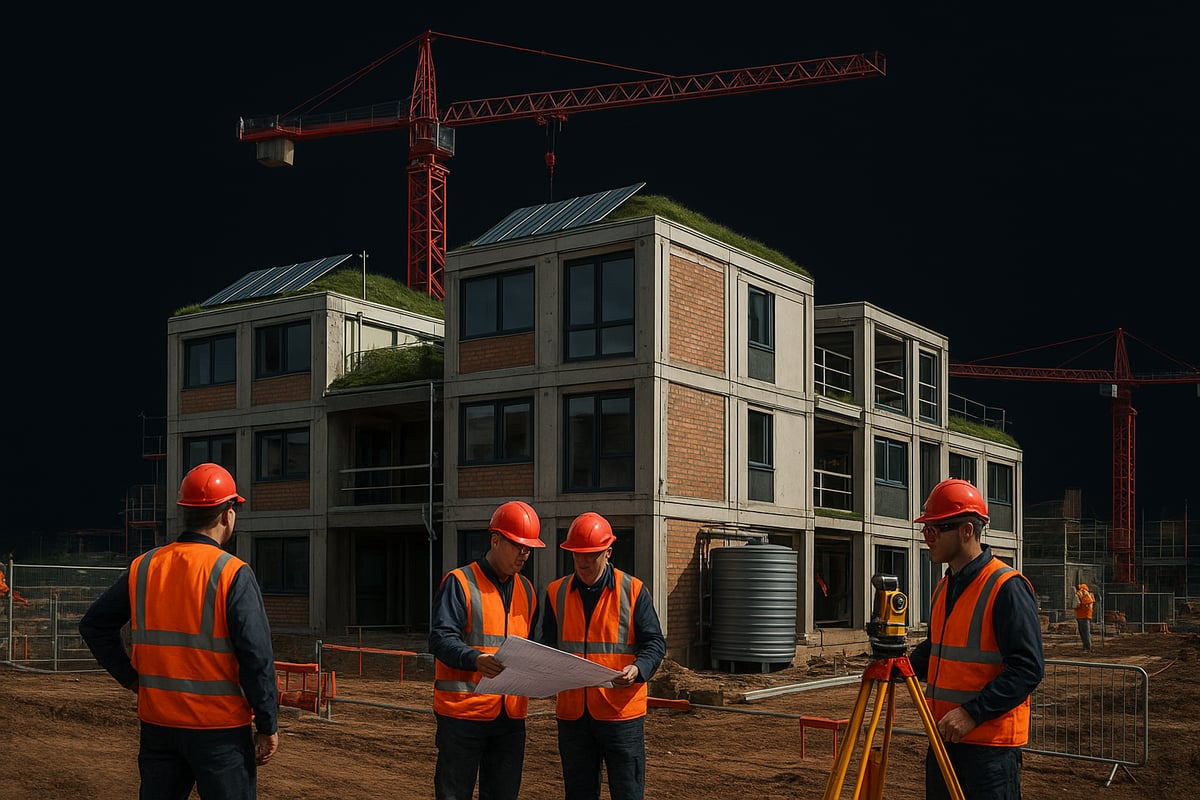
The shift towards low-carbon materials is transforming civil engineering building. Recycled aggregates, low-carbon concrete, and sustainable timber are now standard choices. Prefabrication and modular construction not only reduce waste but also speed up delivery and improve site safety.
By designing for disassembly, civil engineering building projects can make future reuse and recycling easier. Many major university projects, such as those at West Cambridge, now specify sustainable materials from the outset. For further details on eco-friendly strategies, visit Sustainable Civil Engineering Solutions.
Energy Efficiency and Smart Infrastructure
Energy efficiency is a core focus in civil engineering building for 2026. Renewable energy systems, such as rooftop solar panels and ground-source heat pumps, are increasingly integrated into designs. Smart sensors and IoT networks allow real-time monitoring of energy consumption, optimising performance and reducing costs.
Recent developments at the West Cambridge site illustrate how infrastructure sensing enhances operational efficiency. These smart systems ensure that civil engineering building projects meet strict carbon reduction targets and adapt to changing user needs.
Waste Management and Circular Economy
Effective waste management is a hallmark of modern civil engineering building. Strategies include reducing material offcuts, reusing on-site resources, and recycling demolition waste. Prefabrication, modular construction, and just-in-time delivery all help to keep waste to a minimum.
Compliance with the UK’s evolving waste management regulations is essential. University civil engineering buildings often lead the way, implementing robust recycling initiatives and tracking waste streams to maximise resource recovery. These practices support a circular economy and demonstrate sector leadership.
Water Management and Climate Resilience
Future-ready civil engineering building must address water management and climate resilience. Sustainable drainage systems (SuDS) are widely adopted to manage runoff, filter pollutants, and support biodiversity. Flood risk assessments are now a standard part of early project planning.
According to recent UK infrastructure data, climate adaptation measures like permeable paving and rainwater harvesting are on the rise. By prioritising these solutions, civil engineering building projects protect communities and ensure long-term asset performance.
Construction Technologies and Methods Shaping 2026
The pace of technological advancement in civil engineering building is accelerating, setting new benchmarks for efficiency, safety, and sustainability. By 2026, the sector will be defined by digital transformation, automation, advanced materials, and smarter site management. Embracing these innovations is crucial for anyone aiming to lead in civil engineering building.

Digital Transformation in Construction
Digital transformation is at the heart of every successful civil engineering building project in 2026. Building Information Modelling (BIM) is now fully integrated into the design, planning, and construction phases, enabling seamless collaboration across disciplines.
Digital twins—virtual replicas of physical assets—allow real-time monitoring and optimisation of construction processes. These tools provide project teams with actionable insights, reducing errors and enhancing efficiency. Artificial intelligence and machine learning are widely used for predictive project management and quality control.
For example, recent UK projects have adopted cloud-based platforms to streamline communication and document control. This digital-first approach ensures transparency, traceability, and swift problem resolution throughout the civil engineering building lifecycle.
Robotics, Automation, and Offsite Manufacturing
Robotics and automation are transforming how civil engineering building sites operate. Robots now handle repetitive and hazardous tasks, such as excavation, concrete pouring, and structural assembly, which improves safety and consistency.
Offsite manufacturing and modular construction are gaining traction, allowing major components to be produced in controlled environments and assembled on-site. This method reduces waste, shortens build times, and ensures higher quality standards.
The UK has seen several commercial and research facilities successfully delivered using these methods. For an in-depth look at how AI and robotics are shaping the industry, explore the AI & Robotics in UK Construction 2026 resource. These innovations are quickly becoming essential for competitive civil engineering building firms.
Advanced Materials and Innovative Techniques
The materials used in civil engineering building are evolving to meet the demands of durability and sustainability. Self-healing concrete, which repairs its own cracks, is being trialled on infrastructure projects to extend service life and reduce maintenance.
Graphene-enhanced materials offer superior strength and conductivity, opening new possibilities in structural design. 3D printing of building components is moving from pilot projects to mainstream adoption, enabling bespoke, rapid production with minimal waste.
Recent UK initiatives have showcased these advanced materials, demonstrating their potential to revolutionise how civil engineering building projects are conceived and delivered.
Health, Safety, and Site Management Innovations
Health and safety standards on civil engineering building sites are advancing through technology. Wearable devices now monitor workers’ vital signs, detect fatigue, and provide instant alerts in case of danger.
Drones are widely used for site surveys, inspections, and progress tracking, reducing the need for manual checks and improving accuracy. Enhanced site logistics, supported by real-time data and supply chain integration, ensure materials and personnel are deployed efficiently.
These innovations not only protect workers but also contribute to smoother, more predictable project delivery in the civil engineering building sector.
Step-by-Step Guide to Civil Engineering Building Projects in 2026
Embarking on a civil engineering building project in 2026 requires a blend of strategic vision, technical expertise, and an agile approach to ever-evolving standards. This guide is designed to walk you through each critical phase, ensuring your project meets the demands of modern infrastructure, digital innovation, and sustainability. By following these steps, civil engineering building professionals can align with industry best practices and deliver resilient, future-ready assets.
Step 1: Project Initiation and Brief Development
The first stage in any civil engineering building project is to establish a clear project brief. This step defines scope, objectives, and measurable outcomes, setting the foundation for success. Assembling a multidisciplinary team is crucial, combining technical, sustainability, and digital expertise.
Early engagement with stakeholders ensures alignment on project goals and risk appetite. Referencing a Building and Civil Engineering Overview can clarify industry-specific requirements at this stage. Documenting key performance indicators (KPIs) and identifying constraints will guide subsequent phases and help future-proof your civil engineering building project.
Step 2: Design and Pre-Construction Planning
With a robust brief, the focus shifts to integrated design and pre-construction planning. Digital tools such as Building Information Modelling (BIM) are now standard, facilitating collaborative workflows and real-time design coordination.
Sustainability targets are embedded early, ensuring the civil engineering building meets regulatory and environmental goals. Early contractor involvement is increasingly common, fostering innovation and constructability reviews. Supply chain partners should be engaged from the outset to ensure alignment and mitigate risks associated with materials or logistics.
Step 3: Procurement and Contract Strategy
Selecting the appropriate procurement route is a pivotal decision for civil engineering building success. Options include traditional, design and build, or integrated approaches, each with different risk and collaboration profiles.
Modern contracts prioritise transparency, digital information sharing, and risk-sharing mechanisms. Emphasising collaboration helps manage complexity and fosters innovation. Procurement strategies should also reflect sustainability and digital delivery requirements, ensuring the civil engineering building project remains agile and resilient to market shifts.
Step 4: Construction Phase Execution
During execution, sequencing works efficiently and minimising disruption is vital. Digital dashboards enable real-time project monitoring, allowing teams to track progress, manage resources, and address issues promptly.
Quality assurance processes are embedded throughout, ensuring compliance with both regulatory and client standards. The use of modular construction and prefabricated elements is increasing, driving speed and reducing waste in civil engineering building projects. Regular site meetings and transparent communication underpin successful delivery.
Step 5: Handover, Commissioning, and Post-Occupancy Evaluation
A structured handover is essential for a seamless transition from construction to operation. Digital documentation, including as-built models and operation manuals, supports ongoing asset management.
Commissioning systems for energy, water, and safety guarantees the civil engineering building meets performance criteria. Post-occupancy evaluation, using feedback loops and monitoring data, allows for continuous improvement and ensures the asset delivers value throughout its lifecycle.
Step 6: Maintenance and Lifecycle Management
Long-term success in civil engineering building depends on proactive maintenance and lifecycle management. Digital twins and predictive analytics are increasingly used to monitor asset health, schedule interventions, and optimise performance.
Asset management strategies should align with resilience and sustainability objectives, extending the useful life of infrastructure. Ongoing training and knowledge sharing within the operations team ensure the civil engineering building remains adaptable to future challenges and opportunities.
Skills, Careers, and the Future Workforce
The civil engineering building sector in 2026 is undergoing rapid transformation, creating demand for a future-ready workforce. As new technologies become mainstream, professionals must adapt to shifting roles, embrace lifelong learning, and foster inclusive working environments. Let’s explore the key changes shaping careers and skills in the industry.
Evolving Roles in Civil Engineering Building
By 2026, roles within civil engineering building are evolving rapidly. Digital transformation is fuelling demand for BIM managers, automation specialists, and data analysts who can bridge engineering with technology. Cross-disciplinary collaboration is critical, with teams blending expertise in sustainability, data science, and traditional engineering. Professionals who adapt to these new requirements will shape the future of civil engineering building, ensuring projects remain at the forefront of innovation.
Education, Training, and Professional Development
To keep pace with these changes, education and upskilling are essential. Universities and professional bodies are expanding Centres for Doctoral Training and offering micro-credentials in cutting-edge technologies. Staying compliant with evolving frameworks, such as the UK-SPEC HRB Standard, is increasingly important for those working in civil engineering building. Continuous learning ensures professionals remain agile and prepared for future challenges.
Diversity, Inclusion, and Workforce Wellbeing
A modern civil engineering building workforce thrives on diversity and wellbeing. Employers are implementing inclusive recruitment and retention strategies to attract talent from all backgrounds. Health and wellbeing initiatives, both on-site and in offices, support a positive work environment. Fostering inclusion not only strengthens project outcomes but also helps civil engineering building teams reflect the communities they serve.
Career Pathways and Opportunities
The career landscape for civil engineering building is full of opportunity. Forecasts show strong job growth and rising demand for specialists in digital construction, sustainability, and project management. Professionals can progress from technical roles to leadership through clear development pathways. Exploring Civil Engineering Projects in the UK reveals how innovation is shaping career trajectories and the skills required for success in 2026.
The Role of Research, Innovation, and Collaboration
Ongoing research, innovation, and collaboration are shaping the future of civil engineering building. As we approach 2026, these drivers underpin advances in materials, processes, and sustainability. They also foster a culture of shared learning, which is essential for meeting the sector’s evolving demands.
University-Led Research and Industry Partnerships
Universities play a crucial role in civil engineering building by driving research that informs industry practice. Facilities like the UK Collaboratorium for Research on Infrastructure and Cities (UKCRIC) and the National Research Facility for Infrastructure Sensing act as hubs for innovation. These partnerships enable the testing of new materials, data-driven design, and advanced monitoring techniques. By connecting academia, industry, and government, these collaborations accelerate the adoption of new solutions. The impact is evident in the delivery of safer, more resilient infrastructure. As research priorities evolve, these partnerships ensure civil engineering building meets both present and future needs.
Emerging Technologies and Pilot Projects
Emerging technologies are transforming civil engineering building through real-world pilot projects. Innovations such as sensor networks, AI-driven analytics, and modular construction are first trialled in controlled environments. The Civil Engineering Building at West Cambridge exemplifies this approach, serving as a testbed for infrastructure sensing and smart systems. Pilot projects allow teams to evaluate new materials and digital tools before wider implementation. This reduces risk and shortens the timeline from concept to adoption. The sector’s commitment to piloting technology keeps civil engineering building at the forefront of global best practice.
Knowledge Sharing and Best Practice Networks
Knowledge sharing is vital for continuous improvement in civil engineering building. National and international forums bring professionals together to exchange insights and lessons learned. Open data platforms and collaborative networks enable teams to share research findings, case studies, and technical guidance. These connections foster a culture of transparency and rapid dissemination of best practices. By participating in these networks, organisations can benchmark their performance and stay aligned with industry standards. Ultimately, this ensures that civil engineering building projects benefit from collective expertise and remain adaptable to new challenges.
Funding, Grants, and Support for Innovation
Access to funding and support is essential for driving research and innovation in civil engineering building. Government grants, industry investment, and academic funding streams all contribute to the sector’s growth. Understanding how to secure these resources can unlock opportunities for R&D and pilot initiatives. With the UK construction sector poised for growth from 2025, public and private investment is expected to increase. This trend supports collaboration and accelerates the adoption of advanced technologies. Proactively seeking grants and forming strategic partnerships will help ensure sustained innovation in civil engineering building.