
Civil engineering design is entering a transformative era. As we move towards 2026, the industry is being shaped by rapid digital innovation, growing sustainability goals, and an urgent need for resilient infrastructure.
This expert guide is crafted to help civil engineers, project managers, and stakeholders navigate these changes. Here, you will discover the key principles, step-by-step processes, and future trends influencing successful projects in the coming year.
We will explore foundational concepts, digital advancements, regulatory updates, and actionable strategies for civil engineering design. Stay ahead with insights into best practices, advanced tools, and sustainability imperatives.
Prepare to adapt, innovate, and lead as the landscape evolves.
Foundations of Civil Engineering Design
The foundations of civil engineering design are evolving, blending tradition with innovation to meet the demands of a changing world. At its heart, civil engineering design is about shaping safe, resilient environments that support communities and drive progress.

Key Principles and Objectives
Every civil engineering design project is guided by four core aims: safety, stability, functionality, and cost-efficiency. Ensuring structures withstand both everyday use and extreme events is fundamental. This involves rigorous load analysis—dead loads from the structure itself, live loads from occupants or vehicles, and environmental loads such as wind or flooding.
Material selection is another cornerstone of civil engineering design. The right materials bring strength, durability, and adaptability, allowing projects to stand the test of time and changing conditions. Increasingly, engineers must also consider how materials contribute to a project’s carbon footprint.
Balancing aesthetics with function is essential. Great civil engineering design does not just solve technical challenges, it creates spaces that integrate with their surroundings and serve the needs of communities. The Institution of Civil Engineers (ICE) highlights four design principles—climate, people, places, and value—as critical for the future. For example, the redevelopment of urban parks often demonstrates how form and function can coexist beautifully.
A recent ICE survey found about 60% of its members believe climate issues need even greater focus. This underscores the growing role of environmental responsibility at the foundation of modern civil engineering design.
Types of Civil Engineering Design Projects
Civil engineering design encompasses a wide variety of projects, each with unique requirements and challenges. These include:
| Project Type | Examples | Key Challenges |
|---|---|---|
| Structural | Bridges, buildings | Stability, aesthetics |
| Transportation | Roads, railways | Congestion, safety |
| Water | Drainage, flood control systems | Environmental impact |
| Public Realm | Parks, urban spaces | Community engagement |
Commercial and residential projects differ in scale, regulations, and stakeholder expectations. Commercial sites, such as retail parks, often prioritise high traffic flow and robust infrastructure, while residential projects focus on comfort, accessibility, and integration with local communities.
Consider the recent drive-through developments for brands like Costa Coffee and Greggs. These projects require careful civil engineering design to manage vehicle flow, pedestrian safety, and site drainage, especially in busy urban locations. Such examples illustrate how adapting design strategies to project type is key to success.
To learn more about the breadth of services involved, you can explore the Civil Engineering Design Services Overview.
Stakeholder Roles and Collaboration
Effective civil engineering design relies on the coordinated efforts of multiple stakeholders. Civil engineers lead the technical delivery, working closely with architects to ensure that structures are both functional and visually appealing. Contractors translate designs into reality, while local authorities and clients guide project objectives and regulatory compliance.
Early engagement and open communication among all parties are vital. The National Infrastructure Commission recommends appointing a ‘design champion’ to advocate for quality and innovation from the outset. This approach fosters a culture of multidisciplinary collaboration, ensuring that solutions are holistic and adaptable.
Multidisciplinary teamwork is not just a best practice, it is a necessity in today’s complex projects. By bringing diverse expertise together early, civil engineering design teams can anticipate challenges, streamline delivery, and achieve outcomes that benefit both people and the environment.
The Civil Engineering Design Process: Step-by-Step in 2026
The civil engineering design process in 2026 is more dynamic, data-driven, and collaborative than ever before. Each stage, from initial consultation to final handover, is shaped by digital innovation, sustainability, and the need for resilient infrastructure. Let us walk through the essential steps that define successful civil engineering design in today’s evolving landscape.

Step 1: Project Brief and Initial Consultation
Every civil engineering design project begins with a thorough understanding of the client’s needs and the project’s context. This stage involves gathering requirements, conducting site surveys, and performing feasibility studies to identify potential opportunities and constraints.
Early engagement ensures that the project scope is clear and objectives are aligned. Digital tools, such as reality capture and interactive visualisation software, help clients and stakeholders envision the project from the outset. This clarity reduces misunderstandings and sets a solid foundation for the civil engineering design journey.
Open communication at this stage is vital. By involving all parties early, teams can identify challenges, anticipate risks, and establish realistic expectations for timelines and budgets.
Step 2: Conceptual and Preliminary Design
With a well-defined brief, the next step in civil engineering design is to develop and test initial concepts. Engineers use both physical models and sophisticated digital tools to visualise different approaches and evaluate their feasibility.
Load analysis and basic calculations are carried out to ensure the concepts are structurally sound. Stakeholder feedback is actively sought, and designs are refined iteratively based on insights from clients, planners, and the community.
This phase encourages creativity and innovation while maintaining a focus on practicality. The goal is to generate solutions that meet both functional and aesthetic requirements, setting the stage for detailed civil engineering design work.
Step 3: Detailed Design and Analysis
Once a preferred concept is agreed upon, the civil engineering design process moves into detailed design and rigorous analysis. Advanced software, including Building Information Modelling (BIM) and finite element analysis tools, are used to model structures, systems, and materials with high precision.
Designs are checked for compliance with the latest codes and standards, ensuring safety and reliability. Every component, from foundation dimensions to reinforcement details, is specified and documented.
System integration is paramount at this stage. Effective coordination between disciplines reduces errors and ensures that the final design delivers on all project objectives.
Step 4: Sustainability and Resilience Integration
Integrating sustainability and resilience is now a core requirement in civil engineering design. Engineers must address climate adaptation by incorporating flood resilience, efficient energy use, and low-carbon materials.
Circular design principles are applied to extend the asset’s lifecycle and reduce waste. Choices made at this stage, such as using recycled materials or designing for future adaptability, have long-term environmental and economic impacts.
Collaboration with environmental specialists helps ensure that solutions not only meet regulations but also contribute positively to the wider community and ecosystem.
Step 5: Regulatory Approvals and Documentation
Navigating the regulatory landscape is a critical aspect of civil engineering design. Engineers prepare technical drawings, specifications, and risk assessments to secure planning permission and meet building regulations.
Health and safety compliance is integrated throughout the process. For highway projects, Section 278 works are a key consideration, requiring detailed coordination with local authorities. For further details, see Section 278 Highway Works Explained.
Comprehensive documentation at this stage ensures that all statutory obligations are met, reducing the risk of project delays and costly revisions.
Step 6: Construction Support and Administration
During construction, the civil engineering design team plays a crucial role in overseeing implementation and maintaining quality. Site supervision, regular inspections, and prompt responses to Requests for Information (RFIs) help address challenges as they arise.
Engineers manage changes, deferred submittals, and project schedules to keep construction on track. Maintaining clear communication between the design and construction teams ensures that the original design intent is preserved throughout the build.
Robust quality assurance processes are essential for delivering safe, durable, and compliant infrastructure.
Step 7: Post-Construction Review and Handover
The civil engineering design process concludes with a comprehensive post-construction review. Final inspections are conducted, and any outstanding issues (snagging) are addressed to ensure quality.
Performance monitoring, including gathering feedback from clients and end-users, supports continuous improvement for future projects. Accurate as-built documentation and client training are provided to facilitate effective asset management and long-term value.
This final step closes the loop, ensuring that every civil engineering design delivers lasting benefits to clients and communities.
Sustainability and Climate-Responsive Design
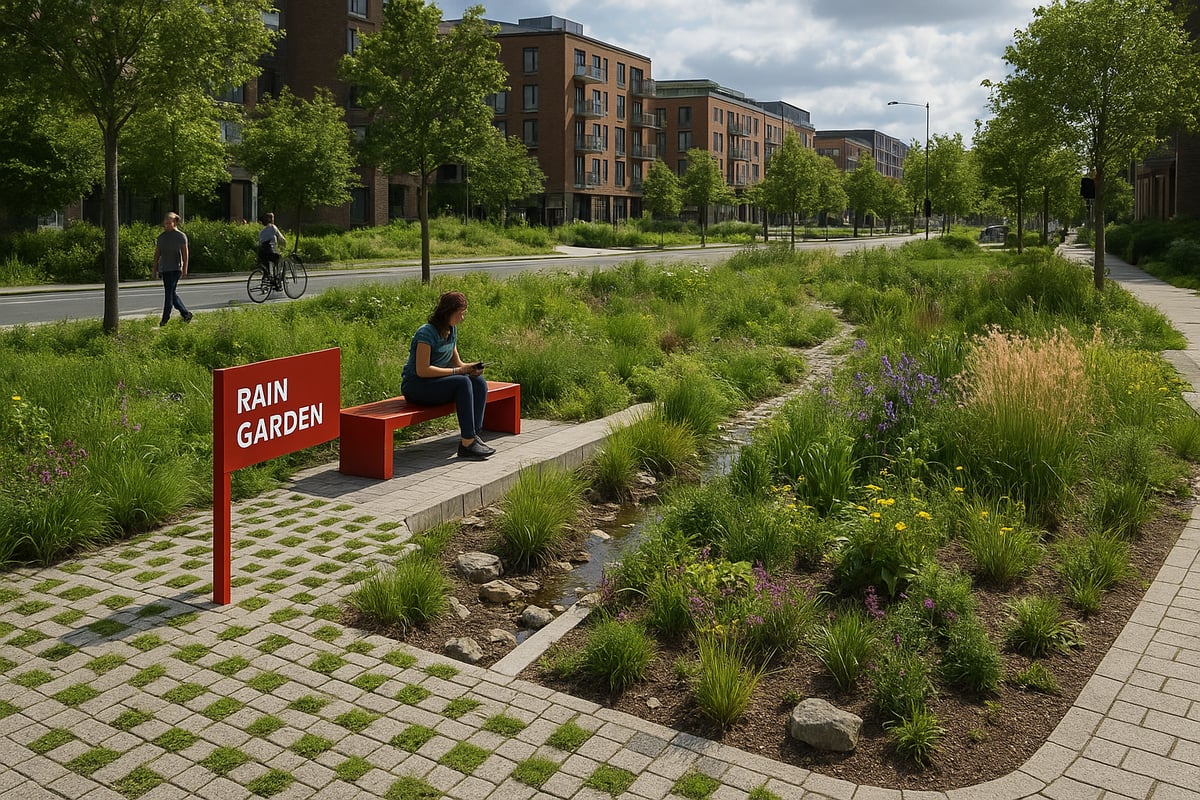
Climate change and environmental pressures are reshaping civil engineering design. As the UK targets net zero by 2050, engineers must embed environmental responsibility into every stage of project planning and delivery. This means designing infrastructure that is not only robust but also adaptable to shifting climate patterns, such as increased flooding or heatwaves.
Embedding Environmental Responsibility
Environmental responsibility in civil engineering design starts with understanding climate risks. Flood resilience, heat mitigation, and biodiversity enhancement are now core objectives. Projects increasingly use sustainable drainage systems (SuDS) to manage surface water and reduce flood risk. Green infrastructure, like living roofs and urban woodlands, helps cities adapt to extreme weather while creating healthier spaces.
Effective civil engineering design addresses both mitigation and adaptation. Engineers collaborate with ecologists and planners to ensure developments support local wildlife and enhance natural habitats. By integrating these approaches, infrastructure can serve communities today and remain resilient for decades.
Materials and Resource Efficiency
Material efficiency is fundamental to sustainable civil engineering design. Choosing low-carbon, recycled, or locally sourced materials reduces a project’s environmental impact. Innovations in concrete, steel, and composite materials enable structures to be both durable and climate-friendly. For example, permeable paving is increasingly specified in urban developments to reduce runoff and improve groundwater recharge.
Civil engineering design teams assess the entire supply chain to minimise waste and energy use. The use of recycled aggregates or cement alternatives lowers carbon emissions. Real-world examples, such as those highlighted in Recent Civil Engineering Projects, demonstrate how sustainable material choices can deliver robust and innovative outcomes.
Social and Economic Value
Modern civil engineering design goes beyond technical performance, focusing on social and economic value. Community engagement is essential to ensure infrastructure meets the needs of all users. Placemaking principles guide the creation of spaces that are accessible, safe, and welcoming, enhancing wellbeing and fostering a sense of belonging.
Designing for accessibility and safety benefits everyone, from families to older adults and those with disabilities. Projects that deliver multiple benefits, such as parks that provide flood storage, offer value beyond their primary function. By prioritising people and places, civil engineering design delivers infrastructure that strengthens communities and supports economic growth.
Measuring and Reporting Sustainability
Measuring sustainability in civil engineering design requires robust tools and transparent reporting. Life Cycle Assessment (LCA) quantifies a project’s carbon footprint and environmental impact from construction to decommissioning. Digital tools help track material use, waste, and emissions, enabling teams to optimise designs for sustainability.
Industry frameworks, such as the ICE and NIC design principles, ensure that climate and value considerations are embedded in decision-making. Reporting on sustainability outcomes builds trust with stakeholders and demonstrates accountability. As civil engineering design evolves, continuous monitoring and feedback help drive further improvements, ensuring projects remain aligned with environmental and social priorities.
Digital Transformation in Civil Engineering Design
Digital transformation is reshaping civil engineering design, offering unprecedented opportunities for efficiency, collaboration, and innovation. As the industry adapts to rapid technological advances, professionals are leveraging digital tools to deliver more resilient, sustainable, and cost-effective infrastructure.

BIM and Digital Twins
Building Information Modelling (BIM) is now a cornerstone of civil engineering design. It enables teams to create detailed, data-rich 3D models that capture every aspect of a project, from structure to services. BIM streamlines coordination, reduces clashes, and ensures accuracy throughout the design and construction lifecycle.
The integration of digital twins takes this further by creating real-time, virtual replicas of physical assets. Civil engineering design teams use digital twins to monitor infrastructure performance, simulate scenarios, and plan maintenance. These technologies empower stakeholders to make data-driven decisions, enhancing project outcomes.
For a deeper look at how these innovations are reshaping the industry, see Digital technologies transforming civil engineering.
Advanced Analysis and Simulation Tools
Modern civil engineering design relies heavily on advanced analysis tools to solve complex challenges. Software for structural analysis, such as finite element modelling, allows engineers to test load responses and optimise material use before construction begins.
Simulation tools help teams visualise how designs perform under various conditions, including seismic activity, wind, and traffic loads. Automation in drafting and clash detection minimises human error and accelerates project delivery.
Scan-to-BIM technology is increasingly used for refurbishing existing assets, bringing older infrastructure into the digital age. These capabilities ensure civil engineering design remains robust, adaptable, and fit for future demands.
Data-Driven Design and AI
The shift towards data-driven civil engineering design is transforming how projects are planned and executed. By harnessing big data and artificial intelligence, engineers can predict performance, optimise layouts, and select materials that balance cost, sustainability, and resilience.
AI-powered algorithms analyse vast datasets from previous projects, traffic patterns, and environmental factors. This enables civil engineering design teams to make informed choices quickly and with greater accuracy. For example, AI-driven traffic modelling is now standard in new road network planning, ensuring smoother journeys and safer roads.
As data analytics becomes more embedded, civil engineering design will continue to benefit from smarter, more efficient workflows.
Remote Collaboration and Cloud Platforms
Remote collaboration is now integral to civil engineering design, especially with distributed and multidisciplinary teams. Cloud-based project management platforms provide a central hub for sharing models, drawings, and documents, ensuring everyone has access to the latest information.
These platforms offer real-time updates, version control, and transparent communication between engineers, architects, and contractors. Civil engineering design projects now benefit from fewer delays and misunderstandings, as issues are flagged and resolved collaboratively.
Cloud solutions also support flexible working, making it easier to engage stakeholders and maintain project momentum across locations and time zones.
Regulatory Landscape and Future Trends in 2026
The regulatory environment for civil engineering design is evolving at pace, requiring professionals to stay alert to new standards, technologies, and client demands. As we look towards 2026, understanding these changes is essential for maintaining compliance, delivering innovative projects, and meeting societal needs.
Evolving Standards and Codes
Civil engineering design in 2026 will be shaped by updated UK and international standards. Regulatory bodies continue to prioritise sustainability, digitalisation, and enhanced safety. New codes are likely to include stricter environmental requirements, such as mandatory carbon assessments and digital record-keeping for all major projects.
Continuous professional development and accreditation will be vital for engineers to keep pace with these changes. Many institutions now require evidence of ongoing learning in digital tools and sustainable practices. Staying informed about upcoming regulatory updates helps teams future-proof their designs and avoid compliance issues.
Resilience and Risk Management
The future of civil engineering design demands robust strategies for resilience and risk management. Climate extremes, unpredictable weather, and supply chain disruptions are now critical considerations. Engineers must apply advanced risk assessment methodologies and scenario planning techniques to anticipate vulnerabilities.
Lessons from historic structural failures, such as the Tacoma Narrows Bridge, highlight the necessity of thorough analysis and adaptability. Integrating resilience measures into the earliest design stages ensures infrastructure can withstand both current and emerging threats. This proactive approach protects investments and public safety.
Innovation and Emerging Technologies
Innovation is central to the advancement of civil engineering design. The sector is rapidly adopting modular construction, 3D printing, and smart materials to enhance efficiency and sustainability. Digital tools, including IoT sensors, support real-time asset monitoring, enabling predictive maintenance and performance optimisation.
For a deeper look at upcoming innovations, explore these emerging trends in civil engineering 2025. Upskilling in digital and green technologies is becoming essential, as the industry shifts towards data-driven and environmentally responsible practices.
Market and Client Expectations
Market expectations for civil engineering design in 2026 are evolving rapidly. Clients now demand faster delivery, greater transparency, and measurable project outcomes. The rise of design champions and client-led innovation reflects a shift towards collaborative, results-oriented approaches.
Investment in digital engineering is increasing significantly, with projected spending expected to surge by 2026. This trend supports the integration of new technologies and drives cultural shifts within engineering teams. According to ICE surveys, addressing skills gaps and supporting continuous learning are now top priorities for both firms and professionals.
Professional Practice: Skills, Collaboration, and Project Delivery
Professional practice in civil engineering design is evolving rapidly, requiring a blend of technical excellence, effective teamwork, robust quality management, and ethical responsibility. As 2026 approaches, professionals must combine digital fluency with a strong ethical foundation to ensure projects deliver value and resilience for society. Let us explore the core elements shaping successful civil engineering design practice today.
Essential Skills for Civil Engineers in 2026
To excel in civil engineering design, professionals must master advanced digital tools and sustainable design strategies. Proficiency with Building Information Modelling (BIM), data analytics, and simulation software is now a baseline expectation. In addition, familiarity with emerging technologies such as digital twins in civil engineering is increasingly vital for real-time decision-making.
Equally important are soft skills. Effective communication, leadership, and stakeholder management enable civil engineers to bridge technical and non-technical perspectives. Lifelong learning is essential, as regulations, technologies, and best practices in civil engineering design continue to evolve.
Multidisciplinary Teamwork
Civil engineering design projects demand collaboration among engineers, architects, planners, and contractors. Open communication and mutual respect lay the foundation for successful outcomes. Regular coordination meetings, digital collaboration platforms, and clear documentation help teams align on objectives and resolve conflicts efficiently.
Integrated project delivery models foster shared responsibility, reducing errors and delays. For instance, the delivery of mixed-use developments often hinges on seamless teamwork and a shared vision. By embracing multidisciplinary collaboration, civil engineering design teams can create solutions that are robust, innovative, and tailored to diverse community needs.
Quality Assurance and Health & Safety
Quality assurance and health and safety are central to civil engineering design success. Embedding QA/QC processes from the earliest design stages through construction ensures compliance and minimises risk. Digital checklists, site monitoring tools, and automated reporting enhance transparency and accuracy.
Meeting obligations under CDM regulations is non-negotiable. Adopting robust foundational practices, such as those highlighted in Foundations and Piling in Civil Design, helps safeguard structural integrity and public safety. Consistent quality management upholds standards and protects all project stakeholders.
Ethics and Professional Responsibility
Ethical practice anchors civil engineering design in public trust and social value. Professionals must act transparently, communicate clearly, and take accountability for their decisions. Addressing social and environmental impacts proactively is not only a regulatory requirement but also a moral imperative.
Continuous professional development underpins ethical behaviour. By staying informed and committed to learning, civil engineers reinforce industry standards and enhance their ability to serve communities responsibly. Civil engineering design will continue to thrive when integrity and ethics remain at its core.