
Imagine a world transformed by bold ideas and innovative design. Civil engineering projects are at the heart of this change, building the foundations of tomorrow’s cities and communities.
This article spotlights eight inspiring civil engineering projects set to redefine what is possible in 2026. These ventures champion innovation, sustainability, and engineering excellence.
Join us as we explore groundbreaking infrastructure, environmental protection schemes, advanced transport hubs, and digital advancements making headlines around the globe. Discover how these projects are not only solving real-world challenges, but also shaping a brighter future for everyone.
The Role of Civil Engineering in Modern Society
Civil engineering projects are the backbone of contemporary life, underpinning everything from bustling city centres to remote coastal communities. These projects shape our economies, protect our environment, and improve the way we live, work, and connect. Let’s explore how civil engineering projects influence modern society across several critical dimensions.
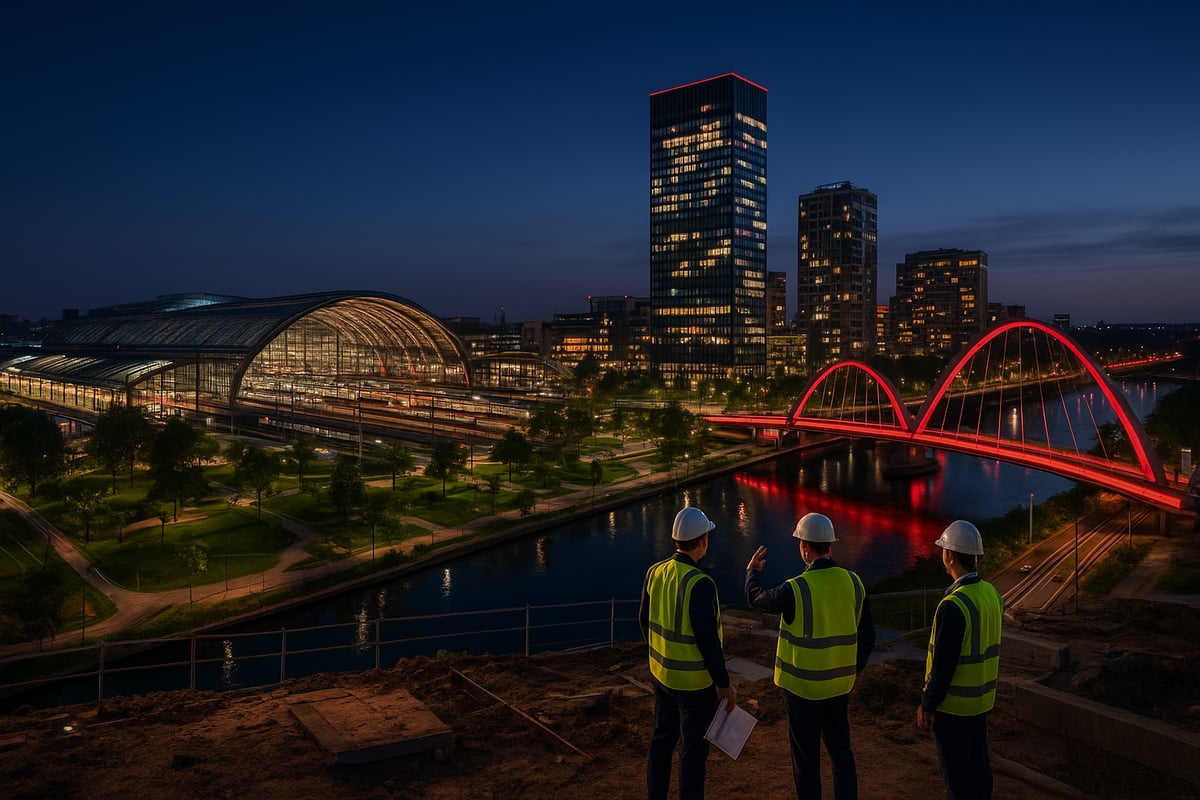
Driving Economic Growth and Urban Development
Civil engineering projects are fundamental drivers of economic growth and urban transformation. By developing critical infrastructure such as transport hubs and commercial zones, these projects stimulate investment and create employment opportunities at every stage, from planning to completion.
For example, the regeneration of city centres through new transport links not only improves mobility but also attracts businesses and residents, revitalising local economies. According to Civil Engineering and Building Projects, a wide variety of civil engineering projects contribute directly to the prosperity and evolution of communities, serving as catalysts for long-term development.
Promoting Sustainability and Climate Resilience
Sustainability is at the heart of modern civil engineering projects. Engineers now prioritise green technologies, such as renewable energy systems and low-carbon materials, to minimise environmental footprints.
Many projects are designed to withstand the impacts of climate change, from rising sea levels to extreme weather. A notable example is the Norfolk coastline protection scheme, which is set to prevent the loss of over 1,000 properties by 2105. These initiatives demonstrate how civil engineering projects can safeguard both people and ecosystems for generations to come.
Enhancing Quality of Life and Connectivity
The impact of civil engineering projects goes beyond physical structures, as they directly enhance the quality of life for millions. Improved transport, water, and energy systems mean safer, more reliable services for everyone.
Social infrastructure projects, such as schools and hospitals, foster community well-being. The Belfast Grand Central Station, for instance, acts as a powerful catalyst for regional connectivity, providing easier access and better mobility. Such projects embody the transformative potential of civil engineering projects in everyday life.
Leveraging Technology and Innovation
Innovation is reshaping civil engineering projects through the adoption of digital tools and smart technologies. Building Information Modelling (BIM), smart sensors, and drones are now integral to planning, construction, and maintenance.
These advancements enable teams to detect structural issues early, improve efficiency, and enhance safety. The Greater Anglia station surveys, using high-tech diagnostics, showcase how digital transformation leads to more resilient and cost-effective civil engineering projects.
Meeting Future Challenges
Civil engineering projects are evolving to address rapid urbanisation, resource scarcity, and climate threats. Today’s engineers play a crucial role in policy development, strategic planning, and project execution.
Collaboration across disciplines is increasingly vital for delivering large-scale, sustainable solutions. As society faces new challenges, the adaptability and expertise of civil engineers ensure that civil engineering projects will continue to meet the needs of both present and future generations.
8 Inspiring Civil Engineering Projects to Explore in 2026
The year 2026 is set to be a landmark for civil engineering projects worldwide. From state-of-the-art transport hubs to resilient coastal defences and smart urban infrastructure, these projects are redefining what is possible. Each initiative combines cutting-edge engineering, sustainability, and community impact, offering a glimpse into the future of our built environment.

1. Belfast Grand Central Station – Northern Ireland’s Integrated Transport Hub
Belfast Grand Central Station is a transformative project for Northern Ireland and the largest transport hub in Ireland. By replacing outdated stations, it is designed to accommodate a 50% increase in passenger numbers, positioning itself at the heart of the region’s civil engineering projects. The station integrates bus and rail services, featuring modern facilities and a focus on sustainable design.
Key features include energy-efficient systems, seamless urban access, and advanced passenger amenities. This focus on sustainability is reflected in the use of renewable materials and smart building technologies, which set a new benchmark for similar civil engineering projects. The station is already serving thousands of travellers daily since its opening in November 2025.
Community benefits are significant. Enhanced accessibility, improved travel experiences, and regional economic growth all stem from this ambitious development. The project’s multi-modal infrastructure is shaping the future of cities in Ireland and beyond.
To learn more about the station’s design, construction phases, and its impact on regional connectivity, see the Belfast Grand Central Station project details.
2. Cromer and Mundesley Coast Protection Schemes – Safeguarding the Norfolk Coastline
The Cromer and Mundesley Coast Protection Schemes are vital civil engineering projects aimed at preserving one of Europe’s fastest-eroding coastlines. Using a combination of rock armour, new seawalls, and beach nourishment, these schemes provide robust defence against rising sea levels and storm surges.
Over 1,030 properties are safeguarded, with projections extending protection up to 2105. The civil engineering projects in this region demonstrate a careful balance between safeguarding communities and protecting natural habitats. Environmental assessments ensure that wildlife and coastal ecosystems are preserved wherever possible.
Innovative construction techniques, such as modular seawalls and climate-resilient materials, underpin these schemes. The project is funded collaboratively by local councils and national agencies, with completion in late 2025 and ongoing monitoring through 2026. These efforts highlight the importance of resilience and adaptability in modern civil engineering projects.
3. Hong Kong Section of the Guangzhou-Shenzhen-Hong Kong Express Rail Link
The Hong Kong section of the Guangzhou-Shenzhen-Hong Kong Express Rail Link stands as a remarkable feat among civil engineering projects. This high-speed rail line connects Hong Kong to mainland China, drastically reducing travel time between major cities to under 50 minutes.
The engineering challenges involved were immense. Tunnels, bridges, and the iconic West Kowloon Station required innovative solutions and precise execution. The project’s urban integration is seamless, with links to local transport networks enhancing accessibility and convenience for millions.
Economic benefits are clear. The link boosts tourism, fosters trade, and supports regional collaboration. Sustainability is also prioritised, with energy-efficient trains and green station design at the forefront. Full operations are scheduled for 2026, making it a flagship for cross-border civil engineering projects.
4. Greater Anglia Station Condition and Hidden Critical Element Survey – UK Rail Safety Innovation
The Greater Anglia Station Condition and Hidden Critical Element Survey is redefining rail safety and maintenance in the UK. This ambitious initiative involves a comprehensive survey of 47 railway stations using advanced technology such as laser scanning, digital twins, and sensor networks.
These civil engineering projects aim to detect hidden structural issues before they become critical. Data-driven maintenance strategies ensure long-term cost savings and improved passenger safety. Stakeholder collaboration is integral, bringing together rail operators, engineers, and technology partners.
The real-world impact is profound. Enhanced reliability, increased user confidence, and a proactive approach to infrastructure management are direct outcomes. Completed in 2025, with full implementation in 2026, this project exemplifies the benefits of integrating technology into civil engineering projects.
5. Smart City Infrastructure in Singapore – Next-Generation Urban Living
Singapore’s smart city infrastructure initiatives are redefining urban life through groundbreaking civil engineering projects. The integration of IoT, AI, and data analytics allows for real-time management of city systems, improving efficiency and sustainability.
Civil engineering projects in Singapore include smart roads, automated drainage, and green buildings. Energy-efficient lighting, extensive water reuse, and urban greenery contribute to a healthier, more sustainable environment. Notably, Marina Bay’s digital twin enables monitoring of infrastructure in real time, ensuring rapid response to issues.
For residents, the benefits are tangible. Reduced congestion, enhanced safety, and better air quality all stem from these civil engineering projects. Singapore’s efforts are recognised as the most advanced in Asia-Pacific, with ongoing expansion of smart systems into new districts throughout 2026.
6. Los Angeles River Revitalisation – Urban Ecology and Community Renewal
The Los Angeles River Revitalisation is one of the most ambitious civil engineering projects in the United States, aiming to transform a 51-mile concrete channel into green, accessible public spaces. This project addresses flood control, habitat restoration, and public access, making it a model for urban river restoration.
Collaboration is key. City planners, engineers, and environmental groups work together to integrate flood management with ecological renewal. New parks, cycling paths, and community spaces foster social cohesion and improve quality of life.
Sustainability is central to these civil engineering projects. Native landscaping, innovative water management, and thousands of new trees planted during phase one—completed in 2026—underscore a commitment to both the environment and urban communities.
7. Mumbai Coastal Road Project – India’s Urban Mobility Revolution
The Mumbai Coastal Road Project is a transformative addition to India’s civil engineering projects, connecting South and North Mumbai with a 29.2-km expressway. This development features sea walls, tunnels, and land reclamation, overcoming significant engineering challenges posed by the coastal environment.
The project’s impact on urban mobility is dramatic. Commuters experience up to 70% reductions in travel times, easing congestion and supporting economic activity. Environmental safeguards, such as marine life protection and green corridors, are integrated throughout the project.
As major segments become operational in 2026, the Mumbai Coastal Road is set to support business growth, tourism, and city expansion. Its scale and ambition make it a standout among current civil engineering projects in India.
8. Sydney Metro West – Expanding Australia’s Rapid Transit
Sydney Metro West is a flagship for Australian civil engineering projects, introducing a new 24-km underground railway between Parramatta and the Sydney CBD. The construction includes twin tunnels and state-of-the-art stations, doubling rail capacity along this vital corridor.
Sustainability is at the forefront, with solar-powered stations and low-emission trains. The project is designed to provide shorter commutes and stimulate economic uplift across Greater Sydney. With completion scheduled for 2026 and an expected 150,000 daily riders, Sydney Metro West sets a new standard for future infrastructure.
This initiative exemplifies how civil engineering projects can shape urban growth, improve connectivity, and deliver lasting benefits to communities across Australia.
Trends Shaping Civil Engineering Projects in 2026
Civil engineering projects are evolving rapidly as new trends redefine the industry’s future. In 2026, innovation, sustainability, and collaboration are at the heart of modern infrastructure, driving transformative change across the globe.

Emphasis on Sustainability and Green Infrastructure
Sustainability is no longer optional for civil engineering projects. The use of low-carbon materials, renewable energy systems, and urban green spaces is becoming standard practice. Flood resilience and biodiversity are integrated from the outset, as seen in London’s recent projects that use recycled materials for construction.
Civil engineers now prioritise long-term environmental benefits, ensuring that infrastructure serves both people and the planet.
Integration of Digital Technologies
Digital tools are revolutionising civil engineering projects in 2026. Building Information Modelling, digital twins, and artificial intelligence streamline planning, construction, and maintenance. These technologies improve efficiency and safety throughout a project’s lifecycle.
For more on these innovative approaches, see Civils Design Innovations. The widespread use of smart sensors and automation enables precise diagnostics and predictive maintenance, setting new benchmarks for the industry.
Focus on Climate Adaptation and Resilience
Adapting to climate change is central to civil engineering projects today. Designs account for extreme weather, rising sea levels, and urban heat. Engineers work closely with environmental scientists and local communities to create solutions that protect people and natural habitats.
The Norfolk coastline’s protection scheme is a prime example, blending robust engineering with environmental sensitivity.
Community-Centric Design
Modern civil engineering projects put people first. Stakeholder engagement happens from concept to completion, ensuring accessibility and inclusivity. Social infrastructure, such as transport hubs, now routinely includes public consultation phases.
This approach leads to spaces that foster community well-being, demonstrating the industry’s commitment to positive societal impact.
Global Collaboration and Knowledge Sharing
International collaboration shapes the future of civil engineering projects. Cross-border partnerships support mega-projects, and best practices in sustainability and safety are shared worldwide. Organisations like WFEO unite engineers, fostering innovation and collective progress.
These trends reflect a dynamic industry, poised to tackle tomorrow’s challenges with skill and vision.
How to Get Involved in Civil Engineering and Support Future Projects
Civil engineering projects offer countless ways for individuals to make a meaningful difference in the built environment. Whether you are a student, a recent graduate, or an experienced professional, there are clear steps you can take to get involved and support the future of this vital industry.

Educational Pathways and Skills
The journey often begins with a degree in civil engineering or a related field, but apprenticeships and professional qualifications are also excellent routes. Modern civil engineering projects value digital literacy, sustainability awareness, teamwork, and strong project management abilities. Building these skills can set you apart in a competitive field.
- Civil engineering degrees
- Apprenticeship programmes
- Professional certifications
- Digital and sustainability skills
Career Opportunities and Professional Bodies
There is a wide range of career paths within civil engineering projects, from infrastructure development and consultancy to research and public sector roles. Professional bodies such as the Institution of Civil Engineers (ICE) and the World Federation of Engineering Organizations (WFEO) offer networking, guidance, and professional development. For more on potential pathways, see Civil Engineering Opportunities in UK.
Ways to Contribute and Further Resources
You can support the future of civil engineering projects by volunteering, advocating for sustainable infrastructure, or engaging with your local community. Explore resources like ICE, Novatr, industry events, and online courses to stay informed and connected.
Today’s students and professionals are tomorrow’s innovators. By taking these steps, you can help shape the next generation of civil engineering projects and play a part in building a sustainable future.