The world of civil engineering is changing at an unprecedented pace. As we approach 2025, the way projects are delivered and managed is shifting, with contracts evolving to address new challenges and opportunities.
This guide aims to clarify what a civil engineering contract truly involves. Whether you are a professional, client, or stakeholder, understanding the latest trends will help you manage risks, ensure compliance, and achieve project success.
We will explore the essential types of contracts, highlight key clauses, navigate regulatory updates, and share best practices for risk allocation, digital transformation, and sustainability.
Ready to stay ahead? Unlock actionable insights and master the contract landscape for 2025.
Understanding Civil Engineering Contracts: Fundamentals & Types
Civil engineering contracts are the backbone of successful infrastructure delivery. Understanding their fundamentals and types is essential for anyone involved in the sector, from clients to contractors and consultants. In 2025, changes in contract frameworks, legal requirements, and industry practices are reshaping how we approach these agreements.

What is a Civil Engineering Contract?
A civil engineering contract is a legally binding agreement that sets out the terms, responsibilities, and expectations for delivering infrastructure works such as roads, bridges, and utilities. These contracts define how risks, costs, and obligations are shared between parties. The legal framework ensures that every civil engineering contract is enforceable, with clear remedies for breach.
There is a crucial distinction between a civil engineering contract and a general construction contract. While both share similarities, civil engineering contracts often address unique technical, regulatory, and environmental challenges specific to infrastructure projects. For a deeper insight into these distinctions and overlaps, see the building and civil engineering overview.
Clarity and enforceability are vital. Modern contracts are moving from adversarial models to collaborative frameworks, such as the NEC suite. For example, Crossrail adopted NEC contracts to minimise disputes and encourage problem-solving, resulting in smoother project delivery.
Key Contract Types in 2025
The civil engineering contract landscape in 2025 includes several key forms, each suited to different project needs and risk profiles.
| Contract Type | Key Features | Typical Use Cases |
|---|---|---|
| Lump Sum / Fixed Price | Pre-agreed total price, clear scope | Simple, well-defined projects |
| Measurement | Payment based on measured work | Projects with variable quantities |
| Cost-Reimbursable / Target | Payment for actual costs plus fee | Complex, uncertain projects |
| Design & Build | Single entity designs and builds | Projects needing speed and innovation |
| Framework / Alliance | Multi-project, collaborative teams | Series of works, long-term partnerships |
Lump sum contracts offer cost predictability but can expose contractors to risk if the scope is unclear. Measurement contracts are used when quantities cannot be precisely defined at the outset. Cost-reimbursable and target cost contracts are favoured for complex or high-risk projects where flexibility is key.
Design and build contracts integrate design and construction, promoting innovation and reducing programme duration. Framework and alliance contracts, such as FAC-1 and TAC-1, foster collaboration across multiple projects. Hybrid and collaborative forms are gaining traction, blending risk-sharing and flexibility.
A notable example is the London 2012 Olympics, where collaborative contracts helped deliver venues on time and within budget, setting a benchmark for future civil engineering contract practice.
Essential Parties and Stakeholder Roles
Every civil engineering contract involves multiple parties, each with distinct responsibilities:
- Client (Employer): Sets project objectives, secures funding, and appoints contractors.
- Contractor: Delivers the works in line with contract requirements.
- Subcontractors: Carry out specialist tasks under the main contractor.
- Consultants: Provide design, supervision, and management expertise.
- Suppliers: Deliver materials and equipment.
The rise of alliance and integrated project teams in modern civil engineering contract arrangements has improved collaboration. Clear role definitions reduce disputes and streamline decision-making, ensuring that everyone understands their duties and reporting lines.
Integrated teams, where designers, contractors, and clients work closely from the outset, are becoming the norm. This structure underpins effective risk management and project delivery in 2025.
Core Contractual Elements and Clauses
A robust civil engineering contract contains core elements designed to protect all parties and ensure project success:
- Scope of Work: Defines precisely what is to be delivered, reducing ambiguity.
- Payment Terms: Sets out schedules, methods, and triggers for payment.
- Time for Completion: Establishes deadlines and procedures for extensions.
- Variation and Claims: Details how changes are managed and compensated.
- Dispute Resolution: Outlines mechanisms for resolving disagreements, such as adjudication or mediation.
- Health, Safety, and Sustainability: Embeds legal and industry standards, including climate commitments.
Contracts like the NEC use plain English clauses for transparency and understanding. This approach reduces the risk of misinterpretation and helps all parties navigate complex requirements confidently.
In summary, understanding the fundamentals and types of civil engineering contract is the foundation for effective project management in 2025. With the right contract structure and stakeholder alignment, projects are far more likely to succeed.
The Evolution of Civil Engineering Contracts: 2025 and Beyond
Civil engineering contract practices have undergone a remarkable transformation in recent years. This evolution reflects a shift in industry culture, legal frameworks, and project delivery methods. By 2025, professionals must understand how these changes impact risk, collaboration, and project success.

From Adversarial to Collaborative: Contractual Shifts
Historically, the civil engineering contract environment was defined by adversarial terms and rigid structures. Disputes and blame were common, leading to cost overruns and strained relationships. Iconic engineers like Isambard Kingdom Brunel often worked under contracts that prioritised self-preservation over partnership.
However, the landscape has shifted dramatically. Modern civil engineering contract frameworks such as NEC, FAC-1, and TAC-1 now encourage collaboration. These frameworks promote shared goals and transparent communication. The transition from adversarial to collaborative contracts has reduced disputes and improved project outcomes.
One notable example is the use of collaborative contracts on large infrastructure projects. These approaches have fostered innovation and trust, leading to more efficient delivery and fewer legal conflicts. This shift is reshaping the culture of the industry, making the civil engineering contract not just a legal formality but a tool for partnership and success.
Key Contract Frameworks in 2025
By 2025, several frameworks dominate the civil engineering contract landscape. NEC4 is widely adopted for its clarity, flexibility, and emphasis on collaboration. Its structure supports proactive risk management and fair allocation of responsibilities. The NEC philosophy focuses on transparency and mutual benefit.
Other key forms include FIDIC, JCT, and ICE contracts. Each has its own strengths:
- FIDIC: Favoured for international projects and clear risk allocation.
- JCT: Common in the UK for traditional build contracts.
- ICE: Often used for engineering works with defined roles.
A major milestone in 2025 is the integration of FAC-1 and TAC-1 under the NEC banner, strengthening collaborative contracting. Internationally, countries like Singapore and Peru have adopted NEC4, demonstrating its global relevance.
For instance, Heathrow Terminal 5C used the NEC contract to streamline delivery and manage risk effectively. These frameworks are essential for any civil engineering contract, ensuring projects align with modern industry standards and client expectations.
Digital Transformation in Contract Management
The digital revolution is transforming civil engineering contract management. In 2025, the launch of NEC Digital marks a significant step forward. This platform offers online drafting, intuitive navigation, and real-time collaboration, helping teams manage contracts more efficiently.
Digital tools minimise human error and reduce the risk of disputes. They also improve compliance and transparency, making it easier to track changes and resolve issues promptly. By centralising documentation and workflows, digital platforms support proactive project management.
The NEC Digital contract management platform is a prime example, providing a comprehensive solution for drafting, negotiating, and monitoring contracts in the civil engineering sector. Embracing these tools is now essential for staying competitive and compliant in the evolving civil engineering contract landscape.
Sustainability and Climate Change Clauses
Sustainability is now a core requirement in every civil engineering contract. The NEC Secondary Option X29, introduced to address climate and net zero targets, is widely adopted in 2025. This clause embeds sustainability at each project stage, from design to delivery.
Regulatory pressures and client expectations are driving the inclusion of robust environmental obligations. Contracts now require clear commitments to reduce carbon emissions, manage resources responsibly, and report on sustainability performance.
Recent infrastructure projects have demonstrated how effective use of X29 supports compliance with climate goals. By prioritising sustainability, the civil engineering contract has become a vehicle for lasting positive impact—balancing technical, financial, and environmental objectives.
Legal, Regulatory, and Compliance Changes Impacting Contracts
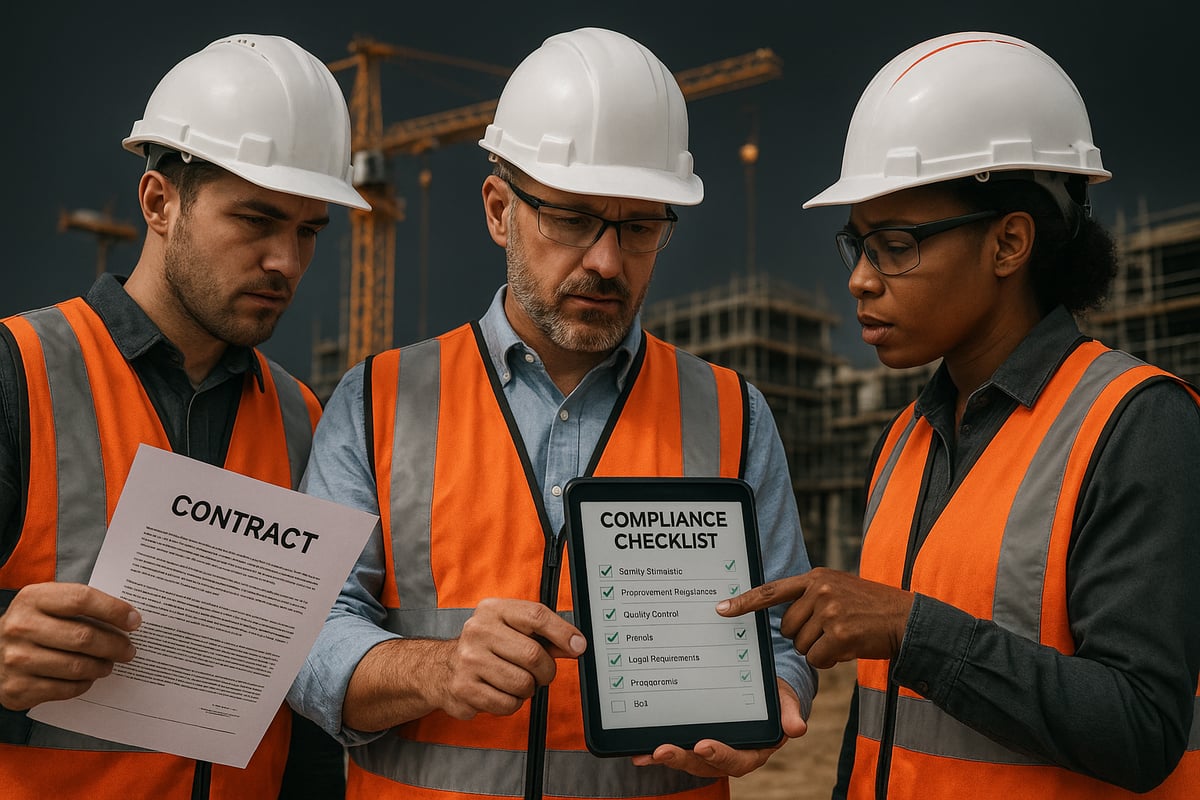
The legal and regulatory landscape for civil engineering contract management is evolving rapidly as we approach 2025. Staying ahead of these changes is vital for professionals, clients, and stakeholders who want to minimise risk and ensure project success. This section explores the most significant updates, from statutory reforms to sustainability obligations, providing essential guidance for anyone working with a civil engineering contract.
2025 Regulatory Updates and Industry Standards
Recent years have brought pivotal changes to the civil engineering contract environment. Amendments to the Building Safety Act, new public procurement standards, and a global trend toward transparency are reshaping contract frameworks. The adoption of NEC4 and other collaborative forms is becoming the norm, with countries like Singapore mandating NEC4 for public works.
For UK projects, compliance with updated safety legislation and procurement transparency is now non-negotiable. Contractors must keep pace with these shifts to avoid penalties and reputational risk. The move toward digital contract management is also accelerating, as seen in guidance such as Contract civil engineering insights, which provides practical advice for adapting to regulatory changes. Staying informed and agile is essential, as a failure to address new requirements can jeopardise a civil engineering contract from the outset.
Health, Safety, and Environmental Obligations
Health, safety, and environmental (HSE) compliance remains at the core of every civil engineering contract. Statutory requirements now demand stricter adherence to the Construction Design and Management (CDM) Regulations, making roles and responsibilities crystal clear. Enforcement agencies are increasing penalties for non-compliance, while clients expect robust HSE measures from the start.
Key obligations include:
- Comprehensive risk assessments
- Regular safety briefings
- Transparent reporting of incidents
- Environmental protection measures
The British Antarctic Survey’s recent contract approach is a strong example of integrating HSE into all stages of project delivery. As the sector evolves, embedding HSE into the civil engineering contract is no longer optional but a minimum requirement.
Dispute Resolution and Adjudication Provisions
Modern civil engineering contract forms prioritise dispute avoidance and swift resolution. Adjudication, mediation, and arbitration are now standard, with early warning systems encouraged by NEC and similar frameworks. In the UK, statutory adjudication supports rapid decision-making, helping projects stay on track.
Key trends in dispute resolution include:
- Early dispute avoidance protocols
- Defined adjudicator appointment processes
- Mediation as a preferred first step
The use of dedicated adjudicator contracts within the NEC suite demonstrates the importance of clear, enforceable dispute mechanisms. Incorporating these provisions in a civil engineering contract can significantly reduce costly delays and legal battles.
Insurance, Bonds, and Financial Security
A robust civil engineering contract must address financial security from multiple angles. Typical requirements include:
- Public liability insurance
- Professional indemnity cover
- Performance bonds and parent company guarantees
Financial due diligence is crucial, as is clear allocation of responsibility for insurances and bonds. These measures protect all parties and ensure that unforeseen events do not derail project delivery. For contractors and clients alike, a well-structured civil engineering contract is the cornerstone of financial stability.
Compliance with Sustainability and Social Value Legislation
Sustainability and social value are now embedded in every civil engineering contract, especially on public sector projects. Legislation requires contractors to report on carbon emissions, waste management, and social impact. Monitoring and transparent reporting are essential for demonstrating compliance.
Key elements include:
- Social value targets and KPIs
- Environmental performance monitoring
- Regular reporting to stakeholders
The London 2012 Games set a benchmark for contract-based social and environmental reporting. As expectations rise, integrating sustainability into the civil engineering contract is vital for winning work and maintaining a strong reputation.
Risk Allocation and Management in Civil Engineering Contracts
Navigating risk allocation is fundamental to the success of any civil engineering contract. Understanding how risks are identified, shared, and managed can make the difference between a project delivered on time and within budget or one beset by disputes and overruns.

Identifying and Allocating Project Risks
Every civil engineering contract involves a unique risk landscape. Common risks include design errors, unforeseen ground conditions, supply chain delays, and adverse weather. Identifying these early is crucial.
Risk allocation determines which party bears each risk. Typically, risks are assigned based on who can best manage or mitigate them. For instance, clients may retain responsibility for ground conditions, while contractors handle construction risks.
Modern contracts, such as NEC4, encourage joint risk registers and early warning systems. These tools foster collaboration and transparency. For examples of how risk allocation plays out in real projects, see Civil engineering and building projects.
A well-structured civil engineering contract ensures risks are clearly defined and responsibilities are understood, reducing the likelihood of costly disputes.
Contract Clauses for Managing Change and Uncertainty
Change is inevitable in civil engineering projects. Effective civil engineering contract clauses address variations, compensation events, and unforeseen circumstances.
Variation clauses outline how changes to scope or design are managed. Compensation event mechanisms, found in NEC contracts, provide a structured process for assessing the impact of changes on time and cost.
Force majeure provisions protect parties from events outside their control, such as extreme weather or supply shortages. With 2025’s volatile market conditions, inflation and material price fluctuation clauses are more important than ever.
By embedding these mechanisms, a civil engineering contract supports adaptability while safeguarding both parties’ interests.
Payment Mechanisms and Financial Risk
Proper payment structures are essential for cash flow and financial stability. A civil engineering contract typically specifies interim payments, milestone payments, and retention sums.
Prompt payment provisions help ensure contractors and subcontractors are paid on time. This minimises disputes and supports supply chain resilience.
Disagreements over valuations or delayed payments can disrupt projects. Clear civil engineering contract clauses for payment certification, dispute resolution, and escalation paths are vital to protect all parties from unnecessary financial risk.
Quality Assurance and Performance Monitoring
Quality assurance is integral to every civil engineering contract. Defects liability periods require contractors to rectify faults discovered after completion. Performance standards are set to ensure that works meet client expectations.
Independent certifiers or supervisors often monitor compliance, providing impartial assessments. Penalties for non-compliance incentivise high standards and timely rectification of issues.
A robust civil engineering contract will include explicit quality and performance requirements, helping to maintain project integrity from start to finish.
Lessons from Recent High-Profile Projects
Major infrastructure projects offer valuable lessons in risk management. Heathrow, Crossrail, and the London 2012 Olympics all used collaborative contract models to allocate risk efficiently.
Data shows that NEC contracts have enabled delivery of over £100bn in works globally, with notable reductions in disputes and overruns. These successes highlight the value of clear, fair, and collaborative civil engineering contract frameworks.
Studying such projects underscores the importance of early risk identification, transparent allocation, and continuous performance monitoring in every civil engineering contract.
Best Practices for Successful Contract Management in 2025
Achieving success with any civil engineering contract in 2025 depends on a blend of strategic planning, robust processes, and continual improvement. As the industry adapts to new demands, these best practices guide professionals through drafting, managing, and future-proofing their contracts.
Steps to Effective Contract Drafting and Negotiation
Effective drafting is the cornerstone of every civil engineering contract. Begin by engaging stakeholders early to capture all project requirements and expectations. Use clear, concise language to avoid ambiguity. Applying model forms, such as the NEC4 suite, ensures consistency and legal robustness.
Adopt a collaborative negotiation approach that seeks win-win outcomes rather than confrontation. Digital tools streamline drafting and review, reducing turnaround times. For guidance on preparing and managing NEC4 contracts, refer to the NEC4 Framework Contract guidance.
- Early stakeholder engagement
- Use of model forms and digital tools
- Focus on clarity and enforceability
- Collaborative negotiation strategies
A well-drafted civil engineering contract reduces disputes and sets the stage for project success.
Project Management and Communication Protocols
Clear protocols underpin successful civil engineering contract delivery. Establish a strong governance structure with defined roles and reporting lines. Develop a communication plan that specifies frequency, format, and channels for information sharing.
Use digital collaboration platforms to centralise documents and updates. Assign responsibilities for document control and version management. This ensures that everyone works from current information, reducing the risk of errors.
| Protocol | Description |
|---|---|
| Governance | Defined authority and responsibilities |
| Reporting Structure | Scheduled updates and escalation routes |
| Document Control | Versioning and access management |
| Communication Plan | Frequency and method of updates |
Consistent communication and robust management drive efficiency across every civil engineering contract.
Monitoring Compliance and Performance
Ongoing monitoring safeguards contract compliance and project quality. Schedule regular audits and reviews to check adherence to contract terms, health and safety standards, and sustainability targets.
Define key performance indicators (KPIs) aligned with client objectives. Use digital dashboards to track progress and flag issues early. Address non-compliance swiftly to maintain momentum and avoid escalation.
- Scheduled audits and compliance checks
- Real-time KPI tracking
- Rapid response to non-compliance
Effective monitoring ensures the civil engineering contract delivers its intended value.
Training, Professional Development, and Accreditation
Continuous training is vital for those managing a civil engineering contract. Stay updated on legal changes, digital tools, and best practices through structured learning programmes.
Accreditation schemes such as SafeContractor, ConstructionLine Gold, and SMAS demonstrate a commitment to high standards. Encourage a culture of improvement by supporting ongoing professional development.
- SafeContractor accreditation
- ConstructionLine Gold membership
- SMAS certification
- Continuous learning initiatives
Skilled and accredited teams are better equipped to manage the complexities of a modern civil engineering contract.
Future Trends and Innovations in Contract Management
Innovation is rapidly reshaping civil engineering contract management. Predictive analytics and artificial intelligence are driving smarter decision-making. Sustainability metrics are becoming integral to reporting and compliance.
The industry is moving towards fully digital contracts and even smart contracts, which automate performance monitoring and payments. For insights on smart contract validation, see this validation framework for smart contracts relevant to digital transformation in contract management.
- Predictive analytics for risk management
- Sustainability tracking embedded in contracts
- Smart contracts automating processes
Staying ahead of these trends positions any civil engineering contract for future success.
Frequently Asked Questions on Civil Engineering Contracts
Civil engineering contract queries are common in 2025, as the sector evolves rapidly. Here are the answers to the most pressing questions, helping professionals navigate the changing landscape with confidence.
What are the most common types of civil engineering contracts in 2025?
The main types are lump sum, measurement, cost-reimbursable, target cost, design and build, and framework or alliance contracts. Hybrid and collaborative forms now dominate major projects. The table below shows a quick comparison:
| Type | Main Feature | Typical Use |
|---|---|---|
| Lump Sum | Fixed price | Simple builds |
| Measurement | Paid by quantities measured | Complex civil works |
| Target Cost | Shared risk/reward | Large infrastructure |
| Design & Build | Single point responsibility | Fast-track projects |
| Framework/Alliance | Long-term, collaborative | Programmes of work |
How do collaborative contracts differ from traditional forms?
Collaborative contracts, such as NEC4 or FAC-1, focus on shared goals, risk sharing, and open communication. Traditional forms like JCT or ICE are more adversarial, with strict roles and risk allocation. Collaboration reduces disputes and improves project delivery.
What are the key legal risks to watch for in new contracts?
Key risks include unclear scope, ambiguous payment terms, and shifting regulatory requirements. Failing to address health, safety, or sustainability clauses can lead to penalties or project delays. Always ensure the civil engineering contract is clear and up to date.
How is sustainability embedded in modern contract clauses?
Sustainability is now a core requirement. Clauses such as NEC Option X29 mandate climate and net zero commitments. Clients expect clear environmental targets, carbon reporting, and social value delivery within every civil engineering contract.
What digital tools are available for contract management?
Platforms like NEC Digital offer online drafting, collaboration, and compliance checks. These tools reduce errors, track changes, and improve efficiency. Digital solutions are becoming standard for civil engineering contract administration.
How can disputes be avoided or resolved efficiently?
Early warning systems, mediation, and adjudication are built into modern contracts. NEC contracts, for example, prioritise dispute avoidance and rapid resolution. Most issues are resolved before formal proceedings are needed.
What should be included in a robust risk allocation plan?
Identify risks such as design, ground conditions, and supply chain issues. Allocate each risk to the party best able to manage it. Use risk registers and early warning notices, as recommended in every civil engineering contract.
What accreditations or certifications should contractors hold?
Common accreditations include:
- SafeContractor
- ConstructionLine Gold
- SMAS Worksafe
- ISO 9001 for quality management
Holding these demonstrates compliance and professionalism.
How are payments and cash flow protected in current contracts?
Modern contracts set out interim payments, retention, and prompt payment clauses. Clear schedules and dispute resolution help maintain cash flow. Digital platforms also aid in tracking and enforcing payment terms.
Where can I find further resources or professional advice?
For a deeper dive into the principles behind contract clauses and project delivery, see Engineering for construction fundamentals. Industry bodies, legal advisors, and professional training providers also offer guidance on civil engineering contract best practice.