
The world of site engineering is transforming at a remarkable pace in 2025, with both innovation and compliance shaping every project. For professionals in the field, staying ahead of industry shifts is now essential, not just beneficial.
This guide is designed to equip civil engineers, contractors, and project managers with the critical knowledge and tools needed for success in site engineering. You will discover up-to-date principles, a step-by-step workflow, the latest regulatory updates, sustainability strategies, technology integration, and robust risk management.
Ready to future-proof your projects? Explore these expert insights and set the standard for excellence in site engineering.
Understanding Modern Site Engineering Principles
The landscape of site engineering has experienced a profound transformation over recent years. As we approach 2025, professionals in the industry must adapt to new technologies, evolving standards, and changing project demands. Mastering modern site engineering means embracing continuous learning and collaboration, ensuring every project is delivered safely, efficiently, and to the highest standard.

Evolution of Site Engineering: 2020-2025
The period between 2020 and 2025 has seen site engineering shift dramatically. Digitalisation and automation have become central, with over 70% of UK civil engineering firms now relying on digital site planning tools (CITB, 2024). Manual surveying is rapidly being replaced by automated techniques using drones and laser scanners, increasing both speed and accuracy.
New materials and construction methods are also shaping the industry. Prefabrication and modular construction have become common, reducing waste and improving quality. The adoption of real-time data platforms has made it possible to monitor site engineering progress and resolve issues instantly.
This evolution has expanded the scope of site engineering, requiring professionals to stay current with innovative tools and methods. For a deeper dive into the latest on-site engineering services and their practical application, see the On-Site Engineering Services Overview.
Core Responsibilities of a Site Engineer
A site engineer’s responsibilities are broad and pivotal to project success. These include:
- Setting out and surveying the site to ensure precise construction alignment.
- Supervising works and coordinating with teams on the ground.
- Overseeing quality assurance and compliance with regulations.
- Managing health, safety, and environmental standards daily.
While the site engineer ensures technical accuracy and compliance, the project manager typically oversees the broader project delivery and client communication. This clear division of duties allows site engineering teams to focus on technical excellence and safety.
Essential Skills and Qualifications
To excel in site engineering, professionals must demonstrate a blend of technical and interpersonal skills. Key qualifications include:
| Certification/Skill | Importance |
|---|---|
| CSCS Card | Site access compliance |
| SMSTS | Site management safety |
| CAD/BIM | Digital design & review |
| GPS Proficiency | Modern surveying |
| Communication | Team collaboration |
| Leadership | Supervising teams |
Technical skills such as CAD, BIM, and GPS operation are vital for accuracy and efficiency. Equally, strong communication and leadership abilities help foster effective teamwork and problem-solving on site.
Key Stakeholders and Collaboration
Site engineering is inherently collaborative. Site engineers must work closely with architects, contractors, local authorities, and clients. Open communication ensures all project requirements are met and regulatory conditions are satisfied.
Clear documentation, including daily reports and technical drawings, is essential for transparency and accountability. Regular coordination meetings help resolve challenges and keep the project on track. Effective collaboration is the backbone of successful site engineering.
Real-World Example
A recent major UK infrastructure project highlights the value of collaborative site engineering. The team used digital planning tools, drone surveys, and real-time data sharing to coordinate between contractors, engineers, and authorities.
By integrating technology and maintaining open lines of communication, the project was completed ahead of schedule with minimal rework. This approach emphasised the crucial role of site engineering in delivering projects that meet modern standards and client expectations.
Step-by-Step Site Engineering Workflow for 2025
Modern site engineering projects demand a precise and structured workflow to ensure efficiency, compliance, and successful outcomes. In 2025, following a methodical approach is essential for managing complexity, integrating technology, and achieving project goals.
The following step-by-step site engineering workflow outlines the key stages, responsibilities, and innovations driving excellence in the industry.

Step 1: Pre-Construction Planning
Effective site engineering begins with thorough pre-construction planning. This phase includes site investigation, feasibility studies, and detailed environmental impact assessments. These activities allow project teams to identify risks, set realistic timelines, and allocate resources appropriately.
Inadequate planning is a leading cause of delays. In fact, 85% of project setbacks in the UK have been traced to insufficient pre-construction work, according to ICE in 2023. By prioritising this step, site engineering professionals can proactively address potential issues before construction begins.
During planning, teams gather and analyse data, consult with stakeholders, and develop a robust project roadmap. A comprehensive approach at this stage sets the tone for the entire site engineering process, ensuring that every subsequent step is founded on solid information.
Step 2: Surveying and Setting Out
Once planning is complete, surveying and setting out form the critical next phase in the site engineering workflow. Advanced technologies such as GPS, drones, and laser scanning have transformed this step, delivering greater accuracy and efficiency.
Site engineers use these tools to define boundaries, establish levels, and map out construction zones. Drone surveys, for example, can reduce traditional surveying times by up to 40 percent, freeing up resources for other tasks and improving overall project timelines.
The precision achieved during this stage is vital. Accurate data ensures that all site engineering activities are aligned with design specifications and regulatory requirements, minimising costly errors later in the build.
Step 3: Groundworks and Foundations
Groundworks and foundations are the backbone of any site engineering project. This step involves soil testing, ground stabilisation, and the implementation of foundation systems such as piling, raft, or strip footings. Compliance with BS 5930 and Eurocode 7 is non-negotiable for safety and quality.
Modern site engineering leverages innovative techniques and machinery to improve efficiency and sustainability. For those seeking further detail on best practice, the Ground Works and Site Preparation guide offers in-depth insights.
By investing in robust foundations, site engineers provide the structural integrity needed to support all subsequent construction activities. This phase also sets the stage for seamless integration of utilities and superstructure elements.
Step 4: Infrastructure and Utilities Installation
Infrastructure and utilities installation is where site engineering teams coordinate multiple systems, including drainage, ducting, and service networks. Careful planning and collaboration are essential to prevent clashes and ensure that all installations are future-proofed.
Site engineers must manage complex interfaces between different trades and anticipate requirements for technology upgrades or expansion. By leveraging digital coordination tools, teams can visualise utility layouts and identify potential conflicts before they impact the build.
This proactive approach not only reduces delays but also supports compliance with evolving standards, keeping the site engineering process adaptable and resilient.
Step 5: Structural Works and Superstructure
With foundations and utilities in place, the focus shifts to structural works and superstructure assembly. Material selection is a key consideration, balancing sustainability with performance requirements. The adoption of prefabrication and modular construction methods is accelerating, delivering faster builds and reduced waste.
Site engineering professionals oversee the assembly of structural frames, ensuring alignment with architectural and engineering designs. Quality control during this phase is paramount to guarantee the longevity and safety of the finished structure.
Prefabrication also enables tighter control over material usage and supports the industry's shift toward greener construction practices, making it a core element of the modern site engineering workflow.
Step 6: Quality Assurance and Compliance
Quality assurance and compliance are continuous priorities throughout the site engineering process, but this dedicated step ensures all works meet regulatory and client standards. On-site testing, routine inspections, and comprehensive documentation underpin a culture of accountability.
Digital QA systems now enable real-time tracking of compliance, providing instant feedback and transparent audit trails. Site engineers document every stage, from material deliveries to installation records, supporting smooth handovers and reducing the risk of disputes.
A strong focus on quality and compliance safeguards project outcomes, protecting reputations and enabling repeat business in a competitive market.
Step 7: Handover and Post-Completion Review
The final stage of the site engineering workflow is handover and post-completion review. This involves detailed inspections, snagging, and the collection of feedback from clients and stakeholders.
Site engineers ensure that all deliverables are complete, documentation is in order, and any outstanding issues are addressed promptly. Post-completion reviews provide valuable insights for continuous improvement, helping teams refine processes and deliver even better results on future projects.
A smooth handover is the hallmark of effective site engineering, reflecting thorough planning, diligent execution, and a commitment to excellence.
Summary Table: Site Engineering Workflow and Technologies
| Step | Key Activities | Technology/Tool Used |
|---|---|---|
| Pre-Construction Planning | Feasibility, risk, environmental studies | Planning software, GIS |
| Surveying and Setting Out | Boundary, level, mapping | GPS, drones, laser scanners |
| Groundworks and Foundations | Soil testing, stabilisation, foundations | Drilling rigs, testing kits |
| Infrastructure and Utilities Installation | Drainage, ducting, service coordination | BIM, clash detection tools |
| Structural Works and Superstructure | Material selection, assembly, QA | Prefab systems, QA software |
| Quality Assurance and Compliance | Testing, documentation, inspections | Digital QA systems |
| Handover and Post-Completion Review | Inspections, snagging, feedback | Handover apps, review tools |
This structured approach enables site engineering teams to deliver projects on time, within budget, and to the highest standards of quality and safety.
Navigating Regulatory Changes and Compliance in 2025
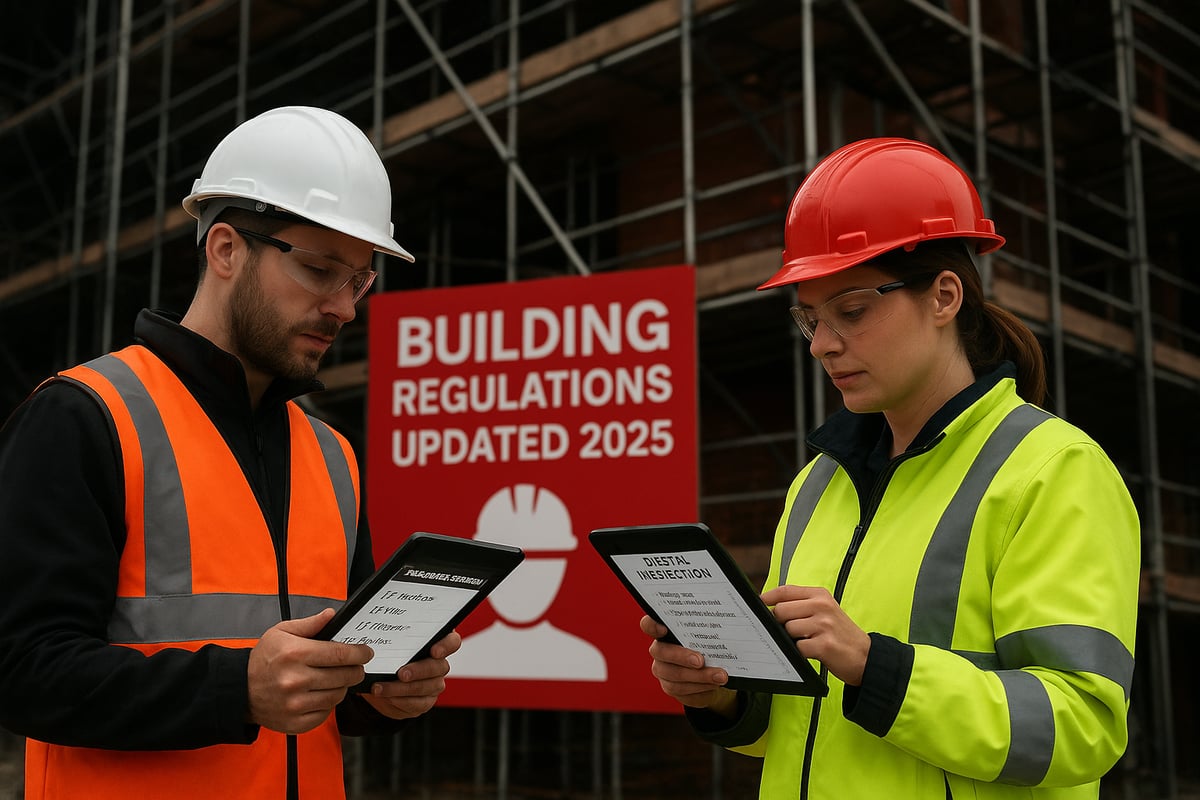
Staying ahead of regulatory changes is crucial for success in site engineering projects. The landscape in 2025 demands a proactive approach to compliance as legislation, environmental standards, and safety protocols continue to evolve. Effective navigation of these requirements is essential for minimising risk and ensuring project quality.
Latest UK Legislation and Standards
The UK regulatory landscape has shifted significantly for site engineering since the introduction of the Building Safety Act 2022. This act, alongside recent updates to the CDM Regulations, places greater responsibility on all dutyholders to ensure compliance throughout the project lifecycle. In fact, 60% of recent project non-compliance cases have been linked to outdated regulatory knowledge, highlighting the importance of staying informed.
For site engineering professionals, understanding key updates is vital. The Building Safety Act 2022 introduces stricter oversight, clearer dutyholder roles, and enhanced fire safety requirements. For further details on these changes, refer to the official Building Safety Act 2022 updates. Regular training and up-to-date documentation are essential to meet these evolving standards.
Environmental and Sustainability Regulations
Environmental compliance is now a core aspect of site engineering. BREEAM and LEED certifications are increasingly required, reflecting the industry’s commitment to sustainability. Net-zero carbon targets for construction sites are driving innovation in materials and methods.
Site engineering teams must incorporate sustainable strategies, such as efficient waste management and low-carbon construction techniques, into every stage of a project. For example, projects achieving BREEAM ‘Excellent’ often utilise innovative approaches to reduce emissions and manage resources responsibly. Meeting these regulations not only ensures compliance but also enhances project reputation.
Health and Safety Compliance
Health and safety remain central to site engineering in 2025. New standards for personal protective equipment (PPE) and updated site safety protocols have been introduced to address emerging risks. Digital safety management systems now support real-time monitoring and reporting, enabling more responsive hazard control.
Site engineering teams must ensure all workers are equipped with compliant PPE and trained in the latest protocols. Incorporating digital tools helps maintain safety records and provides instant access to critical information. Continuous improvement in safety practices is essential for regulatory compliance and workforce wellbeing.
Documentation and Auditing
Accurate documentation is fundamental for demonstrating compliance in site engineering projects. Record-keeping best practices include maintaining detailed logs of inspections, training, and safety checks. This documentation is critical when preparing for site audits or regulatory inspections.
To streamline auditing, site engineering professionals should adopt digital systems for storing and accessing records. Automated reminders for compliance tasks and audit preparation can help prevent oversights. Thorough documentation not only satisfies regulatory requirements but also supports continuous improvement and accountability.
Integrating Technology and Innovation on Site
The rapid pace of technological advancement is reshaping site engineering across the UK. Digital platforms, automation, and intelligent systems are now integral to efficient project delivery. Adopting these innovations is essential for any team seeking to stay competitive and compliant in modern construction.

Digital Tools for Site Engineering
Digital transformation is at the heart of effective site engineering. Building Information Modelling (BIM), Geographic Information Systems (GIS), and cloud-based project management tools streamline every phase, from design to delivery.
These platforms enable real-time collaboration among multidisciplinary teams. Engineers can access up-to-date project data, track changes, and manage resources efficiently. Integrated digital systems have been credited with boosting productivity and reducing errors on site.
For those seeking practical guidance on leveraging digital tools in construction, the resource on Construction Engineering Best Practices offers actionable insights relevant to site engineering teams.
Automation and Robotics
Automation is transforming site engineering by increasing precision and reducing manual effort. Autonomous machinery, such as self-driving excavators and robotic total stations, are now common on UK construction sites.
These systems perform repetitive or hazardous tasks with greater accuracy. For example, robotic surveyors can set out points faster and with less human intervention, supporting safer and more efficient workflows.
Embracing automation requires site engineering professionals to develop new technical skills. Training in programming and equipment operation is becoming a standard requirement.
Drones and Aerial Surveying
Drones are revolutionising site engineering by providing rapid, cost-effective aerial surveys. They capture high-resolution images and generate detailed 3D models, enabling better planning and progress tracking.
A notable example is a major UK highway project that used drones for real-time updates. This approach cut traditional surveying time by nearly 40 percent, enhancing safety and reducing site disruption.
Drones also support compliance by documenting conditions for quality assurance. Site engineering teams can monitor changes and identify issues before they escalate.
IoT and Smart Sensors
The Internet of Things (IoT) is rapidly becoming a cornerstone of site engineering. Smart sensors monitor ground movement, track environmental data, and report equipment status in real time.
These devices provide site engineering teams with actionable insights. Predictive maintenance reduces downtime, while automated safety alerts help prevent accidents.
Integrating IoT into site engineering operations supports proactive risk management. It also enables more accurate reporting and compliance with regulatory standards.
Overcoming Implementation Challenges
While technology brings efficiency, it also introduces challenges for site engineering. Staff must be trained and upskilled to operate new digital systems and automated machinery.
Cybersecurity is another major concern. Protecting sensitive project data and ensuring the integrity of connected devices is crucial. Establishing clear protocols and regular audits can help mitigate risks.
Ultimately, a successful site engineering team embraces innovation, invests in people, and creates a culture of continuous improvement.
Sustainable Site Engineering Practices for the Future
Sustainable site engineering is now at the heart of every successful construction project. Adopting forward-thinking practices not only protects the environment but also delivers long-term value and compliance. Let’s explore the most impactful approaches shaping the future of site engineering.
Low-Carbon Construction Techniques
Low-carbon construction is essential for reducing the environmental footprint of site engineering. Leading projects increasingly specify recycled aggregates, low-carbon concrete, and responsibly sourced timber.
Modular and offsite construction methods are gaining traction, enabling efficient assembly with less waste and fewer vehicle movements. These innovations not only cut emissions but also speed up delivery.
For a deeper understanding of how these methods fit within the broader principles of civil and site engineering, see the Civil Engineering Fundamentals resource.
Site Waste Management
Effective site waste management is central to sustainable site engineering. Teams focus on reducing, reusing, and recycling materials at every stage.
For example, a recent infrastructure project in the UK achieved 95% waste diversion from landfill by implementing on-site segregation and partnering with local recycling facilities.
Clear waste management plans, regular audits, and staff training are vital to achieving these ambitious targets.
Water and Energy Efficiency
Water and energy efficiency are now standard objectives within site engineering. Rainwater harvesting systems and sustainable drainage systems (SuDS) help manage stormwater and reduce reliance on mains supply.
Sites are increasingly integrating renewable energy sources, such as solar panels for temporary power, supporting net-zero carbon goals. These measures lower operating costs and demonstrate commitment to environmental stewardship.
Biodiversity and Ecological Considerations
Enhancing biodiversity is a core responsibility in modern site engineering. Projects now create wildlife corridors, install bird and bat boxes, and protect existing trees wherever possible.
Green spaces and planted areas are thoughtfully incorporated, supporting local ecosystems and improving site aesthetics. These efforts align with the UK’s Biodiversity Net Gain requirements, ensuring positive outcomes for nature as well as people.
Measuring and Reporting Sustainability
Accurate measurement and transparent reporting are critical to credible sustainable site engineering. Teams use sustainability KPIs to track material usage, waste diversion rates, carbon emissions, and water consumption.
Reporting frameworks, such as BREEAM and LEED, provide recognised benchmarks and facilitate continuous improvement. Regular reviews and stakeholder engagement ensure that sustainability remains a priority throughout the project lifecycle.
Risk Management and Quality Assurance on Site
Managing risk and ensuring quality are at the heart of successful site engineering. With evolving regulations and new technologies, today’s professionals must adapt to safeguard projects, people, and reputations. Let’s explore how to identify risks, mitigate them proactively, maintain quality, and foster continuous improvement in site engineering.
Identifying and Assessing Risks
Effective site engineering begins with a thorough risk assessment. Common risks include unpredictable ground conditions, adverse weather, and supply chain disruptions. Each risk must be evaluated for its likelihood and potential impact on the project.
Recent regulatory changes have shifted responsibilities. Understanding the new dutyholder roles and responsibilities is essential for site engineering teams, as accountability is now more clearly defined.
Tools such as RAMS (Risk Assessment and Method Statements) and HAZOP (Hazard and Operability Study) help structure the process. By identifying hazards early, teams can prevent costly delays and safety incidents.
Proactive Risk Mitigation Strategies
Once risks are identified, proactive mitigation is critical for site engineering success. This includes contingency planning, scenario analysis, and regular communication with all stakeholders.
For example, on UK infrastructure projects in flood-prone areas, early-stage flood modelling and drainage design can dramatically reduce the risk of costly overruns. Teams also develop alternative supply chain routes to address potential material shortages.
Key proactive strategies:
- Establish clear escalation processes
- Regularly update risk registers
- Integrate lessons learned from past projects
By embedding these strategies, site engineering teams can respond quickly to unforeseen challenges, keeping projects on track and within budget.
Ensuring Quality Throughout the Project Lifecycle
Quality assurance is a continuous process in site engineering, from material selection to final handover. Digital quality management systems now enable real-time monitoring, automated reporting, and streamlined inspections.
Regulatory oversight is also increasing, with the Building Safety Regulator’s new powers making compliance checks more robust.
Here's a table summarising key quality control checkpoints:
| Stage | Checkpoint | Method |
|---|---|---|
| Groundworks | Soil compaction | Field testing |
| Superstructure | Material conformity | Lab analysis |
| MEP Installation | System commissioning | Digital logs |
| Pre-handover | Snagging and inspection | Site walkdown |
This structured approach ensures site engineering teams meet project standards and regulatory requirements at every stage.
Continuous Improvement and Lessons Learned
The site engineering journey does not end at project completion. Post-project reviews help teams capture valuable insights and drive continuous improvement.
Key elements include:
- Debriefing sessions with all stakeholders
- Documentation of successes and failures
- Sharing knowledge across future projects
Building a culture of safety, quality, and learning ensures that each site engineering project benefits from collective experience. This commitment to improvement not only reduces risk but also elevates standards across the industry.