
The world of site work is evolving at a pace unseen before, especially as we approach 2025. Staying ahead requires not just experience, but also up-to-date knowledge and a willingness to adapt.
This guide provides essential insights, actionable steps, and a look at the trends that are shaping the future of site work. Whether you are a contractor, engineer, or project manager, you will find practical strategies to optimise your operations.
Here is what you can expect to learn:
- Effective planning and early assessment
- Navigating new regulations and compliance
- Leveraging technology and digital tools
- Embracing sustainability and environmental best practices
- Prioritising safety and risk management
- Implementing proven methods for successful site work
By building awareness of new standards, sparking your interest in innovation, and inspiring action, this guide will help you thrive in 2025 and beyond.
Understanding Site Work: Foundations and Scope
Site work is fundamental to every construction project, setting the stage for everything that follows. In 2025, the definition and scope of site work are evolving rapidly in response to technological progress and sustainability demands.

Defining Site Work in 2025
Site work in 2025 encompasses all activities required to prepare and develop land for construction. This includes everything from initial ground preparation to the final touches of landscaping. The scope has expanded to integrate smart infrastructure, such as embedded sensors and data-enabled utilities, making site work more connected and intelligent.
Site work is vital across civil, commercial, and public sector projects. While residential site work often focuses on smaller-scale excavation and landscaping, commercial and public sector projects require complex coordination for utilities, drainage, and large-scale ground stabilisation. For example, typical site work activities now include excavation, grading, soil remediation, drainage installation, and surfacing.
A key foundation is Groundworks and Excavation Services, which involve earthmoving, trenching, and preparing sub-bases for structures. These activities ensure stability, manage water flow, and provide a platform for efficient project delivery. As digital tools become standard, site work is increasingly linked with geospatial mapping and real-time monitoring, supporting both compliance and operational precision.
Key Stakeholders and Roles
Site work success depends on the effective collaboration of multiple stakeholders. Core participants include:
- Civil engineers, who design and oversee technical aspects.
- Contractors, who manage on-site execution and logistics.
- Local authorities, responsible for regulations and permitting.
- Clients, providing vision, funding, and project goals.
Each stakeholder brings specific responsibilities. Civil engineers develop plans aligned with site work requirements, while contractors coordinate teams and machinery. Local authorities enforce standards and monitor progress. Clients make strategic decisions and ensure objectives are met.
The rise of digitalisation and sustainability has transformed these roles. For example, site managers now use digital dashboards to track real-time data, and environmental specialists ensure site work meets green standards. On major UK infrastructure projects, teams often include dedicated BIM coordinators, data analysts, and sustainability officers to support smarter, safer, and more sustainable site work.
Site Work in the Project Lifecycle
Site work forms the essential early phase of any construction project. It lays the groundwork for foundations, structural elements, and future stages. Effective site work influences project timelines, cost control, and final quality.
Early-stage site work, such as precise grading and robust drainage solutions, can prevent delays and costly rework later. For instance, a well-executed ground investigation identifies risks, reducing the chance of surprises during construction. In commercial developments, advanced site work coordination can shorten schedules and lower expenses by streamlining access for follow-on trades.
Real-world case studies from UK projects show that investing in thorough site work planning and execution leads to fewer disruptions and long-term performance gains. As site work integrates more technology and sustainability practices, its impact on the entire project lifecycle becomes even more significant.
Step-by-Step Site Work Process for 2025
The site work process in 2025 is more structured, data-driven, and collaborative than ever. Each phase, from early surveys to final landscaping, is shaped by evolving technology, regulations, and sustainability goals. By following a clear sequence, teams can ensure site work meets the highest standards, minimises risks, and delivers lasting value.
Pre-Construction Planning and Site Assessment
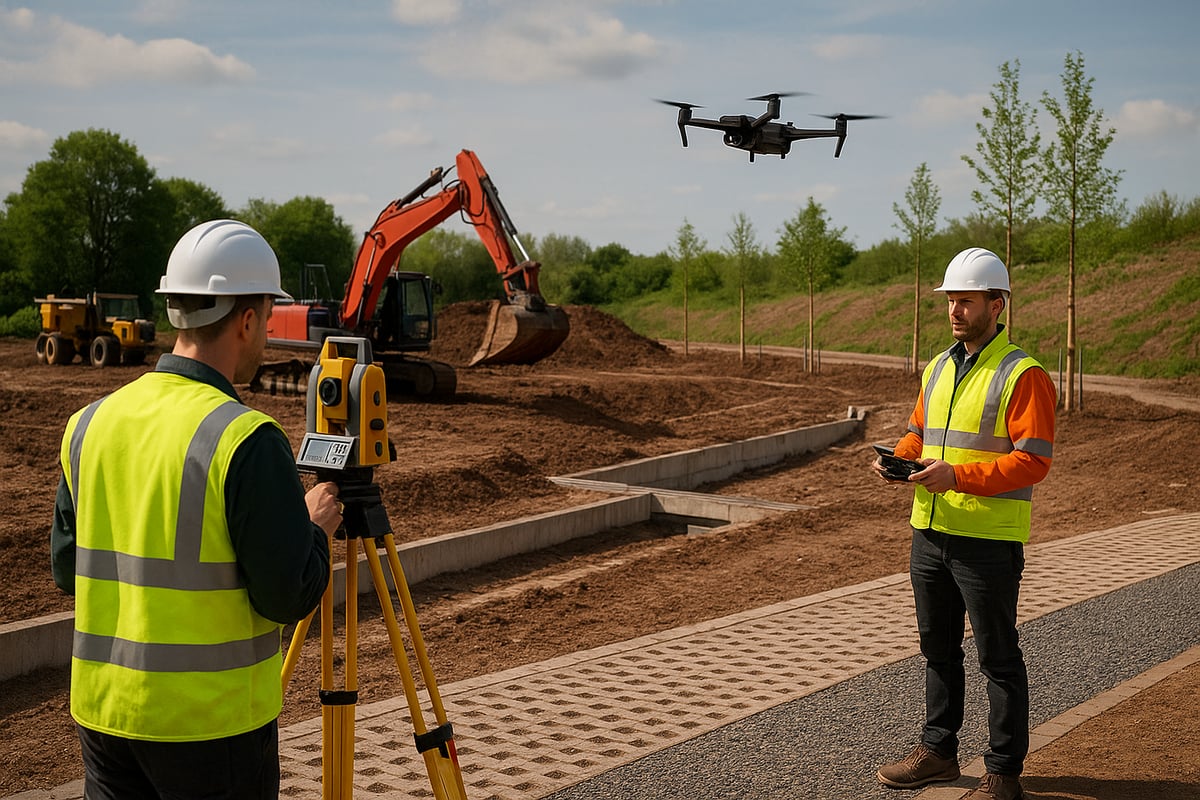
Every successful site work project begins with thorough pre-construction planning. The process starts with detailed site surveys, using both traditional methods and innovative digital mapping. Drone technology provides high-resolution aerial images, allowing teams to assess ground conditions with precision.
Geotechnical investigations are essential. These studies identify soil properties, groundwater levels, and potential contaminants. Early risk identification and mitigation strategies help prevent costly surprises later. For example, unstable ground can be stabilised before construction begins, reducing delays.
Effective site work also demands proactive stakeholder engagement. Early communication with local authorities, utility providers, and nearby residents helps address concerns and streamline approvals. Digital collaboration platforms make it easier to share site data and updates in real time.
A well-executed planning phase lays the foundation for efficient site work and supports compliance, safety, and project success.
Regulatory Compliance and Permits
Site work in the UK is governed by a complex regulatory landscape. For 2025, new standards emphasise environmental protection and enhanced safety. Securing the correct permits is a critical first step.
Essential permits include:
- Planning permission from local councils
- Environmental consents for protected habitats and waterways
- Utilities agreements for water, electricity, and gas connections
Non-compliance can result in project shutdowns, fines, or reputational damage. High-profile cases have shown that overlooking permits can delay site work by months. Digital permit management systems are now widely used, helping teams track applications, renewals, and compliance deadlines.
Staying up to date with evolving regulations ensures site work progresses smoothly and avoids costly legal issues. Early engagement with regulators and digital record keeping are best practices for 2025.
Groundworks and Excavation
Groundworks form the backbone of any site work project. Modern techniques have transformed excavation, making it safer and more efficient. Machinery such as GPS-guided excavators and remote-controlled compactors are now commonplace.
Soil remediation is a key focus, especially on brownfield sites. Before excavation, teams check for contamination and treat affected areas. Ground stabilisation methods, like soil nailing or vibro compaction, help create a secure base for future structures.
Building Information Modelling (BIM) plays a pivotal role in groundworks. By integrating site data into 3D models, teams can visualise underground utilities, plan excavation routes, and avoid costly clashes. Recent UK projects have shown that BIM reduces errors and rework, saving both time and money.
Drainage, Utilities, and Services Installation
Efficient drainage and utility installation are vital parts of site work. Sustainable drainage systems (SuDS) are now the norm, managing stormwater and improving site resilience. These systems reduce flood risk and enhance water quality.
Smart utility installation uses sensors and digital mapping to locate and monitor underground services. Close coordination with local authorities and service providers minimises disruptions and ensures compliance.
For a deeper look at professional drainage installation and management, consider exploring Drainage Services for Site Work. Leveraging expert services ensures that drainage and utilities are integrated seamlessly, supporting long-term site performance.
Surfacing, Landscaping, and Finishing
The final phase of site work focuses on surfacing, landscaping, and finishing touches. Modern surfacing options include tarmac, reinforced concrete, and permeable paving, each suited to different project needs. Permeable surfaces are especially valuable for managing rainwater and reducing runoff.
Landscaping is not just about aesthetics. It plays a vital role in erosion control, biodiversity, and site integration with the surrounding environment. Techniques like hydroseeding and the installation of living roofs or rain gardens support sustainability goals.
Attention to detail in this final stage ensures the site is safe, attractive, and ready for use. Incorporating green infrastructure elements not only meets regulatory requirements but also enhances long-term site value.
Emerging Technologies and Innovations in Site Work
The landscape of site work is being reshaped by a wave of transformative technologies. In 2025, digital integration, automation, sustainable materials, and advanced data management are revolutionising how projects are planned, executed, and delivered. Understanding these innovations is essential for any professional seeking to optimise site work outcomes.

Digital Transformation: BIM, GIS, and Drones
Digital transformation is at the heart of modern site work. Building Information Modelling (BIM) and Geographic Information Systems (GIS) are now standard tools for planning and managing complex projects.
BIM enables teams to visualise every stage of site work, from excavation to finishing, reducing errors and facilitating collaboration. GIS tools overlay geospatial data, supporting accurate site assessments and infrastructure planning.
Drones are increasingly deployed for aerial surveys, progress monitoring, and safety checks. These devices provide real-time imagery and 3D mapping, improving decision-making and reducing time spent on manual inspections.
Efficiency gains are significant. Recent studies indicate that integrating digital tools can cut planning time by up to 30 percent and reduce costly rework. For a detailed perspective on the impact of AI and technology on construction, see AI and technology shaping UK construction in 2025.
Automation and Smart Machinery
Automation is redefining site work machinery in 2025. Autonomous excavators, graders, and compactors are now operational on leading UK projects, delivering precision and consistency.
Smart equipment is equipped with sensors, GPS, and remote monitoring systems. Operators can oversee progress from central control rooms, reducing on-site risks and labour requirements.
Predictive maintenance, powered by data analytics, minimises downtime. Machines alert teams to potential faults before breakdowns occur, ensuring continuous site work flow.
Benefits of smart machinery include:
- Reduced fuel consumption
- Fewer accidents
- Enhanced productivity
Such advancements are making site work safer, more reliable, and cost-effective.
Sustainable Materials and Construction Methods
Sustainability is a core driver in site work innovation. The adoption of recycled aggregates, low-carbon concrete, and eco-friendly composites is growing rapidly.
Modern site work also embraces modular and off-site construction. Prefabricated components reduce waste, speed up installation, and lower carbon emissions.
Consider this comparison:
| Method | Waste Reduction | Carbon Savings |
|---|---|---|
| Traditional | Low | Low |
| Modular/Off-site | High | High |
UK projects using sustainable materials report up to 40 percent less landfill waste and substantial reductions in embodied carbon. These methods are not only environmentally responsible but also improve the economic performance of site work.
Data-Driven Site Management
Data is now central to effective site work management. IoT sensors monitor ground conditions, equipment health, and environmental factors in real time.
Data analytics platforms consolidate this information, enabling faster, evidence-based decisions. Site work teams can identify risks early, optimise resource allocation, and track progress with precision.
Case studies show that data-driven site management can reduce project delays and improve safety outcomes. For example, automated alerts for ground movement or equipment faults allow immediate responses, minimising hazards.
In 2025, leveraging data is essential for delivering site work that meets regulatory, safety, and sustainability standards.
Sustainability and Environmental Best Practices
Sustainability is now a cornerstone of modern site work, with clients and regulators demanding higher standards for environmental protection. From initial planning to project completion, integrating sustainable practices is essential for compliance, reputation, and long-term value. In this section, we explore the most effective strategies for responsible site work, focusing on assessments, water management, waste reduction, and green certification.
Environmental Impact Assessments and Mitigation
Every successful site work project in 2025 begins with a thorough Environmental Impact Assessment (EIA). These assessments are legally required in the UK for most large-scale developments, ensuring that biodiversity, air quality, and local habitats are protected.
Mitigation strategies are tailored to each site. Common approaches include:
- Creating buffer zones for wildlife habitats
- Installing noise barriers to protect nearby communities
- Using dust suppression systems to reduce airborne particles
Recent projects demonstrate that proactive mitigation not only avoids legal penalties but also speeds up approvals. Effective site work planning considers the EIA findings at every stage, embedding environmental responsibility from the outset.
Sustainable Drainage and Water Management
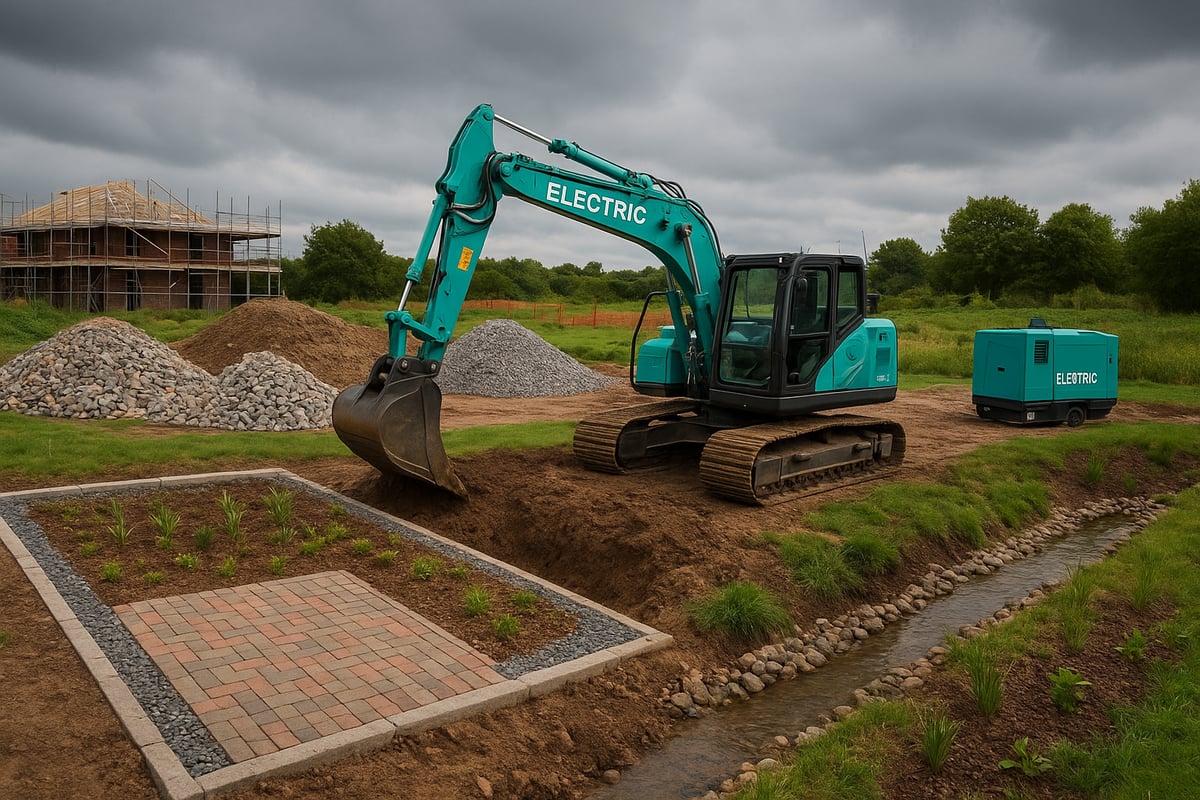
Flood prevention and water quality are at the heart of sustainable site work. Sustainable Drainage Systems (SuDS) manage surface water by mimicking natural processes, reducing runoff and preventing pollution.
Key SuDS features include:
- Permeable paving for car parks and walkways
- Swales and rain gardens to filter and slow water flow
- Attenuation tanks for temporary water storage
Rainwater harvesting and greywater recycling are increasingly specified in site work to meet regulatory benchmarks. These systems lower mains water use and support compliance with UK standards, making them a smart choice for forward-thinking projects.
Waste Management and Material Reuse
Effective waste management is integral to responsible site work. Segregating waste on-site enables recycling of materials such as concrete, timber, and metals. Circular economy principles encourage reusing materials wherever possible, cutting both costs and environmental impact.
On-site crushing and screening equipment allow aggregates to be reused in new foundations or landscaping. This reduces the need for landfill and supports the UK’s ambition to divert over 90% of construction waste from disposal. By planning for material reuse from the outset, site work teams deliver projects that are both efficient and sustainable.
Carbon Reduction and Green Site Certification
Achieving green certification is a clear indicator of excellence in site work. Standards like BREEAM and CEEQUAL recognise projects that reduce carbon emissions and prioritise sustainable methods.
Key steps include:
- Using electric or hybrid plant to cut diesel use
- Sourcing renewable energy for site offices
- Optimising logistics to minimise transport emissions
Green-certified site work is becoming the norm, with clients seeking measurable outcomes. For practical guidance, Civil Engineering Best Practices offers valuable insights into sustainable construction methods and certification pathways.
Health, Safety, and Risk Management in 2025
Health, safety, and risk management are at the core of successful site work in 2025. The construction landscape is shifting, with new regulations, digital tools, and wellbeing initiatives shaping daily operations. Staying current is essential for every professional involved in site work.
Evolving Health and Safety Standards
2025 brings significant updates to UK health and safety regulations for site work. The introduction of the Product Regulation and Metrology Act 2025 has set stricter standards for equipment, materials, and processes. Digital safety management tools and mobile apps now support real-time compliance tracking, incident reporting, and hazard identification.
Mandatory training requirements have expanded, reflecting the sector's demand for higher skills and awareness. The UK government’s £600 million investment in construction skills underscores the importance of continuous learning for everyone involved in site work. As a result, competency checks and digital certification are now standard across all projects.
Site Hazards and Preventative Measures
Site work presents a unique set of hazards that require proactive management. Common risks include:
- Working at height
- Operating heavy machinery
- Ground instability and excavation collapse
Innovations in personal protective equipment (PPE) and safety technology are reducing incidents. Smart helmets, sensor-embedded vests, and automated barrier systems help detect and prevent accidents. Despite these advances, recent statistics show that slips, trips, and falls remain the leading causes of non-fatal injuries in site work, highlighting the need for ongoing vigilance and robust safety protocols.
Mental Health and Wellbeing on Site
The focus on mental health in construction has never been stronger. Site work teams now benefit from structured support systems, mental health first aiders, and dedicated training. Industry initiatives promote open conversations and early intervention, aiming to break down stigma.
Evidence shows that wellbeing programmes are delivering real results, with reported improvements in worker satisfaction and reductions in absenteeism. By fostering a supportive culture, site work leaders are not only meeting regulatory expectations but also enhancing productivity and morale.
Emergency Preparedness and Response
Effective emergency planning is a non-negotiable part of site work in 2025. Each site maintains a tailored emergency response plan, including regular drills and clear communication protocols. Digital alert systems enable rapid notification to all personnel in the event of an incident.
Lessons from recent projects demonstrate the value of integrating technology with traditional emergency measures. Teams that rehearse and update their response plans experience fewer delays and minimise risk, ensuring that site work can proceed safely even in challenging situations.
Best Practices and Future Trends in Site Work
The landscape of site work is evolving rapidly, demanding a forward-thinking approach to remain competitive and compliant. Embracing best practices and anticipating future trends is vital for delivering successful, sustainable, and efficient projects. Let us explore the key areas shaping the future of site work in the UK.
Collaborative Project Delivery and Communication
Integrated project teams and digital collaboration platforms are transforming the way site work is managed. Clear communication between contractors, engineers, and clients minimises misunderstandings and helps resolve issues quickly. Cloud-based tools now enable real-time document sharing, virtual meetings, and instant updates across all project phases.
This collaborative approach reduces delays, improves planning accuracy, and strengthens accountability. For site work, early engagement of all stakeholders ensures that risks are identified and mitigated before construction begins. Projects benefit from shared knowledge, leading to higher quality outcomes and smoother delivery.
- Real-time communication increases transparency
- Shared data supports faster decisions
- Integrated teams foster innovation
By prioritising collaboration, site work teams can adapt more effectively to changing project demands.
Quality Assurance and Continuous Improvement
Consistent quality assurance is essential for successful site work. Modern quality management systems use digital checklists, automated inspections, and detailed reporting to track progress at every stage. These tools help identify defects early, reducing costly rework and project delays.
Continuous improvement is embedded through regular feedback and lessons learned sessions. Site work teams review performance data to refine processes and set new benchmarks for excellence. This proactive approach supports compliance with UK standards and elevates project outcomes.
Utilising robust QA systems means site work is completed safely, efficiently, and to the highest standards. The adoption of digital technologies further enhances transparency and traceability across all activities.
Skills Development and Workforce Trends
The future of site work relies on a skilled and adaptable workforce. Digital literacy, sustainability expertise, and data analysis are now as critical as traditional construction skills. Employers are investing in training programmes, apprenticeships, and upskilling initiatives to bridge the gap.
In 2025, demand for roles such as BIM coordinators, sustainability officers, and data managers continues to grow. Site work teams benefit from diverse skill sets, enabling them to integrate new technologies and deliver complex projects effectively.
- Ongoing training boosts workforce competency
- Apprenticeships address skills shortages
- Digital skills drive innovation in site work
By nurturing talent and promoting lifelong learning, the industry ensures site work remains future-ready.
Anticipated Regulatory and Market Changes
Regulation is a driving force in the evolution of site work. The UK government’s net zero targets are influencing project requirements, with stricter environmental policies and building codes on the horizon. Clients increasingly demand evidence of sustainable practices and digital compliance.
Staying ahead means regularly reviewing industry guidance and updating procedures to meet new standards. Site work teams should anticipate shifts in client expectations, such as the need for transparent carbon reporting and adoption of smart infrastructure.
Leading firms are already preparing by investing in compliance training and digital permit management systems. This proactive stance protects reputation and secures future project opportunities.
Innovations on the Horizon
Emerging technologies are set to revolutionise site work. Artificial intelligence, robotics, and advanced materials offer the potential for greater productivity, safety, and sustainability. Digital twins, for example, are transforming how projects are designed, monitored, and maintained, enabling real-time data integration and predictive insights.
To learn more about how digital twins are shaping UK infrastructure, see Digital twins transforming UK infrastructure management.
Site work professionals should keep pace with these innovations by engaging with industry forums, attending training, and collaborating with technology partners. Staying informed ensures teams can implement cutting-edge solutions and maintain a competitive edge.