
The world of construction engineering is undergoing a remarkable transformation, reshaping how we design and deliver the infrastructure that supports daily life. As innovation accelerates, understanding the latest advances has never been more crucial. This guide offers a thorough look at construction engineering for 2025, revealing essential trends, new technologies, and strategies for success. Discover how digital tools, sustainability initiatives, and evolving skill sets are redefining the industry. Ready to future-proof your career and projects? Use this comprehensive resource to navigate the changing landscape with confidence.
Understanding Construction Engineering: Roles and Scope
Construction engineering plays a pivotal role in shaping the built environment. This discipline merges technical expertise with practical management to deliver complex infrastructure and building projects. As demand for resilient and efficient structures grows, understanding the breadth of construction engineering is more important than ever.

The Core Functions of Construction Engineering
Construction engineering is often confused with civil engineering, yet each has a distinct focus. While civil engineering concentrates on design and theory, construction engineering is grounded in the practical delivery of projects. Professionals in this field oversee the entire project lifecycle: from initial design and planning, through construction, to ongoing operations and maintenance.
Key responsibilities include coordinating multidisciplinary teams, managing budgets, and ensuring compliance with strict safety and regulatory standards. Typical projects span a wide range, including roadways, bridges, tunnels, airports, commercial buildings, and utility networks.
A construction engineering role demands the integration of technical knowledge with business acumen and management capability. Project success relies on meticulous risk analysis, accurate costing, and effective scheduling. These core functions ensure projects are delivered safely, on time, and within budget.
Work Activities and Career Pathways
Entry into construction engineering usually begins with positions such as project engineer or assistant project engineer. Daily tasks include preparing purchasing requisitions, processing change orders, managing budgets, and documenting meetings. These roles offer hands-on experience in project delivery and stakeholder coordination.
Professional licensure, such as the Professional Engineer (PE) or Engineer in Training/Fundamentals of Engineering (EIT/FE) credentials, is essential for career advancement. As engineers progress, they may specialise in design-focused roles, which emphasise technical detail, or management-focused positions, prioritising leadership and project oversight.
The diversity of pathways in construction engineering is reflected in the range of projects and responsibilities. For a closer look at the day-to-day realities and decision-making processes, see Engineering for Building Projects, which explores the varied roles and workflows within the sector.
Essential Skills and Abilities
Excelling in construction engineering requires a blend of technical and interpersonal skills. Problem-solving and critical thinking are vital for navigating the complex challenges that arise on-site. Effective project and people management ensure teams remain productive and projects stay on track.
Strong communication and collaboration skills are necessary for working within multidisciplinary teams and liaising with stakeholders. Analytical and mathematical proficiency underpin accurate decision-making and resource allocation.
A real-world example is the involvement of construction engineers in major UK infrastructure projects, such as large-scale rail or airport developments. These projects highlight how construction engineering professionals apply their diverse skill set to deliver safe, sustainable, and innovative outcomes.
Technological Innovations Transforming Construction Engineering
The pace of technological change in construction engineering is accelerating, fundamentally reshaping how projects are conceived, delivered, and maintained. Digital tools, smart materials, and advanced analytics are now central to the profession, enhancing both efficiency and quality. In 2025, staying at the forefront of these innovations is essential for anyone involved in construction engineering.

Digitalisation and Smart Construction
Digital transformation is redefining construction engineering across the UK and beyond. Building Information Modelling (BIM) is now a staple, providing a collaborative digital environment where architects, engineers, and contractors work from a unified set of data. This approach reduces errors, streamlines communication, and accelerates project timelines.
Digital twins are another breakthrough, creating virtual replicas of assets for real-time monitoring and predictive maintenance. These models allow teams to anticipate issues before they arise, reducing downtime and extending the lifespan of critical infrastructure.
Drones and robotics have brought a new level of precision to surveying, site inspections, and automated construction tasks. Drones capture high-resolution aerial imagery, supporting accurate mapping and progress tracking. Robotics are increasingly used for repetitive or hazardous activities, improving safety and productivity.
IoT devices are becoming standard on construction sites, gathering data on equipment usage, environmental conditions, and worker safety. This data-driven approach enables more informed decision-making and proactive risk management in construction engineering.
Projects such as major UK transport hubs now routinely combine BIM, digital twins, and IoT to deliver complex, high-value infrastructure on schedule and within budget.
Advanced Materials and Methods
Innovative materials and construction methods are transforming the landscape of construction engineering. Prefabrication and modular construction techniques allow for building components to be manufactured offsite, reducing waste and speeding up assembly. This method not only improves quality control but also minimises disruption at the project site.
3D printing is being used to produce customised building elements and even entire structures. This reduces lead times and allows for complex geometries that would be difficult to achieve with traditional methods.
High-performance materials, such as self-healing concrete and advanced composites, are gaining traction. These materials extend the lifespan of structures and lower maintenance costs, which is a major advantage for public infrastructure.
Offsite construction techniques offer several benefits:
| Method | Benefits | Example Use Cases |
|---|---|---|
| Prefabrication | Faster build, less waste | Schools, hospitals |
| Modular | Flexibility, scalability | Housing, offices |
| 3D Printing | Customisation, efficiency | Bridges, bespoke components |
As these methods become mainstream, construction engineering professionals will need to stay informed about material performance and sustainability.
Data Analytics and Artificial Intelligence
Data analytics and artificial intelligence (AI) are revolutionising construction engineering, enabling smarter and more proactive project management. Predictive analytics is now used for cost estimation, scheduling, and risk assessment, helping engineers make data-driven decisions that improve outcomes.
AI-powered project management tools automate resource allocation, identify workflow bottlenecks, and optimise schedules. These systems analyse vast amounts of project data, providing actionable insights that were previously out of reach.
The adoption of AI is growing rapidly among UK construction firms, with industry reports highlighting increased efficiency and reduced costs. For a deeper dive into these trends, explore how AI and robotics are transforming construction.
As construction engineering becomes more data-centric, professionals must develop analytical skills to interpret insights and drive innovation.
Cybersecurity and Data Protection
With the increasing reliance on digital platforms and connected devices, cybersecurity has become a critical concern in construction engineering. Sensitive project data, including designs, schedules, and financial information, must be safeguarded against cyber threats.
Best practices include using encrypted communication channels, implementing strong access controls, and conducting regular security audits. Teams are also investing in cybersecurity training to ensure all staff can recognise and respond to potential risks.
The protection of digital assets is not just a technical issue but a vital part of maintaining client trust and regulatory compliance. As technology adoption grows, so too does the need for robust data protection strategies in construction engineering.
Sustainability and Green Construction: 2025 Priorities
The drive for sustainability is reshaping construction engineering across the UK and Europe. As environmental concerns intensify, the industry is under increasing pressure to deliver greener, more resilient infrastructure. Navigating these priorities requires a comprehensive understanding of evolving regulations, innovative design solutions, circular economy practices, and community engagement.
Environmental Regulations and Industry Standards
Construction engineering must comply with a complex web of environmental regulations in 2025. In the UK, the Building Regulations Part L and Part F set stringent requirements for energy efficiency and ventilation. EU directives on energy performance and emissions are also influencing project planning.
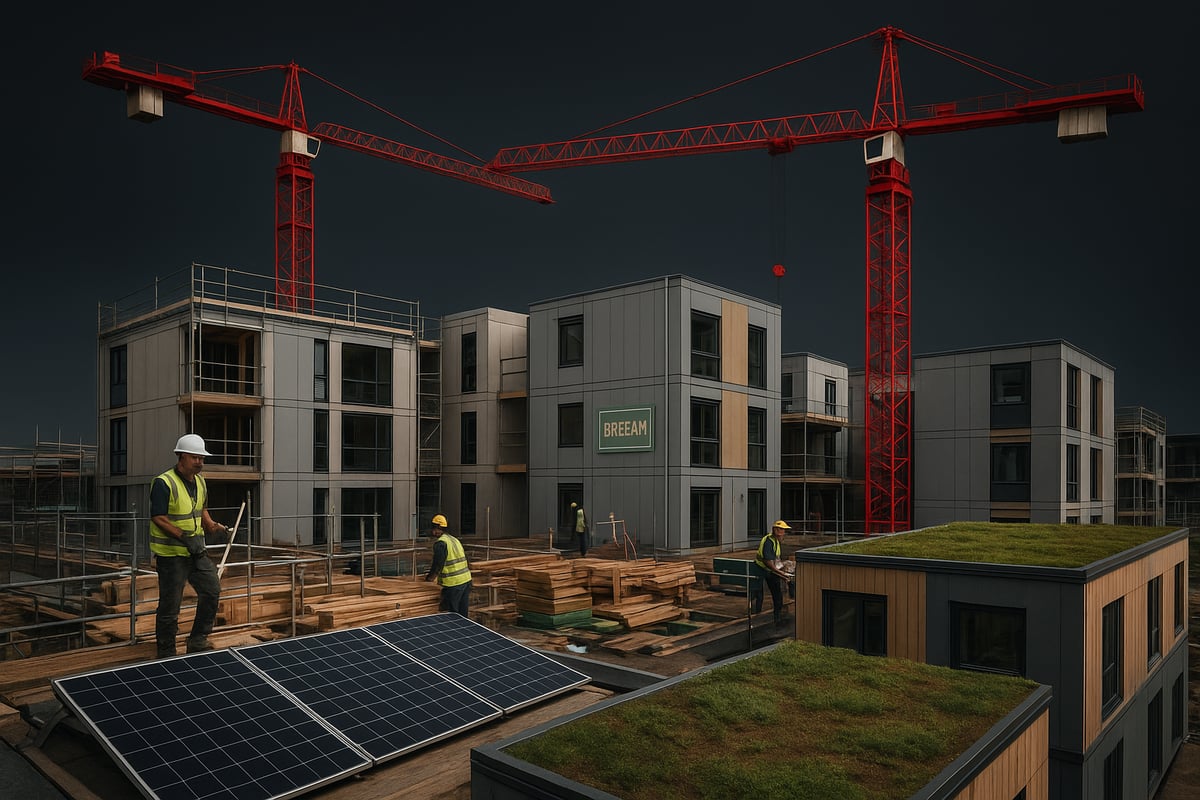
Industry standards such as BREEAM and LEED are pivotal for benchmarking green building performance. These certifications encourage the use of sustainable materials, efficient systems, and responsible site practices. Recent updates to building codes now demand higher levels of thermal performance and renewable energy integration.
Projects that prioritise regulatory compliance not only reduce environmental impact but also enhance market value. For construction engineering professionals, staying updated with evolving standards is essential for successful project delivery.
Sustainable Design and Materials
Sustainable design is at the core of modern construction engineering. Lifecycle assessment (LCA) is increasingly used to evaluate the environmental footprint of materials and systems over a project’s lifespan.
Low carbon materials, such as recycled steel and cross-laminated timber, are gaining traction. The cement industry, in particular, is making significant strides, with Cement Industry’s Decarbonization Efforts highlighting innovations to cut emissions. These advances are complemented by energy-efficient building systems and on-site renewable energy generation.
Selecting the right materials and systems is vital for reducing carbon emissions and achieving sustainability targets in construction engineering.
Circular Economy and Waste Reduction
A circular economy approach is transforming waste management in construction engineering. Traditional linear models are giving way to strategies focused on minimising waste and promoting material reuse.
Key practices include:
- Designing for disassembly and material recovery
- Using prefabricated components to reduce on-site waste
- Implementing take-back schemes for surplus materials
Case studies from the UK demonstrate the success of these methods in reducing landfill use and improving resource efficiency. Embracing circular economy principles supports sustainable growth and aligns with broader industry goals.
Climate Resilience and Adaptation
Climate resilience is a top priority for construction engineering in 2025. Projects must be designed to cope with extreme weather events and long-term climate shifts.
Adaptive strategies include:
- Incorporating green infrastructure, such as green roofs and permeable pavements
- Enhancing flood defences and stormwater management
- Using robust materials and flexible design principles
Construction engineering teams are integrating climate risk assessments into all project phases. This proactive approach ensures infrastructure remains safe and functional, even as environmental conditions evolve. Developing climate-resilient solutions is fundamental for future-proofing assets and meeting regulatory expectations.
Social Sustainability and Community Impact
Modern construction engineering recognises the importance of social sustainability. Projects now prioritise accessibility, inclusivity, and positive outcomes for local communities.
Key elements include:
- Designing spaces that cater to diverse needs
- Engaging communities in planning and decision-making
- Creating local employment and training opportunities
Effective stakeholder engagement helps align project objectives with community values. By focusing on social impact, construction engineering professionals contribute to long-term wellbeing and foster trust with the public.
Skills, Education, and Professional Development in Construction Engineering
The landscape of construction engineering is evolving rapidly, making robust education and ongoing professional development essential. As the industry adapts to new technologies and sustainability demands, the right skills and training are more critical than ever.

Educational Pathways and Accreditation
A solid foundation in construction engineering typically begins with a BSc in Construction Engineering Management or a closely related field. Accredited programmes, such as those recognised by the Chartered Institute of Building (CIOB) or ABET, are highly valued by employers and open doors to global opportunities.
Students study core subjects like design, construction technology, project management, law, and economics. These areas equip future professionals with the technical and managerial expertise needed in construction engineering.
Recently, the UK has acknowledged the urgent need for skilled workers, pledging a significant £600 million investment in construction skills to address shortages and support education initiatives.
Professional Skills and Career Progression
Success in construction engineering demands a blend of technical knowledge and soft skills. Leadership, negotiation, and digital literacy are all essential for career advancement. Many students gain a competitive edge through industry placements, gaining hands-on experience in real-world projects.
Progression often leads to chartered status, such as becoming a Chartered Construction Manager via the CIOB. This credential signals a high level of expertise and commitment to the profession. The construction engineering sector values professionals who can manage complex teams and adapt to emerging challenges.
Lifelong Learning and Upskilling
Continuous professional development (CPD) is a cornerstone of success in construction engineering. As new digital tools and sustainable construction methods emerge, staying current is vital. Training in BIM, project management software, and green building practices is increasingly common.
University-industry partnerships offer valuable opportunities for ongoing learning. Many programmes now include workshops, online courses, and mentorship schemes to help professionals keep pace with rapid change in construction engineering.
Diversity and Inclusion
The construction engineering field is placing growing emphasis on diversity and inclusion. Attracting more women and individuals from underrepresented backgrounds is a key priority for industry leaders.
Initiatives such as outreach programmes, scholarships, and mentorship aim to foster a more inclusive environment. Diverse teams bring fresh perspectives and drive innovation, making construction engineering more resilient and adaptable to future demands.
Project Management Excellence: Delivering Successful Projects in 2025
Delivering successful projects in construction engineering demands a strategic approach to project management. As the landscape evolves, firms must adopt innovative techniques and collaborative models to ensure projects are completed on time, within budget, and to the highest standards. Excellence in project management is the cornerstone of sustainable growth and industry leadership.
Integrated Project Delivery Models
Modern construction engineering projects increasingly rely on integrated project delivery models such as IPD, Design-Build, and Alliance Contracting. These models foster collaboration from the earliest stages, involving contractors, designers, and stakeholders in decision-making. Early contractor involvement ensures potential issues are addressed proactively, reducing delays and cost overruns.
Multidisciplinary teams are essential, combining technical, commercial, and management expertise. In the UK, many complex builds have successfully adopted these approaches, leading to improved outcomes and stakeholder satisfaction. For a deeper look at project management best practices in the UK context, see Project Management in UK Civils.
Risk Management and Cost Control
Effective risk management is at the heart of successful construction engineering. Modern techniques emphasise early identification, clear allocation, and mitigation of risks throughout the project lifecycle. Teams use predictive analytics and scenario planning to anticipate challenges and minimise disruptions.
Cost control is equally critical. Digital tools enable real-time budget tracking, allowing managers to adjust forecasts and avoid overruns. Data-driven cost estimation improves accuracy and transparency, supporting informed decision-making and fostering client trust.
Health, Safety, and Wellbeing
Health and safety standards in construction engineering are continually evolving, especially in a post-pandemic environment. Firms now leverage wearable technology and AI-powered video analytics to monitor site safety, identify hazards, and ensure compliance with regulations.
Beyond physical safety, mental health and wellbeing initiatives are gaining prominence. Providing support systems, flexible work arrangements, and open channels for communication helps maintain morale and productivity. A safe, healthy workforce underpins project success and industry reputation.
Communication and Stakeholder Engagement
Transparent communication is fundamental in construction engineering project management. Engaging clients, regulators, and local communities from the outset ensures expectations are clear and issues are resolved quickly. Digital platforms streamline collaboration, allowing real-time sharing of plans, updates, and feedback.
Active stakeholder engagement reduces misunderstandings and builds trust. It also enables teams to adapt to changing requirements and navigate complex regulatory environments more efficiently, ultimately resulting in smoother project delivery.
Quality Assurance and Regulatory Compliance
Maintaining quality and compliance is non-negotiable in construction engineering. Projects must adhere to strict regulatory, safety, and environmental standards. Regular audits, third-party inspections, and certifications verify that work meets or exceeds benchmarks.
Quality assurance processes are integrated into every phase, from design to completion. This commitment to excellence not only reduces rework and warranty claims but also enhances the long-term value and sustainability of built assets.
Future Outlook: Key Trends and Predictions for Construction Engineering in 2025
The future of construction engineering is shaped by dynamic market forces, evolving roles, and a surge of innovation. As we look towards 2025, professionals must be prepared for a landscape defined by growth, global connectivity, and resilience. Here, we explore the trends set to have the greatest impact.
Market Growth and Industry Drivers
The construction engineering sector is projected to see robust growth in the UK and globally. Urbanisation, infrastructure renewal, and sustainability mandates are key market drivers. Investment in transport, energy, and digital infrastructure is rising, opening new opportunities for engineers.
Government initiatives continue to prioritise resilient and sustainable development. For a broader perspective on industry context and related disciplines, see the Civil Engineering Services Overview. As demand rises, construction engineering professionals will play a pivotal role in meeting society’s evolving needs.
Emerging Roles and Specialisations
Technological advancements are leading to the creation of new roles within construction engineering. Positions such as digital construction manager, sustainability coordinator, and construction data analyst are increasingly in demand.
The industry now requires hybrid skills that blend traditional engineering expertise with IT and management capabilities. This shift is driving professionals to upskill in areas like data analytics and digital modelling. Construction engineering is becoming more multidisciplinary, offering diverse pathways for career progression and specialisation.
Globalisation and Mobility
Globalisation is opening doors for UK construction engineering professionals to work on international projects. The recognition of UK qualifications abroad enhances mobility, allowing talent to contribute to projects worldwide.
However, this also brings new challenges, such as navigating different regulatory environments and cultural expectations. Staying adaptable and informed is crucial for those seeking to expand their horizons and thrive in a global marketplace.
Resilience and Agility
Resilience is now a cornerstone of successful construction engineering. Firms are focusing on building robust supply chains and adopting flexible project delivery models.
The ability to adapt to economic, environmental, and technological disruptions is essential. Agile methodologies and proactive risk management are helping organisations respond effectively to sudden changes. Construction engineering teams must foster a culture of continuous improvement and adaptability to remain competitive.
Thought Leadership and Innovation
Innovation and research are driving the evolution of construction engineering. Collaboration between industry and academia is yielding new technologies and sustainable practices. UK universities, for example, are leading research into advanced construction methods and materials.
For a deeper look at how design and innovation are shaping the sector, visit Civils Design and Innovation. Thought leadership, investment in innovation hubs, and commitment to research will keep the industry at the forefront of progress.
References and Further Reading
For professionals seeking to deepen their expertise in construction engineering, the following resources offer critical insights and up-to-date guidance:
- UK Government Construction Guidance: Official policy documents and regulations shaping construction engineering practice.
- Chartered Institute of Building (CIOB): Industry standards, professional development, and best practice resources.
- Institution of Civil Engineers (ICE): Technical papers, events, and professional support for those in construction engineering.
- Academic Journals: Explore "Construction Management and Economics" or "Journal of Construction Engineering and Management" for peer-reviewed research.
- Industry Reports: Stay informed on trends like Modular Construction’s Role in Cost Management for advanced materials and methods.
Continued learning is essential for navigating the evolving landscape of construction engineering. Explore these sources to stay ahead in 2025.